

What Is Research Design?
Introduction
If you search for the right essay topic in medicine, you will quickly face the same problem: many studies look “good” on paper, but few are truly well designed. That is why understanding what is research design matters for medical students, physicians, and researchers. A strong research design decides whether your study can answer the clinical question, control bias, and produce publishable evidence.
1. What Is Research Design in Clinical Research?
1.1 The core definition
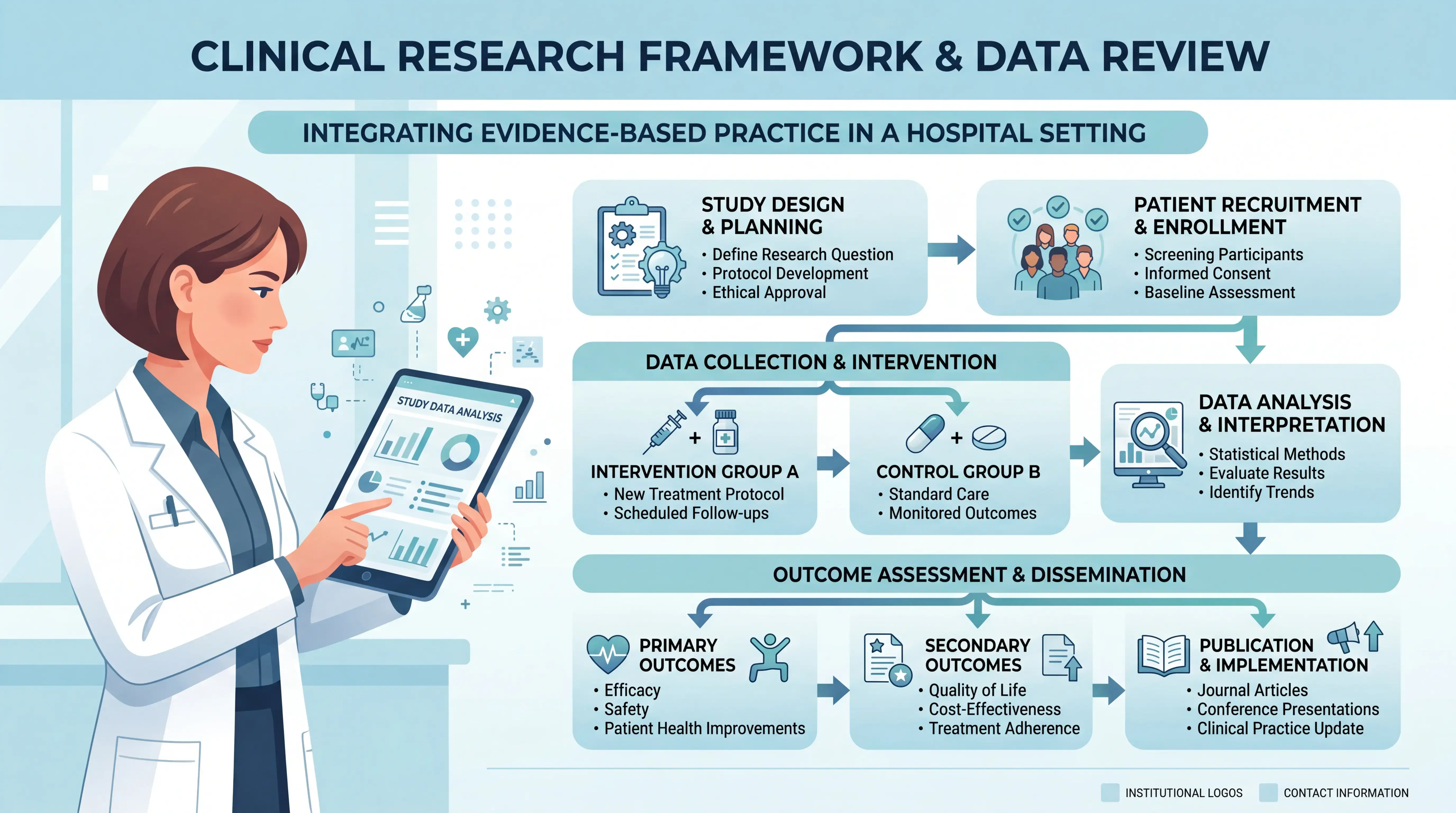
Research design is the overall plan for how a study will answer a question. In clinical research, it defines the population, the exposure or intervention, the outcomes, and the method of analysis. It is not just a formality. It is the logic behind the entire study.
In simple terms, research design tells you what to study, how to study it, and how to interpret the results. If the design is weak, even large sample sizes and advanced statistics cannot fully fix the problem.
1.2 Why it matters for medical research
For clinicians, the main goal is not only publication. It is reliable evidence that can improve diagnosis, treatment, or prognosis. A well-built design improves internal validity and makes findings easier to trust.
The research design also affects feasibility. It influences cost, time, ethics approval, sample size, and follow-up. In practice, many failed projects begin with a vague question and an unclear design.
2. Main Types of Research Design
2.1 Observational research
Clinical research is often divided into two broad categories: observational and interventional. Observational studies do not assign treatment. They observe what naturally happens in real-world practice.
Common observational designs include:
- Case report
- Cross-sectional study
- Case-control study
- Cohort study
Case reports and cross-sectional studies are descriptive. They describe a condition, a pattern, or a prevalence at one point in time.
Case-control and cohort studies are analytical. They try to explore associations between exposure and outcome. This makes them stronger for hypothesis testing than purely descriptive work.
2.2 Interventional research
Interventional studies include randomized controlled trials, or RCTs, and quasi-experimental studies. These designs involve an intervention, such as a drug, procedure, or care pathway.
The key difference is whether the researcher actively assigns the intervention. If yes, the study belongs to interventional research. If no, it is observational.
RCTs are considered the gold standard for testing efficacy because randomization helps balance known and unknown confounders. Quasi-experimental studies are useful when randomization is not feasible, but they usually have more bias risk.
2.3 Choosing the right design
The best design depends on your clinical question.
Use observational designs when you want to:
- Describe a disease or clinical characteristic
- Explore risk factors
- Study prognosis
- Work with limited intervention feasibility
Use interventional designs when you want to:
- Test treatment effect
- Compare therapies
- Evaluate a new clinical pathway
- Establish stronger causal evidence
3. The Structure of a Good Research Design
3.1 Research question and population
A solid design starts with a clear clinical question. The question should define the target population, inclusion and exclusion criteria, and the setting. This step determines whether your results will be relevant to real patients.
For example, a study in adults with acute stroke should not mix populations with very different disease stages unless that is part of the research purpose. Precision here improves both clarity and credibility.
3.2 Intervention, exposure, and outcomes
Every clinical study needs a clear exposure or intervention and measurable outcomes. Outcomes should be specific, clinically meaningful, and practical to collect.
Examples include:
- Mortality
- Symptom improvement
- Length of hospital stay
- Laboratory markers
- Complication rates
A vague outcome creates a weak essay, a weak protocol, and a weak paper. The best outcomes are measurable and tied to the real clinical question.
3.3 Confounders and bias control
Confounding is one of the biggest threats in medical research. A confounder can distort the relationship between exposure and outcome. That is why design matters before analysis begins.
Common strategies include:
- Randomization
- Matching
- Restriction
- Stratification
- Multivariable analysis
In RCTs, randomization is the strongest tool for balance. In observational studies, confounding control must be planned early, not added at the end.
4. Steps to Build a Strong Clinical Study
4.1 From literature to question
The first step is reading the literature. This helps identify what is known, what is missing, and where the clinical gap lies. Good research usually starts from a precise gap, not from a broad interest.
Then define the research purpose. Ask whether the study is meant to change treatment practice, generate a publishable paper, or support a thesis. Different goals may require different designs.
4.2 From question to protocol
A clinical protocol should include the core elements of the study. Based on the knowledge base, a complete protocol generally covers:
- Background
- Objectives
- Study content
- Methods
- Feasibility
- Innovation
- Expected results
- Work plan
- Budget
- Ethics and informed consent
The protocol is the soul of the clinical trial. It protects study quality before data collection begins.
4.3 From protocol to implementation
After the protocol is set, the study moves through several stages:
- Research design
- Data collection
- Data cleaning and organization
- Data analysis
- Manuscript writing
This sequence seems simple, but weak planning in stage one often ruins later stages. Good execution cannot fully rescue poor design.
5. Common Mistakes in Research Design
5.1 Asking too many questions
A common error is trying to answer too much in one study. Strong research usually has two or three feasible objectives, not ten. Too many endpoints dilute the focus and weaken interpretation.
5.2 Ignoring feasibility
A brilliant question is not enough. It must be realistic. If follow-up is impossible, sample size is too small, or outcome data are unavailable, the study will fail.
5.3 Overlooking logic and consistency
A good design must be logically consistent from start to finish. The question, population, intervention, outcomes, and statistics should match. If they do not, reviewers will notice quickly.
Scientific rigor is not only about statistics. It is about the full chain of logic.
6. How Research Design Supports Publication and Clinical Value
6.1 Better design, better evidence
A rigorous design improves the chance that your findings will be trusted by reviewers, clinicians, and readers. It also makes your work easier to reproduce and translate into practice.
For medical students and doctors, this is critical. Many papers fail not because the topic is unimportant, but because the design does not answer the question clearly.
6.2 Practical value for researchers
Researchers need designs that are both publishable and useful. This means selecting the right study type, defining clear endpoints, and controlling confounding from the beginning.
If you want a study that performs well academically and clinically, the design must be precise, feasible, and defensible.
7. A Smarter Way to Plan Research
7.1 Use structured support
Planning research alone is difficult, especially when you need to align a clinical question with study type, endpoints, and statistical logic. This is where structured tools can help.
Scifocus.ai can support researchers by organizing ideas, refining the study question, and helping you build a clearer research plan faster. For busy clinicians and trainees, that can save time and reduce design errors.
7.2 Why this matters now
In medical research, speed without structure leads to weak evidence. Structure without execution leads to delay. The best workflow combines both. A well-designed study is easier to write, easier to analyze, and easier to defend.
If you are developing an essay, proposal, or clinical paper, using a focused research workflow can help you move from idea to protocol with more confidence.
Conclusion
So, what is research design? It is the blueprint that connects your clinical question to your methods, data, and final conclusions. In medicine, the right design determines whether your study is descriptive, analytical, observational, or interventional. It also shapes feasibility, bias control, and publication quality. For medical students, doctors, and researchers, mastering research design is the first step toward meaningful evidence. If you want to improve your next project, consider using scifocus.ai to organize your ideas, sharpen your question, and build a more effective study plan.

Did you like this article? Explore a few more related posts.
Start Your Research Journey With Scifocus Today
Create your free Scifocus account today and take your research to the next level. Experience the difference firsthand—your journey to academic excellence starts here.