
What Is Plagiarism in Academic Writing
Introduction
Plagiarism is one of the fastest ways to damage trust in an academic essay. For medical students, physicians, and researchers, the risk is not only a bad grade or rejected paper. It can harm your reputation, delay publication, and raise questions about your integrity. In academic writing, plagiarism means using another person’s words, ideas, figures, or structure without proper attribution. Understanding this early helps you protect your work before submission.
1. What Plagiarism Means in Academic Writing
1.1 A clear definition
In academic writing, plagiarism is the act of presenting someone else’s work as your own. That includes direct copying, close paraphrasing without credit, and using another author’s ideas without acknowledgement. It can also involve modifying text just enough to look different while keeping the original structure and meaning.
The core problem is misrepresentation. If readers believe the content is yours when it is not, the writing becomes unethical. In research settings, this can affect not only the manuscript, but also the credibility of the author and the institution.
1.2 Why this matters in medicine and research
For medical students and researchers, the issue is especially serious because academic writing often shapes clinical education, grant applications, and published evidence. A weak essay may hurt performance. A plagiarized manuscript can trigger rejection, revision requests, or even institutional review.
Recent academic misconduct cases have shown that repeated copying can lead to large-scale retractions. In practice, this means one poor decision can follow a researcher for years. Plagiarism is not a formatting mistake. It is an ethics problem.
2. Common Forms of Plagiarism
2.1 Direct copying
Direct copying is the simplest form. It happens when an author lifts sentences, paragraphs, or sections from a source without quotation marks and citation. Even if the source is changed slightly, the risk remains if the wording stays too close.
This often appears in introduction sections, literature reviews, and method descriptions. These sections are easy to imitate, which is why editors and reviewers pay attention to similarity reports.
2.2 Patchwriting and close paraphrasing
Patchwriting means rewriting a source by swapping a few words, changing a few verbs, or adjusting sentence order, while keeping the original logic and structure. It may look original on the surface, but it is still too close to the source.
A safer approach is to read the source, understand the idea fully, close the paper, and then write it again from memory in your own words. True paraphrasing changes both the language and the sentence structure.
2.3 Self-plagiarism
Self-plagiarism happens when authors reuse their own previously published text without disclosure. This is common in duplicate methods sections, repeated background statements, or recycled abstracts. It may seem harmless, but journals often treat it as a publication integrity issue.
If you reuse material, check the journal’s policy first. Some reuse may be acceptable with citation or permission, but silent reuse can still cause problems.
2.4 Image and data plagiarism
Plagiarism is not limited to text. Reusing another person’s figures, microscopy images, Western blots, charts, or tables without permission and citation is also a serious violation. In research, this can be even more damaging than copied text because images are often treated as evidence.
Improper image editing is especially risky. If background changes, contrast adjustments, or cut-and-paste edits alter the meaning of a figure, the work may be seen as misconduct rather than simple poor presentation.
3. How Journals Detect Plagiarism
3.1 Similarity software
Most journals use plagiarism detection software before peer review or before final acceptance. These tools compare your manuscript with published literature, conference papers, and web sources. Many editors expect low overlap, especially in narrative sections.
In many fields, a small similarity score may be acceptable if it comes from methods, references, or standard terminology. But there is no universal safe number. A low score does not guarantee originality, and a high score does not automatically prove misconduct. Editors review both the report and the context.
3.2 Why the methods section is often flagged
The methods section often creates the highest overlap because researchers use similar experimental or statistical descriptions. This is common in laboratory science and clinical studies. However, copying method sentences from another paper without modification or citation is still a problem.
A better strategy is to describe your procedures based on what you actually did, then cite standard protocols where needed. If a procedure is established, cite the original method and explain only the necessary details.
3.3 Why careful review matters before submission
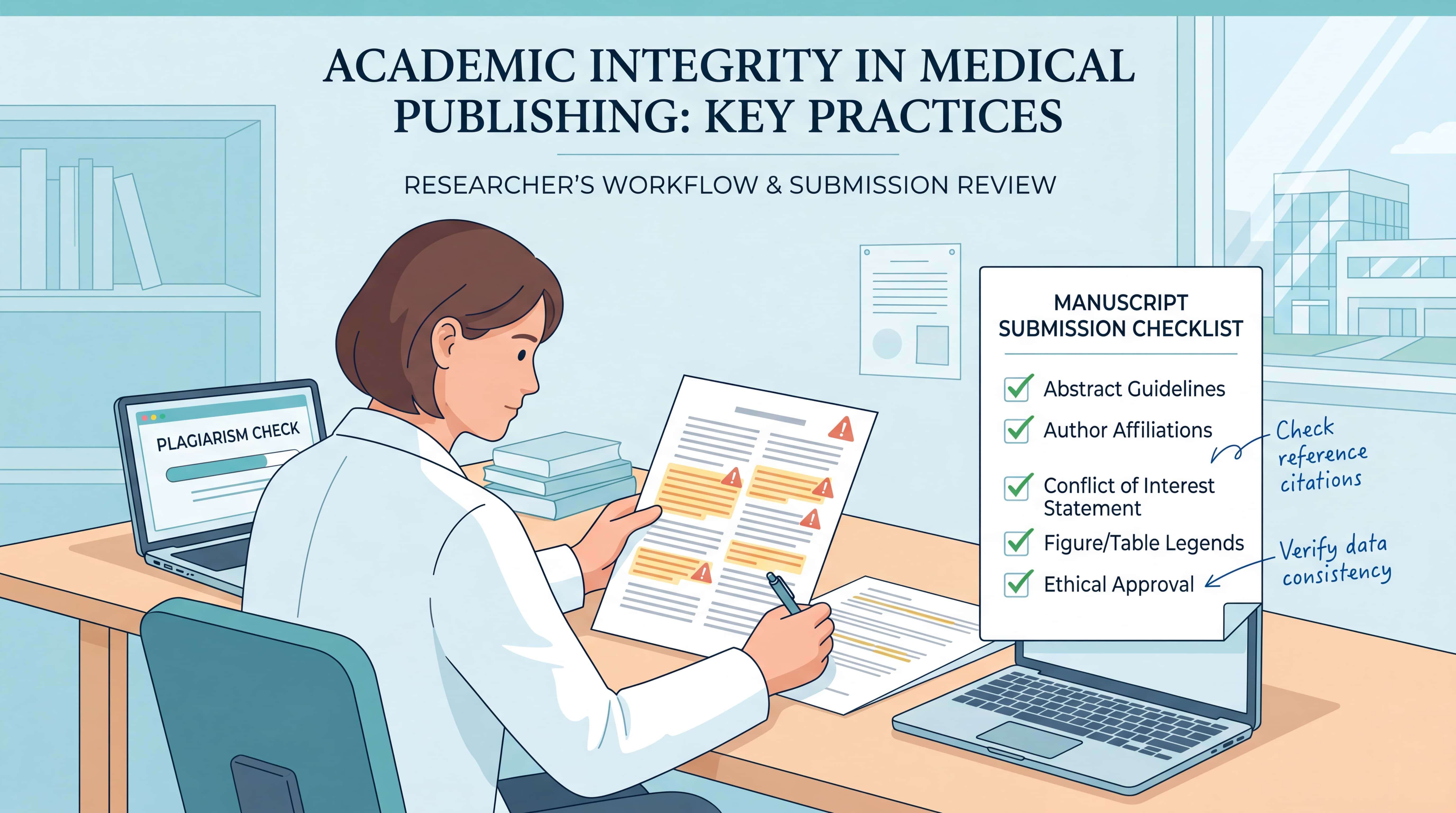
Before submitting an essay or manuscript, check the similarity report yourself. Focus on repeated phrases, long copied sequences, and unattributed blocks of text. Pay special attention to copied definitions, descriptions of common procedures, and reused figure legends.
Pre-submission review is one of the most effective ways to avoid accidental plagiarism.
4. How to Avoid Plagiarism in Academic Writing
4.1 Read, understand, then write
The safest method is simple. Read the source carefully, understand the argument, and then explain it in your own words. Do not translate line by line or replace individual words one by one.
A strong paraphrase should sound like your own academic voice. It should keep the meaning accurate, but not the sentence pattern. This is especially important when summarizing prior studies in a literature review.
4.2 Cite every borrowed idea
If an idea is not common knowledge, cite the source. This includes theories, model names, study results, definitions, and unique interpretations. A citation tells the reader where the idea came from and protects you from unintentional plagiarism.
If you use a direct quote, use quotation marks and the correct reference style. In medical and scientific writing, direct quotations are usually limited. Paraphrasing with citation is often better.
4.3 Change more than a few words
Do not rely on surface edits. Adding a word, removing an article, or changing one verb is usually not enough. Editors can still identify the source if the sentence structure is too similar.
A stronger revision may involve:
- changing active voice to passive voice, or the reverse
- splitting one long sentence into two shorter ones
- changing the order of ideas
- replacing broad phrasing with precise academic terms
The goal is originality with accuracy, not cosmetic editing.
4.4 Keep accurate notes during research
Many plagiarism problems start during note-taking. If you copy a sentence into your notes and later forget that it was copied, it may enter your draft by mistake. To prevent this, clearly label quotations, paraphrases, and your own comments from the beginning.
This is especially useful in long projects. A structured notes file can save time and reduce risk when drafting the final essay or article.
5. Ethical Writing Standards for Medical Students and Researchers
5.1 Protect your academic reputation
Academic integrity is part of professional identity. For medical trainees and researchers, writing honestly is linked to clinical trust, publication credibility, and future collaboration. A single misconduct issue can affect grants, promotions, and journal relationships.
Trust is easier to lose than to rebuild. That is why plagiarism prevention should be treated as a routine part of academic work.
5.2 Be transparent about tools and assistance
If you use any tool to support writing, data handling, or language editing, follow the relevant disclosure rules. Many journals now require transparency about writing assistance and AI use. Hidden assistance can raise ethical concerns if it affects authorship, originality, or accountability.
The safest approach is to check the target journal policy before submission. When in doubt, disclose.
5.3 Use workflow tools to reduce risk
A structured writing workflow can help:
- Draft from original understanding.
- Insert citations as you write.
- Check similarity before submission.
- Review figures, tables, and captions.
- Finalize with a style and ethics check.
This process is practical for busy clinicians and researchers. It reduces errors and improves manuscript quality.
6. How SciFocus Can Help You Write Safely and Efficiently
6.1 A smarter way to reduce writing risk
If you often write medical papers, case reports, or research essay drafts, a tool that supports structured writing can save time and lower risk. SciFocus.ai is designed to help streamline the writing workflow, improve clarity, and support better manuscript preparation.
Instead of starting with fragmented notes or copied text, you can build content more systematically. That makes it easier to produce original, readable academic writing.
6.2 Why this matters for busy researchers
Researchers often juggle patient care, experiments, and deadlines. Under pressure, copying phrases or reusing old text can become tempting. A guided writing workflow helps you stay original while moving faster.
Used properly, a tool like SciFocus.ai can support drafting, refinement, and organization. It does not replace academic responsibility, but it can make careful writing easier to maintain.
Conclusion
Plagiarism in academic writing is more than copying text. It includes direct copying, poor paraphrasing, self-plagiarism, and improper reuse of images or data. For medical students, physicians, and researchers, the consequences can be serious. The best defense is a disciplined writing process: understand the source, cite correctly, rewrite in your own voice, and review before submission. If you want to write with more confidence and less risk, consider using SciFocus.ai as part of your academic workflow.
Did you like this article? Explore a few more related posts.
Start Your Research Journey With Scifocus Today
Create your free Scifocus account today and take your research to the next level. Experience the difference firsthand—your journey to academic excellence starts here.