
What Is an Abstract in a Research Paper
Introduction
An abstract in a research paper is the shortest and most strategic part of the manuscript. For many medical students, physicians, and researchers, it is also the section that decides whether the paper gets read, cited, or submitted at all. A weak abstract can hide a strong study. A strong one can make the whole essay easier to evaluate. This article explains what an abstract is, what it must include, and how to write one that is clear, complete, and publication-ready.
1. What an Abstract Does in a Research Paper
1.1 A compact summary of the entire study
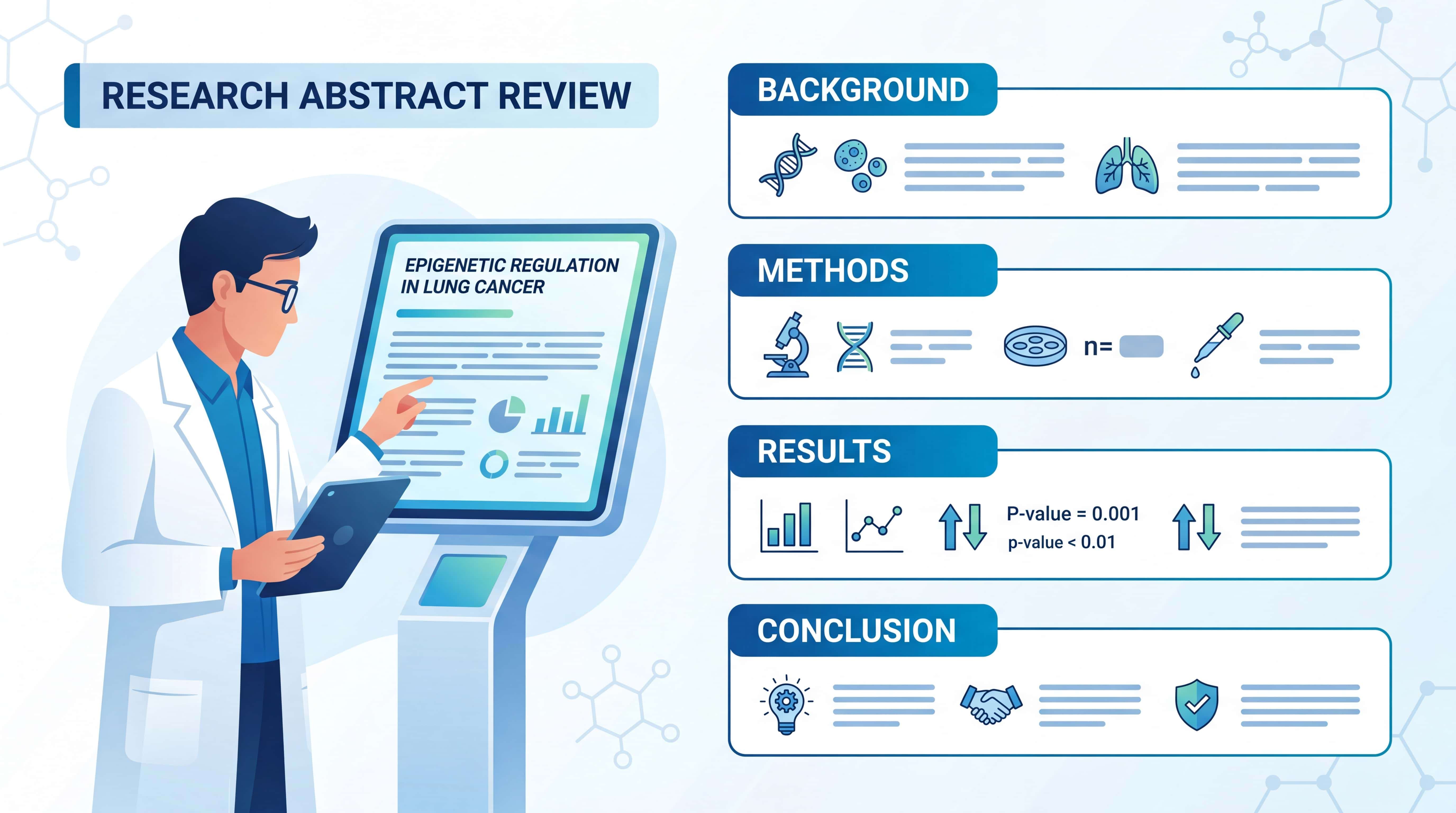
An abstract is a self-contained summary of the paper. It gives the core message without requiring the reader to open the full text. In most journals, it includes the study purpose, methods, main results, and conclusion.
For medical and scientific readers, this matters because time is limited. A reviewer may read the abstract first. A clinician may scan it before deciding whether the findings are relevant. A well-written abstract should stand alone and make sense on its own.
1.2 Why it matters for visibility and acceptance
The abstract is often the first indexed part of a paper in databases such as PubMed and Web of Science. That means it affects discoverability. It also influences editorial screening. If the abstract is vague, incomplete, or inconsistent with the paper, the manuscript may be judged as weak before the body is even reviewed.
This is why the abstract is not a casual summary. It is a high-value part of the academic essay. It functions as both a summary and a marketing tool for the study.
1.3 The four core elements
Most structured abstracts follow four parts:
- Background
- Methods
- Results
- Conclusions
Some journals allow unstructured abstracts, but the same logic still applies. The reader should be able to identify the problem, the approach, the findings, and the significance.
2. How to Structure a Strong Abstract
2.1 Background: define the problem clearly
The background should explain why the study was needed. It should identify the research gap, the clinical issue, or the scientific question. Keep it brief. One or two sentences are usually enough.
A good background does three things:
- States the topic.
- Identifies the gap.
- Presents the research objective or hypothesis.
For example, in a clinical study, the background might explain that current treatment outcomes remain inconsistent, and the study aims to test a new intervention. Do not turn the abstract into a literature review.
2.2 Methods: show what was done
The methods section should be concise but specific. It should tell the reader where the data came from, what the study design was, and which main analysis was used. In medical writing, precision is essential.
Include only the major points:
- Study design
- Sample or data source
- Key intervention or exposure
- Primary statistical approach
Avoid unnecessary technical detail. The goal is clarity, not duplication of the full methods section. A strong abstract gives enough information for the reader to judge credibility without overloading them.
2.3 Results: present the main findings
The results section should contain the most important data, not every number in the paper. Focus on outcomes that directly answer the research question. When possible, report quantitative results, such as effect size, confidence interval, or statistical significance.
This is one of the most common weaknesses in abstracts. Writers often say “significant improvement” without showing what improved or by how much. An effective abstract uses concrete evidence, not vague claims.
A practical rule is this. If a result does not support the main conclusion, it probably does not belong in the abstract.
2.4 Conclusions: explain the meaning
The conclusion should summarize the scientific or clinical implication of the findings. It should answer one question: So what?
The conclusion must be aligned with the data. It should not overstate the results or introduce claims that the study did not test. If further research is needed, say so briefly. If the finding has immediate relevance, state that clearly.
A strong conclusion is short, accurate, and measured. It shows value without exaggeration.
3. Common Mistakes to Avoid
3.1 Including information not found in the paper
An abstract should not introduce new ideas, new data, or new claims that are absent from the main text. That creates inconsistency and weakens trust.
It should also avoid citations, tables, and figures in most cases. The abstract is meant to be independent. References are usually unnecessary and often disallowed.
3.2 Writing too much background
Many beginners spend too much space on context and not enough on methods, results, and conclusion. That makes the abstract feel like an introduction, not a summary.
A useful balance is to keep the background short and direct. The reader needs orientation, not a full historical narrative.
3.3 Being too general
Phrases like “this study is important” or “the findings are useful” do not help the reader. They sound broad but reveal little. Academic readers want specifics.
For example, instead of saying a treatment was effective, say it reduced symptoms, improved survival, or lowered biomarker levels. Specificity improves credibility.
3.4 Exceeding journal limits
Many journals limit abstracts to around 250 words, though requirements vary. Because of this, every sentence must work hard. A concise abstract is usually stronger than a long one.
If you are preparing a submission essay, check the target journal format first. Word count, heading style, and structure may differ.
4. A Practical Framework for Writing One
4.1 Use a simple four-step method
A reliable writing method is:
- Write the research question in one sentence.
- Summarize the design and data source.
- Extract the main results with numbers.
- Write one conclusion tied directly to the objective.
This approach keeps the abstract focused. It also reduces the risk of missing a required element.
4.2 Edit for clarity and independence
After drafting, read the abstract alone. Ask yourself whether a reader could understand the study without seeing the full paper. If not, revise.
Check for these points:
- Is the objective clear?
- Are the methods identifiable?
- Are the results specific?
- Does the conclusion match the results?
- Are there any unnecessary words?
If a sentence does not add meaning, remove it.
4.3 Match the abstract to the journal and discipline
Different journals have different abstract styles. Some require structured headings. Others allow a single paragraph. Some clinical journals expect more detail in methods. Some basic science journals emphasize the key experimental outcome.
Before submission, review the journal’s author instructions carefully. Formatting errors can create a poor first impression even when the research itself is strong.
5. Why Abstract Quality Affects Academic Performance
5.1 It shapes the first judgment
Reviewers, editors, and readers often make a quick decision based on the abstract. That decision may determine whether they continue reading. In practice, the abstract can shape the fate of the entire paper.
This is especially important in medicine and research, where readers scan many papers each week. A clear abstract helps the study stand out in a crowded field.
5.2 It supports dissemination and citation
Search engines and database algorithms use abstract text heavily. A well-structured abstract improves discoverability and makes the paper easier to classify by topic.
It also helps conference organizers, systematic reviewers, and busy clinicians identify relevant work faster. In short, the abstract extends the reach of the full article.
5.3 It reflects writing discipline
A precise abstract signals careful research and disciplined writing. It shows the author can select what matters most and present it clearly. That is a valuable academic skill.
For many researchers, the abstract is also the hardest section to write. It compresses months of work into a few hundred words. That is why it deserves careful revision.
6. How scifocus.ai Can Help
6.1 Faster drafting, cleaner structure
If you struggle to organize your abstract, scifocus.ai can help you turn rough research notes into a clear academic draft. It is especially useful when you need to build a structured summary from background, methods, results, and conclusions.
For medical students and researchers under time pressure, this saves time and reduces structural errors.
6.2 Better alignment with academic expectations
scifocus.ai can support clearer phrasing, tighter wording, and stronger logical flow. That matters when you are preparing a journal submission or revising an essay for publication.
Instead of starting from a blank page, you can start with a focused draft and refine it into a submission-ready abstract.
6.3 A practical companion for busy researchers
Academic writing is often limited by time, not ideas. Tools like scifocus.ai can help you move faster while keeping the content organized. For researchers who manage clinical work, teaching, and publishing at the same time, that practical support can be valuable.
Conclusion
An abstract in a research paper is not just a summary. It is the paper’s first signal of quality, relevance, and rigor. A strong abstract is independent, concise, and complete. It should include the study’s purpose, methods, main results, and conclusion. It should also avoid vague language, unsupported claims, and unnecessary detail.
For medical students, doctors, and researchers, mastering the abstract can improve both writing quality and publication outcomes. If you want help turning your research into a clear, structured, and publication-focused abstract, try scifocus.ai and streamline your next essay from draft to submission.
Did you like this article? Explore a few more related posts.
Start Your Research Journey With Scifocus Today
Create your free Scifocus account today and take your research to the next level. Experience the difference firsthand—your journey to academic excellence starts here.