

What Is a Bibliography
Introduction
A bibliography is more than a list at the end of an essay. It is the evidence base behind your claims. For medical students, doctors, and researchers, a weak bibliography can undermine an otherwise strong paper. A clear bibliography shows where your facts came from, how current they are, and whether your essay is built on reliable sources. This matters in clinical writing, research papers, and academic submissions.
1. What Is a Bibliography in an Essay?
1.1 A simple definition
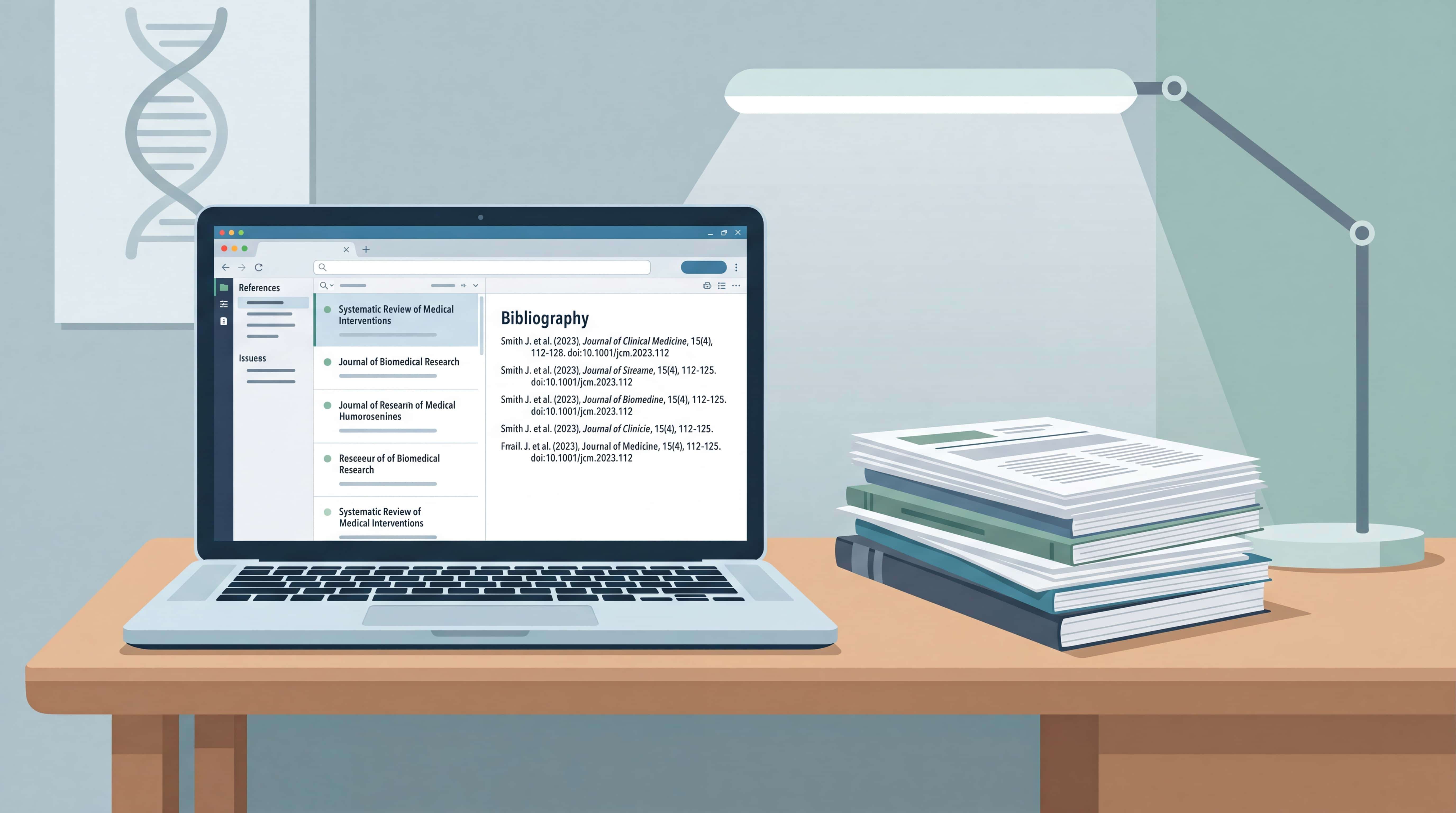
A bibliography is a structured list of sources used, consulted, or cited when writing an essay or research paper. It helps readers verify your evidence and follow your line of reasoning. In academic writing, it is a sign of transparency.
In the broad sense, a bibliography can include books, journal articles, conference papers, dissertations, standards, patents, newspapers, and online resources. In most medical and scientific essays, journal articles are the most important source type because they are usually peer reviewed and current.
1.2 Why it matters in medicine and research
In medical writing, source quality is critical. A statement about treatment, diagnosis, or epidemiology should be supported by credible literature. A bibliography is not decoration. It is part of the proof.
It also helps with plagiarism prevention. If you cite properly, you show which ideas are yours and which come from prior work. That protects academic integrity and makes your essay more trustworthy.
2. Bibliography vs. References vs. Works Cited
2.1 The differences you should know
These terms are often used interchangeably, but they are not always the same.
- Bibliography: may include all sources consulted, not only the ones directly cited.
- References: usually includes only sources cited in the text.
- Works Cited: commonly used in MLA style and also lists only cited sources.
For scientific and medical essays, journals often require a reference list rather than a broad bibliography. Always check the assignment brief or journal instructions before you submit.
2.2 Why format matters
Different styles use different rules. APA, Vancouver, MLA, and Chicago all vary in punctuation, order, and capitalization. In healthcare and life sciences, Vancouver style is widely used because it is compact and easy to scan.
The key is consistency. A strong essay does not just use credible sources. It formats them correctly, every time.
3. What Sources Should Be Included?
3.1 Core academic sources
A strong bibliography should prioritize high-quality, relevant, and recent material. Common source types include:
- Journal articles. Best for current evidence and peer-reviewed findings.
- Books and book chapters. Useful for theory, background, and foundational concepts.
- Conference papers. Helpful for emerging topics and early findings.
- Theses and dissertations. Valuable for detailed methodology and niche topics.
- Standards and patents. Important in technical and applied research.
- Reliable online resources. Use cautiously, and prefer official or institutional websites.
For a medical essay, journal articles should usually dominate the bibliography. If your topic is clinical, aim for the most recent evidence possible.
3.2 Sources to use carefully
Not every source is equally strong. Blogs, forums, and unscreened websites are usually weak for academic essays. News articles may help explain public events, but they should not replace primary research.
A practical rule is simple. Use primary literature when possible. Use secondary sources only when they are trustworthy and necessary.
4. How to Write a Bibliography Correctly
4.1 Follow the required style
Before writing your essay, confirm the citation style. Then apply it consistently. Pay attention to:
- author names
- article titles
- journal names
- volume and issue numbers
- page ranges
- publication year
- DOI or URL
- access date, if required
Even small errors can reduce credibility. In research settings, inconsistent formatting can also slow down peer review or grading.
4.2 Check source quality before citing
A bibliography is only as strong as the sources behind it. Before adding a citation, ask:
- Is this source peer reviewed?
- Is it recent enough for the topic?
- Does it come from a trusted journal or institution?
- Does it actually support the point I am making?
For clinical topics, older sources may still be useful for historical context, but current guidelines and systematic reviews are usually better for practice-related claims.
4.3 Organize sources as you write
Do not wait until the end. Track sources while drafting your essay. This reduces missed citations and formatting mistakes. Many researchers use citation managers to store metadata and generate bibliographies automatically.
Tools such as scifocus.ai can help streamline this process by organizing sources, reducing manual errors, and keeping references consistent across a full essay. For busy medical students and researchers, that saves time and improves accuracy.
5. Common Mistakes in an Essay Bibliography
5.1 Frequent errors to avoid
A bibliography often loses marks because of simple mistakes. The most common ones are:
- missing author names
- incorrect punctuation
- inconsistent formatting
- citing weak or irrelevant sources
- mixing citation styles
- forgetting in-text citations and bibliography matching
- using outdated evidence for fast-moving medical topics
These problems are avoidable. A final source check is essential before submission.
5.2 Overlooking evidence quality
A long bibliography does not automatically mean a strong essay. Ten irrelevant sources are less useful than five highly relevant ones. Quality matters more than quantity.
In medical and scientific writing, prioritize evidence hierarchy. Systematic reviews, meta-analyses, and well-designed clinical studies often carry more weight than opinion pieces or low-quality summaries.
6. A Practical Workflow for Medical Essays
6.1 Build the bibliography in three steps
A simple workflow can improve accuracy:
- Search strategically. Start with PubMed, Scopus, Google Scholar, or institutional databases.
- Screen sources. Keep only relevant, recent, and reliable material.
- Format consistently. Apply one citation style from start to finish.
This approach reduces last-minute errors and helps keep your essay focused on evidence rather than formatting problems.
6.2 Use technology wisely
Reference tools can make academic writing faster, but they are not perfect. Always review auto-generated entries. Journal titles, page ranges, and author order may still need correction.
That is where a focused workflow matters. With scifocus.ai, you can support source management, structure your references better, and produce a cleaner essay with less effort. For medical students and researchers handling multiple papers, that can make a real difference.
Conclusion
A bibliography is a core part of academic and medical writing. It shows the evidence behind your essay, supports trust, and helps readers assess the quality of your work. In scientific fields, the best bibliographies are accurate, consistent, and built on strong sources.
If you want to save time and improve reference quality, consider using scifocus.ai to support your writing workflow. It can help you organize sources more efficiently and reduce avoidable citation errors. For any serious essay, a reliable bibliography is not optional. It is essential.
Did you like this article? Explore a few more related posts.
Start Your Research Journey With Scifocus Today
Create your free Scifocus account today and take your research to the next level. Experience the difference firsthand—your journey to academic excellence starts here.