

Transition Words for Synthesizing Sources
Introduction
Writing a strong essay in medicine or research is not only about reporting facts. It is about connecting evidence clearly. Many students and researchers can summarize sources, but struggle to synthesize them. That is where transition words for synthesizing sources matter. They help you compare findings, show relationships, and build a logical argument fast.
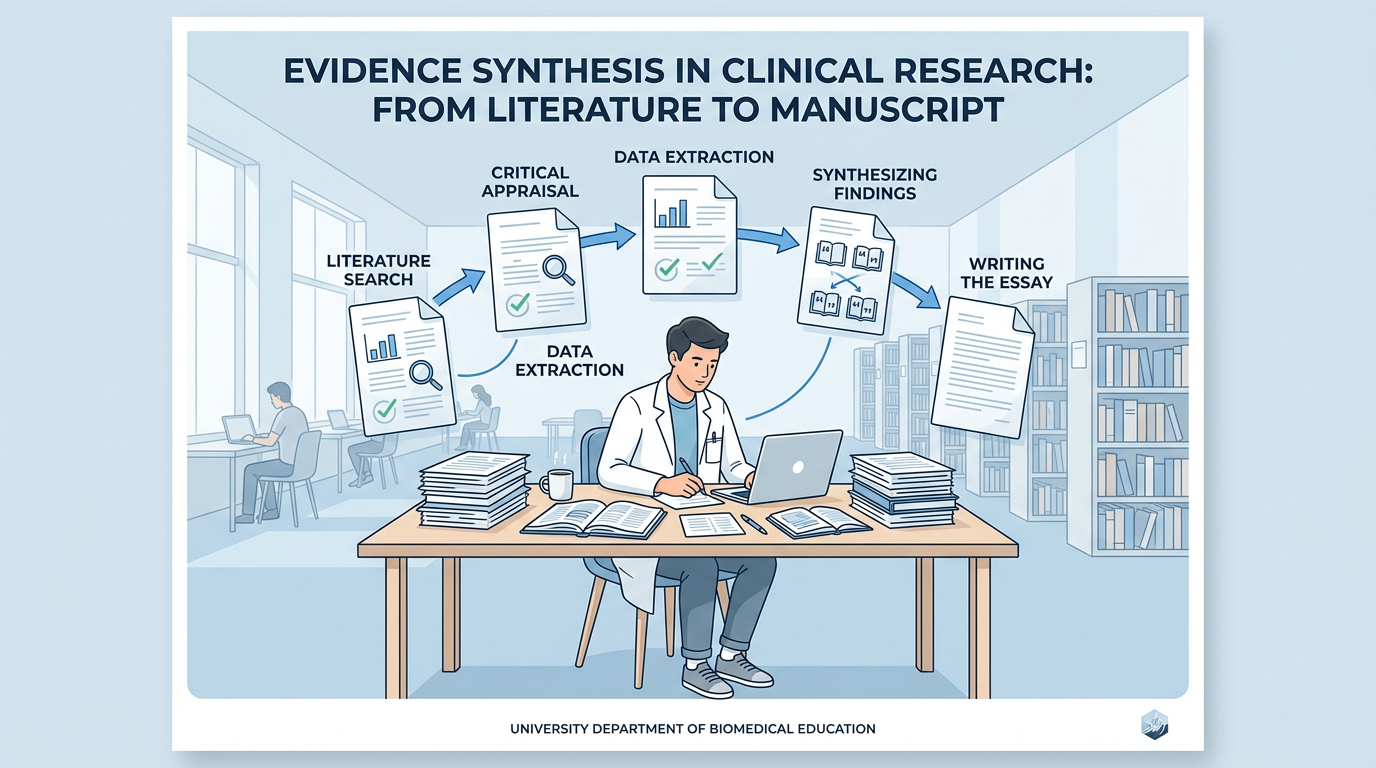
1. Why Transition Words Matter in Academic Writing
1.1 They help you move from summary to synthesis
A summary tells the reader what one source says. Synthesis shows how several sources relate to each other. In an essay, this difference is critical. Without transitions, your writing can feel like a list of disconnected studies.
Transition words for synthesizing sources guide the reader through agreement, contrast, addition, and cause-effect logic. They make your analysis easier to follow. They also show that you understand not just the findings, but the research conversation around them.
1.2 They improve clarity in medical and scientific writing
For medical students, doctors, and researchers, clarity is not optional. A discussion section, literature review, or evidence-based essay must show how one result supports, challenges, or extends another. Common academic markers include phrases such as “others have shown,” “their findings demonstrate,” “Smith reported,” and “our previous study showed.”
These phrases tell readers that you are referring to prior evidence, not presenting a new result. That distinction matters in scientific writing. It reduces ambiguity and improves trust.
1.3 They support E-E-A-T in research writing
Good academic writing reflects experience, expertise, authority, and trust. Transition words for synthesizing sources help you present evidence in a disciplined way. They show that you can weigh studies objectively.
For example:
- Use therefore to show a conclusion based on evidence.
- Use however to signal a limitation or contradiction.
- Use in addition to add another related finding.
- Use in contrast to highlight a meaningful difference.
- Use nevertheless when a point still holds despite a limitation.
These small words create a stronger argument structure. In a high-quality essay, structure is part of credibility.
2. Core Transition Words for Synthesizing Sources
2.1 Additive transitions
Additive words help you connect studies that point in the same direction. They are useful when two or more papers support the same theme.
Common examples include:
- in addition
- moreover
- further
- likewise
- also
- meanwhile
Use them when the sources reinforce each other. For example, one study may show a biomarker is elevated in disease, and another may confirm the same pattern in a different cohort. In that case, in addition or moreover works well.
A strong synthesis does not repeat. It connects evidence.
2.2 Contrast transitions
Contrast words are essential when sources disagree or reveal different mechanisms. They help you compare rather than merely list.
Key options include:
- however
- in contrast
- nevertheless
- on the other hand
- conversely
- despite
- yet
These words are useful when a study’s result differs from the expected pattern. For example, if one article reports increased migration after knockdown, while another finds the opposite, in contrast is appropriate. In a medical essay, this kind of precision matters because inconsistencies are common in biological data.
2.3 Cause-effect transitions
Use cause-effect words when your synthesis explains why findings matter.
Useful terms include:
- therefore
- thus
- as a result
- consequently
- for this reason
These transitions are especially important in translational medicine. They help you move from observation to implication. For example, if a pathway is linked to invasion, therefore the pathway may be a therapeutic target. That is a synthesis, not just a summary.
3. How to Use Transition Words in a Strong Essay
3.1 Start with the relationship, not the source list
A common mistake is writing one sentence per paper. That creates a report, not a synthesis. Instead, group sources by idea.
For example, instead of saying:
- Study A found X.
- Study B found X.
- Study C found X.
Write:
- Several studies have shown X, and recent evidence further supports this pattern.
This structure reads more naturally in an essay and shows analytical thinking.
3.2 Use signal phrases to attribute findings
Transition words work best with clear attribution. This is especially important in scholarly writing, where readers need to know whose data you are discussing.
Helpful signal phrases include:
- X reported that
- their findings demonstrate that
- others have shown that
- our previous study showed that
- recent work indicates that
These phrases make your writing more transparent. They also reduce the risk of vague statements that sound unsupported.
3.3 Match the transition to the purpose
Do not use a transition word just because it sounds academic. Use it because it serves a function.
A practical guide:
- If you are adding evidence, use moreover or in addition.
- If you are showing opposition, use however or in contrast.
- If you are explaining a consequence, use therefore or thus.
- If you are narrowing a point, use specifically or notably.
- If you are emphasizing an exception, use nevertheless or despite this.
This is one of the simplest ways to make an essay sound more professional.
4. Common Mistakes to Avoid
4.1 Overusing one transition word
If every paragraph starts with however, the writing becomes repetitive. Strong academic writing uses variety. The knowledge base highlights many options, and that variety matters.
Try rotating words such as:
- however
- nevertheless
- in contrast
- likewise
- moreover
- conversely
A controlled vocabulary improves readability and keeps the reader engaged.
4.2 Using transitions without logical connection
A transition word cannot fix weak logic. If two sources are unrelated, moreover will not make them connected. The relationship must exist first.
Before choosing a word, ask:
- Are these findings similar?
- Are they opposite?
- Is one a consequence of the other?
- Does one add detail to the other?
If the answer is unclear, revise the sentence structure first. Then add the transition.
4.3 Confusing summary with synthesis
Summarizing means stating what a source says. Synthesizing means comparing multiple sources and identifying a pattern.
For example:
- Summary: One study found elevated inflammation.
- Synthesis: Several studies have shown elevated inflammation; however, the magnitude varies across patient groups.
The second version is stronger because it connects evidence. That is the goal of a research essay.
5. Practical Sentence Patterns You Can Use
5.1 Agreement patterns
Use these when studies support the same conclusion:
- Smith reported X, and likewise, other studies found similar results.
- Recent findings demonstrate X, and in addition, related work supports this trend.
- Our previous study showed X, and further evidence confirms the same pattern.
These structures are useful in literature reviews and discussion sections.
5.2 Contrast patterns
Use these when evidence conflicts:
- Smith reported X; however, later studies found Y.
- In contrast to earlier findings, recent data suggest a different mechanism.
- X was observed in one cohort, whereas Y was seen in another.
This approach is especially useful in medical research, where different methods or populations often produce different outcomes.
5.3 Explanation patterns
Use these when you are building an argument:
- X was associated with poor outcomes; therefore, it may serve as a prognostic marker.
- The pathway was upregulated, thus supporting a role in progression.
- The intervention reduced invasion, which suggests a direct functional effect.
These patterns improve the flow of an analytical essay.
6. A Simple Workflow for Stronger Synthesis
6.1 Read for patterns, not just facts
When reviewing sources, group them by:
- agreement
- disagreement
- methodology
- population
- biological mechanism
- clinical implication
This makes writing easier later. You will know which transition words to use before you draft.
6.2 Draft with one main point per paragraph
Each paragraph should answer one question. Then use transitions to show how sources support or challenge that point.
A useful formula is:
- claim
- evidence
- contrast
- implication
This structure is efficient and clear. It works well in any research essay.
6.3 Revise for readability
After drafting, check every transition word. Ask whether it is doing real work. If it is not, remove it.
Good writing is often simpler than expected. Short sentences. Clear source attribution. Precise transitions. That is what readers in medicine and science need.
7. How SciFocus.ai Can Help You Write Faster
7.1 A smarter way to synthesize sources
If you write literature reviews, discussion sections, or a research essay often, manual synthesis can be time-consuming. This is where scifocus.ai can help. It is designed to support academic writing workflows, so you can organize evidence, compare findings, and draft more efficiently.
Instead of starting from a blank page, you can use a focused tool to structure source relationships. That saves time and reduces writing friction.
7.2 Better structure, cleaner transitions
A tool like scifocus.ai can help you turn raw references into clearer paragraphs. It can support better logical flow, help you spot gaps in comparison, and improve the way you use transition words for synthesizing sources.
For busy clinicians and researchers, this matters. The goal is not just to write more. It is to write with more precision, less effort, and stronger academic clarity.
Conclusion
Transition words for synthesizing sources are small, but they shape the quality of your argument. In a medical or scientific essay, they help you move from isolated summaries to clear synthesis. Use them to show agreement, contrast, addition, and causality. Pair them with strong signal phrases and precise source attribution. If you want to write faster and structure evidence more effectively, try scifocus.ai as part of your academic workflow.

Did you like this article? Explore a few more related posts.
Start Your Research Journey With Scifocus Today
Create your free Scifocus account today and take your research to the next level. Experience the difference firsthand—your journey to academic excellence starts here.