

Transition Words for a Cause-and-Effect Essay
Introduction
Writing a strong essay is often harder than it looks. In a cause-and-effect structure, readers must follow a clear chain of events, not a pile of disconnected facts. For medical students, doctors, and researchers, this matters even more. A weak transition can blur logic. A precise one can make your argument easier to trust. This guide explains how to use transition words for cause and effect essay writing with clarity, accuracy, and a professional tone.
1. Why Transition Words Matter in a Cause-and-Effect Essay
1.1 They make your logic easier to follow
In scientific and academic writing, readers expect more than correct grammar. They expect a clear sequence. Transition words help connect one finding to the next. They show whether a result is a cause, an effect, a contrast, or a summary.
In a medical essay, this is especially important. A sentence like “Protein X increased, therefore we ran the next experiment” may sound natural, but it can be logically too strong. If the first observation only suggests a possible mechanism, use softer language such as “suggests,” “indicates,” or “may contribute to.” This protects accuracy.
Clear transitions do not just improve style. They improve scientific credibility.
1.2 They help you match the strength of the evidence
One common mistake is using strong causal words when the data only show association. In research writing, that distinction matters. If an experiment demonstrates a direct effect, words like “therefore,” “as a result,” or “consequently” are acceptable. If the link is only tentative, weaker phrasing is safer.
For example:
- Strong relation: “The treatment reduced inflammation; therefore, cytokine levels dropped.”
- Weak relation: “The treatment reduced inflammation, which may explain the decrease in cytokine levels.”
This approach is consistent with scientific writing practice. It keeps your essay objective and avoids overstating conclusions.
1.3 They save time during drafting and revision
Many writers spend too long fixing flow after the draft is finished. A better method is to plan the transitions while outlining. Think in modules:
- State the cause.
- Show the process.
- Present the effect.
- Summarize the meaning.
This is close to how strong results sections are built in scientific papers. The same logic works in a cause-and-effect essay.
2. The Main Types of Transition Words You Need
2.1 Cause and reason transitions
These words introduce the reason something happens. They answer “why.”
Useful examples include:
- because
- since
- due to
- owing to
- as a result of
- for this reason
Use them when the cause is direct and clear. In academic writing, “due to” and “owing to” often appear before nouns, while “because” usually introduces a clause.
Examples:
- “The assay was repeated because the first run showed unstable values.”
- “Owing to the low sample size, the findings should be interpreted cautiously.”
Choose the form that fits the sentence structure, not the one that sounds most advanced.
2.2 Effect and result transitions
These words show what happened after the cause. They answer “what happened next?”
Useful examples include:
- therefore
- thus
- consequently
- hence
- as a result
- so
These are useful when the effect follows logically and strongly. In research contexts, “therefore” and “thus” are common, but they should not be used to force a conclusion.
Examples:
- “The intervention improved adherence; thus, follow-up completion increased.”
- “The cells were exposed to hypoxia, as a result, apoptosis rose.”
A strong essay uses these words sparingly, only when the logic is truly tight.
2.3 Contrast transitions
Cause-and-effect writing sometimes needs a turn. Not every result follows the expected pattern. Contrast words help you show this cleanly.
Useful examples include:
- however
- although
- in contrast
- on the other hand
- whereas
- nevertheless
These are valuable when the evidence is mixed or when your findings differ from earlier reports.
Examples:
- “The biomarker was elevated in diseased tissue; however, it was not associated with severity.”
- “Although the intervention reduced pain, it did not improve mobility.”
This kind of transition adds balance. It prevents an essay from sounding one-sided.
2.4 Summary transitions
Good scientific writing does not end with raw findings. It ends with interpretation. Summary words help you close a section clearly.
Useful examples include:
- in conclusion
- to summarize
- in summary
- taken together
- overall
Examples:
- “Taken together, these results suggest a dose-dependent effect.”
- “In summary, the intervention was effective but not uniformly across all outcomes.”
A strong closing line can make your essay easier to remember.
3. How to Use Transition Words Without Sounding Mechanical
3.1 Avoid repetition
If every sentence starts with “therefore” or “however,” the writing becomes predictable. Vary the structure. You can place transitions at the start, middle, or end of a sentence.
Examples:
- Start: “However, the response was weaker than expected.”
- Middle: “The response was weaker than expected, however, in older patients.”
- End: “The response was weaker than expected in older patients, however.”
In practice, the first form is usually the cleanest. A professional essay should feel controlled, not crowded.
3.2 Match the word to the evidence level
This is the key rule for medical and research writing.
Use strong causal transitions only when:
- the experiment directly supports the link
- the mechanism is tested
- the data are consistent across measures
Use softer transitions when:
- the relationship is suggestive
- the mechanism is not fully proven
- you are describing association, not causation
This distinction improves trust. It is one of the clearest signs of expert-level writing.
3.3 Keep the tone precise and objective
Avoid inflated language. Words like “obviously,” “undeniably,” or “clearly” often weaken credibility unless the evidence is overwhelming. Instead, let the data speak.
Better options:
- “These findings suggest...”
- “The results indicate...”
- “This may explain...”
- “The data support...”
A disciplined essay does not overclaim. It explains.
4. Practical Sentence Patterns for Academic Writing
4.1 Cause-to-effect templates
Use these patterns when you want a direct causal chain:
- “Because X, Y increased.”
- “Due to X, Y decreased.”
- “X led to Y.”
- “X contributed to Y.”
- “X triggered Y.”
These patterns are useful in medicine, biology, and public health writing.
Example:
- “Because the sample was degraded, the qPCR signal weakened.”
4.2 Result-to-interpretation templates
Use these when moving from data to meaning:
- “These findings suggest that...”
- “This result indicates that...”
- “Taken together, the data support...”
- “This may account for...”
Example:
- “These findings suggest that the pathway may regulate inflammatory signaling.”
4.3 Comparison templates
Use these to introduce contrast or nuance:
- “In contrast to previous reports...”
- “Unlike the control group...”
- “Whereas one marker increased, the other decreased...”
Example:
- “In contrast to previous reports, our data showed no significant rise in the biomarker.”
These structures are especially useful when your essay needs to reconcile new data with older literature.
5. Common Mistakes to Avoid
5.1 Using strong causation for weak evidence
This is the most serious error. Do not write “therefore” if the data only show correlation.
Weak:
- “We observed higher expression, therefore the gene caused the disease.”
Better:
- “We observed higher expression, which may contribute to disease progression.”
5.2 Overusing the same connector
Repetition reduces readability. If one paragraph has four “therefore” sentences, revise it. Replace some with:
- this suggests
- as a result
- in turn
- consequently
- accordingly
A polished essay should sound varied but consistent.
5.3 Choosing complex words when simple ones work better
Advanced vocabulary is not always better. In scientific writing, direct language is often strongest.
For example:
- “The pathway could be a novel target” is clearer than “The pathway may represent a novel target” if you mean it directly.
- Use “is,” “was,” or “could be” when that is the most accurate option.
Precision matters more than decoration.
6. A Simple Workflow for Writing Better Transitions
6.1 Draft the logic first
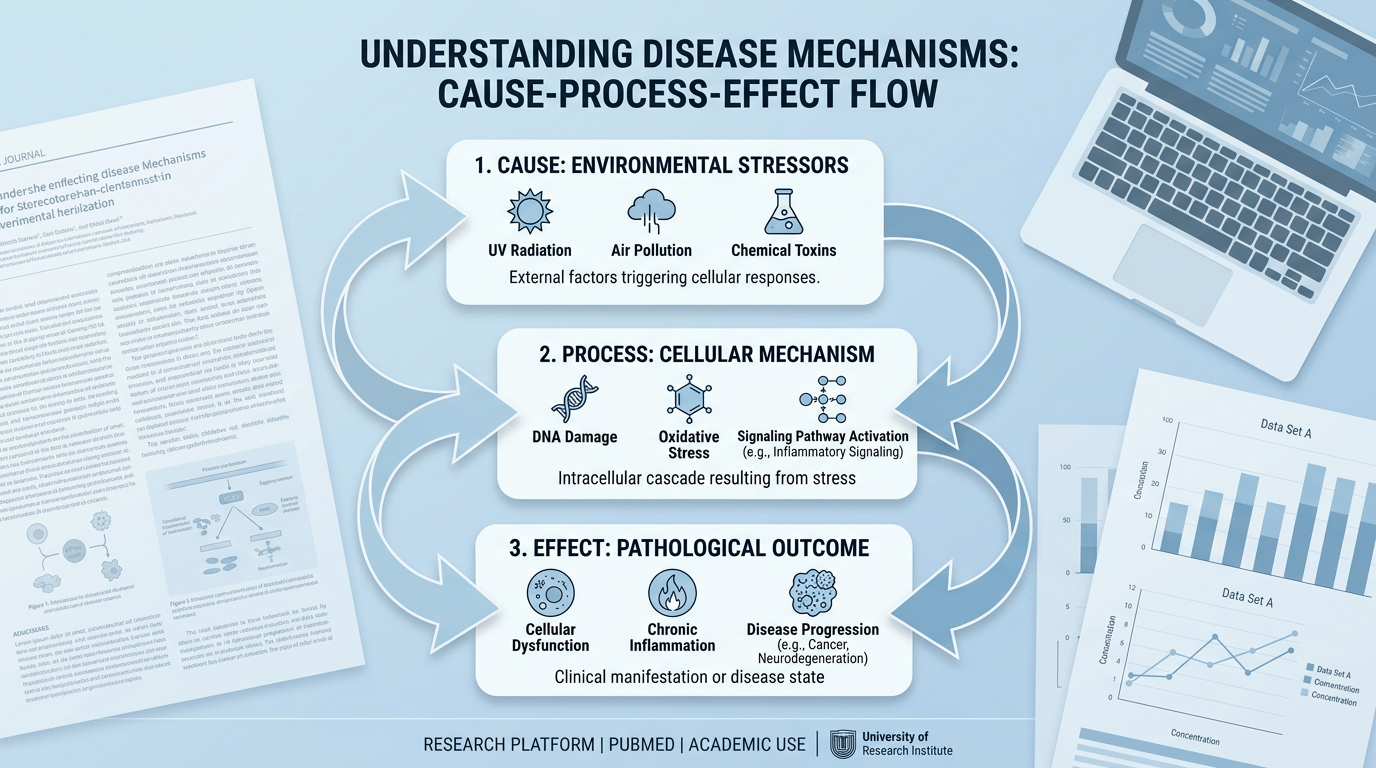
Before writing full paragraphs, map the flow:
- cause
- process
- effect
- interpretation
This is especially helpful for medical essays and research summaries.
6.2 Add transitions only where needed
Not every sentence needs a connector. Overuse can make the prose feel artificial. Add transitions at points where the reader might otherwise pause.
6.3 Read the paragraph aloud
This is an effective revision method. If the logic feels abrupt, the transition is probably too weak or missing. If it feels repetitive, remove one connector.
A strong essay should read like a reasoned argument, not a list of linked fragments.
7. Final Advice for Medical and Research Writers
7.1 Think like a reviewer
A reviewer asks one thing repeatedly: does the claim match the evidence? Your transition words should support that answer. They should guide the reader, not push the reader.
7.2 Use transitions to show scientific discipline
In medicine and research, careful wording is a sign of competence. It shows that you understand the difference between observation, interpretation, and conclusion.
7.3 Use the right tool to write faster
If you write academic content often, tools can help you structure arguments faster. Platforms like scifocus.ai are designed to support clearer research writing, better organization, and faster drafting. For students, clinicians, and researchers who need a more efficient workflow, this can reduce writing friction and improve consistency.
Conclusion
Transition words are not small details. They are the backbone of a clear cause-and-effect essay. When used correctly, they improve logic, strengthen argument flow, and help you communicate with scientific precision. Keep the evidence level in mind. Use strong transitions only when the data support them. Use softer language when the relationship is still tentative. If you want to write faster and with more structure, consider using scifocus.ai as part of your academic workflow.

Did you like this article? Explore a few more related posts.
Start Your Research Journey With Scifocus Today
Create your free Scifocus account today and take your research to the next level. Experience the difference firsthand—your journey to academic excellence starts here.