

Transition Words for Adding Information
Introduction
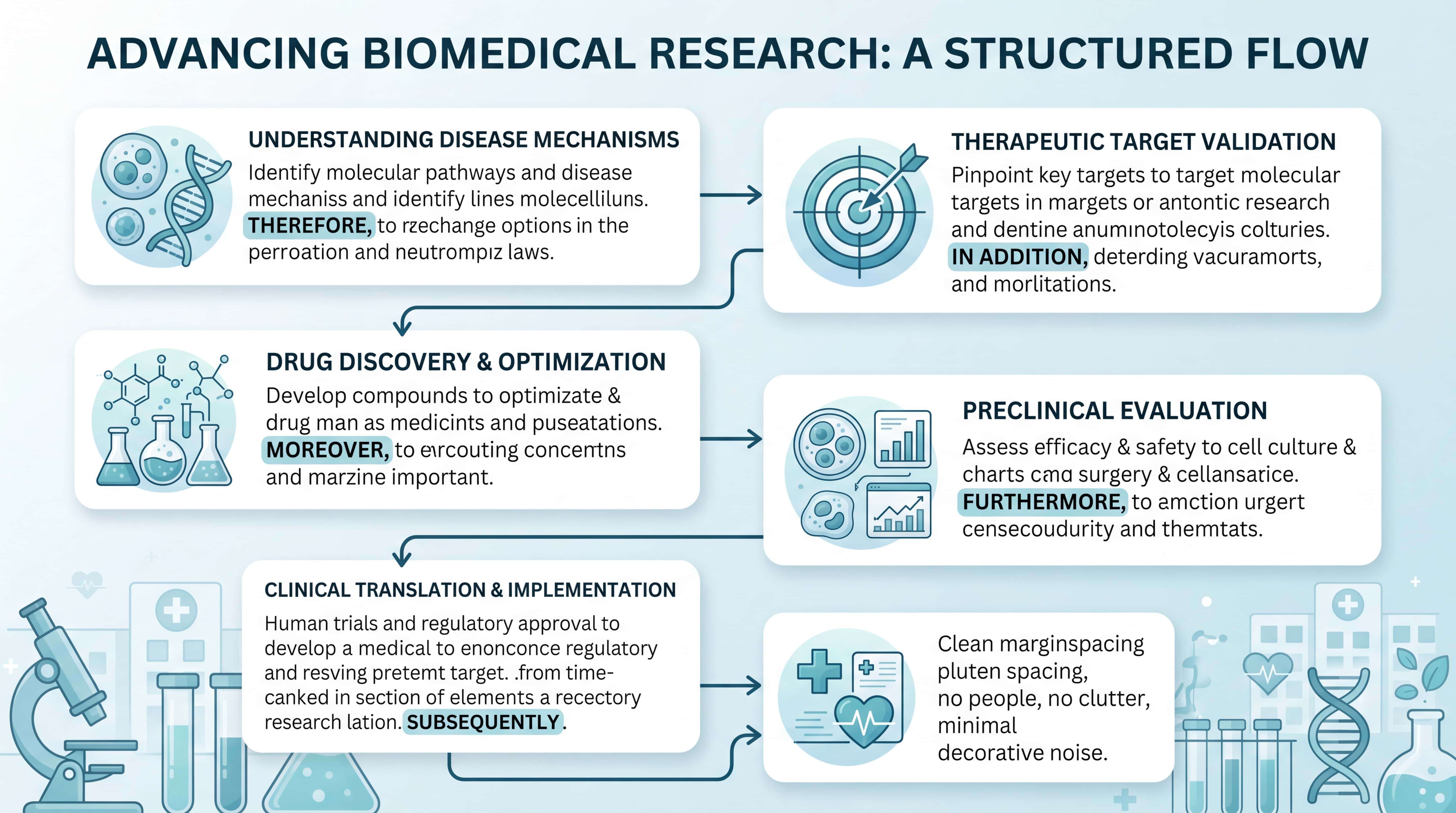
If your essay feels repetitive, weakly connected, or hard to follow, the problem is often not the idea. It is the transitions. In medical writing, research reports, and academic papers, readers need clear links between points. Transition words for adding information help you move from one claim to the next without breaking logic or tone.
For medical students, doctors, and researchers, this is especially important in results, discussion, and literature review sections.
1. Why adding-information transitions matter in an essay
1.1 They improve logic and readability
A strong academic essay does more than present facts. It shows how each fact supports the next one. When you add information clearly, readers do not have to guess your meaning. They can follow the argument step by step.
This matters in scientific writing because the reader is usually busy. A clinician, reviewer, or researcher wants fast comprehension. Good transitions reduce friction and make your writing sound more professional.
1.2 They help you build a stronger argument
Adding-information transitions are not decorative. They serve a function. They help you expand a point, introduce another finding, or strengthen a conclusion.
For example, in a results section, you may write:
- The biomarker increased after treatment.
- In addition, inflammatory signaling was also elevated.
- Moreover, the effect remained significant across two time points.
This structure creates progression. It shows that the evidence is accumulating, not isolated.
2. Core transition words for adding information
2.1 Common academic transitions
Below are the most useful transitions for an academic essay or medical paper:
- In addition
- Moreover
- Furthermore
- Also
- Besides
- Additionally
- What is more
- As well
- Not only that
These words are common because they are clear and neutral. In formal writing, in addition, moreover, and furthermore are usually the safest choices.
2.2 How they differ in tone
Not all adding-information words carry the same weight.
- Also is simple and direct.
- In addition is more formal.
- Moreover adds emphasis.
- Furthermore is often used to extend a point in structured academic writing.
- Additionally is useful when introducing one more fact without strong emphasis.
Use one that matches the level of formality in your essay. A clinical review often benefits from “in addition” or “furthermore.” A shorter report may work well with “also.”
2.3 Examples in medical writing
Consider these examples:
- The study showed reduced cell viability. In addition, apoptosis markers increased.
- The patient improved clinically. Moreover, laboratory values normalized within 72 hours.
- The intervention was well tolerated. Furthermore, no severe adverse events were reported.
These sentences work because the second clause adds meaningful information. It does not repeat the first. It deepens it.
3. How to use transition words correctly in an essay
3.1 Place them at the right point
Most adding-information transitions go at the start of a sentence or clause. That is the easiest pattern to read.
Example:
- The treatment improved symptoms. Furthermore, it reduced hospitalization time.
You can also place them mid-sentence in some cases, but keep the structure simple if clarity is the goal. In medical and research writing, simplicity is usually better.
3.2 Do not use them for unrelated ideas
A transition word should reflect real logic. If the next sentence is not truly additive, do not force it.
Wrong:
- The sample size was small. Moreover, the hospital was in a rural area.
These ideas are related, but not in a clear add-on sequence. A better choice may be:
- The sample size was small. This limitation is important because the hospital was in a rural area.
A transition should guide the reader, not hide weak logic.
3.3 Avoid overuse
Using too many adding-information words can make an essay feel mechanical. If every sentence starts with “Furthermore” or “Moreover,” the writing becomes predictable.
A better approach is to mix transitions with natural sentence flow:
- The findings were consistent across groups.
- The effect was strongest in the high-risk cohort.
- In addition, subgroup analysis confirmed the same pattern.
This keeps the text professional and readable.
4. Transition words in results, discussion, and literature review
4.1 In results sections
In scientific writing, adding-information transitions are especially useful when you want to move from one result to the next.
Example:
- Western blot showed increased protein X expression. In addition, qPCR confirmed the same trend at the mRNA level.
- Cell migration was reduced. Furthermore, invasion ability decreased in the same treatment group.
This is a good model because each sentence builds on the previous one. The reader sees a chain of evidence, not disconnected observations.
4.2 In discussion sections
In the discussion, these words help you expand interpretation.
Example:
- The data suggest a pro-inflammatory role for the pathway. Moreover, this may explain the delayed recovery observed in severe cases.
Here, the second sentence adds a deeper explanation. It does not simply repeat the result.
4.3 In literature reviews
In a literature review, you can use adding-information transitions to connect studies and ideas.
Example:
- Previous research linked the biomarker to immune activation. Additionally, recent studies have associated it with disease severity.
This is useful when you are summarizing a field and showing how the evidence has grown over time.
5. Best alternatives to “and” in academic writing
5.1 Stronger than simple coordination
Many writers rely too much on “and.” In an academic essay, that can sound flat. Transition words create a more precise connection.
Compare:
- The drug reduced pain and improved sleep.
- The drug reduced pain. In addition, it improved sleep.
- The drug reduced pain. Moreover, sleep quality improved.
The second and third versions sound more deliberate. They tell the reader the second point deserves attention.
5.2 Useful sentence patterns
You can combine transition words with standard academic structures:
- In addition, + subject + verb
- Moreover, + subject + verb
- Furthermore, + subject + verb
- Additionally, + subject + verb
Examples:
- In addition, the intervention lowered CRP levels.
- Moreover, the patient reported fewer adverse effects.
- Furthermore, the follow-up data supported the same conclusion.
These are easy to apply in any medical or research manuscript.
6. A practical checklist for writing a better essay
6.1 Ask these three questions
Before you insert an adding-information transition, check:
- Does the next sentence truly add new information?
- Is the relationship additive, not contrastive or causal?
- Is the transition appropriate for formal academic tone?
If the answer is yes, the transition is likely correct.
6.2 Match the transition to the purpose
Use:
- Also for simple addition
- In addition for neutral formal writing
- Moreover for emphasis
- Furthermore for extended academic argument
- Additionally for one more supporting point
This small choice can improve precision across the whole essay.
6.3 Edit for flow, not just grammar
A common mistake is to focus only on sentence-level grammar. But transition quality is a paragraph issue.
A strong paragraph usually follows this pattern:
- Main point
- Supporting detail
- Added evidence
- Short summary
Adding-information transitions are the bridge between these layers.
7. How SciFocus.ai can help you write faster and better
7.1 A practical solution for academic writers
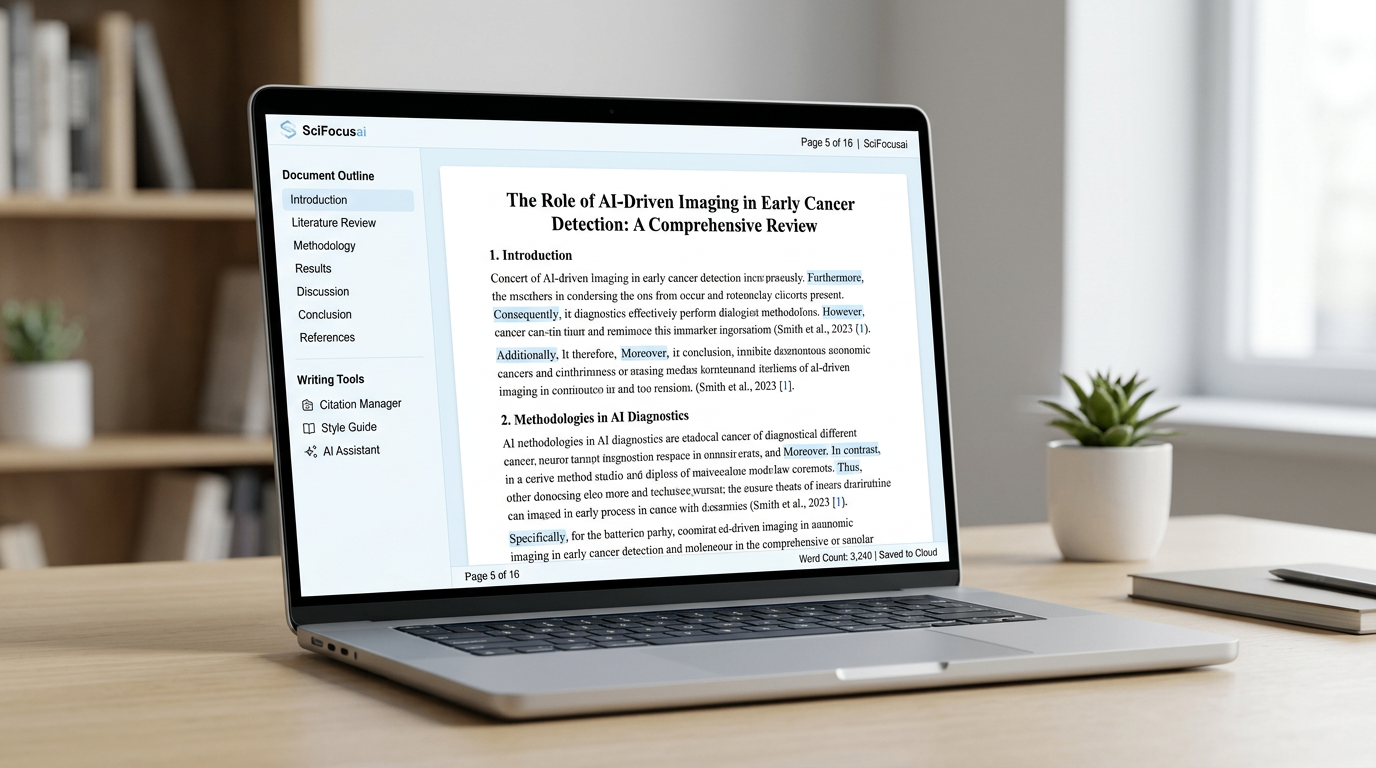
If you write medical essays, research summaries, or manuscript drafts, you already know the challenge. You need speed, but you cannot sacrifice accuracy or tone. That is where SciFocus.ai can help.
It supports structured academic writing, helps organize ideas, and makes it easier to build coherent paragraphs with correct transition logic. For busy medical students, doctors, and researchers, that saves time.
7.2 Why it matters for E-E-A-T style writing
High-quality academic content needs clarity, consistency, and evidence-based logic. SciFocus.ai can support a more systematic writing workflow, especially when you are moving from notes to a polished draft.
Instead of rewriting the same paragraph several times, you can focus on:
- argument structure
- transition flow
- section clarity
- concise academic tone
That means less editing friction and stronger output.
Conclusion
In academic writing, small words can make a big difference. The right adding-information transition improves clarity, logic, and reader trust. For any essay, especially in medicine or research, words like in addition, moreover, furthermore, and additionally help you build stronger paragraphs and cleaner argument flow.
Use them with purpose. Use them sparingly. And always make sure the next idea truly adds value. If you want to write faster and with better structure, explore SciFocus.ai as a practical tool for more efficient academic writing.
Did you like this article? Explore a few more related posts.
Start Your Research Journey With Scifocus Today
Create your free Scifocus account today and take your research to the next level. Experience the difference firsthand—your journey to academic excellence starts here.