

Transition Phrases for Thesis Statement
Introduction
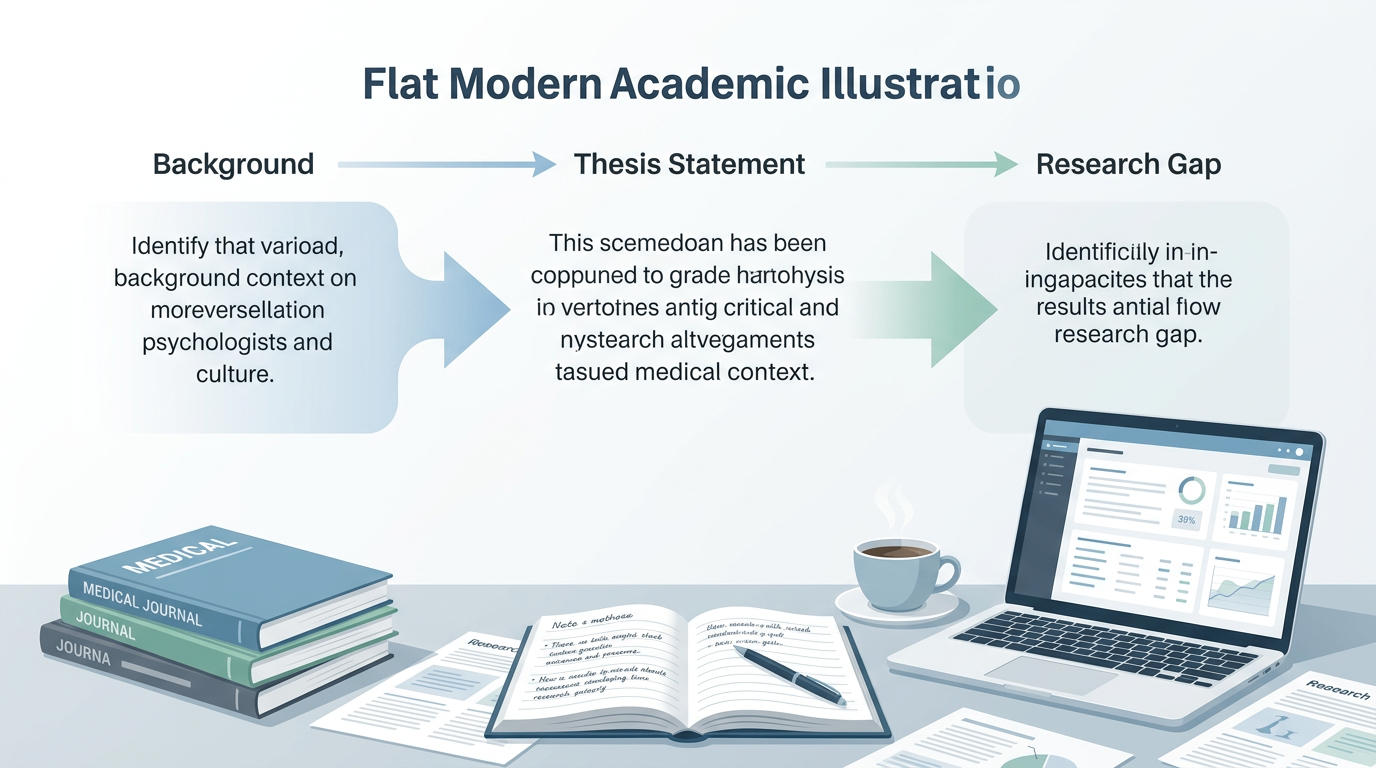
A strong thesis statement can fail if the transition is weak. In an essay, especially in medical writing, the reader must move from background to gap, then to purpose, without confusion. The right transition phrases for thesis statement writing help you do that. They improve logic, readability, and trust. For medical students, doctors, and researchers, this is not style alone. It is structure.
1. Why Transition Phrases Matter in a Thesis Statement Essay
1.1 They Signal the Shift from Known to Unknown
In research writing, the introduction usually begins with established facts. Then it must move toward what is still unclear. This shift is where transition phrases for thesis statement writing become essential. Words like however, although, and nevertheless tell the reader that the essay is leaving the known area and entering the knowledge gap.
This is not a minor detail. In scientific writing, the gap in knowledge is what justifies the study. If the transition is unclear, the rationale becomes weak. A thesis statement should not appear suddenly. It should emerge from the logic of the introduction.
A good example is this pattern:
- Background: what is already known.
- Transition: however, little is known about one key issue.
- Thesis: therefore, this essay examines that issue.
1.2 They Strengthen Academic Clarity
A thesis statement must be concise. But concise does not mean abrupt. A clear transition makes the thesis easier to follow and harder to misunderstand. This is especially important in an essay for medical or research audiences, where precision matters.
Transition phrases also help prevent unsupported claims. They connect prior findings with the current argument. That improves coherence across paragraphs. In a structured essay, each sentence should lead to the next one in a measurable way.
2. Common Transition Phrases for Thesis Statement Writing
2.1 Use Contrast to Introduce the Research Gap
The most common function of transition phrases for thesis statement writing is contrast. These phrases show that existing evidence is incomplete, mixed, or insufficient.
Useful examples include:
- however
- nevertheless
- although
- in contrast
- despite this
In scientific introductions, these transitions often introduce uncertainty. For example, however, the clinical relevance of these findings is not yet known. This type of sentence is direct, formal, and effective.
Another common structure is:
- Although several studies have reported X, the direct effect of Y has not been determined.
This pattern works well because it acknowledges previous research and identifies the unresolved issue at once.
2.2 Use Cause and Result to Build the Thesis
Some thesis statements need a more logical connection than contrast alone. In that case, cause-and-result transitions are useful.
Examples include:
- therefore
- thus
- as a result
- consequently
- for this reason
These phrases are especially helpful when your essay argues that a specific problem should be studied because it has practical consequences. In medical writing, that consequence may be diagnostic, prognostic, or therapeutic.
The key rule is simple: use a causal transition only when the evidence really supports the link. Overstating causality weakens trust.
2.3 Use Addition to Expand the Argument
Addition transitions help you move from one reason to another without breaking the flow.
Examples include:
- in addition
- moreover
- further
- likewise
- also
These are useful when the thesis statement is built on multiple layers of reasoning. For instance, one study may show prevalence, and another may show clinical impact. A well-placed addition transition keeps both points connected.
In an essay, this is often the best way to expand an argument without sounding repetitive. It also helps readers track the logic in a long introduction.
3. How to Place Transition Phrases in an Essay
3.1 Place Them Between Background and Thesis
The most effective location is the sentence or clause right before the thesis statement. This is the point where the writer must move from context to argument.
A practical structure is:
- State the background.
- Add the transition phrase.
- Present the unresolved issue.
- End with the thesis statement.
For example:
Several studies have examined inflammatory markers in sepsis; however, their prognostic value in early-stage disease remains uncertain. This essay argues that early biomarker evaluation should be integrated into risk assessment.
This is clear and efficient. The transition does the job without unnecessary language.
3.2 Match the Transition to the Purpose of the Essay
Not every essay needs the same transition. The choice depends on the function of the sentence.
- Use however when introducing a limitation.
- Use therefore when drawing a conclusion.
- Use in addition when adding a second reason.
- Use although when presenting a qualified position.
A strong thesis statement always matches the logic of the paragraph before it. If the transition is mismatched, the argument feels forced.
3.3 Keep the Language Formal and Specific
For medical students and researchers, general transitions are not enough. The sentence must sound precise. Avoid vague phrases like “so” or “and then” in formal academic writing.
Instead, use transitions that reflect scholarly reasoning. For example:
- However, the long-term effect remains unclear.
- Therefore, this essay focuses on clinical implications.
- In addition, recent evidence suggests a broader application.
These phrases are short, formal, and easy to scan.
4. Common Mistakes to Avoid
4.1 Do Not Overuse Transition Phrases
Too many transitions can make an essay feel mechanical. Each sentence does not need a connector. Use them where the logic truly changes.
If every line begins with however or moreover, the reader will notice the pattern and lose interest. Good academic writing is controlled, not crowded.
4.2 Do Not Use a Transition Without Logical Support
A transition phrase cannot fix weak reasoning. If the thesis statement is not supported by the paragraph above it, the sentence still fails.
For example, therefore should not be used unless the previous sentence genuinely leads to a conclusion. In the same way, although should introduce a real contrast, not a decorative one.
4.3 Do Not Make the Thesis Overly Long
A thesis statement must stay focused. Transition phrases should guide the reader, not bury the main point. A long, overloaded thesis reduces impact and reduces readability.
A better approach is to write one clear thesis and let the surrounding sentences provide the context.
5. A Practical Model for Medical and Research Essays
5.1 A Simple Formula You Can Reuse
If you write essays for medical school, clinical training, or research publication, this formula is reliable:
- Background sentence
- Transition phrase
- Knowledge gap
- Thesis statement
Example:
Biomarkers are increasingly used to guide treatment decisions; however, their value in early triage remains uncertain. This essay examines whether early biomarker testing can improve clinical decision-making.
This model works because it follows a familiar academic pattern. It is direct, testable, and easy to defend.
5.2 How SciFocus.ai Can Help
When you need to write faster without losing structure, tools like scifocus.ai can support the process. It can help you organize ideas, refine transitions, and keep the thesis statement aligned with the essay’s argument. For busy clinicians and researchers, that means less time fixing structure and more time improving content.
If your essay must sound clear, academic, and credible, a writing workflow with scifocus.ai can reduce revision time and improve consistency. That is especially useful when you are drafting introductions, abstracts, or discussion sections under deadline.
Conclusion
Transition phrases for thesis statement writing are small, but their role is large. They connect background to gap, and gap to purpose. In a well-written essay, they improve clarity, strengthen logic, and help the reader trust your argument. Use contrast, cause, and addition with precision. Keep the thesis statement short and supported. If you want to write better academic text with less friction, consider using scifocus.ai to structure and refine your next essay.

Did you like this article? Explore a few more related posts.
Start Your Research Journey With Scifocus Today
Create your free Scifocus account today and take your research to the next level. Experience the difference firsthand—your journey to academic excellence starts here.