
Top Grammar Check Tools for Students
Introduction
Writing a strong essay is harder than it looks. Medical students, doctors, and researchers often lose marks or credibility because of grammar errors, unclear phrasing, or inconsistent academic style. A good grammar checker can save time, reduce avoidable mistakes, and improve the final draft before submission or publication. In this guide, we review the most practical grammar check tools for students and show how they support academic writing.
1. Why Grammar Check Tools Matter in Academic Writing
1.1 Grammar errors weaken even good ideas
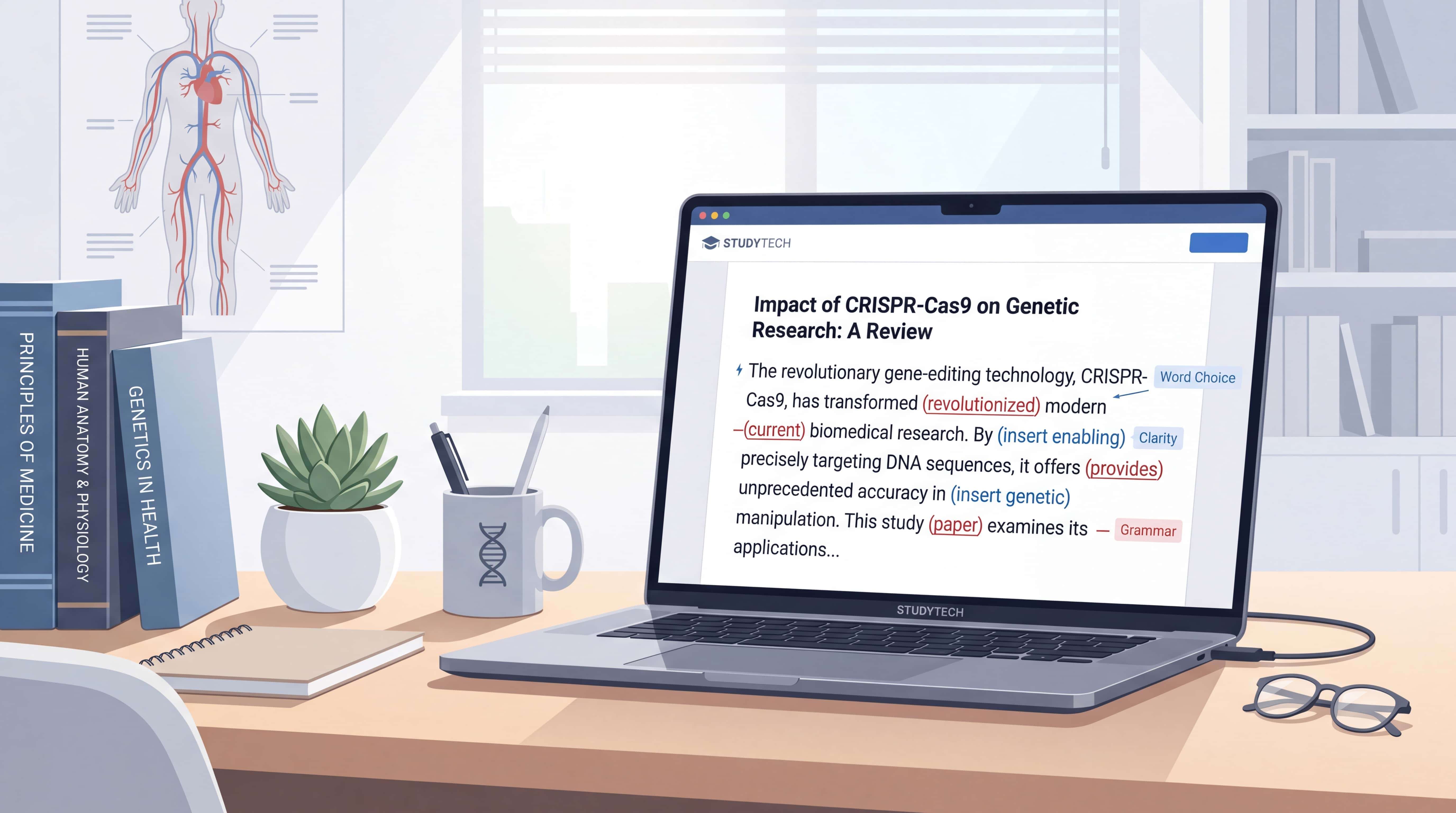
In academic writing, content quality is only part of the equation. A well-researched essay can still fail if the grammar is weak. Reviewers and instructors often judge writing quality within the first few lines. That means sentence clarity, punctuation, and word choice matter from the start.
For medical students and researchers, this is even more important. A small language error can change meaning. In clinical or scientific writing, precision is not optional. It is a requirement.
1.2 Good tools improve speed and consistency
Manual proofreading takes time. Most students miss repeated errors because they know what they meant to write. Grammar check tools help catch issues the writer no longer sees. They also support consistency in tense, article use, and sentence structure.
The best tools do more than correct spelling. They help improve clarity, academic tone, and sentence flow. That is especially useful when writing an essay, research summary, or journal submission draft.
2. Top Grammar Check Tools Students Can Use
2.1 Grammarly
Grammarly is one of the most widely used online grammar tools. It checks spelling, grammar, punctuation, sentence structure, and contextual word choice. It also offers style suggestions, which can be helpful when polishing an academic essay.
Its strength is ease of use. You can paste text into the editor or use browser integration. For students working on repeated assignments, Grammarly helps identify common mistakes early. It is especially useful for sentence-level correction and fast review.
2.2 Ginger
Ginger provides real-time grammar and spelling correction. It also gives vocabulary suggestions and supports multiple languages. For students who write in English as a second language, that can reduce basic errors before submission.
Its value is in quick correction during drafting. If you are revising an essay under time pressure, Ginger can help clean up obvious issues fast. However, like most tools, it still needs human review for academic accuracy.
2.3 Whitesmoke
Whitesmoke focuses on grammar correction, spelling, style improvement, and vocabulary suggestions. It is designed to help writers improve sentence structure and expression. This makes it useful for academic users who want more than simple error detection.
For medical and research writing, style matters. A formal essay should sound precise and concise. Whitesmoke can support that goal by pointing out weak phrasing and offering clearer alternatives.
2.4 Wordtune
Wordtune is strong in rewriting and rephrasing. It provides suggestions for sentence tone, structure, and fluency. Instead of only marking errors, it helps reshape sentences to sound more natural.
This is useful when your essay is grammatically correct but still reads awkwardly. Wordtune helps improve readability without changing the core meaning. That makes it a practical tool for refinement, not just correction.
2.5 Linggle
Linggle is a corpus-based tool that helps users check natural usage, collocations, and synonyms. It is especially helpful when choosing the right phrase in academic English. It does not replace a full grammar checker, but it supports better word selection.
For students who want stronger academic style, Linggle is useful for phrase-level accuracy. It can help avoid unnatural combinations in an essay or research paragraph.
3. Tools for Academic Integrity and Reference Quality
3.1 Turnitin
Turnitin is widely used for plagiarism detection. It is not a grammar checker in the narrow sense, but it is essential for academic writing. It helps students identify similarity issues before submission.
For any serious essay, originality matters. Turnitin supports integrity by showing where text may be too close to existing sources. That gives writers a chance to revise properly and avoid unintentional plagiarism.
3.2 Citethisforme
Citation errors are common in student writing. Citethisforme helps generate bibliographies in different formats. It can save time when building references for an essay, lab report, or research paper.
Accurate citations improve trust. They also make the work easier to verify. In academic contexts, that is part of strong writing, not just formatting.
3.3 COCA
The Corpus of Contemporary American English, or COCA, is useful for checking word usage, collocations, and common academic patterns. It is not a grammar tool in the usual sense, but it helps writers choose more natural expressions.
If a sentence in your essay sounds correct but not quite academic, COCA can help confirm better phrasing. That is valuable for advanced writing and publication-level language refinement.
4. How to Choose the Right Tool
4.1 Match the tool to your writing stage
Different tools solve different problems. Early drafting needs speed. Final editing needs precision. Plagiarism review needs similarity checking. Reference writing needs citation support.
A practical workflow for a student essay is simple:
- Draft the content.
- Run grammar correction.
- Review sentence flow.
- Check citations.
- Scan for similarity.
- Read the final version aloud.
This sequence reduces errors without wasting time.
4.2 Do not rely on automation alone
Grammar tools are helpful, but they are not perfect. They can miss context, misread technical terms, or suggest unnatural changes. This is especially important in medicine and research, where terminology must remain accurate.
Always review every suggestion manually before submitting your essay. A tool can support the process, but it should not replace your judgment.
5. A Smarter Workflow for Medical Students and Researchers
5.1 Use tools to protect accuracy, not just polish text
In medical writing, precision is central. A grammar checker can help clean language, but it cannot verify clinical meaning. That means terminology, units, and logic still need expert review.
For a research-focused essay, the best workflow combines grammar correction with subject-matter awareness. First, correct the language. Then, confirm the science. Finally, ensure the argument reads clearly from start to finish.
5.2 Save time with integrated writing support
Students often switch between drafting, editing, and reference formatting. That creates friction. A better approach is to use one workflow that reduces manual effort at each stage.
This is where tools like scifocus.ai can help. Instead of moving between multiple platforms, users can streamline writing support in one place. For academic users who need cleaner structure, better phrasing, and faster revision, that kind of support can make essay preparation more efficient.
A focused toolchain helps you write faster, reduce avoidable errors, and submit a stronger essay with less stress.
Conclusion
The best grammar check tools for students do more than fix typos. They improve clarity, strengthen academic tone, and protect the quality of your essay. Grammarly, Ginger, Whitesmoke, Wordtune, Linggle, Turnitin, Citethisforme, and COCA each solve a different part of the writing process.
For medical students, doctors, and researchers, the goal is not only correct grammar. It is accurate, credible, and readable academic writing. If you want a more efficient workflow, explore scifocus.ai and see how it can support your next draft from first sentence to final submission.

Did you like this article? Explore a few more related posts.
Start Your Research Journey With Scifocus Today
Create your free Scifocus account today and take your research to the next level. Experience the difference firsthand—your journey to academic excellence starts here.