

Tips for Organizing Your Research Notes
Introduction
Organizing research notes is not a minor task. It directly affects how fast you can write an essay, review the literature, and avoid missing key evidence. For medical students, doctors, and researchers, scattered PDFs, duplicate references, and unclear annotations often turn a simple writing task into hours of searching. In this guide, you will learn practical ways to structure your research notes so your essay work becomes faster, cleaner, and easier to defend.
1. Build a system before you collect too much material
1.1 Choose one main note hub
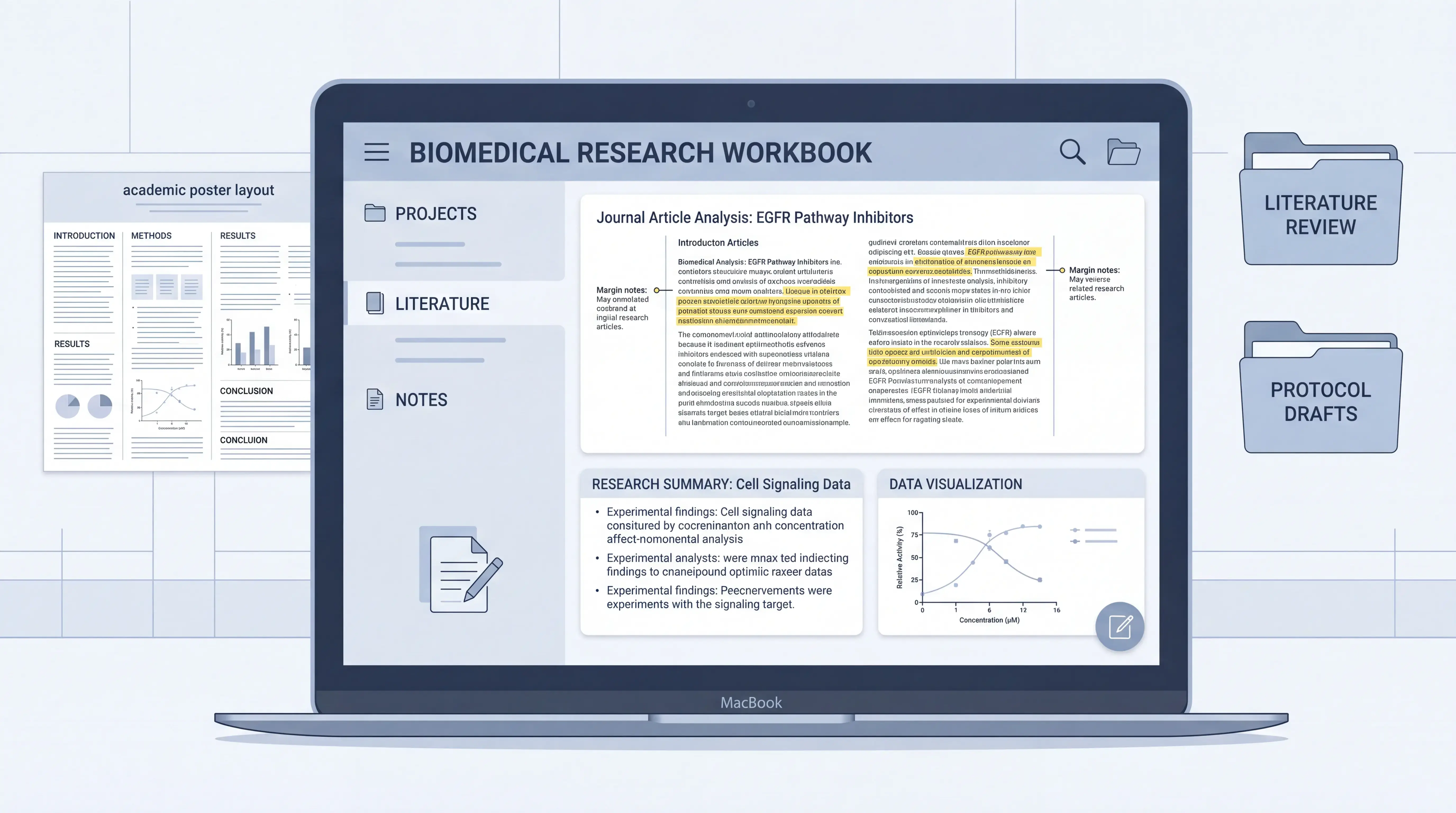
A strong note system starts with one place where everything lives. In the knowledge base, OneNote is highlighted as a useful tool because it supports multi-device access, text formatting, screenshots, and search. That matters in real research work. If your notes are split across paper, chat apps, and random folders, your essay writing will slow down immediately.
A good research note hub should let you search, tag, and revisit ideas quickly. OneNote is practical because it works on mobile, Windows, and iPad. It also supports pages, sections, and notebooks, which helps you separate topics by project, course, or clinical question.
1.2 Create a simple structure from day one
Do not wait until you have 100 papers. Create a folder or notebook structure early. A simple model is:
- One notebook per project or topic.
- One section for screening notes.
- One section for article summaries.
- One section for quotes, methods, and key results.
- One section for your own synthesis and essay outline.
This kind of structure supports faster review later. It also reduces the risk of repeating work. In academic writing, repeated reading without organization wastes time and weakens your essay.
1.3 Use a consistent naming rule
Naming matters more than many beginners think. Use one standard format for notes and files. For example:
- Author-Year-Topic
- Study Type
- Key Finding
- Relevance Score
This makes searching easier. It also helps when you move between devices or share files with supervisors. Consistency is one of the fastest ways to improve note retrieval.
2. Manage references as carefully as your notes
2.1 Use reference software to avoid duplicates
The knowledge base strongly supports EndNote-style reference management. One major benefit is deduplication. When you import studies from multiple databases, the same paper often appears more than once. Duplicate references can distort your reading list and waste time during essay preparation.
EndNote allows automatic and manual deduplication. You can also find duplicates in the library and remove them in bulk. This is especially useful when you are building a large evidence base for a review or clinical essay.
2.2 Add PDFs and keep them linked
A key workflow is to attach the PDF to the reference record. In the source material, a paper with an attached full text is marked by a paperclip icon. Double-clicking opens the article directly. This saves time because you can read, highlight, annotate, and return to the notes without switching software.
If a Chinese article or other paper is not directly downloadable, you can download the PDF separately and link it back to the reference. Linked full text is essential for fast essay writing, because it keeps citation, PDF, and notes in one place.
2.3 Mark, annotate, and rate what matters
Do not treat all papers equally. The source material recommends using ratings and notes to prioritize papers.
A useful workflow is:
- Read titles first.
- Mark relevant papers with one star.
- Read abstracts next.
- Increase the rating for papers that are more important.
- Add notes after full-text reading.
- Sort by rating to surface the strongest evidence.
This method is efficient because it mirrors how researchers actually think. First, broad relevance. Then, deeper value. Then, final synthesis for your essay.
3. Read strategically, not line by line
3.1 Focus on the question, not the entire article
Many readers make the same mistake. They read every paper from beginning to end with equal intensity. That is not efficient. For medical writing, your first task is to identify the study’s main question, design, and conclusion.
When reading, ask:
- What was studied?
- How was it studied?
- What were the key findings?
- How strong is the evidence?
- How does it support my essay topic?
This approach fits review writing principles from the knowledge base. Summarize published results. Do not copy long passages. Keep the writing concise and analytical.
3.2 Use headings inside your notes
A clear note should not be one block of text. Use short headings such as:
- Study aim
- Methods
- Main results
- Limitations
- Relevance to my essay
This format makes later synthesis easier. It also aligns with review-writing guidance, which recommends organizing material by subheadings, methodology, model type, chronology, or agreement versus disagreement among studies.
3.3 Write your own interpretation immediately
Do not rely on memory. Add a short interpretation while the paper is still fresh.
For example:
- Useful for background.
- Strong method, small sample.
- Conflicts with earlier findings.
- Good candidate for a discussion section.
These small comments help you later when drafting the essay. They also reduce the risk of forgetting why a paper mattered in the first place.
4. Organize notes for comparison, not just storage
4.1 Group papers by theme
EndNote supports grouping, including regular groups, smart groups, and group sets. This is useful when your topic includes several subthemes. For example, you can group papers by:
- Disease mechanism.
- Diagnostic method.
- Intervention type.
- Population.
- Outcome measure.
This makes comparison easier. Instead of looking at papers one by one, you can compare similar studies together. That is a major advantage when preparing an essay or review.
4.2 Use time order when needed
In some topics, chronology matters. If you are tracing how a hypothesis evolved, organize notes by publication year. The knowledge base notes that chronological structure is one of the common ways to write review content.
This is especially useful when the field changed over time, such as when new biomarkers, imaging methods, or treatment strategies were introduced. A timeline makes your essay easier to follow and more persuasive.
4.3 Compare agreement and disagreement
Do not only list findings. Compare them.
A strong note system should help you separate:
- Studies that agree.
- Studies that disagree.
- Studies with stronger methodology.
- Studies with limited generalizability.
This comparison step is where research notes become essay material. Without it, you only have storage. With it, you have argument structure.
5. Make your notes portable and safe
5.1 Back up your database regularly
The source material emphasizes backup. EndNote databases can be compressed and transferred as a package file, which helps when moving between computers. This is important for clinicians and researchers who work across devices or labs.
A lost database can mean lost attachments, lost annotations, and lost organization. Backups protect months of work. At minimum, keep:
- One local backup.
- One cloud backup.
- One export copy for emergencies.
5.2 Prepare for manuscript and essay revisions
When you write in Word, linked citations can be convenient. But if your supervisor edits the document on another computer, citation links may break if the database is missing. The knowledge base recommends saving a backup and, when needed, converting references to an unlinked or plain format before submission.
This protects the final version. It also prevents formatting issues during review. For an essay, that means fewer technical corrections and more focus on content.
5.3 Search your own notes like a database
OneNote’s search function is a major productivity tool. If you have hundreds of notes, memory is not enough. Search lets you retrieve a concept, author, or method in seconds.
That is the real advantage of a digital system. Your notes become a searchable knowledge base, not a pile of files.
6. Turn organized notes into a stronger essay
6.1 Move from reading to outlining
Once your notes are organized, writing becomes much easier. You can build an outline from your groups and tags. Start with:
- Introduction.
- Background.
- Key themes.
- Comparison of evidence.
- Limitations.
- Conclusion.
This structure works well for academic essay writing because it keeps the argument focused and evidence-based.
6.2 Use short synthesis statements
After each cluster of notes, write one or two synthesis sentences. For example:
- Most studies support this trend.
- Evidence is mixed for this subgroup.
- Methodological quality varies across studies.
These sentences save time later. They also help you avoid writing a long, unfocused essay.
6.3 Keep the final writing objective
Review-writing principles in the knowledge base stress objectivity. Do not overstate findings. Do not insert unsupported personal opinion. Summarize the literature clearly and critically.
A well-organized note system makes objective writing easier, because the evidence is already sorted by relevance and strength.
7. Use the right tool to reduce friction
7.1 Combine note-taking and reference management
The most efficient workflow is to combine note-taking, PDF reading, and reference organization. OneNote helps with flexible note capture. EndNote-style management helps with citations, deduplication, annotation, and attachment control.
That combination is especially useful for medical students, physicians, and researchers who need to manage large volumes of literature quickly.
7.2 Let automation handle repetitive work
This is where a dedicated tool like scifocus.ai can help. If you are juggling papers, notes, and outlines for an essay, a structured research workflow platform can reduce manual sorting and speed up content organization. Instead of spending hours on repetitive formatting or file hunting, you can focus on analysis, synthesis, and writing.
The goal is not to replace judgment. The goal is to remove friction. For busy clinicians and researchers, that difference matters.
Conclusion
Organizing research notes is a practical skill. It affects how fast you read, how clearly you think, and how well you write an essay. The best system is simple: one place for notes, one method for references, one structure for grouping studies, and one routine for backups. Use search, tags, ratings, and subheadings to turn raw literature into usable evidence. If you want to save time and keep your workflow clean, consider using scifocus.ai to support a more efficient research and writing process.
Did you like this article? Explore a few more related posts.
Start Your Research Journey With Scifocus Today
Create your free Scifocus account today and take your research to the next level. Experience the difference firsthand—your journey to academic excellence starts here.