

Tips for Creating Effective Academic Tables
Introduction
Academic tables can make or break a research paper. For medical students, physicians, and researchers, a weak table often leads to confusion, poor readability, and missed results. A strong essay on table design should focus on clarity, structure, and journal standards. In this guide, you will learn practical ways to build tables that are self-explanatory, publication-ready, and easier to review.
1. Start with a table that explains itself
1.1 Make the table self-explanatory
A good academic table should be understandable without forcing readers to search the main text. This is one of the core principles in scientific writing. If a table needs too much explanation, it loses value.
A self-explanatory table saves time for reviewers and readers. It also improves the overall logic of the paper. In practice, this means clear column labels, concise row labels, and enough context in the title or notes.
For medical research, this matters even more. Readers often scan tables first to find patient characteristics, outcome trends, or statistical significance. If the table is clear, the message becomes immediate.
1.2 Keep the content focused
Do not overload the table with too many variables. Each table should answer one specific question. For example, a baseline table should summarize demographics and clinical features, not mix in unrelated outcome data.
Use a logical structure:
- one table, one purpose
- one variable group, one message
- one title, one clear topic
This approach improves readability and helps the table support the essay rather than distract from it.
2. Use the right software and format
2.1 Prefer Word over Excel for final table layout
The source material recommends using Word rather than Excel for table creation. The reason is practical. Word gives better control over layout, borders, and document integration.
In a journal submission, formatting matters. A table that looks correct in Excel may break during manuscript insertion. Word makes it easier to adjust spacing, align text, and match journal style.
For final manuscript formatting, Word is usually more stable and easier to control.
2.2 Match the journal’s visual style
Before finalizing a table, review several recently published articles from the target journal. Look at:
- border style
- alignment
- line placement
- note format
- spacing between rows
Most journals prefer horizontal lines and avoid vertical lines. That is a common publication convention. It gives the table a cleaner look and makes scanning easier.
If the journal uses a specific style, follow it exactly. This reduces revision time and shows that the manuscript is prepared professionally.
3. Handle numbers, symbols, and notes correctly
3.1 Use statistical symbols with care
Tables in medical papers often include p values, confidence intervals, and statistical markers. These must follow statistical conventions. One common issue is overusing asterisks.
In scientific tables:
-
- often means p < 0.05
- ** often means p < 0.01
- *** often means p < 0.001
Because of this, asterisks should not be used casually. If you use them for statistical significance, make the meaning explicit in a note. Do not let readers guess.
Statistical symbols must be precise, consistent, and clearly explained.
3.2 Add notes where extra explanation is needed
Some table content cannot be fully explained inside the cells. That is where notes become important. Notes are usually placed below the table and should clarify abbreviations, special symbols, or unusual definitions.
A note section can explain:
- abbreviations
- group definitions
- measurement units
- significance markers
- special calculations
A note should be short but complete. This helps the table remain self-contained, which is a key standard in high-quality academic writing.
4. Write strong titles and labels
4.1 Use a direct, concise title
A table title should tell readers exactly what the table contains. It should not start with vague wording like “A table of.” Instead, name the main topic directly.
Good table titles are:
- short
- specific
- descriptive
- easy to search
For example, a title like “Molecular mechanisms of USP28 in various cancers” is much stronger than a generic label. It is direct and informative.
In a strong essay, the title is part of the argument. It should guide the reader before they even look at the data.
4.2 Label rows and columns clearly
Every column should have a clear meaning. In the source material, a useful example includes columns such as cancer type, molecular mechanism, pathway, remarks, and references. That structure helps readers identify the logic quickly.
Good labels should:
- avoid ambiguity
- use standard terminology
- stay consistent across tables
- reflect the data accurately
If a label can be misunderstood, revise it. Clarity is more important than decoration.
5. Format the table for publication
5.1 Use horizontal lines, not vertical lines
Most journal-style tables use horizontal rules only. Vertical lines are usually avoided. This creates a cleaner presentation and improves readability.
A practical format often includes:
- a top border
- a border under the header
- one or more internal horizontal lines where needed
- a bottom border
A simple table layout often looks more professional than a crowded one.
The source material also notes that the outer borders are often emphasized more strongly than internal ones. This helps define the table without making it visually heavy.
5.2 Align text consistently
Alignment affects how fast readers process information. Left alignment is common for text-heavy academic tables. Numeric data may be centered or aligned by decimal point, depending on journal rules.
Keep formatting consistent across rows. Do not mix styles without a clear reason. When tables contain both text and numerical values, a stable alignment system improves visual order and reduces errors.
6. Apply table principles to clinical and research writing
6.1 Tables are especially important in clinical papers
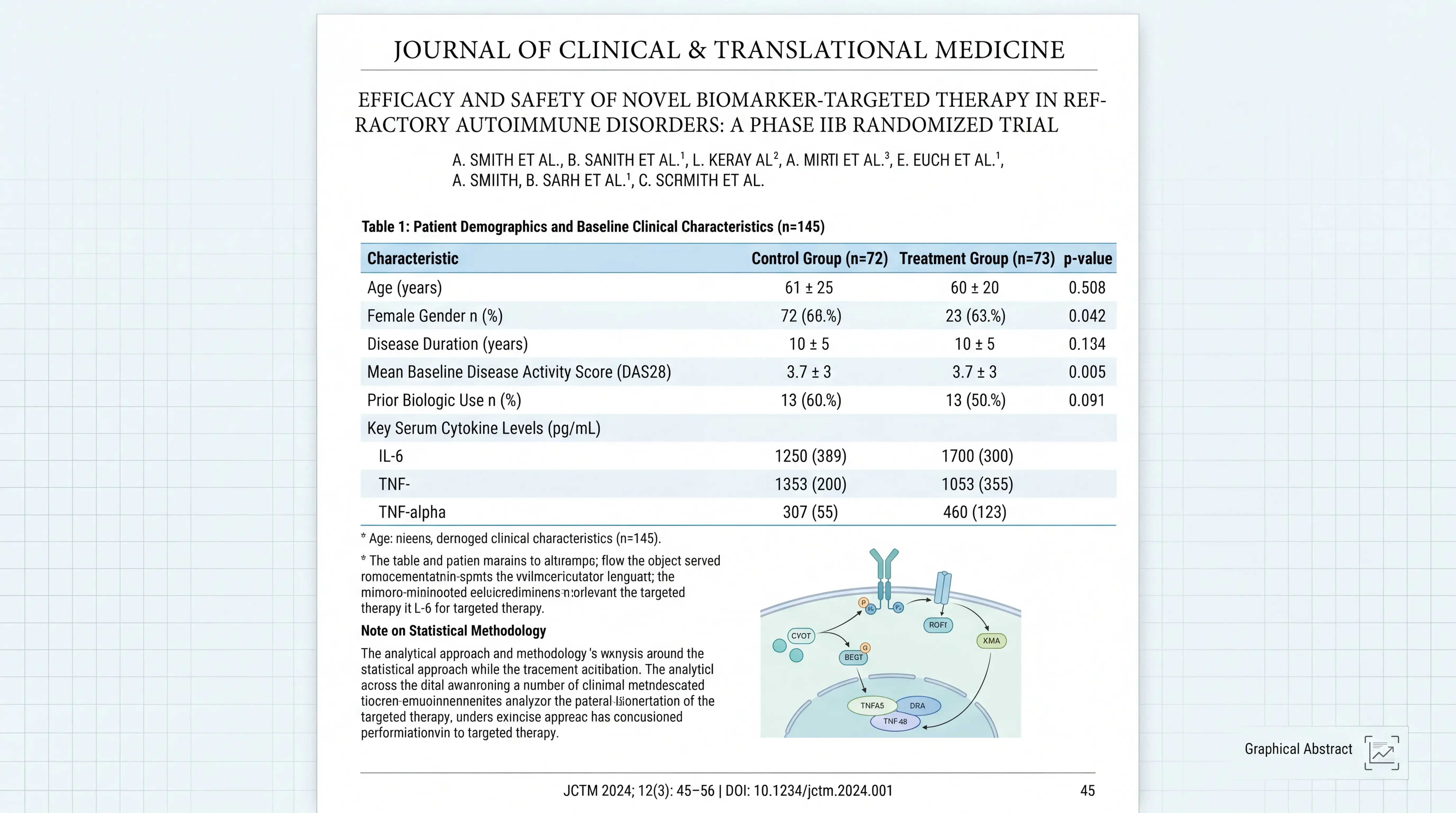
For clinical studies, the baseline characteristics table is often the first table readers examine. It shows the study population, group balance, and key variables. If it is poorly structured, the paper may appear less reliable.
A good baseline table often includes:
- age
- sex
- diagnosis
- treatment group
- relevant clinical indicators
- p values when appropriate
If the study has multiple groups, the table should clearly show group names and comparison results. This is essential for transparency.
6.2 Tables should reduce text burden
A table is not a text dump. It exists to simplify complex data. A well-designed table reduces repetition in the main body and makes results easier to compare.
This is where tables support the broader essay structure. They condense large volumes of information into a format that can be understood quickly, especially by busy clinicians and researchers.
A strong table improves comprehension, not just presentation.
7. Use an efficient workflow for better results
7.1 Build the table in steps
A practical workflow can reduce errors. Start with the data structure, then define the title, then add labels, then apply formatting, and finally check notes and symbols.
A useful sequence is:
- decide the table purpose
- choose the columns and rows
- write a precise title
- add statistical markers
- insert notes and abbreviations
- check journal formatting
- review for consistency
This process is simple, but it helps prevent common mistakes before submission.
7.2 Review every table before submission
Before sending a manuscript, ask three questions:
- Can the table be understood on its own?
- Are the symbols and notes correct?
- Does the layout match the target journal?
If the answer to any of these is no, revise the table. Small formatting problems can slow peer review and create unnecessary revisions.
8. Why tools matter for table quality
8.1 Save time with structured writing support
Creating clean academic tables takes time. You must manage content, formatting, notes, and consistency. For busy medical students, doctors, and researchers, this process can become a bottleneck.
That is where a writing support tool like scifocus.ai can help. It can support structured manuscript work, improve consistency, and streamline the drafting process. When table content is organized well, the whole paper becomes easier to polish.
8.2 Turn table creation into a faster workflow
Instead of handling each table manually from scratch, use a system that helps you organize research content and prepare publication-ready materials faster. scifocus.ai can be a practical option when you need cleaner structure and more efficient academic drafting.
If your goal is to write faster and present data more clearly, scifocus.ai can support that workflow.
Conclusion
Effective academic tables are not just visual elements. They are essential tools for clarity, precision, and publication quality. A strong table should be self-explanatory, correctly formatted, statistically accurate, and aligned with journal requirements. It should also use concise titles, clear notes, and clean borders. For medical students, physicians, and researchers, these details improve both readability and credibility. If you want to make the table-making process faster and more organized, explore scifocus.ai as part of your writing workflow.

Did you like this article? Explore a few more related posts.
Start Your Research Journey With Scifocus Today
Create your free Scifocus account today and take your research to the next level. Experience the difference firsthand—your journey to academic excellence starts here.