
Introduction
Open access has changed the way biomedical research is read, shared, and cited. For medical students, physicians, and researchers, the main problem is no longer only how to publish an essay, but how to reach the right audience fast, ethically, and with measurable impact. Open access promises wider visibility and faster dissemination. Yet it also raises questions about cost, quality, and journal selection.
1. What Open Access Means in Biomedical Publishing
1.1 The Basic Model
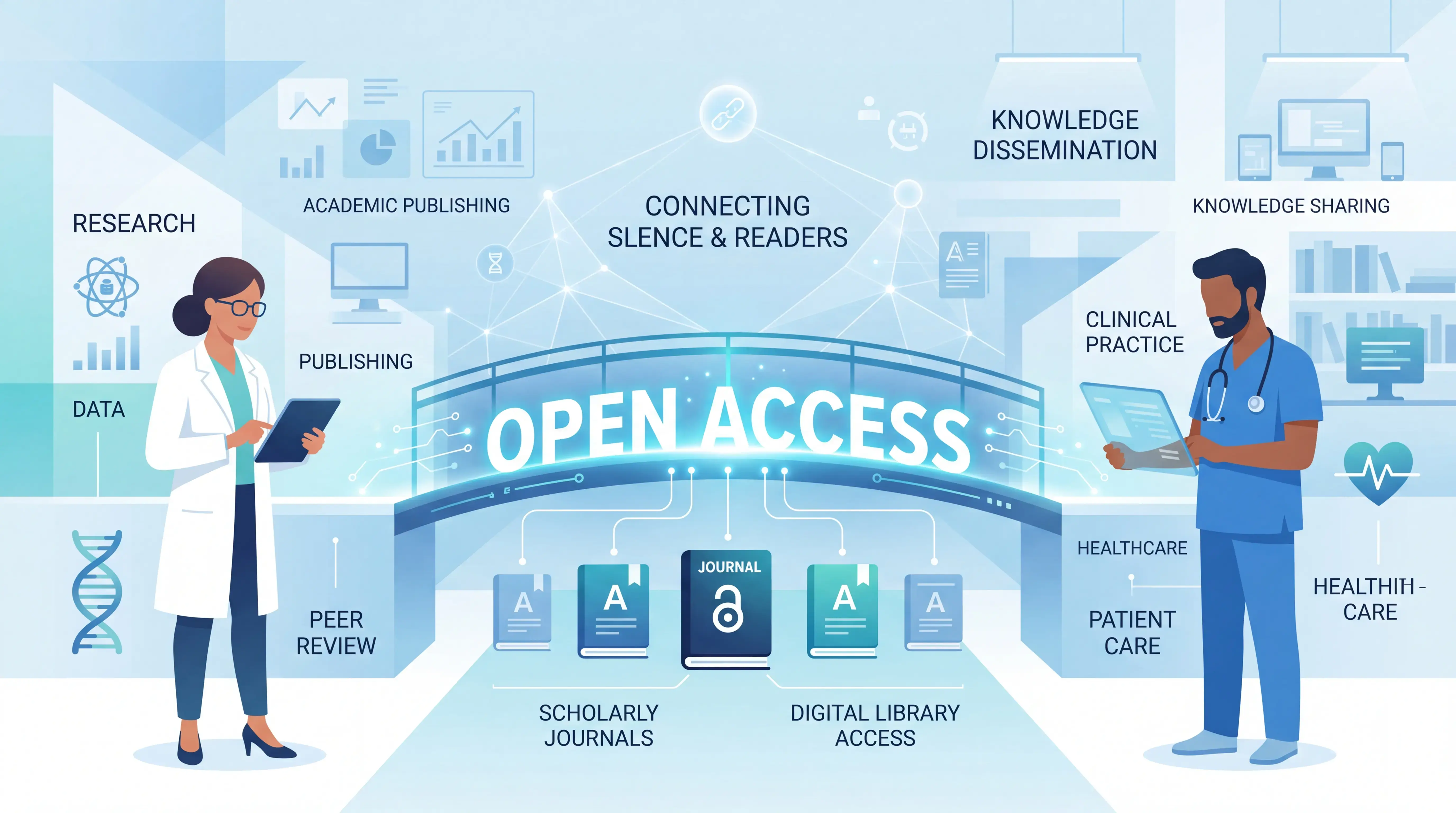
Open access, or OA, means published articles are available online without a paywall. Readers can access, download, and share the content freely. In biomedical publishing, this matters because clinicians and scientists often need rapid access to evidence.
Traditional subscription journals work differently. Readers or institutions pay to read the work. OA shifts the cost from the reader side to the author side, usually through article processing charges, or APCs. This change has made biomedical literature more accessible, but also more complex to evaluate.
1.2 Why It Matters for Medical Fields
Biomedical research is time-sensitive. A delayed paper can slow down clinical awareness, method adoption, and follow-up studies. OA reduces that delay in access.
It also improves reach across low-resource settings. Hospitals, universities, and independent researchers without strong library budgets can still read the work. For fields like oncology, immunology, microbiology, and genetics, that broader access can support faster knowledge transfer and collaboration.
2. The Main Benefits of Open Access
2.1 Faster Visibility and Wider Readership
One of the strongest advantages of open access is visibility. A freely available paper is easier to read, share, and cite. That can increase the chance that the work is noticed by peers, guideline developers, and clinicians.
For authors, this is not just about prestige. It can affect the practical value of the publication. A paper on a diagnostic method or treatment pathway has more utility when it can be accessed immediately by the people who need it.
2.2 More Citations and Broader Academic Influence
Open access often supports higher citation potential because the barrier to reading is lower. This does not guarantee impact, but it improves exposure. In biomedical publishing, where research competition is intense, exposure matters.
A well-structured essay or study can gain traction faster when it is available to a larger audience. That includes researchers in related disciplines who may not subscribe to the hosting journal but can still use the findings in their own work.
2.3 Better Public and Clinical Reach
Biomedical knowledge is not used only in academia. Patients, policy teams, educators, and healthcare organizations may also need access. OA helps bridge that gap.
For clinical topics, this can support evidence-based practice. For public health topics, it can improve knowledge transfer during outbreaks or policy changes. The more accessible the article, the more likely it is to inform real-world decisions.
3. The Challenges Behind the Open Access Model
3.1 Article Processing Charges
OA is not free to publish. Many journals charge APCs to cover editorial and production costs. These fees can be substantial, especially in high-profile biomedical journals.
For early-career researchers, medical trainees, and small research teams, APCs can be a real barrier. This is one reason why publication strategy matters. A strong manuscript is not enough. Authors also need to plan budget, journal fit, and funding requirements early.
3.2 Quality Control and Journal Selection
Open access is not automatically equal to high quality. Some OA journals maintain rigorous peer review and strong editorial standards. Others are less selective.
This is why journal evaluation is essential. Authors should check:
- indexing status
- peer review policy
- editorial board
- publication ethics
- APC transparency
A good open access journal should be judged by its standards, not just by its access model.
3.3 The Risk of Overgeneralization
Some people assume OA always means faster, better, or more cited. That is too simple. The actual outcome depends on topic, study design, novelty, and journal reputation.
In biomedical publishing, a strong methodology still matters more than the access model. An open paper with weak evidence will not outperform a rigorous paper in a subscription journal just because it is free to read.
4. New Publishing Pathways Are Changing the System
4.1 Internal Multi-Journal Submission Models
Publishing is becoming more flexible. Some major publishers now support internal multi-journal submission systems. These allow one manuscript to be considered by more than one journal within the same publisher network.
According to the knowledge base, Cell Press has launched a Multi-Journal Submission system covering 26 journals, and Wiley’s pre-review platform includes 10 journals. This shows that biomedical publishing is moving toward more efficient manuscript transfer and review workflows.
For authors, this can reduce repetitive submissions and save time. For journals, it can improve manuscript matching and editorial efficiency.
4.2 What This Means for Biomedical Authors
These systems are not a replacement for good writing or good research. But they can reduce friction in the publication process.
That is especially useful for authors who need to publish efficiently for graduation, clinical promotion, or grant reporting. Instead of resubmitting the same manuscript repeatedly, authors may gain a more structured path across related journals.
5. How to Make a Stronger Submission Strategy
5.1 Match the Journal to the Manuscript
The best strategy starts with fit. Ask whether the study is method-focused, clinically oriented, or computational. Then select a journal that regularly publishes that type of work.
A biomedical essay or research article should not be sent blindly to the highest-impact journal. A better match often leads to faster review and a higher chance of acceptance.
5.2 Prepare the Submission Package Carefully
Before submission, authors should check:
- the author guidelines
- ethical approval and consent requirements
- figure quality and data consistency
- disclosure statements
- formatting and reference style
These steps are not optional. They improve professionalism and reduce avoidable delays.
5.3 Use Workflow Tools to Save Time
Many researchers lose time to repeated formatting, tracking, and revision work. This is where smart tools can help.
Platforms such as scifocus.ai can support research workflow efficiency, helping authors organize drafts, refine structure, and prepare cleaner submissions. For busy medical students, physicians, and researchers, that means less time spent on repetitive tasks and more time spent on science.
6. The Long-Term Impact on Biomedical Publishing
6.1 More Access, More Competition
Open access has made biomedical literature easier to reach. That benefits readers, but it also increases competition among authors. When more papers are visible, the pressure to produce clear, rigorous, and clinically useful work becomes stronger.
This is a healthy shift. It rewards substance over silence. It also means authors must think not only about publication, but about discoverability, relevance, and trust.
6.2 More Innovation in Publishing Models
The rise of OA and internal manuscript transfer systems suggests that publishing is becoming more author-centered. The goal is not only to archive research, but to move it efficiently from submission to use.
That is important in biomedicine, where speed and accuracy both matter. The field benefits when good research reaches the right readers without unnecessary delay.
6.3 What Authors Should Expect Next
The future is unlikely to be a simple choice between OA and non-OA. Instead, authors will likely navigate a mixed system of access models, review platforms, and publisher networks.
The best authors will be the ones who understand both the science and the publishing system. They will plan early, choose carefully, and use efficient tools to reduce friction.
Conclusion
Open access has reshaped biomedical publishing by expanding readership, improving visibility, and speeding up knowledge transfer. It also brings real challenges, including APC costs and the need for careful journal evaluation. For medical students, physicians, and researchers, the key is not just to publish an essay, but to publish strategically. Strong research, the right journal, and a clean submission process all matter.
If you want to reduce friction and improve your publication workflow, consider using scifocus.ai to support drafting, organization, and submission preparation. In a competitive publishing environment, efficiency is an advantage.

Did you like this article? Explore a few more related posts.
Start Your Research Journey With Scifocus Today
Create your free Scifocus account today and take your research to the next level. Experience the difference firsthand—your journey to academic excellence starts here.