

Standard Research Paper Margin Size
Introduction
If you are preparing an essay for a journal, thesis, or clinical research submission, margin errors can trigger avoidable revisions before review even begins. Standard research paper margins size may seem minor, but it affects readability, page count, and compliance with submission rules. For medical students, doctors, and researchers, the safest approach is always to follow the journal’s Author Guidelines first.
1. Why Margin Size Matters in an Essay
1.1 Margins Affect Review, Readability, and Layout
In academic publishing, margin size is not a cosmetic detail. It shapes how reviewers read the manuscript and how editors assess formatting compliance. A clean layout makes the essay easier to scan, annotate, and convert into print or PDF workflows.
Most journals want a consistent page structure because it reduces production problems. When margins are too narrow, text can appear crowded. When they are too wide, the manuscript may look underdeveloped or waste space.
1.2 Standard Practice Starts with the Journal Guide
The most reliable source is always the journal’s official Author Guidelines or Submission Guidelines. These instructions usually specify font, spacing, page size, and margin requirements. If the journal provides a sample article, use it as a model.
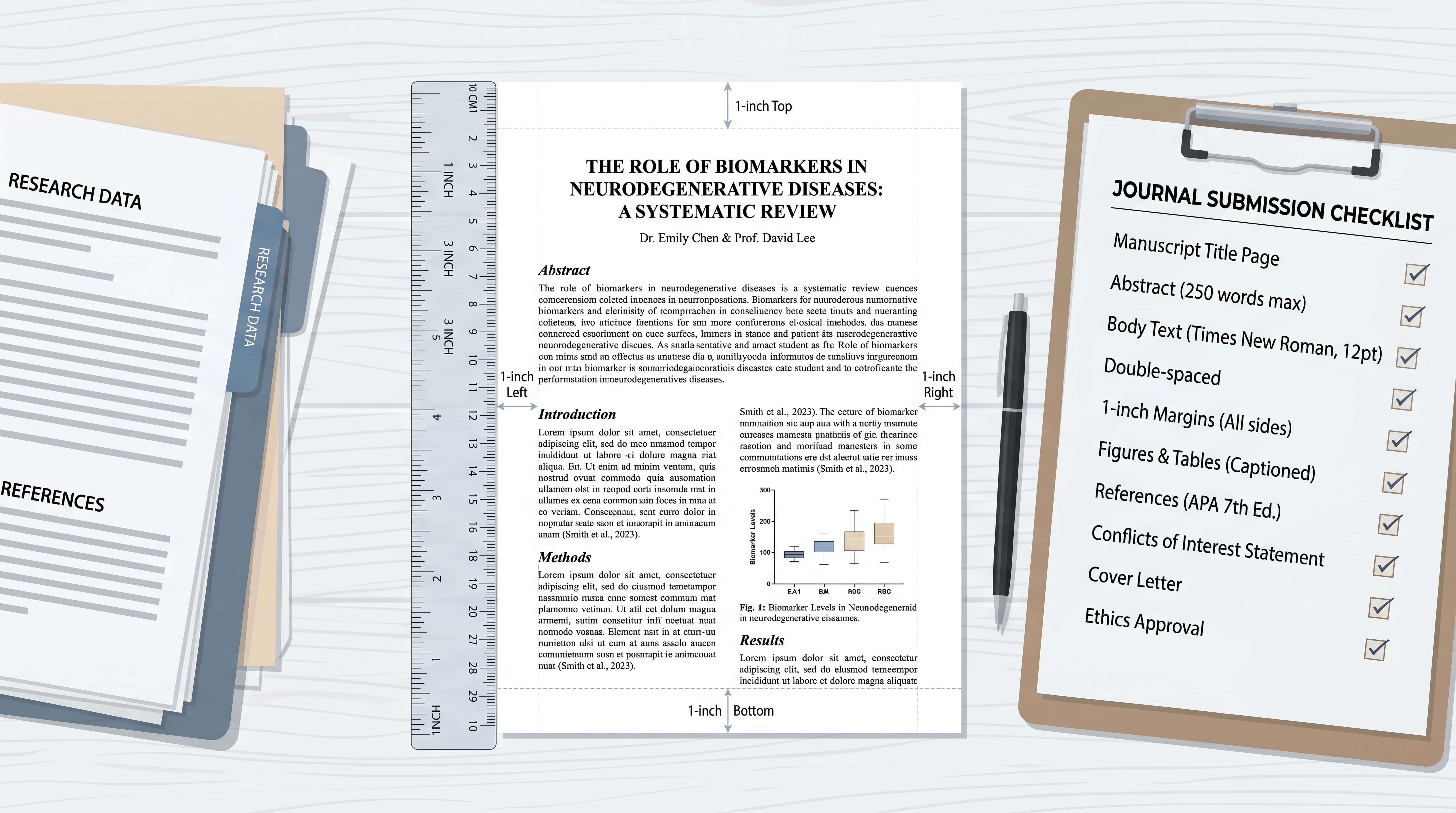
If no exact margin rule is listed, academic convention is the backup reference. In many scholarly settings, a 1-inch margin on all sides is the default for an essay or manuscript draft. This is common because it balances readability and space efficiency.
2. Standard Research Paper Margins Size
2.1 The Most Common Default
The most common standard research paper margins size is:
- Top: 1 inch
- Bottom: 1 inch
- Left: 1 inch
- Right: 1 inch
This layout is widely accepted in academic writing and is often used for initial submissions, unless the journal states otherwise. For medical and scientific essay submissions, this is usually the safest baseline.
Some journals may ask for different margins for specific manuscript types, especially if they use double-blind review templates or print-production formats. Never assume the default is acceptable if the journal has published a specific rule.
2.2 When Margins May Differ
Margin requirements may vary depending on the publication system. For example:
- Print-focused journals may request extra inner margins for binding.
- Template-based submissions may lock margins into the manuscript file.
- Conference abstracts may use narrower or customized layouts.
- Some thesis formats require wider left margins for binding.
In each case, the instruction manual is more important than general convention. A clinically accurate essay can still be rejected for simple formatting mismatch.
2.3 Page Size and Margin Rules Must Match
Margins only make sense when paired with the correct page size. A 1-inch margin on Letter paper is not identical to a 1-inch margin on A4 paper in visual effect, although both are standard in academic use. Many journals in medicine and research prefer A4 or Letter, depending on region and publisher.
Before formatting your essay, confirm these points:
- Required page size.
- Required margin size.
- Font and line spacing.
- File type, usually PDF or DOCX.
- Whether a template is mandatory.
3. How to Check the Correct Margin Requirements
3.1 Start with the Journal Website
The first step is simple. Open the journal’s official website and look for:
- Author Guidelines
- Submission Guidelines
- Instructions for Authors
- Manuscript Template
- Sample Article
These sections usually contain the exact formatting standard. For a medical essay, this is especially important because many journals enforce precise structure rules.
3.2 Use the Sample Article if the Guide Is Unclear
If margin size is not directly stated, a sample article can provide practical clues. Check how the published pages look in PDF form. Observe the white space around text blocks and the overall balance of the layout.
A sample article will not always confirm the exact measurement, but it helps you understand the journal’s typical formatting style. This is useful when preparing a submission under time pressure.
3.3 Contact the Editorial Office When Needed
If the guidelines do not specify margin size, contact the editorial office. This is the most direct way to avoid mistakes. Editors usually prefer a short clarification question over a poorly formatted submission.
A simple message can save time:
- Ask for the preferred margin size.
- Confirm whether the template overrides general rules.
- Request whether PDF submission needs any special layout adjustments.
For a high-stakes essay in medicine or research, direct confirmation is often worth the extra step.
4. Practical Formatting Tips for Medical and Research Essays
4.1 Keep the Layout Clean and Consistent
Once you know the required margin settings, apply them consistently across the manuscript. Do not mix styles between sections. Consistency improves professional appearance and reduces the chance of desk rejection.
Use the same settings for:
- Title page
- Abstract
- Main text
- Tables and figure captions
- References
A clean essay layout is not just about margins. It is about disciplined structure.
4.2 Common Mistakes to Avoid
Many submissions fail because of simple formatting errors. The most common include:
- Using default software margins without checking the journal
- Forgetting to match the template page size
- Changing margins in only one section
- Exporting a PDF that shifts the layout
- Ignoring binding or inner-margin requirements
For medical students and researchers, these are avoidable problems. Formatting should support the content, not distract from it.
4.3 Suggested Backup Standard When No Rules Are Given
If a journal gives no specific margin instructions, a practical fallback is:
- 1-inch margins on all sides
- Times New Roman or a similar standard serif font
- 12 pt font size
- 1.5 line spacing or the journal’s usual academic spacing
- Left-aligned text unless instructed otherwise
This is a conservative setup for a formal essay. It is not a universal rule, but it is widely accepted as a safe default in academic writing.
5. Why AI Support Can Reduce Formatting Friction
5.1 Faster Preparation, Fewer Errors
Manuscript preparation often takes time away from actual research and clinical work. This is where AI-assisted tools can help. Platforms like scifocus.ai can streamline drafting, formatting awareness, and revision workflows, helping users focus on scientific content instead of repetitive layout tasks.
For an essay intended for submission, efficiency matters. A tool that supports structure and consistency can reduce avoidable formatting mistakes before the file is exported.
5.2 Use Technology as a Quality Check, Not a Shortcut
The best use of AI is as a support layer. It should help you organize, review, and refine, but not replace journal-specific instructions. The journal guide remains the final authority.
A practical workflow looks like this:
- Draft the manuscript.
- Confirm the journal’s margin and format rules.
- Apply the template.
- Review the PDF output.
- Use AI tools to check clarity, structure, and consistency.
This process is especially useful for clinical essay writing, where accuracy and presentation both matter.
Conclusion
The correct standard research paper margins size is usually 1 inch on all sides, but the real rule is simple: follow the journal’s official instructions first. If no exact margin is stated, use conventional academic formatting, review a sample article, or contact the editorial office. For medical students, doctors, and researchers, this small detail can prevent rejection and save valuable time. A well-formatted essay is easier to review, easier to publish, and easier to trust. If you want to speed up drafting and reduce formatting friction, explore scifocus.ai as a practical support tool for your next submission.
Did you like this article? Explore a few more related posts.
Start Your Research Journey With Scifocus Today
Create your free Scifocus account today and take your research to the next level. Experience the difference firsthand—your journey to academic excellence starts here.