

Single-Blind vs Double-Blind vs Open Peer Review
Introduction
Peer review is the backbone of scientific publishing, but choosing the right review model can shape bias, transparency, and trust. For researchers, clinicians, and medical students, the terms single-blind, double-blind, and open peer review are often used loosely. That creates confusion during manuscript submission and journal selection. In this essay, I will compare the three models, explain when each works best, and show how to make a more informed publishing decision.
1. What Peer Review Actually Does
1.1 Why peer review matters
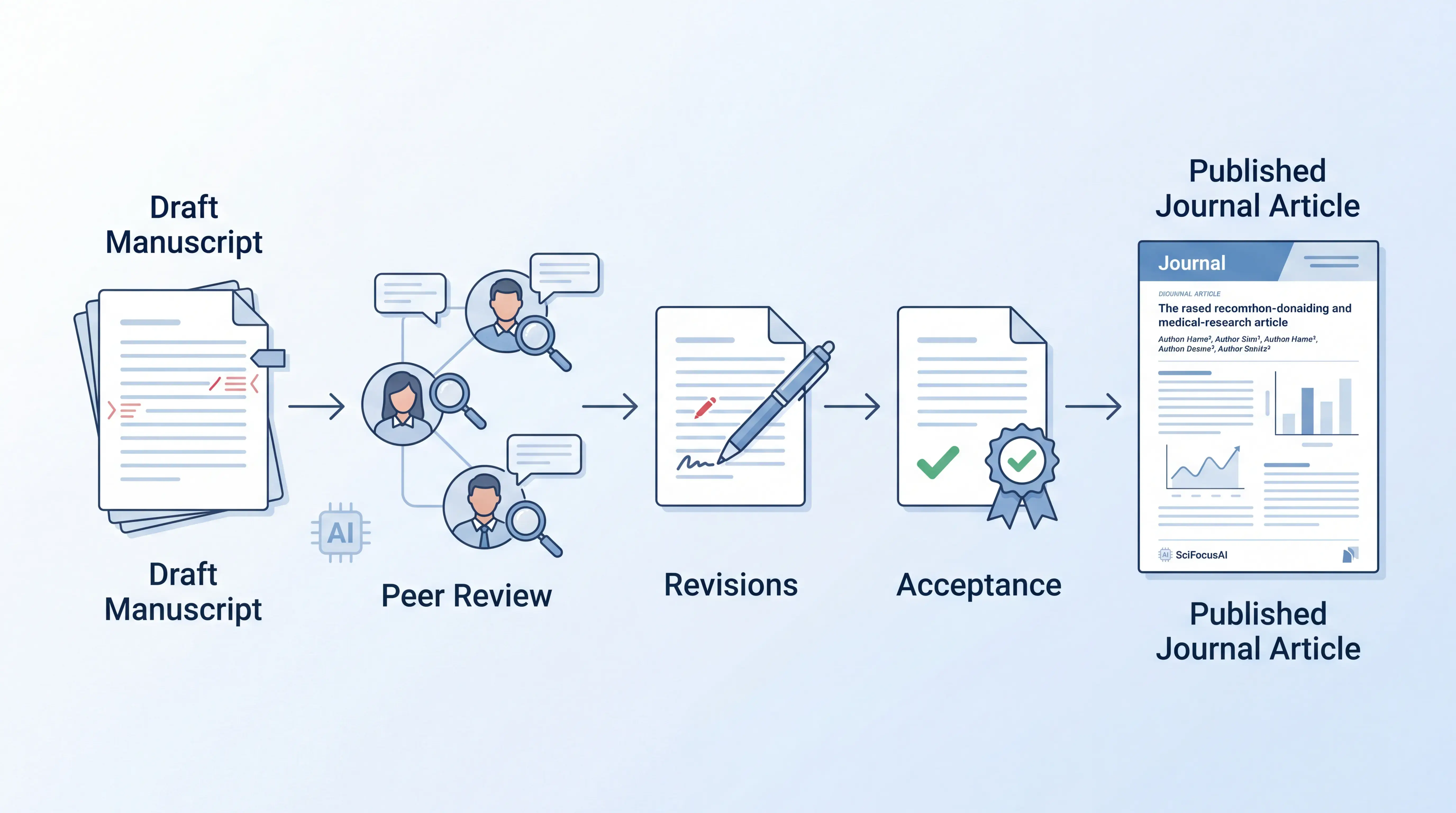
Peer review is designed to improve research quality before publication. It helps editors detect flaws in study design, analysis, reporting, and ethics. In clinical research, this matters even more because weak evidence can affect patient care.
A well-run peer review process is not just a gatekeeping step. It is a quality-control system. It reduces avoidable errors and helps journals maintain credibility.
1.2 Why the review model matters
The review model affects how much bias enters the process. It also affects how candid reviewers can be. Some models protect reviewer independence. Others increase accountability. The best choice depends on the journal’s goals, the field, and the type of manuscript.
For medical and research audiences, the key question is simple: which model produces the fairest and most useful evaluation of an essay or manuscript?
2. Single-Blind Peer Review
2.1 Definition and structure
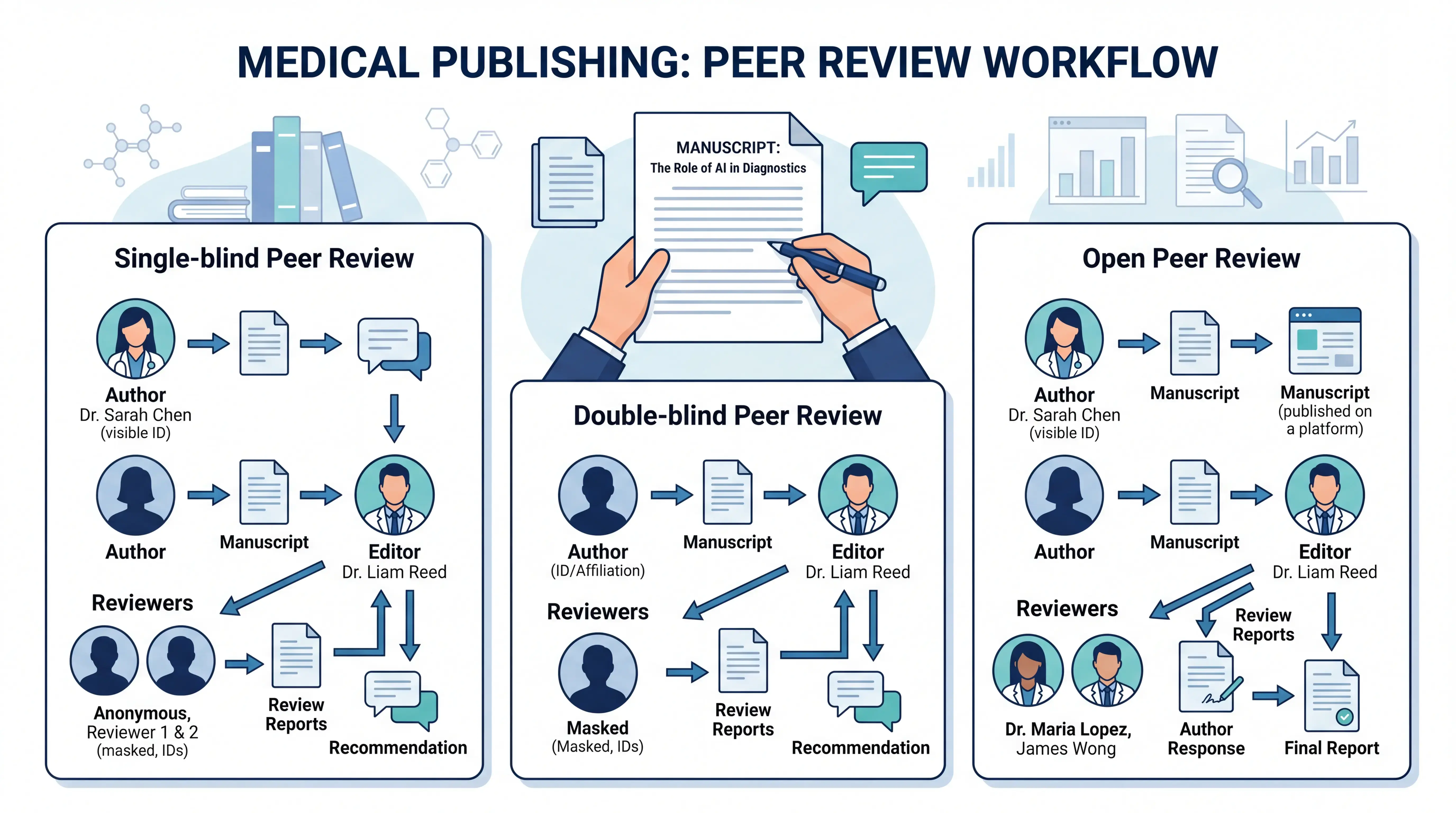
In single-blind peer review, the reviewer knows the author’s identity, but the author does not know the reviewer’s identity. This is still one of the most common systems in academic publishing.
This format is often used because it is easy to organize. Editors can send manuscripts to experts without revealing reviewer names. Reviewers can then give detailed feedback with some degree of anonymity.
2.2 Strengths and limitations
Single-blind review can work well when journals want efficient editorial control. It may also encourage reviewers to be frank about weaknesses in a paper. However, it can introduce bias based on institution, country, gender, or author reputation.
The main problem is that knowing the author can influence judgment, even unintentionally. A famous laboratory may receive a more favorable reading than an unknown one. A young researcher may face a harsher standard.
For medical authors, this means single-blind review is practical, but not always the most impartial.
3. Double-Blind Peer Review
3.1 How it works
In double-blind peer review, both the reviewer and the author remain anonymous to each other. The journal removes identifying details before sending the manuscript for review.
This model is intended to reduce bias tied to identity. It is often favored in fields where authorship status could influence evaluation.
3.2 Why researchers often prefer it
Double-blind review is valued because it can make assessment more focused on the content of the paper. A strong methodology, clear data, and sound interpretation matter more when names and affiliations are hidden.
For a research essay, double-blind review can improve perceived fairness, especially for early-career authors and authors from lesser-known institutions.
3.3 Practical limits
Double-blind review is not perfect. In small specialties, reviewers may guess the author from the topic, dataset, writing style, or cited work. In highly specialized clinical areas, true anonymity is difficult.
It also requires careful manuscript preparation. Authors must remove names, affiliations, acknowledgments, and hidden file metadata. If they fail to do this, the blind process weakens.
4. Open Peer Review
4.1 What “open” means
Open peer review is a broader term. In many journals, it means the author and reviewer know each other’s identities. In some journals, the review reports are also published alongside the article.
This model increases transparency. It can make the review process more accountable and more educational for readers.
4.2 Advantages for science and medicine
Open peer review can improve trust because decisions are more visible. Reviewers may produce more thoughtful critiques when their names or reports are public. Readers can also see how the paper changed during review.
When the goal is transparency, open peer review offers a clear advantage. It can be especially useful for journals that value methodological openness and post-publication discussion.
4.3 Challenges to consider
Open review may reduce reviewer candor. Some experts may avoid strong criticism if their identity is known. This is a real concern in small academic communities.
It can also make it harder to recruit reviewers. Not every expert is willing to have their review comments attached to their name. So while open peer review supports openness, it may not always maximize participation.
5. Comparing the Three Models
5.1 Bias, transparency, and accountability
The three models differ in how they balance bias control and openness.
- Single-blind review: easier to run, but more vulnerable to author-related bias.
- Double-blind review: better at limiting identity bias, but anonymity is not always complete.
- Open peer review: strongest on transparency, but may reduce reviewer candor.
For a medical research essay, the best model depends on the study context. A bias-sensitive clinical paper may benefit from double-blind review. A journal focused on openness may prefer an open system.
5.2 Which model is most rigorous
There is no universal winner. Rigor depends on implementation, not only on format. A poorly managed double-blind system can still fail. A well-managed open system can be highly credible.
The real standard is whether the process produces fair, evidence-based, and reproducible critique. That is what authors should look for.
6. How to Choose the Right Review Model for Your Manuscript
6.1 Match the model to the research type
Different manuscripts benefit from different review setups.
- Use double-blind review when identity bias is a concern.
- Use open peer review when transparency is part of the journal’s mission.
- Use single-blind review when the journal prioritizes speed and reviewer practicality.
For clinical studies, especially those with subjective endpoints or competitive institutional environments, double-blind review may be more protective. For commentary, perspective pieces, or collaborative research communities, open review may add value.
6.2 Prepare your manuscript correctly
If you submit to a blind system, remove identifying information before upload. Check the title page, acknowledgments, file properties, and self-citations. Use neutral phrasing where possible.
A practical checklist:
- Remove author names and affiliations.
- Remove funding or ethics text that reveals identity if the journal asks for it separately.
- Strip metadata from the document.
- Review tables, figures, and supplemental files.
- Keep self-citations non-identifying when possible.
Careful preparation supports the integrity of a blind review process.
7. The Role of Publishing Tools in Reducing Friction
7.1 Why authors need better workflow support
Many submission problems are not about science. They are about formatting, structure, and compliance. A strong manuscript can still face delays if files are not prepared correctly.
This is where research workflow tools can help. Platforms like scifocus.ai can support authors by organizing drafts, improving clarity, and reducing avoidable submission errors. For busy clinicians and researchers, that saves time and improves consistency.
7.2 How Helix can help with the same problem
If your goal is to publish faster and with fewer technical mistakes, Helix can support the process from drafting to revision. It can help authors organize content, refine language, and prepare a cleaner submission package.
That matters because peer review starts before the journal sees the paper. A well-structured manuscript is easier to evaluate, easier to review, and less likely to be returned for basic corrections. For researchers managing multiple studies, that efficiency is a real advantage.
Conclusion
Single-blind, double-blind, and open peer review each solve a different problem. Single-blind review is practical. Double-blind review reduces identity bias. Open peer review increases transparency. The best choice depends on the journal, the discipline, and the manuscript’s goals.
For medical students, doctors, and researchers, the key is to understand how each system affects fairness and trust. If you are preparing a submission, focus on compliance, clarity, and reviewer-friendly structure. And if you want help reducing friction in the publishing process, consider scifocus.ai as a practical tool for drafting and revision support.
Did you like this article? Explore a few more related posts.
Start Your Research Journey With Scifocus Today
Create your free Scifocus account today and take your research to the next level. Experience the difference firsthand—your journey to academic excellence starts here.