

Principle vs Principal
Introduction
Essay writing in medicine and research depends on precision. One wrong word can change meaning, weaken clarity, and slow down reader trust. That is why the principle vs principal distinction matters. For medical students, doctors, and researchers, spelling accuracy is not cosmetic. It supports professional credibility, cleaner manuscripts, and faster review.
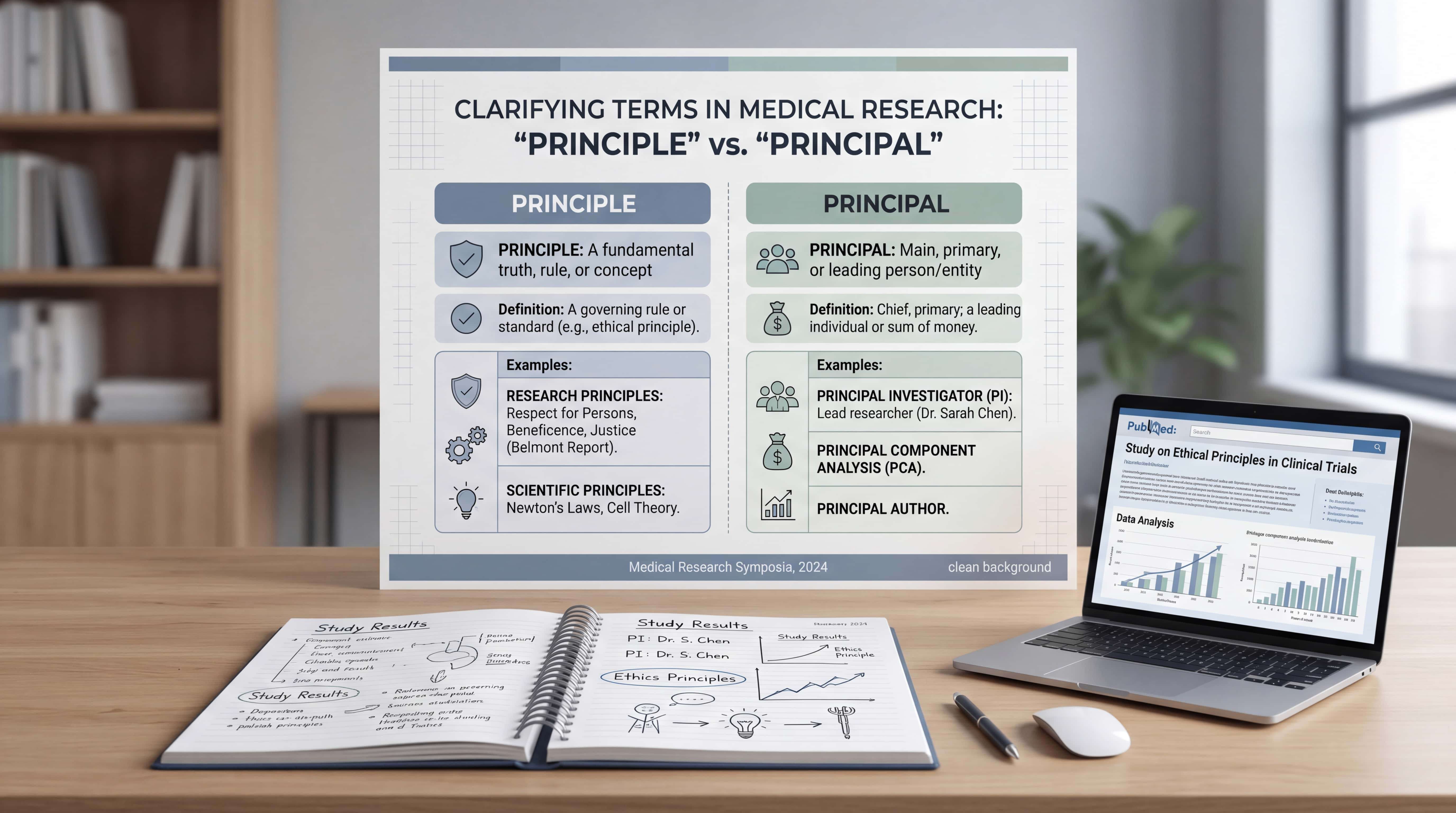
1. Why Principle vs Principal Causes Real Problems
1.1 A small spelling error can create big confusion
In scientific and clinical writing, readers expect exact language. Principle and principal sound the same, but they do not mean the same thing. If you use the wrong one in an essay, the sentence may look careless or even unclear.
This matters because academic writing is often judged quickly. Reviewers scan for accuracy first. If a paper contains repeated word-choice errors, it can signal weak language control, even when the science is solid.
1.2 The difference is simple, but the risk is not
A useful rule is this:
- Principle is usually a noun. It means a rule, belief, or standard.
- Principal can be a noun or adjective. It usually means first, main, or most important.
In an essay, using these words correctly helps maintain a formal tone. It also reduces unnecessary editing later.
For medical and research writing, the safest approach is to check meaning first, not spelling alone.
2. How to Use Principle Correctly in an Essay
2.1 Principle as a rule or standard
The word principle often appears in ethics, physiology, methodology, and public health. It refers to a core rule or guiding idea.
Examples:
- The study followed the principle of informed consent.
- This treatment is based on the principle of dose-response.
- The principle of evidence-based medicine supports clinical decisions.
These sentences work because principle names an idea, not a person or thing. That is the key test.
2.2 Principle in academic and clinical contexts
In research essays, principle often appears in discussions about:
- Scientific methodology.
- Ethical practice.
- Core theoretical frameworks.
- Standards of clinical care.
If you can replace the word with “rule” or “guiding idea,” principle is usually correct. For example, “the basic principle of randomization” is natural. “The basic principal of randomization” is incorrect.
A strong essay uses the right term to preserve accuracy and authority.
3. How to Use Principal Correctly in an Essay
3.1 Principal as the main one
Principal commonly means the most important or main item. In academic writing, it often modifies a noun.
Examples:
- The principal outcome was reduced symptom severity.
- The principal investigator approved the protocol.
- The principal reason for the delay was sample contamination.
Here, principal works like “main” or “primary.” It identifies the most important element in a group.
3.2 Principal as a noun
Less often, principal is a noun meaning a person in charge. In medicine and research, this appears in:
- principal investigator
- principal author
- principal clinician
This is especially important in formal writing. Principal investigator is a standard term in clinical trials and research ethics. It should not be replaced by principle investigator.
4. Fast Ways to Choose the Right Word
4.1 Use a meaning test
Before you finalize your essay, ask:
- Do I mean a rule or belief? Use principle.
- Do I mean main or most important? Use principal.
- Do I mean a person in charge? Use principal.
This simple check can prevent many errors.
4.2 Use sentence substitution
A practical editing method is to substitute an easier word.
- If “main” fits, use principal.
- If “rule” or “standard” fits, use principle.
For example:
- The principal finding = the main finding.
- The principle of transparency = the rule of transparency.
This technique is fast and reliable during essay revision.
4.3 Review the term in context
The same word can look correct in isolation but wrong in context. That is why sentence-level review matters. In medical essays, terms often sit near other technical language, so a spelling mistake may blend in.
A careful review should check:
- meaning,
- grammatical role,
- sentence function,
- field-specific usage.
Context determines correctness. Not appearance alone.
5. Common Errors in Medical and Research Essays
5.1 Mixing up the two words in formal writing
Many writers confuse the pair when drafting quickly. This happens often in first drafts, especially when ideas are translated directly from another language or typed under time pressure.
Common incorrect patterns include:
- principle investigator
- principal of informed consent
- principle reason
These errors are easy to miss because the words sound identical. But in a submitted essay, they can affect professionalism.
5.2 Why this matters for publication and grading
Language issues do not always cause rejection, but they can increase friction. Reviewers may need extra time to interpret the text. In academic settings, that can weaken the impression of rigor.
Clear word choice helps your essay read like expert writing, not rough translation.
For medical students and researchers, this is especially important in:
- personal statements,
- case discussions,
- research essays,
- literature reviews,
- manuscript introductions and discussions.
6. A Practical Checklist for Better Essay Writing
6.1 Edit in two passes
Use one pass for meaning and one pass for language. First, confirm whether the idea is correct. Then, check the word choice.
A simple workflow:
- Read the sentence aloud.
- Replace the target word with “main” or “rule.”
- Confirm the grammar.
- Check whether the word matches the academic context.
This takes little time and improves precision.
6.2 Use writing tools carefully
Grammar tools can help, but they are not perfect. They may miss semantic errors, especially with homophones like principle and principal. Human review is still necessary.
That is where scifocus.ai can support your workflow. It helps refine academic writing, improve clarity, and reduce avoidable language mistakes before submission. For time-pressed medical learners and researchers, that means faster editing and more consistent essay quality.
6.3 Build a short personal error list
Keep a running list of words you often confuse. For many writers, this includes:
- principle vs principal,
- affect vs effect,
- patient vs patience,
- cite vs site.
Reviewing this list before submission can save time and reduce avoidable corrections.
Conclusion
The principle vs principal distinction is small, but it matters in a medical or research essay. Principle means a rule or belief. Principal means main, most important, or a person in charge. If you remember that difference and use a quick meaning test, your writing becomes clearer and more professional.
For medical students, doctors, and researchers, precision is part of credibility. If you want cleaner academic writing with less time spent on revisions, try scifocus.ai as part of your editing process. It can help you polish your essay, strengthen clarity, and present your ideas with greater confidence.

Did you like this article? Explore a few more related posts.
Start Your Research Journey With Scifocus Today
Create your free Scifocus account today and take your research to the next level. Experience the difference firsthand—your journey to academic excellence starts here.