
Its vs. Its
Introduction
If you write a medical essay, one tiny typo can weaken your credibility fast. Its vs. its is one of the most common errors in academic writing, yet it is also one of the easiest to fix. For medical students, doctors, and researchers, this matters because clear writing supports clear thinking. Correct usage signals precision, and precision builds trust.
1. What “Its vs. Its” Really Means
1.1 The Core Difference
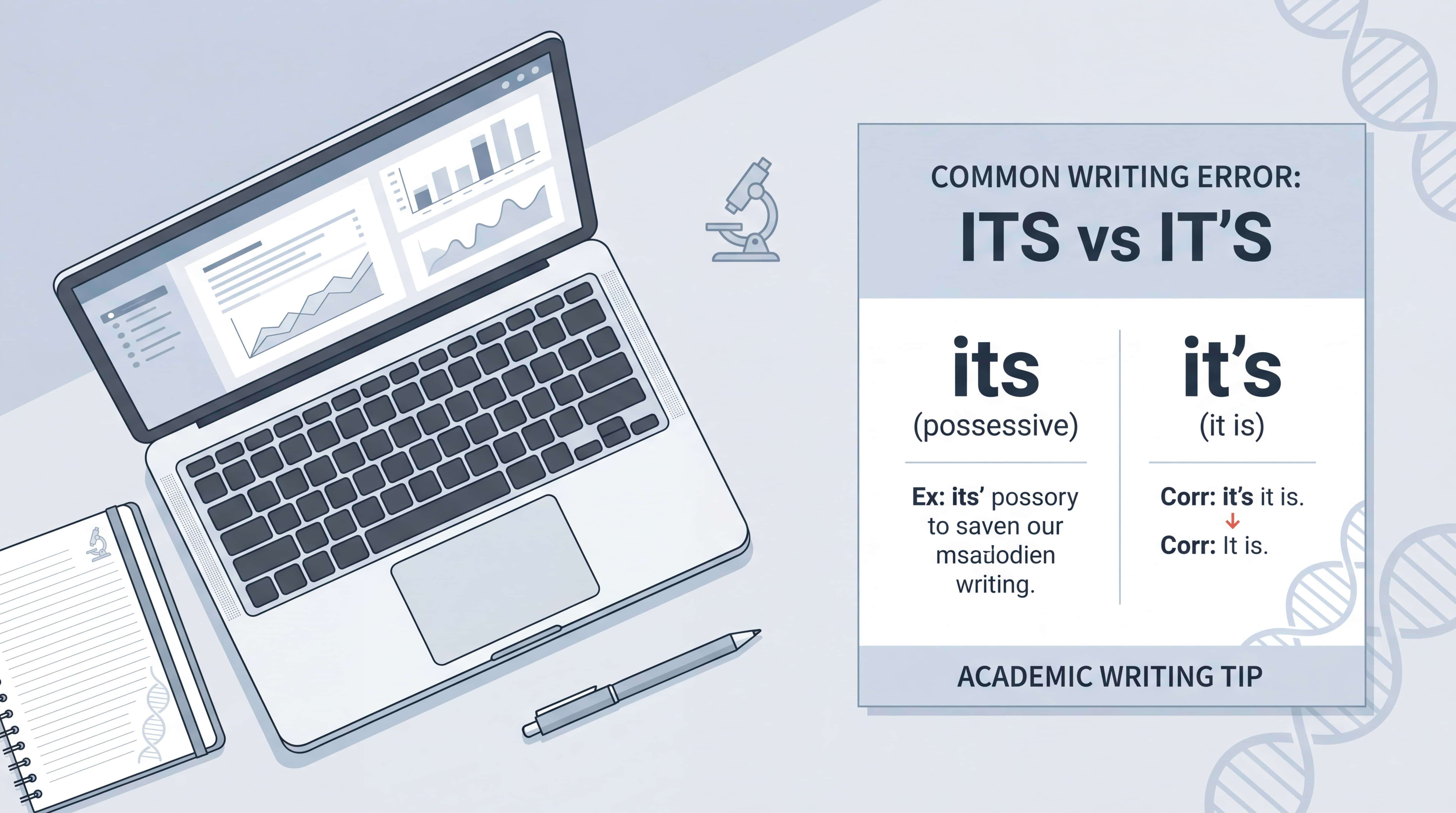
The confusion starts with form, not meaning. Its is the possessive form of “it.” It shows ownership or association. For example, “The cell increased its size.” In contrast, it’s is a contraction of “it is” or “it has.” The apostrophe signals missing letters, not possession.
1.2 Why This Error Matters in a Medical Essay
In clinical and scientific writing, small grammar mistakes can distract readers from your data. A single wrong word may not change your results, but it can affect how your essay is judged. Reviewers, supervisors, and editors often see these errors as signs of rushed writing.
This is especially important in abstracts, case reports, and discussion sections. Those sections are short and dense. Every sentence must carry weight. If your language is unclear, your argument loses force.
2. How to Use “Its” Correctly
2.1 Use “Its” for Possession
Use its when something belongs to an object, organism, device, or concept. Examples include:
- The tumor expanded beyond its original boundary.
- The liver changes its function under stress.
- The device reached its target temperature.
In each case, its shows ownership. There is no apostrophe.
2.2 A Simple Test for Accuracy
A fast way to check your sentence is to replace the word with “it is” or “it has.”
If the sentence still works, use it’s.
If it does not, use its.
Example:
- “The vaccine lost its potency.” Replace with “it is potency.” That does not work.
- So the correct form is its.
This test takes less than 5 seconds. It is practical when drafting an essay under time pressure.
2.3 Common Correct Examples
Here are a few examples that fit professional writing:
- The bacterium changed its shape.
- The heart increased its output.
- The journal revised its submission policy.
These are possessive uses, so the apostrophe is wrong.
3. How to Use “It’s” Correctly
3.1 Use “It’s” for “It Is” or “It Has”
The apostrophe in it’s means letters have been removed. This form is a contraction. Examples:
- It’s difficult to interpret the data.
- It’s been 24 hours since admission.
If you can expand the phrase into “it is” or “it has,” then it’s is correct.
3.2 Why Contractions Are Often Avoided in Formal Writing
In many academic and scientific contexts, contractions are less common. That does not make them incorrect. It just means style matters. In a formal essay, many authors prefer “it is” instead of “it’s” because the full form feels more precise and more professional.
For example:
- Informal: It’s important to report adverse events.
- Formal: It is important to report adverse events.
Both are grammatically correct. The second is often better for manuscripts, reports, and scholarly essays.
3.3 When Contractions May Appear
Contractions may appear in:
- reflections
- personal statements
- blog content
- patient education materials
They are less suitable in highly formal sections such as methods, results, or technical discussion. Match the form to the audience and purpose.
4. Common Mistakes in Medical and Academic Writing
4.1 Mistaking Possession for Contraction
Many writers add an apostrophe automatically. That creates errors like:
- The sample lost it’s integrity.
- The cell preserved it’s membrane.
Both are wrong. The correct form is:
- The sample lost its integrity.
- The cell preserved its membrane.
This mistake is common because English speakers often hear the contraction more frequently than the possessive form.
4.2 Overediting Without a Final Grammar Check
Even strong writers miss this error during revision. Why? Because the eye often reads what it expects to see. If you have already revised your essay several times, your brain may skip the apostrophe mistake.
A final grammar pass should target:
- apostrophes
- subject-verb agreement
- article use
- word choice consistency
A short checklist can prevent repeated errors in submissions, presentations, and grant drafts.
4.3 Why Automated Tools Help, but Do Not Replace Judgment
Spellcheck tools may not always catch its vs. its correctly, especially if the sentence is grammatically valid in both forms. That is why human review still matters. Clinical writers should use tools as support, not as a substitute for editing.
A reliable writing workflow combines software with manual checking.
5. Practical Rules for Writers
5.1 A Quick Memory Rule
Remember this:
- its = possession
- it’s = it is / it has
That is the entire rule. If you apply it consistently, the error rate drops sharply.
5.2 Edit in Two Passes
For academic writing, use two passes:
- First pass: ideas, structure, and evidence.
- Second pass: grammar, punctuation, and word forms.
This method is efficient. It helps you protect both content quality and language accuracy.
5.3 Read Aloud for Final Verification
Reading aloud slows you down. It helps expose missing words and misplaced apostrophes. This is especially useful in dense sections of an essay where technical terms can hide simple grammar mistakes.
If a sentence sounds like “it is” or “it has,” write it’s. If it sounds possessive, write its.
6. Why Strong Writing Supports Strong Research
6.1 Grammar Influences Perceived Reliability
In medicine and research, readers assess clarity as part of credibility. A polished essay suggests careful thinking. An error-filled one can create doubt, even when the science is sound.
That does not mean grammar matters more than evidence. It means grammar helps evidence land effectively.
6.2 Precision Saves Time in Review
Editors and supervisors spend less time interpreting clean prose. That improves the reading experience and can reduce unnecessary revision cycles. In high-stakes environments, even small savings in review time matter.
6.3 Where Tools Like Scifocus.ai Fit In
If you draft medical essays, research summaries, or professional reports regularly, a structured writing assistant can help you stay consistent. Scifocus.ai can support topic development, drafting, and revision workflows, so you spend less time fixing avoidable language errors and more time improving the science.
It is not a replacement for expertise. It is a productivity layer that helps serious writers keep their work accurate, readable, and publication-ready.
Conclusion
The difference between its vs. its is simple, but the impact is real. Use its for possession. Use it’s for “it is” or “it has.” In a medical essay, that one choice can improve clarity, strengthen professionalism, and reduce avoidable revision.
If you want cleaner drafts and faster writing workflows, consider using Scifocus.ai as part of your academic process. It can help medical students, doctors, and researchers write with more confidence and less friction.
Did you like this article? Explore a few more related posts.
Start Your Research Journey With Scifocus Today
Create your free Scifocus account today and take your research to the next level. Experience the difference firsthand—your journey to academic excellence starts here.