

Is Your Paper Citation-Ready? A Practical Guide to Avoiding Unintentional Plagiarism
Introduction
Avoiding academic misconduct starts with one simple habit: citing correctly. For medical students, doctors, and researchers, weak citation practice can lead to high similarity scores, rejection, or even reputation damage. In academic writing, the problem is often not intent. It is unintentional plagiarism caused by poor paraphrasing, missing sources, or mismatched references. This guide explains how to cite accurately, reduce overlap, and protect the credibility of your paper.
1. Why citation quality matters in scientific writing
Citation is not decoration. It is evidence. In medical and scientific publishing, references show where your argument comes from and whether your paper is built on solid research. A strong reference list tells editors that your work is connected to the field, not written in isolation.
This matters even more in competitive journals. Editors often scan the introduction and references first. They look for three things: relevance, novelty, and depth. If your references are outdated, too general, or copied from reviews only, the paper may look weak even before peer review begins.
A good citation strategy also supports the logic of your paper. Background claims need support. Methodological choices need sources. Discussion points that compare your findings with prior studies need evidence. Without that structure, readers cannot judge your contribution.
2. What unintentional plagiarism really looks like
Unintentional plagiarism is common. It usually happens when a writer uses another author’s words or structure too closely, even without copying the whole text. In practice, it often appears in the methods section, literature review, or discussion.
Typical examples include:
- Reusing a sentence pattern too closely.
- Changing only a few words while keeping the original structure.
- Copying a definition or conclusion without quotation or citation.
- Forgetting to cite a source after paraphrasing.
- Mixing up the source and the sentence, so the citation does not match the claim.
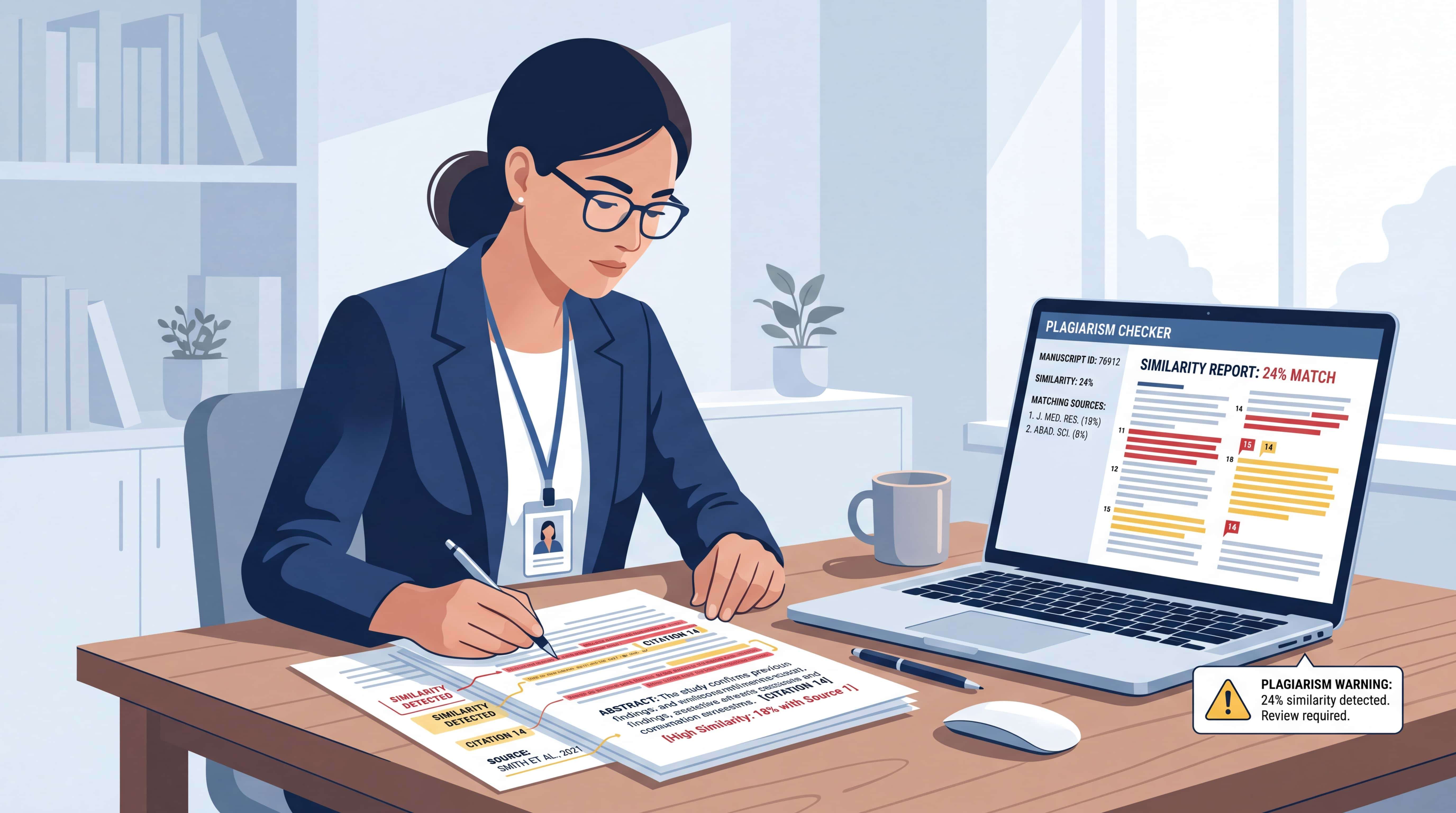
Most journals use plagiarism-detection software, and repeated text can trigger serious concerns. Even if the similarity comes from common phrases, a poorly revised manuscript can still be flagged.
For medical writers, this risk is higher because technical language is often standardized. That does not mean copying is acceptable. It means you must rewrite with care and cite the original source whenever an idea, result, or exact wording is borrowed.
3. How to cite correctly without sounding copied
Good citation is not just about adding a reference. It is about showing that you understand the source and can restate it in your own academic voice. The safest approach is to read, understand, close the source, and then write from memory.
Use these steps:
- Read the source carefully.
- Identify the exact point you want to use.
- Close the article.
- Explain the idea in your own words.
- Add the citation immediately.
If you keep the original sentence open while writing, your phrasing will likely stay too close to the source. That is one of the fastest routes to unintentional plagiarism.
You should also avoid “patchwriting,” which means stitching together pieces of the original text with minor edits. If the structure is still the same, the risk remains high. A better method is to change both the wording and the sentence logic.
3.1 When quotation marks are necessary
Direct quotations should be rare in scientific writing, but they are sometimes appropriate for exact definitions or formal statements. If you use the exact words of another author, the text must be clearly marked and cited.
In most medical manuscripts, paraphrasing is preferred. That said, paraphrasing does not remove the need for attribution. If the idea is not yours, it still needs a source.
3.2 When paraphrasing is not enough
Paraphrasing only works when the original idea is transformed meaningfully. Replacing a few terms with synonyms is not enough. A valid paraphrase usually changes:
- The sentence structure.
- The order of information.
- The emphasis of the claim.
- The level of detail.
If your revised text still feels too close to the original, it probably is.
4. How to build a reference list that supports publication
Reference selection affects both credibility and readability. A strong paper does not cite everything. It cites the right things. Based on structured academic writing principles, references usually concentrate in three areas: the background, the methods, and the discussion.
In the background, cite foundational studies and major developments. In the methods, cite the original or most authoritative description of the technique. In the discussion, use studies that help compare your findings with prior work.
To improve your reference list, focus on these points:
- Cite important and representative studies, not random papers.
- Include recent literature when it reflects the current state of the field.
- Do not rely only on review articles.
- Use original research when you discuss evidence.
- Keep formatting consistent with the target journal.
A reference list full of high-quality original studies usually looks more convincing than one built only from review papers. Editors want to see the actual scientific chain, not just summaries of it.
Also avoid referencing unpublished material when possible. Conference abstracts, incomplete records, or inaccessible sources can weaken verification. If a claim matters, the source should be traceable.
5. The sections where citation problems happen most often
The highest-risk sections are the methods and the discussion. Methods are often copied from prior papers because they seem standardized. Discussion sections are often written too close to previous wording because authors are trying to explain similar findings.
In methods, you can reduce risk by describing only what is unique to your study. For standard procedures, cite the original source instead of rewriting long technical details. If a method was previously published by your team, you may cite your own paper if it is the clearest and most accessible source. But do not overuse self-citation.
In discussion, compare your results with prior work in a factual way. Do not simply repeat the structure of another paper’s discussion. Explain:
- What your finding means.
- How it compares with earlier studies.
- Why the difference may exist.
- What the next research question should be.
This keeps your writing original while maintaining scientific rigor.
6. Practical ways to avoid academic misconduct before submission
Before submitting your manuscript, run a similarity check. This is especially important for the methods and introduction, where repeated phrasing is common. Many journals tolerate moderate overlap in technical language, but excessive similarity can still create problems.
A practical pre-submission routine includes:
- Checking all in-text citations against the reference list.
- Confirming that every borrowed idea has a source.
- Reviewing the methods for copied wording.
- Rewriting long source-based sentences.
- Verifying the journal’s formatting rules.
Do not assume that changing a few words is enough. The safest standard is clarity, originality, and traceability.
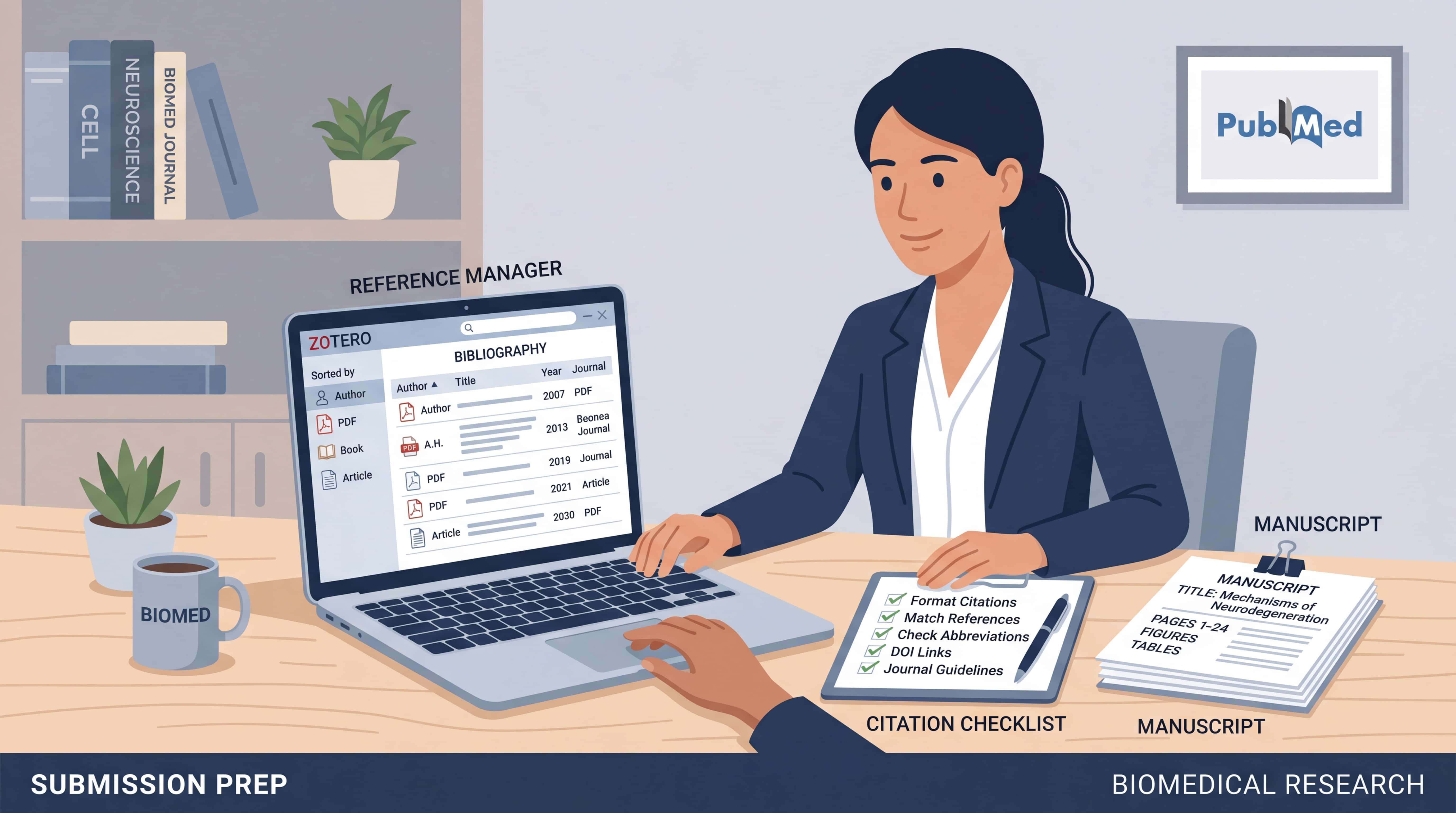
If your manuscript uses many references, consider a reference manager such as EndNote. It helps maintain consistency, reduce formatting errors, and prevent mismatches between citations and the bibliography.
7. How scifocus.ai can help you write with confidence
For writers who want to avoid academic misconduct more efficiently, tools like scifocus.ai can support the workflow. It can help organize references, improve citation consistency, and reduce the chance of mismatched in-text citations and bibliography entries. That matters because citation errors are one of the most common causes of avoidable revision requests.
Used properly, scifocus.ai can also help you review structure before submission, so you can spot overly close phrasing and strengthen paraphrasing where needed. The goal is not to automate judgment. The goal is to make careful academic writing faster, cleaner, and more reliable.
For medical students, doctors, and researchers working under time pressure, that support can save revision rounds and protect academic integrity.
Conclusion
Strong citation practice is a core part of scientific credibility. It helps you avoid academic misconduct, present your evidence clearly, and show editors that your work is built on reliable scholarship. The key is simple: cite the right studies, paraphrase genuinely, and verify every reference before submission. If you want a more efficient way to manage citations and reduce similarity risk, explore scifocus.ai and build a safer writing workflow today.
Did you like this article? Explore a few more related posts.
Start Your Research Journey With Scifocus Today
Create your free Scifocus account today and take your research to the next level. Experience the difference firsthand—your journey to academic excellence starts here.