
Is It Ethical to Use AI in Academic Writing?
Introduction
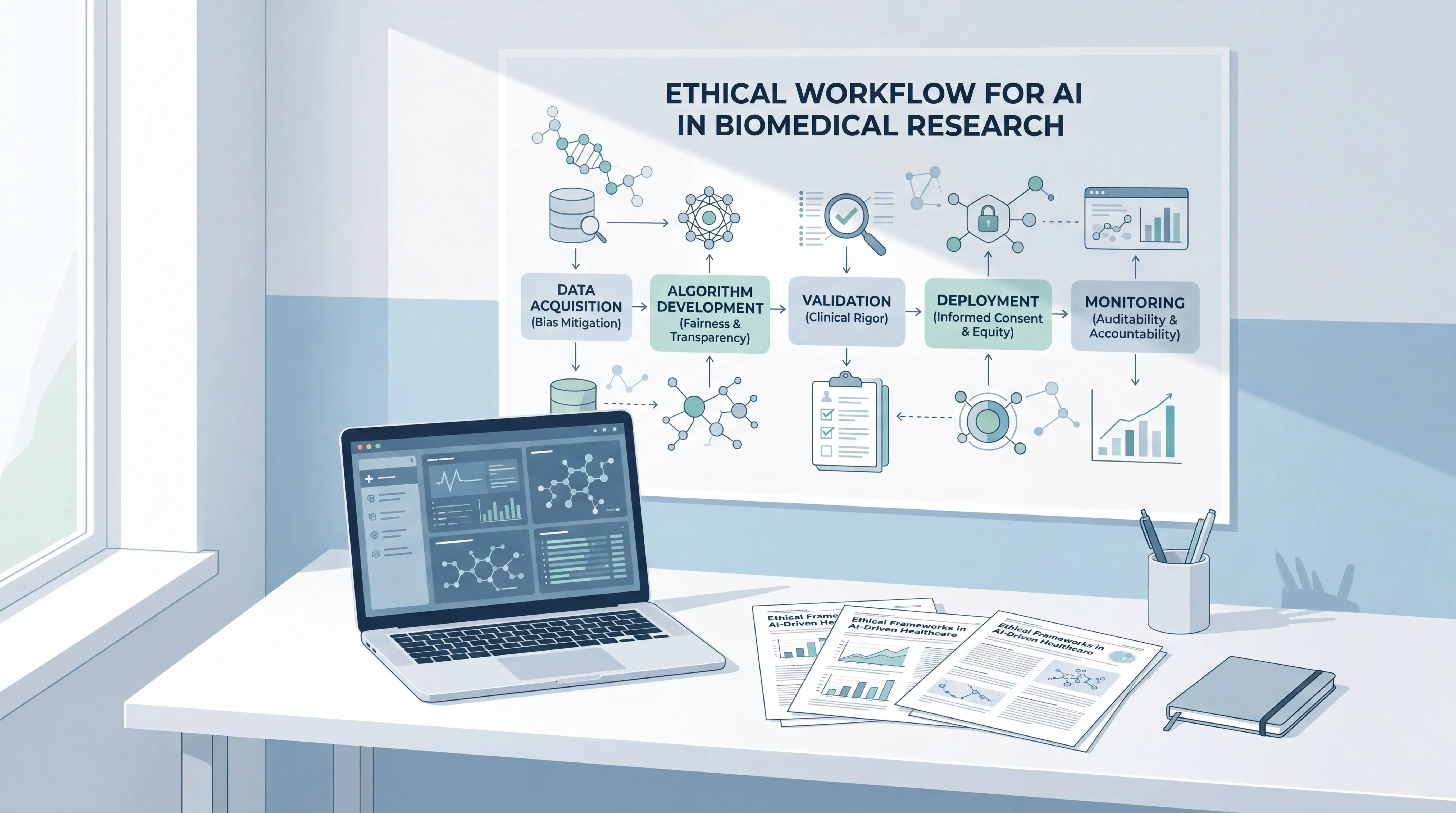
AI has changed how many professionals draft an essay, revise manuscripts, and prepare submissions. For medical students, physicians, and researchers, the key question is no longer whether AI exists. It is whether using it in academic writing is ethical, transparent, and policy-compliant. The short answer is yes, sometimes. But only when the human author remains responsible, and the use of AI is disclosed when required. [Opening image: a clean academic desk with a laptop, medical journal pages, and a visible AI workflow diagram, designed as a professional ethics poster.]
1. What “ethical use” of AI really means
1.1 AI is a tool, not an author
In academic writing, AI can support structure, grammar, literature organization, and clarity. It should not replace intellectual contribution, clinical judgment, or scientific responsibility. The ethical line is crossed when AI is presented as independent scholarship or when its role is hidden.
For medical and scientific audiences, this distinction matters. An AI tool may improve readability, but it cannot verify truth, interpret patient context, or assume authorship. The human writer must still design the argument, check the evidence, and approve the final text.
1.2 Transparency is the core principle
Academic integrity depends on transparency. If AI helped draft, edit, summarize, or translate part of an essay, that contribution should be disclosed when journal policy requires it. Concealing AI use can mislead editors and readers about how the work was created.
This is especially important in research writing. Many journals now expect authors to identify the software, version, manufacturer, date of use, and the specific parts of the manuscript that were assisted by AI. If AI use is hidden, the issue is not the tool itself, but the lack of honesty.
2. When AI use is acceptable in academic writing
2.1 Low-risk tasks are usually acceptable
AI is generally easier to justify when it is used for support tasks rather than content creation. Common acceptable uses include:
- Grammar and spelling correction.
- Rephrasing for clarity.
- Reference formatting.
- Language polishing.
- Outline generation.
- Summarizing public, non-sensitive material.
These tasks do not change the scientific meaning if they are carefully checked by the author. For non-native English speakers, AI can improve efficiency and reduce language barriers. That can support fairness, as long as the final text remains accurate and original.
2.2 Higher-risk tasks need more caution
Risk rises when AI contributes to interpretation, discussion, or conclusions. In medical and research writing, that includes:
- Generating claims without source verification.
- Creating fabricated citations.
- Rewriting results in a way that changes meaning.
- Summarizing patient data.
- Producing figures or tables from sensitive data.
The more AI influences the substance of the manuscript, the more important disclosure, verification, and human oversight become. In an academic essay, style assistance may be acceptable. Invented content is not.
3. Why non-disclosure can become academic misconduct
3.1 Hiding AI use violates trust
If an author intentionally conceals AI assistance, it may be treated as academic misconduct. The reason is simple. Academic publishing relies on trust. Readers, editors, and reviewers must know how a manuscript was produced in order to judge its reliability.
Hiding AI use can also raise questions about originality and accountability. If a manuscript contains AI-generated text that has not been disclosed, the author may be seen as misrepresenting authorship. In many publication systems, that can violate journal policy and institutional ethics standards.
3.2 Medical writing has higher stakes
In medicine, inaccurate writing can affect clinical interpretation, guideline development, and downstream patient care. That is why ethical standards are stricter for medical students, doctors, and researchers than for casual writing.
A weakly checked AI-generated essay may look polished but still contain false statements, outdated guidance, or unsupported claims. Polished language does not equal reliable science. This is why human review is not optional. It is the ethical safeguard.
4. What journals and publishers expect
4.1 Disclosure requirements are becoming more specific
Several journals now provide explicit guidance on AI disclosure. For example, the updated JAMA and JAMA Network author instructions state that when traditional or generative AI is used to create, review, revise, or edit manuscript content, authors should report it in the acknowledgments section.
A complete disclosure may include:
- AI platform or tool name.
- Version number.
- Manufacturer.
- Date of use.
- A short description of how AI was used.
- The manuscript sections affected.
- A statement that the author accepts responsibility for the final content.
This level of detail helps readers assess transparency and reproducibility. It also shows respect for publication standards.
4.2 Some uses may not require disclosure
Routine grammar checking, spell checking, and reference editing may be excluded in some policies. But that does not mean authors should be careless. Always check the journal’s current author guidelines before submission.
If the manuscript includes sensitive data, patient information, or AI-generated images, additional restrictions may apply. Copyright, privacy, and consent issues can arise. In those cases, ethical review is not optional.
5. Practical ethical rules for medical students and researchers
5.1 Use AI with a verification workflow
A safe workflow reduces risk. Use this sequence:
- Draft your own core argument.
- Use AI only for support tasks.
- Check every factual statement against primary sources.
- Verify all citations manually.
- Remove anything that cannot be substantiated.
- Review the final text for tone, accuracy, and policy compliance.
This workflow is especially useful when writing a scientific essay or preparing a manuscript introduction. It keeps the author in control and prevents overreliance on automation.
5.2 Never use AI to fake scholarship
AI should never be used to:
- Invent data.
- Fabricate references.
- Rewrite copied material to bypass plagiarism detection.
- Hide ghostwriting.
- Alter results or images.
- Create false reviewer responses.
These actions are not ethical shortcuts. They are serious integrity violations. If AI is used to deceive, the problem is misconduct, not technology.
6. How to write an ethical AI disclosure
6.1 Keep it factual and concise
A good disclosure should be specific, not defensive. Example:
“During manuscript preparation, the author used [tool name, version, manufacturer] on [date] to assist with language editing and clarity improvement in the Introduction and Discussion. The author reviewed, revised, and takes full responsibility for the final content.”
This type of statement works because it is transparent and limited to the real use case. It does not overstate AI contribution and does not weaken authorship.
6.2 Match the disclosure to the real role of AI
If AI only corrected grammar, say so. If it helped outline the paper, say so. If it assisted in data analysis or figure preparation, describe that clearly and in the correct manuscript section.
Precision matters. A vague statement sounds evasive. A clear statement builds trust.
7. Where scifocus.ai can help, ethically
7.1 A structured writing aid for academic work
For users who want a controlled and transparent workflow, scifocus.ai can support academic writing without replacing the author’s judgment. It can help organize ideas, improve clarity, and speed up revisions. Used properly, it can reduce the time spent on mechanical editing and let the writer focus on content quality.
That matters for busy medical students, clinicians, and researchers who must balance writing with clinical duties and laboratory work. The best use of AI is support, not substitution.
7.2 Use it as part of a compliant process
If you use scifocus.ai, pair it with a human review process. Check journal policy first. Then document exactly how the tool was used. This helps you stay aligned with ethical standards while improving productivity.
In practice, that means you can use it to refine an essay, improve readability, and organize sections, but you still own the ideas, evidence, and final approval. That is the ethical model: assisted, supervised, and disclosed when needed.
Conclusion
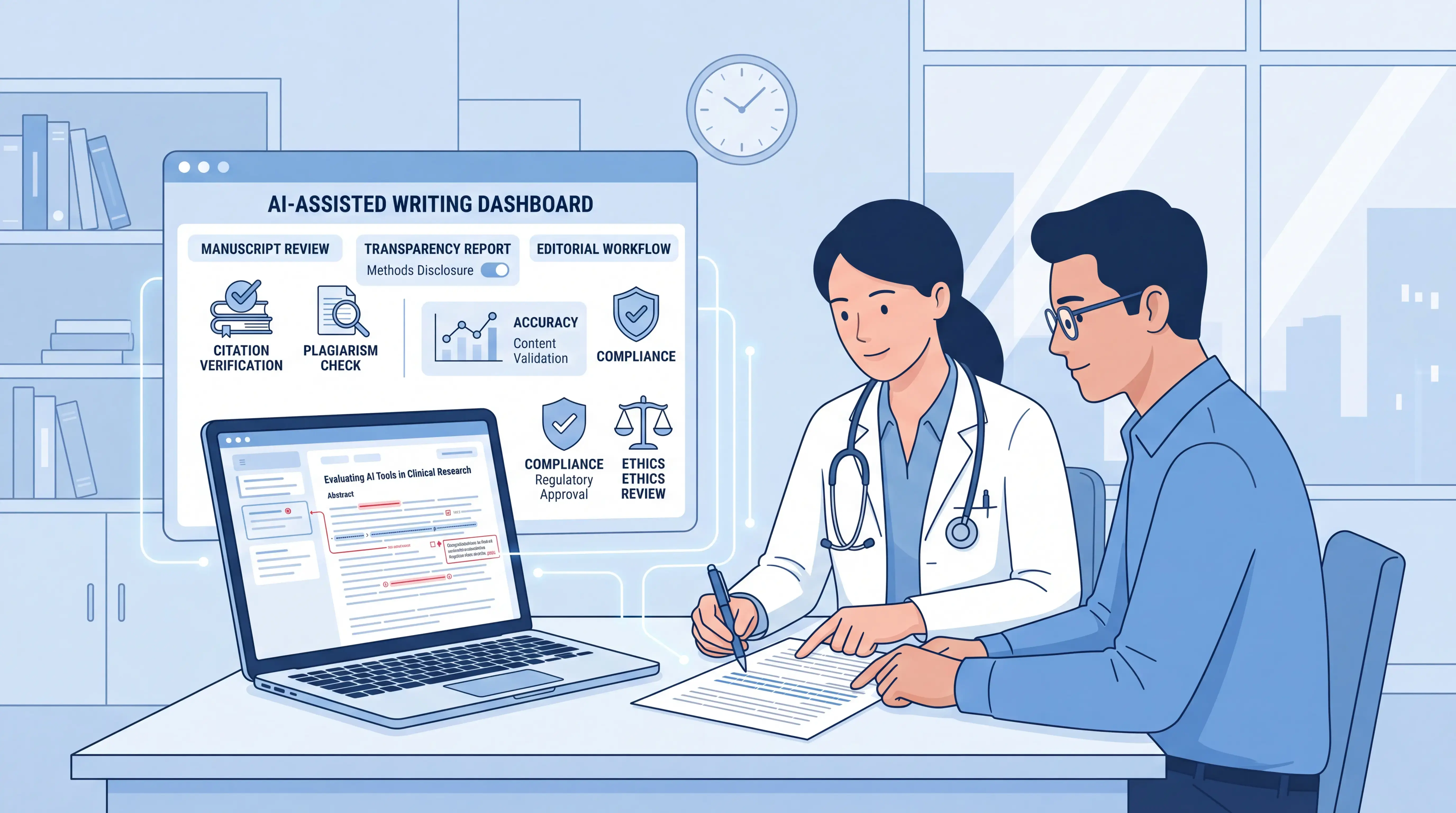
So, is it ethical to use AI in academic writing? Yes, when the use is transparent, limited, and fully reviewed by the author. It becomes unethical when AI is hidden, used to fabricate content, or allowed to replace scholarly responsibility. For medical students, doctors, and researchers, the standard is clear. Use AI to support writing, not to mislead. Always check journal policies, verify every claim, and disclose AI involvement when required. If you want a safer workflow for drafting and editing, consider scifocus.ai as a practical support tool for your next academic essay. [Closing image: a physician and researcher reviewing a manuscript beside an AI-assisted writing dashboard, with a clean message of transparency, accuracy, and compliance.]
Did you like this article? Explore a few more related posts.
Start Your Research Journey With Scifocus Today
Create your free Scifocus account today and take your research to the next level. Experience the difference firsthand—your journey to academic excellence starts here.