

How to Write the Methods Section for a Qualitative Study
Introduction
Writing the essay section for a qualitative study can feel difficult because readers expect clarity, rigor, and enough detail to trust your findings. If the methods section is vague, your study loses credibility. If it is too long, it becomes hard to read. The goal is simple: explain exactly what you did, why you did it, and how another researcher could follow the same logic.
1. What the Methods Section Must Do
1.1 State the study design clearly
A strong methods section begins with the study design. In qualitative research, this means naming the approach early. For example, you may use phenomenology, grounded theory, ethnography, or a case study design. The reader should know, in one or two lines, what kind of qualitative inquiry you conducted.
A precise opening sentence reduces confusion and sets the scientific frame for the entire essay. Do not bury the design in later paragraphs. Put it up front.
1.2 Explain the logic behind the design
You should also explain why that design fits the research question. Qualitative studies are not driven by numerical comparison. They aim to explore experience, meaning, behavior, or context. That is why the method matters.
For example, if your study examines how medical students experience burnout during clinical rotations, a phenomenological approach may be suitable because it focuses on lived experience. If you are building a conceptual model from interviews, grounded theory may be better. This is the kind of rationale readers expect.
1.3 Keep the section focused on methods, not results
A common mistake is to mix methods with interpretation. The methods section should not explain what you found. It should only explain how the study was conducted. Save meaning, themes, and interpretation for the Results and Discussion sections.
In a well-written essay, each section has a separate job. The methods section builds trust by showing methodological discipline.
2. Describe Participants, Setting, and Recruitment
2.1 Define who participated
Start with the participants. In qualitative research, the sample is often small and purposive rather than random. You should specify who was included, how many people participated, and why they were relevant to the study.
For medical and clinical audiences, this detail matters. A study involving residents, physicians, patients, or caregivers must state the role of each group clearly. If applicable, include age range, specialty, clinical setting, or other criteria that shaped the sample.
2.2 Explain recruitment in a transparent way
Recruitment should be described step by step. State where participants came from, how they were approached, and what inclusion or exclusion criteria were used. If you used purposive sampling, say so. If you relied on snowball sampling or convenience sampling, also say so.
A transparent recruitment description improves trust. It also helps readers judge transferability. In qualitative work, that is more important than statistical generalization.
2.3 Include sample size rationale
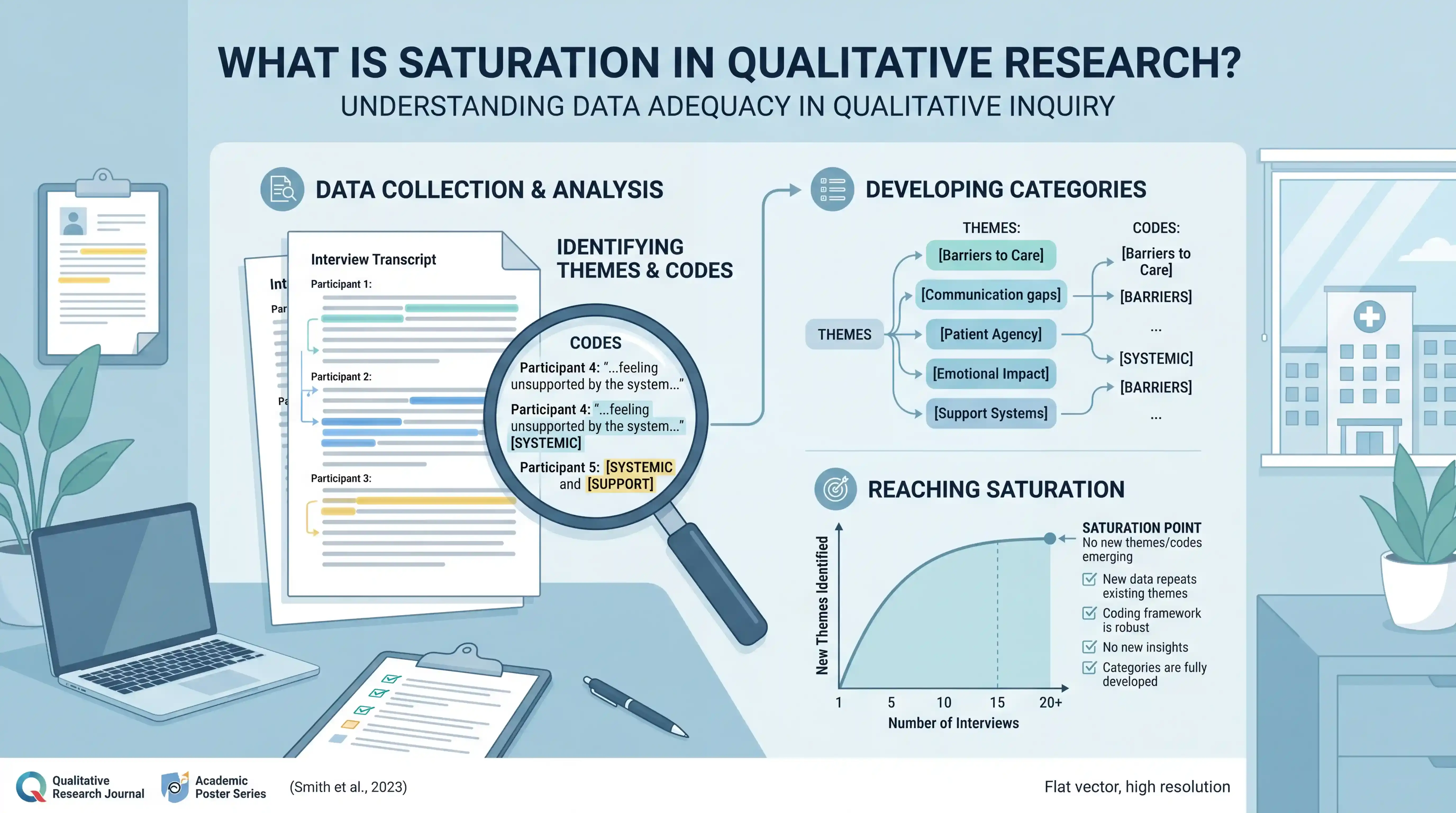
Qualitative sample size is usually justified by information richness or saturation, not by power analysis. If your study stopped recruiting after saturation, explain what that means in your context. If you used a target sample size in advance, state the reason.
A concise explanation is enough. For example:
- Participants were recruited until no new codes emerged.
- Sampling continued until thematic saturation was reached.
- The final sample reflected a range of clinical experience and training levels.
That level of clarity is usually sufficient for a rigorous essay.
3. Explain Data Collection in Detail
3.1 Identify the data source
Qualitative methods depend on the type of data collected. You should state whether you used semi-structured interviews, focus groups, field observations, documents, reflective journals, or open-ended survey responses. If more than one source was used, explain each one separately.
For medical researchers, interviews are often the most common. If so, include who conducted them, where they took place, how long they lasted, and whether they were audio-recorded. These facts matter because they affect depth, consistency, and bias control.
3.2 Describe the interview or observation process
Do not write “data were collected through interviews” and stop there. That is too thin. Readers need enough detail to understand how the interaction unfolded. Mention the interview guide, the core topics, and whether questions were pilot tested.
If observations were used, describe the setting, duration, and what was observed. If documents were analyzed, note the document type and selection process. The methods section should make the data source visible and reproducible in principle.
3.3 Mention practical and ethical details
Important operational details should also appear here. For example:
- Were interviews face-to-face, by phone, or online?
- Was informed consent obtained before data collection?
- Were transcripts anonymized?
- Were field notes taken immediately after each session?
These are not minor points. They shape the reliability and ethics of the study. A professional essay should show that the study was both careful and compliant.
4. Show How the Data Were Analyzed
4.1 Name the analysis method
The analysis method must be named directly. Common approaches include thematic analysis, content analysis, grounded theory coding, framework analysis, and interpretive phenomenological analysis. Choose the term that matches your study, not one that sounds impressive.
Readers should be able to see the link between the research question, the data, and the analytic strategy. That link is central to qualitative credibility.
4.2 Describe the coding process
Explain how coding was done. State whether coding was inductive, deductive, or both. Indicate whether one coder or multiple coders analyzed the data. If more than one coder was involved, describe how disagreements were resolved.
A clear coding description often includes these steps:
- Transcription and familiarization.
- Initial coding.
- Code comparison and refinement.
- Theme development.
- Review and naming of themes.
This sequence is easy to follow and reflects standard qualitative practice.
4.3 Mention software if used
If you used qualitative analysis software such as NVivo, Atlas.ti, or MAXQDA, include it. Software does not replace analysis, but it supports organization and traceability. Mentioning it adds precision to the methods section.
If no software was used, that is also acceptable. Just describe how the data were managed. The goal is transparency, not software branding.
5. Address Rigor, Ethics, and Reporting Quality
5.1 Explain how trustworthiness was ensured
Qualitative studies are judged by rigor, not just by process. You should show how you supported credibility, dependability, confirmability, and transferability. Depending on your design, that may include member checking, peer debriefing, audit trails, reflexive memos, or triangulation.
You do not need to use every technique. But you should explain the ones you did use. For example, if transcripts were checked by participants, say so. If two researchers independently coded the data, explain how that improved reliability.
5.2 Include ethics approval
Ethical approval is essential in medical and clinical research. State the name of the institutional review board or ethics committee, the approval number if available, and how consent was obtained. If the study involved sensitive topics, note any extra protections.
This is especially important for studies involving patients, student participants, or healthcare professionals discussing workplace experience. Ethical clarity is part of scientific credibility.
5.3 Keep the tone factual
The methods section should be written in a factual and direct style. Avoid promotion, emotional language, or interpretation. Use past tense for what you did. Keep the focus on procedures, not conclusions.
That discipline is one reason a strong essay reads as trustworthy. It is not trying to persuade with claims. It is proving rigor through structure.
6. Use a Clean Structure That Readers Can Scan
6.1 Organize by subheadings
Subheadings make the section easier to read. In qualitative research, useful headings often include:
- Study design
- Setting and participants
- Data collection
- Data analysis
- Rigor and ethics
This structure helps readers find what they need fast. It also prevents important details from getting lost.
6.2 Write in short, precise paragraphs
Keep paragraphs short. One paragraph should usually cover one idea. Long blocks of text make methods hard to scan and harder to verify. Short sentences improve readability without reducing rigor.
This is particularly useful for medical students, doctors, and researchers who read quickly and need the essential facts at a glance.
6.3 Avoid unnecessary protocol-level detail
Do not copy every line of a field manual or interview script. Include enough detail for understanding and replication in principle, but avoid overload. The best methods sections are complete, not bloated.
A practical rule is this: include the details that affect interpretation, credibility, or reproducibility. Leave out what does not.
7. A Simple Template You Can Adapt
A useful qualitative methods template may look like this:
- Study design and rationale.
- Setting and participant characteristics.
- Recruitment strategy and criteria.
- Data collection procedures.
- Data analysis approach.
- Trustworthiness measures.
- Ethics approval and consent.
You can adapt this framework to most research projects. It keeps the section logical and complete. It also helps you avoid missing key information.
For busy clinicians and researchers, using a writing tool can save time. Scifocus.ai can help organize your research notes, structure your methods section, and refine academic language while keeping your writing concise and professional. That is especially useful when you need a polished essay without losing methodological precision.
Conclusion
A strong qualitative methods section is specific, transparent, and well organized. It tells readers what kind of study you conducted, who participated, how data were collected, how the analysis was done, and how rigor was maintained. If you write it with precision, your study becomes easier to trust and easier to review.

Did you like this article? Explore a few more related posts.
Start Your Research Journey With Scifocus Today
Create your free Scifocus account today and take your research to the next level. Experience the difference firsthand—your journey to academic excellence starts here.