
How to Write a Compelling Specific Aims Page for an NIH Grant
Introduction
A strong essay for an NIH Specific Aims page must do one thing fast. It must convince reviewers that your project is important, feasible, and worth funding. Many applicants fail because they explain too much background and too little direction. Others hide the real innovation. If your aims page is unclear, the rest of the application loses momentum.
1. Understand What the Specific Aims Page Must Do
1.1 Present a clear scientific gap
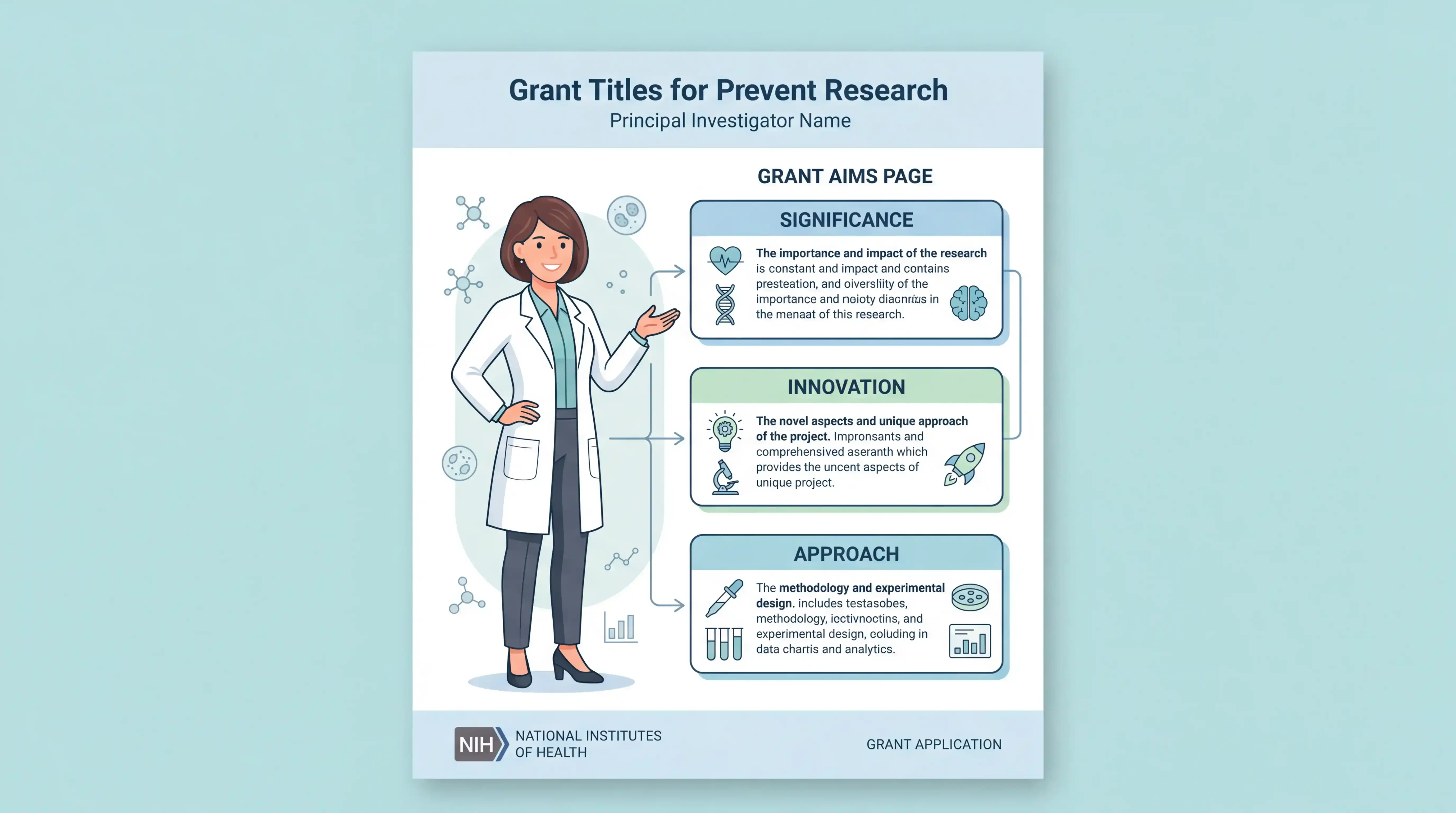
The Specific Aims page is not a full research protocol. It is a one-page argument. Its job is to show the reviewer three things. First, the problem matters. Second, the gap is real. Third, your plan can close that gap.
For medical students, physicians, and researchers, this means writing with precision. You should define the disease or scientific problem in plain terms. Then show why current knowledge or current practice is incomplete. In grant writing, clarity is not optional. Aims that are too broad, too vague, or too crowded reduce reviewer confidence.
1.2 Make the project feel necessary
A compelling page does more than list objectives. It creates urgency. Reviewers should feel that the question is timely and the answer will matter.
This is where E-E-A-T principles matter in writing. Use accurate context. Avoid inflated claims. Support your logic with established facts and a disciplined structure. If your project addresses a major unmet need, state that directly. If it fills a known gap in mechanism, diagnosis, or treatment, say so. Do not bury the reason the study exists.
2. Build the Page Around a Single Central Hypothesis
2.1 Start with a focused hypothesis
Every good Specific Aims page begins with a testable hypothesis. That hypothesis should connect the known problem to the unknown mechanism or solution. It should also guide all proposed aims.
A weak hypothesis sounds descriptive. A strong hypothesis sounds causal. For example, the difference between “we will study how X is related to Y” and “we hypothesize that X drives Y through a defined pathway” is substantial. The second version gives the reviewer a reason to trust the study design.
Aims should not read like a list of disconnected tasks. They should feel like parts of one logical argument.
2.2 Keep the logic narrow and cumulative
A common mistake is trying to solve too many questions at once. That makes the page look ambitious, but not coherent. A better approach is to build from mechanism to validation, or from association to function, depending on the project type.
A practical structure is:
- Define the problem.
- State the hypothesis.
- List 2 to 3 aims.
- Show how each aim supports the next.
This creates a clean narrative. It also helps reviewers understand why your study can be completed within the grant period.
3. Write Aims That Are Specific, Measurable, and Feasible
3.1 Use verbs that signal action
Each aim should be written as a result-oriented statement. Good aims use verbs such as:
- determine
- test
- evaluate
- validate
- define
- compare
Avoid vague verbs like explore or investigate unless the aim truly requires discovery-level framing. Reviewers need to see what will be done and what will be learned.
If your aim can be checked against a clear outcome, it is stronger. For example, an aim that includes a molecular interaction, a cellular phenotype, or a clinical association is easier to evaluate than an aim that only says “characterize the pathway.”
3.2 Match each aim to a realistic experiment
Feasibility matters as much as novelty. Aims must align with your team’s data, tools, and time. A strong page shows that each objective is supported by preliminary evidence or established methods.
This is especially important in NIH review. Reviewers often ask a simple question: can this team actually finish this work? Your page should answer yes without sounding defensive. If you have pilot data, mention it briefly. If the method is standard in your field, note that the approach is established. If clinical samples are involved, explain that access is already in place.
Aims that look exciting but unworkable usually hurt the application more than they help it.
4. Show Innovation Without Overstating It
4.1 Innovation must be concrete
Innovation is not a slogan. It should be visible in the question, the mechanism, the model, or the application. The strongest innovative projects usually have one of these features:
- a new molecular link
- a new mechanism
- a new experimental strategy
- a new clinical translation path
The knowledge base for grant writing emphasizes this point clearly. Reviewers pay close attention to what is unique about the project. They want to know what makes the study different from existing work and why that difference matters.
A good way to frame innovation is to state what is known, then state what remains unresolved. After that, explain how your project addresses the unresolved point in a way others have not.
4.2 Keep the tone objective
Do not call everything “novel.” That weakens credibility. Instead, identify the exact innovation. For example, a project may be innovative because it tests a binding domain, validates a rescue mechanism, or examines clinical relevance in human tissue. That is stronger than a general claim of originality.
Objective innovation is more persuasive than exaggerated novelty.
5. Organize the Page for Reviewer Speed
5.1 Use a simple, readable sequence
Reviewers read quickly. Your page must guide them. A clear flow improves comprehension and increases the chance that your logic survives a busy review.
A practical order is:
- Problem statement.
- Knowledge gap.
- Central hypothesis.
- Overall objective.
- Specific aims.
- Expected impact.
This sequence mirrors how reviewers think. It also reduces cognitive load. Short paragraphs help. So do bolded key sentences. Keep the language direct. Long, dense blocks of text make the page harder to scan.
5.2 Make each aim easy to follow
Each aim should stand on its own and still fit the larger story. A useful test is this: if a reviewer only reads the aim headings, do they understand the project? If not, the page needs tightening.
Aims should not overlap too much. If Aim 1, Aim 2, and Aim 3 sound almost the same, the design looks repetitive. If they are too different, the project looks fragmented. The right balance is sequential and cumulative.
6. End with Impact and Confidence
6.1 State the expected outcome clearly
The ending of the Specific Aims page should tell the reviewer what success looks like. Not every aim needs a full detailed prediction, but the page should make the overall payoff obvious.
A strong closing section answers three questions:
- What will this study prove?
- Why does it matter?
- How will it move the field forward?
If your project is strong, the answer should connect directly to a scientific advance or a clinical application. That is where the page becomes more than a summary. It becomes a funding argument.
6.2 Bring the reader back to the problem
Do not end with a generic statement. End by linking the solution to the unmet need. This is where the application gains momentum. A reviewer should finish the page thinking the same thing you want them to think: this question is important, the approach is sound, and the team is ready.
For writers who struggle with structure, scifocus.ai can help turn raw research ideas into a cleaner grant narrative. It is useful for organizing aims, tightening logic, and improving clarity without losing scientific precision. For NIH applicants, that kind of support can save time and reduce drafting errors.
Conclusion
A compelling Specific Aims page is concise, logical, and persuasive. It identifies a real gap, states a testable hypothesis, and presents 2 to 3 aims that are feasible and meaningful. It also shows innovation in a concrete way and ends with clear expected impact. If you want to improve your draft faster, use scifocus.ai to structure your ideas and sharpen your language.
Did you like this article? Explore a few more related posts.
Start Your Research Journey With Scifocus Today
Create your free Scifocus account today and take your research to the next level. Experience the difference firsthand—your journey to academic excellence starts here.