

How to Write an Effective Results Section for Medical Research Papers
Introduction
Writing the essay-like Results section in a medical research paper is often harder than it looks. Many authors either repeat the Methods, over-interpret the findings, or bury the key data in long paragraphs. For medical students, doctors, and researchers, the real challenge is simple: report what you found, clearly and objectively, without losing the reader.
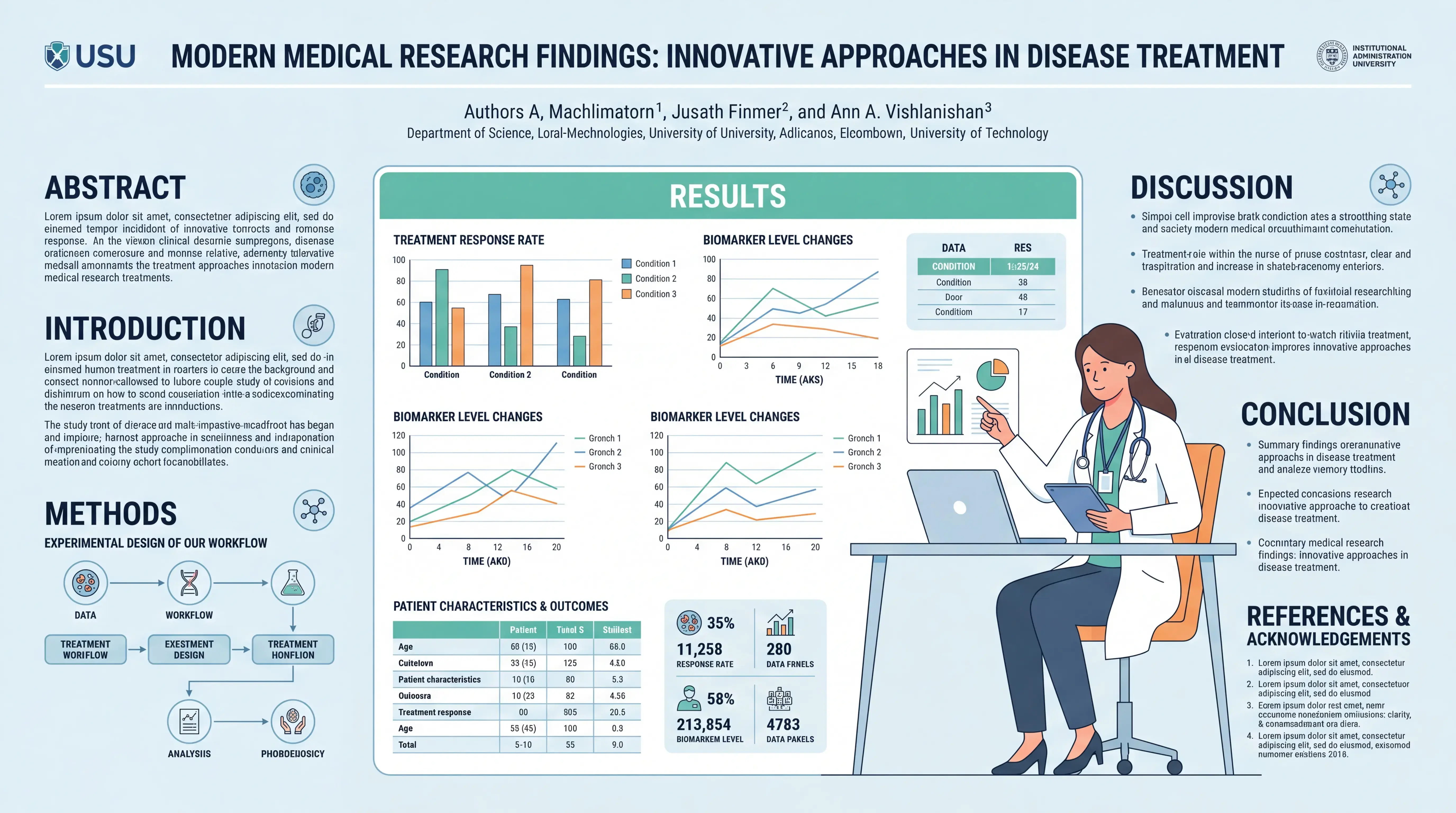
1. Understand the Core Purpose of the Results Section
1.1 Answer the right question
The Results section has one job. It answers: “What did you find?” This section should present the findings of your study in a direct, factual way. It is not the place to explain why the results happened. That belongs in the Discussion.
A strong Results section helps readers quickly see the main outcome, the supporting evidence, and the order of your findings. In medical writing, this clarity matters because readers often scan this section first.
1.2 Keep Methods and Results separate
One common mistake is to repeat experimental procedures. If you wrote about Western blotting, patient selection, or statistical tests in the Methods section, do not restate every detail again.
Instead, mention only the minimum context needed to understand the finding. For example, you may write:
Western blotting showed that protein X was higher in group A than in group B.
This is enough. It tells the reader what was found without re-teaching the method.
1.3 Use a direct, factual tone
Medical research writing should be precise. Avoid vague phrases such as “remarkable changes” or “a lot of improvement.” Use measurable language whenever possible.
For example, write:
- “Tumor volume decreased by 32%.”
- “The survival rate was higher in the treatment group.”
- “Serum HER2/neu levels correlated with disease-free survival.”
These statements are concrete and easy to verify.
2. Build the Results Section Around a Clear Structure
2.1 Use subheadings for each major finding
A well-structured Results section is easier to read and easier to review. Use subheadings to separate major experiments or clinical outcomes. This is especially useful in complex medical studies with multiple datasets.
A practical rule is to let each subheading reflect one main result. For example:
- Baseline characteristics of the study population
- Drug treatment reduced inflammatory markers
- Protein expression changed after intervention
- Survival analysis confirmed the main outcome
This structure gives your paper a logical flow. It also helps the reader follow your argument without getting lost.
2.2 Start each subsection with its purpose
A helpful writing pattern is to begin with the goal of the experiment. Phrases like “To investigate…” or “In order to…” provide a clean transition from Methods to Results.
Example:
To evaluate whether Drug X reduced inflammation, we measured IL-6 and TNF-α levels.
Then present the data. This approach creates order and improves readability.
2.3 End each subsection with the main takeaway
Each Results subsection should close with a short concluding sentence. Do not overstate the meaning. Just state the most important result.
For example:
These results indicated that Drug X reduced inflammatory signaling in treated cells.
This sentence is enough to connect the data without turning the Results into a Discussion.
3. Write with Precision, Not Decoration
3.1 Use past tense for completed findings
In most medical papers, the Results section should be written in the past tense. You are reporting what you observed in completed experiments or finished clinical analyses.
Correct examples:
- “The treatment group showed lower CRP levels.”
- “The number of apoptotic cells increased.”
- “Data demonstrated a significant association between age and outcome.”
One important detail: match subject and verb correctly. Write “our data demonstrate” only if the subject is plural and the statement is general. In Results, “our data demonstrated” is often safer and more consistent.
3.2 Keep sentence structure complete and clear
Incomplete sentences create confusion. Make sure each sentence has a clear subject, verb, and object.
Avoid this:
- “Downstream signaling was activated.”
If the pathway is specific, name it:
- “The PI3K/AKT pathway was activated.”
Clarity is especially important in medical research, where a small ambiguity can change interpretation.
3.3 Avoid exaggerated or high-risk wording
Some words sound sophisticated but make the result less precise. The goal is not to impress. The goal is to inform.
Instead of writing:
- “This may represent a novel therapeutic revolution.”
Write:
- “This pathway could be a novel target for treatment.”
That sentence is more cautious and more scientifically reliable.
4. Present Data in a Smart, Reader-Friendly Way
4.1 Use text for simple results, figures for complex ones
Not every result needs a figure. Simple findings can be described in one or two sentences. More complex comparisons, time-course changes, and multi-group analyses are better shown in tables or figures.
The key is balance. A figure should add value. It should not repeat every number already written in the text.
A good rule is this:
- Use text to highlight the main result.
- Use figures to show patterns, comparisons, or trends.
- Use tables for detailed numeric summaries.
4.2 Do not repeat the figure in full
Many authors copy everything from the figure legend into the Results section. That weakens the paper. Instead, summarize only the most important point.
For example:
Figure 2 showed that cell migration was significantly reduced after treatment.
This is enough. The graph already contains the full data.
4.3 Show representative results
Not every data point belongs in the main text. Select the results that best support your conclusion. This makes the paper sharper and more persuasive.
If several experiments tell the same story, choose the most representative one for the main Results. If one dataset is similar but less central, move it to supplementary material.
That approach improves focus and keeps the reader’s attention on the strongest evidence.
5. Use Logic to Create Flow
5.1 Order results by importance or sequence
A Results section should feel like a story, even in a formal medical paper. The order can follow either:
- Experimental logic, or
- Importance of findings
If your study moves from baseline data to intervention, then molecular mechanism, then clinical outcome, keep that sequence. If the results are parallel, place the strongest or most clinically relevant first.
This kind of structure improves comprehension and makes the paper feel intentional.
5.2 Connect sections with short transition phrases
Simple transitions keep the section moving. Use phrases such as:
- “Next, we examined…”
- “To further assess…”
- “We then analyzed…”
- “In addition, …”
These small connectors help the reader understand that each subsection builds on the last one.
5.3 Summarize only what matters
At the end of each major block, summarize the key message in one sentence. Do not add interpretation. Keep the tone measured.
Example:
Together, these findings showed that the intervention improved clinical markers without increasing adverse events.
That sentence tells the reader what matters most.
6. Common Mistakes to Avoid
6.1 Do not explain the mechanism too early
The Results section is not the Discussion. If you start explaining why the result happened, you risk mixing evidence with interpretation.
Weak example:
- “This proves that the drug works by blocking metastasis.”
Better example:
- “The drug reduced metastatic cell migration.”
The first sentence interprets. The second reports.
6.2 Do not overload the section with unnecessary numbers
Too many exact values can make the section hard to read. Include the most relevant numbers, especially when they support the main claim. Avoid listing every repeated measurement unless it is essential.
6.3 Do not use unsupported phrases
In medical writing, unsupported claims weaken trust. Avoid phrases like “obviously,” “clearly,” or “definitely” unless the evidence truly justifies them. Let the data speak.
6.4 Do not misuse “data show” and “data shows”
Remember that data is plural in standard scientific writing. Use:
- “The data show”
- “Our data demonstrate”
This is a small detail, but it signals precision and professionalism.
7. A Practical Template You Can Reuse
7.1 Simple Results paragraph template
Here is a concise model you can adapt:
To evaluate [purpose], we measured [marker or outcome]. The results showed that [main finding]. Compared with [control or baseline], [group or condition] had [specific change]. These findings indicated that [brief summary].
This format works well for medical papers because it is direct and easy to edit.
7.2 Table and figure description template
When writing about a figure or table, keep it short:
As shown in Figure 3, [main trend] was observed in [group or condition]. Table 2 summarized the clinical characteristics of the cohort.
That is usually enough. Do not retell the entire dataset in words.
7.3 Final editing checklist
Before submission, check the following:
- Is the Results section separate from Methods and Discussion?
- Is the tense mostly past tense?
- Are the key findings easy to identify in each subsection?
- Are figures and tables used only when they add value?
- Are the sentences direct, complete, and precise?
If the answer is yes, your Results section is likely on the right track.
8. How SciFocus.ai Can Help You Write Faster and Better
Writing a medical Results section takes more than grammar. It requires structure, restraint, and careful selection of data. Many researchers lose time turning raw findings into clean, publication-ready prose. This is where SciFocus.ai can help.
With SciFocus.ai, you can streamline the drafting process, refine your scientific wording, and turn scattered notes into a more organized Results section. It is especially useful when you need to keep your language concise, align your tense and structure, and present findings in a cleaner academic format.
For students, clinicians, and researchers under deadline, that means less rewriting and more time for analysis. If your goal is to write a stronger medical paper with less friction, SciFocus.ai is a practical tool worth trying.

Conclusion
An effective Results section is clear, structured, and factual. It reports what you found, in the right order, with the right level of detail. Keep the Methods out, reserve interpretation for the Discussion, and use figures and tables only when they strengthen the message. If you want to write faster and produce cleaner scientific prose, consider using SciFocus.ai as part of your workflow.
Did you like this article? Explore a few more related posts.
Start Your Research Journey With Scifocus Today
Create your free Scifocus account today and take your research to the next level. Experience the difference firsthand—your journey to academic excellence starts here.