
How to Write a Data Availability Statement
Introduction
A strong essay or research paper is incomplete without a clear data availability statement. Many medical students, doctors, and researchers know the data exist, but not how to describe access, restrictions, or repository details in a concise, journal-ready way. That creates delays, revisions, and avoidable publication friction. This guide explains how to write a data availability statement that is accurate, transparent, and aligned with modern journal standards.

1. What a Data Availability Statement Is
1.1 The core purpose
A data availability statement tells readers where the data behind a study can be found, whether the data are public, restricted, or unavailable. In many journals, it is a required section because it improves transparency and reproducibility.
A good data availability statement does not just say “available on request.” It gives enough detail for readers and editors to understand exactly how data can be accessed, or why access is limited.
1.2 Why it matters in medical research
In clinical and biomedical research, data sharing is tied to trust. Reviewers may ask whether patient data were anonymized. Editors may ask whether a repository was used. Funders may require public archiving.
For medical students and early-career researchers, learning this format early reduces submission errors. It also shows that your essay or manuscript follows standard research ethics and reporting practice.
2. What to Include in the Statement
2.1 State the data location
If the data are stored in a repository, name it directly. Include the repository name, accession number, DOI, or persistent link when available.
Examples of useful elements include:
- Repository name
- Dataset identifier
- DOI or accession number
- Direct access link
- Version or date deposited
Precision matters. A vague line creates confusion. A specific repository citation supports reproducibility and editorial review.
2.2 Explain access conditions
If data are not fully open, explain the reason clearly. Common reasons include patient privacy, ethical approval limits, legal restrictions, or institutional policy.
You should specify whether access is:
- Open and unrestricted
- Available upon reasonable request
- Restricted to approved researchers
- Not publicly available
This is especially important in clinical studies where patient confidentiality must be protected. A polished essay should communicate those limits without sounding defensive or evasive.
2.3 Mention code, materials, and supporting files if relevant
Some journals expect more than raw data. If analysis code, protocols, or supplementary materials are available, include them in the same statement or in a linked section.
That is useful when the dataset alone is not enough to reproduce the findings. In quantitative research, code availability can be as important as the data itself.
3. A Simple Structure You Can Follow
3.1 Use a direct, one-sentence format
Many journals prefer a short and direct statement. The structure often follows one of these patterns:
- “The data supporting the findings of this study are available in [repository name], [DOI/link].”
- “The data are available from the corresponding author upon reasonable request.”
- “The data are not publicly available due to patient privacy restrictions.”
Keep the wording factual. Keep the sentence short. Avoid promotional language, unnecessary detail, or broad claims.
3.2 Match the statement to the actual data situation
Do not use a generic template if it does not reflect reality. Editors often check whether the statement matches the study type.
For example:
- A genomics paper may use public repository access.
- A retrospective chart review may require restricted access.
- A small educational survey may allow anonymized data sharing.
The best essay or manuscript statement is the one that reflects the true governance of the data.
3.3 Align with journal and funder rules
Different journals use different policies. Some require open data deposition. Others accept controlled access. A few require a standard phrase in the methods or end matter section.
Before submission, check:
- Journal author guidelines.
- Funders’ open science policy.
- Institutional ethics requirements.
- Patient consent language, if applicable.
The right statement is not only well written. It is also policy-compliant.
4. Examples You Can Adapt
4.1 Public repository example
“The data supporting the findings of this study are available in the Figshare repository, DOI: 10.xxxx/xxxxx.”
This format works well when data are deposited in a stable archive with a persistent identifier.
4.2 Restricted access example
“The data are not publicly available due to confidentiality agreements and patient privacy restrictions, but may be obtained from the corresponding author upon reasonable request and with institutional approval.”
This is suitable for clinical datasets where direct sharing could risk identifiable information.
4.3 No data sharing example
“No new data were generated or analyzed in this study.”
This is common in reviews, commentaries, and some protocol papers. It should only be used when it is factually correct.
4.4 Mixed materials example
“The de-identified dataset and analysis code are available from the corresponding author upon reasonable request. Study materials are provided in the supplementary files.”
This is useful when different components have different access conditions.
5. Common Mistakes to Avoid
5.1 Being too vague
Phrases like “data available on request” without a contact route, condition, or reason can frustrate editors. If access is restricted, explain why.
A better statement gives readers a clear path, even if full public access is not possible.
5.2 Copying a template blindly
A template is only a starting point. If your study used public data, say so. If the dataset contains protected health information, say that too.
A copied statement can look careless and reduce trust in the manuscript.
5.3 Mixing ethics language with access language
Your data availability statement should focus on access. Ethics approval and consent are usually handled elsewhere in the paper.
Keep the statement concise. If needed, mention the restriction briefly, then refer readers to the ethics section for more detail.
5.4 Forgetting supplementary assets
If code, instruments, or dictionaries are part of the analysis, include them. Omitting them can make replication harder and lead to reviewer questions later.
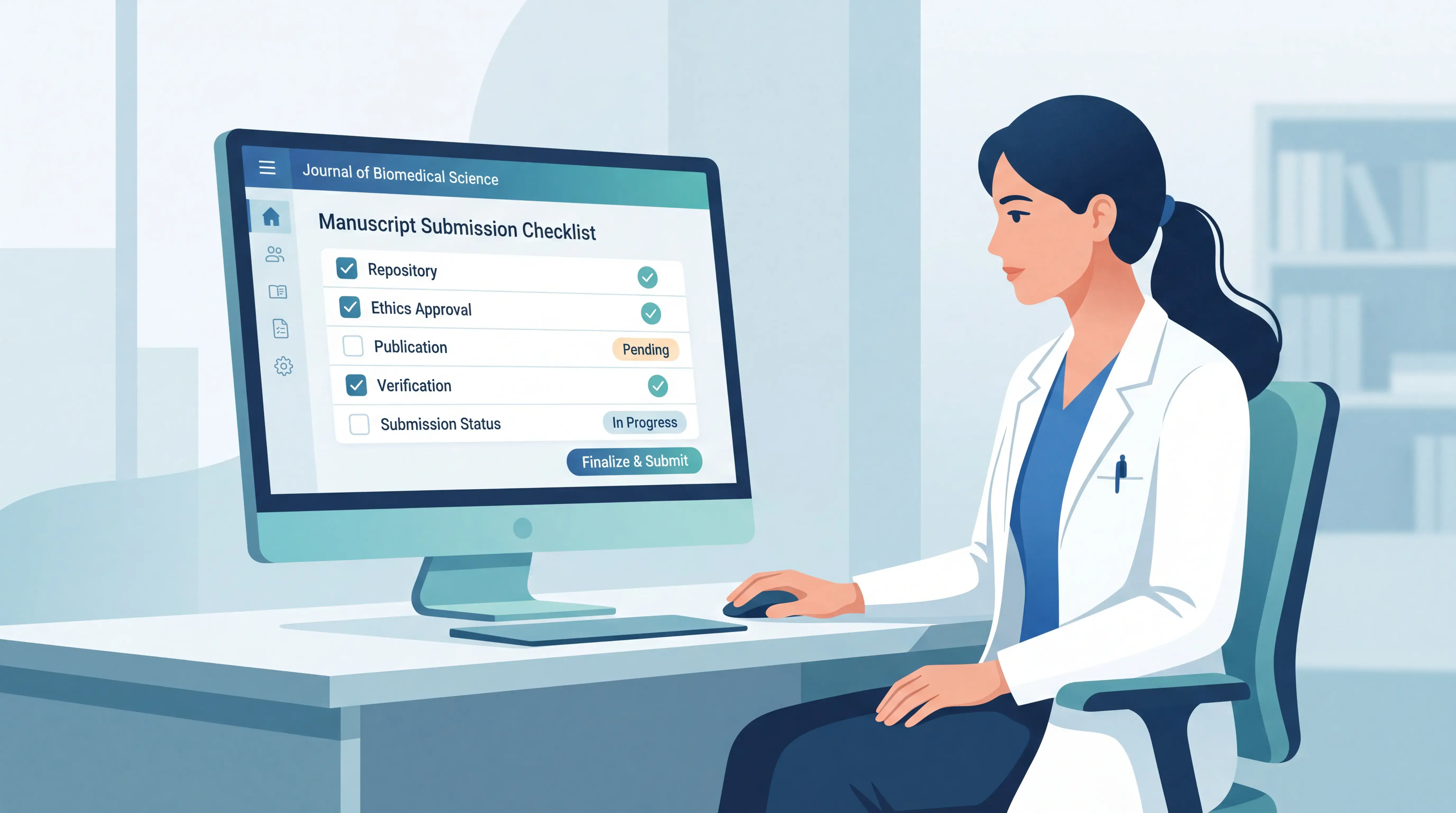
6. A Practical Writing Checklist
6.1 Before you submit
Use this checklist to finalize the statement:
- Identify where the data are stored.
- Confirm whether the data are public or restricted.
- Add repository name, DOI, or accession number.
- State the access route for restricted data.
- Check privacy, consent, and legal limits.
- Verify consistency with ethics and methods sections.
- Review journal wording requirements.
This process takes only a few minutes, but it can prevent avoidable revision cycles.
6.2 After you draft
Read the statement as if you were a reviewer. Ask:
- Can I tell where the data are?
- Can I understand whether I can access them?
- Does this match the study design?
- Is anything missing that a journal would expect?
If the answer to any of these is unclear, revise the statement before submission.
7. How Scifocus.ai Can Help
7.1 Faster drafting with less manual effort
Writing a clean data availability statement is small, but it matters. In a full research paper, these details are easy to overlook. Scifocus.ai helps researchers structure publication-ready academic content more efficiently.
It can support you by:
- Organizing manuscript sections
- Improving clarity and consistency
- Reducing formatting errors
- Helping align wording with academic tone
7.2 Better consistency across the manuscript
A strong essay or paper needs consistent language across the abstract, methods, ethics section, and data availability statement. Scifocus.ai can help you keep that alignment, especially when preparing multiple submission documents at once.
That reduces the risk of contradictions. It also saves time when revising for journal-specific requirements.
7.3 Useful for busy clinicians and researchers
Doctors and medical researchers often write under time pressure. Scifocus.ai is valuable when you need to turn rough notes into structured, submission-ready text without losing academic rigor.
For teams managing multiple projects, it can be a practical way to standardize writing quality and move manuscripts forward faster.
Conclusion
A data availability statement should be short, precise, and honest. It must tell readers where the data are, how they can be accessed, and why access may be limited. For medical students, doctors, and researchers, this is not just a formality. It is part of credible scientific writing.
Use the right format, match the journal policy, and keep the wording factual. If you want faster drafting with fewer mistakes, consider using Scifocus.ai to support your academic writing workflow and simplify manuscript preparation.
Did you like this article? Explore a few more related posts.
Start Your Research Journey With Scifocus Today
Create your free Scifocus account today and take your research to the next level. Experience the difference firsthand—your journey to academic excellence starts here.