

How to Use the PEEL Method to Build a Strong Argument in Every Paragraph
Introduction
The strongest essay paragraphs do more than state an opinion. They prove it. For medical students, doctors, and researchers, weak structure can blur even a good idea. The PEEL method solves that problem. It gives each paragraph a clear line of logic, which improves clarity, credibility, and reader trust. If you want every paragraph to support a precise argument, PEEL is a practical framework worth using.
1. What the PEEL Method Does for an Essay
1.1 Point: Start with one clear claim
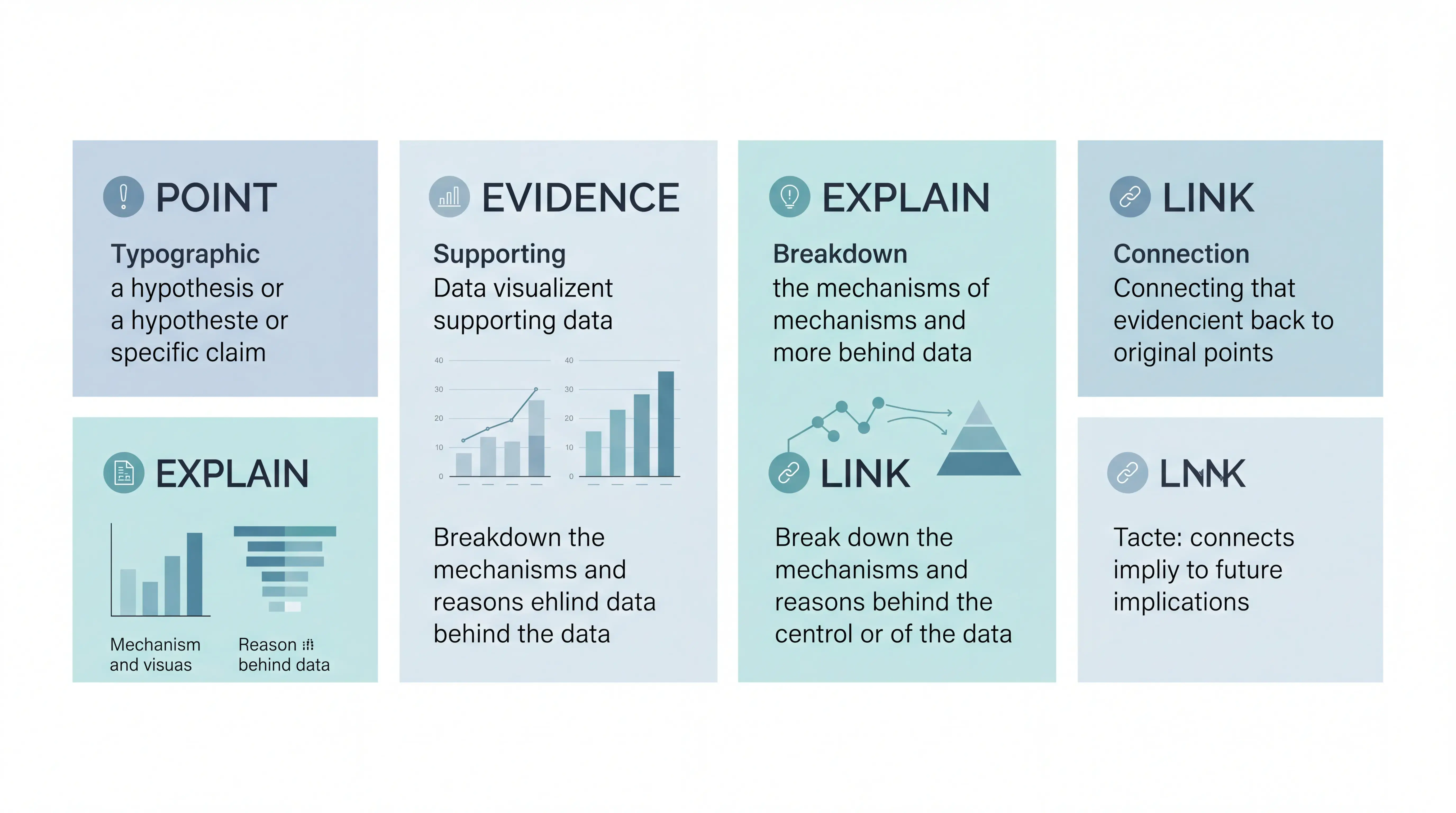
The PEEL method begins with a single point. This is the sentence that tells the reader what the paragraph will argue. In an essay, that point should be specific, not vague. A weak topic sentence says, “There are many reasons this matters.” A stronger one says, “Early intervention reduces complications in chronic disease management.”
For medical writing, precision matters. A paragraph should not try to do three jobs at once. One claim per paragraph keeps the argument measurable and easy to follow. A strong point is the foundation of a strong paragraph.
1.2 Why structure matters in academic writing
Readers in medicine and research expect logic. They need to see how a claim is supported and why it matters. Without structure, an essay can feel like a list of facts rather than an argument.
PEEL helps you move from assertion to evidence-based reasoning. It also reduces ambiguity. That is useful when writing for supervisors, journal reviewers, or examiners who expect disciplined thinking. In practice, PEEL turns a paragraph into a mini argument with a clear purpose.
2. How to Build the Evidence Layer
2.1 Use evidence that directly supports the point
The “E” in PEEL stands for evidence. This is where many writers lose strength. They add a quote, statistic, or citation that sounds relevant but does not actually support the paragraph’s point. In a strong essay, evidence must be chosen for function, not just appearance.
Use data, studies, guidelines, or observed outcomes. For example, if your point is that hand hygiene reduces hospital-acquired infection, the evidence should come from a study, audit, or clinical guideline that directly addresses that outcome. Relevant evidence is more persuasive than abundant evidence.
2.2 Keep evidence brief and specific
You do not need a long block of data to make a strong case. One accurate statistic or one well-selected study may be enough. The goal is to support the point, not overload the paragraph.
A practical rule is this:
- Use one central piece of evidence.
- Add one supporting detail if needed.
- Avoid stacking unrelated sources in the same paragraph.
This keeps the essay readable and focused. It also makes your reasoning easier to defend if challenged by a tutor or reviewer.
3. Explain the Evidence, Don’t Just Present It
3.1 The explanation is where argument becomes analysis
The “E” in the middle of PEEL means explanation. This is the part many students underwrite. They give evidence, then move on. That creates summary, not argument. In a high-quality essay, explanation shows why the evidence matters.
Ask yourself:
- What does this evidence mean?
- How does it support the point?
- Why should the reader care?
For example, if a study shows lower readmission rates after a discharge protocol, do not stop at the statistic. Explain that the protocol improves continuity of care and reduces preventable relapse. The explanation is where your critical thinking becomes visible.
3.2 Link evidence to the wider context
In medical and scientific writing, explanation should not stay narrow. Connect the evidence to broader practice, ethics, or clinical outcomes when relevant. This gives the paragraph depth.
A strong essay paragraph often includes one interpretive sentence that connects micro-level data to macro-level significance. That might mean policy, patient safety, treatment adherence, or research quality. The key is to show that your evidence supports a meaningful conclusion, not just a factual statement.
4. End the Paragraph with a Clear Link
4.1 Link back to the thesis or forward to the next point
The final part of PEEL is the link. This sentence closes the paragraph and connects it to the main argument of the essay. It should not repeat the point word for word. It should show relevance.
A good link does one of two things:
- It returns to the thesis.
- It transitions to the next argument.
For example, if your paragraph argues that early screening improves outcomes, the link might state that screening also supports timely treatment planning. This keeps the argument moving. A paragraph without a link feels unfinished.
4.2 Use the link to strengthen coherence
Coherence is especially important in technical writing. Readers should be able to move through the essay without losing the thread. The link sentence is the bridge between ideas.
If each paragraph ends cleanly, the overall argument becomes easier to read and more convincing. This matters in long-form academic work, where the reader may be evaluating not only your facts, but also your ability to organize them logically.
5. A Practical PEEL Template You Can Use
5.1 A simple four-sentence model
If you want a reliable structure, use this template:
- Point: State the main claim.
- Evidence: Present one relevant fact, study, or example.
- Explain: Show why the evidence supports the claim.
- Link: Connect back to the thesis or next idea.
This model works well for most academic essay paragraphs. It is simple enough to apply under time pressure, but strong enough to produce disciplined argumentation. It also helps you avoid two common errors, unsupported claims and evidence dumping.
5.2 Example of a PEEL paragraph
Here is a short example:
Point: Hand hygiene is one of the most effective methods for reducing infection spread in clinical settings.
Evidence: Multiple healthcare guidelines recommend consistent hand cleaning before and after patient contact.
Explain: This practice lowers the chance of cross-contamination and supports safer patient care.
Link: Therefore, hand hygiene is not a routine task alone, but a core element of infection prevention.
This paragraph works because each sentence has a job. That is the core strength of PEEL in an essay. It makes the argument visible, readable, and defensible.
6. Common PEEL Mistakes to Avoid
6.1 Too much evidence, too little analysis
One of the most common problems is overloading the paragraph with references. More citations do not automatically mean a better argument. In fact, too many sources can weaken clarity if the explanation is thin.
In a strong essay, analysis should usually take up as much space as evidence, or more. If you cannot explain the evidence in your own words, the paragraph is not yet complete.
6.2 Vague points and weak links
Another mistake is writing broad points like “This is important” or “There are several reasons.” These statements do not guide the reader. The same applies to weak links such as “This shows the topic is relevant.” That may be true, but it is not precise enough.
Instead, write points that are testable and links that are specific. For example, connect your argument to patient outcomes, diagnostic accuracy, treatment adherence, or research validity. Specificity is what gives an essay its authority.
7. How scifocus.ai Can Support Better Paragraph Writing
7.1 Use AI to sharpen structure, not replace thinking
For medical students, doctors, and researchers, time is limited. Drafting a high-quality essay paragraph can take longer than expected, especially when balancing evidence, interpretation, and formatting. This is where scifocus.ai can help.
scifocus.ai can support topic refinement, outline organization, and paragraph-level clarity. Used properly, it can help you turn scattered notes into a structured argument that follows PEEL. The result is faster drafting with better logical flow.
7.2 A practical workflow for busy professionals
A useful workflow is simple:
- Draft your point.
- Add your evidence.
- Ask whether the explanation actually interprets the evidence.
- Check whether the link returns to the thesis.
- Refine the paragraph for clarity and academic tone.
scifocus.ai can assist in this process by helping you organize ideas, strengthen phrasing, and reduce weak transitions. For anyone writing a demanding essay under deadline, that support can save time while improving quality. The goal is not to write less carefully. It is to write more efficiently and with greater precision.
Conclusion
The PEEL method is one of the most reliable ways to build a strong argument in every paragraph. It keeps your essay focused, evidence-based, and logically connected. When you write with Point, Evidence, Explain, and Link, each paragraph earns its place in the argument. That is especially valuable for medical students, doctors, and researchers, where clarity and credibility matter.
If your drafting process feels slow or disorganized, consider using scifocus.ai to structure your ideas more effectively and refine your paragraphs with less friction. Strong writing starts with strong structure, and PEEL gives you that structure one paragraph at a time.
Did you like this article? Explore a few more related posts.
Start Your Research Journey With Scifocus Today
Create your free Scifocus account today and take your research to the next level. Experience the difference firsthand—your journey to academic excellence starts here.