

How to Use Quotations in a Research Paper
Introduction
Using quotations in a research paper can strengthen an essay, but only when they are selected and cited with precision. Many medical students, doctors, and researchers struggle with one problem: how to quote authoritative sources without weakening their own argument. The goal is not to fill pages with borrowed words. It is to use quotations strategically, ethically, and in a way that supports evidence-based writing.
1. Understand the Role of Quotations in Academic Writing
1.1 What quotations are for
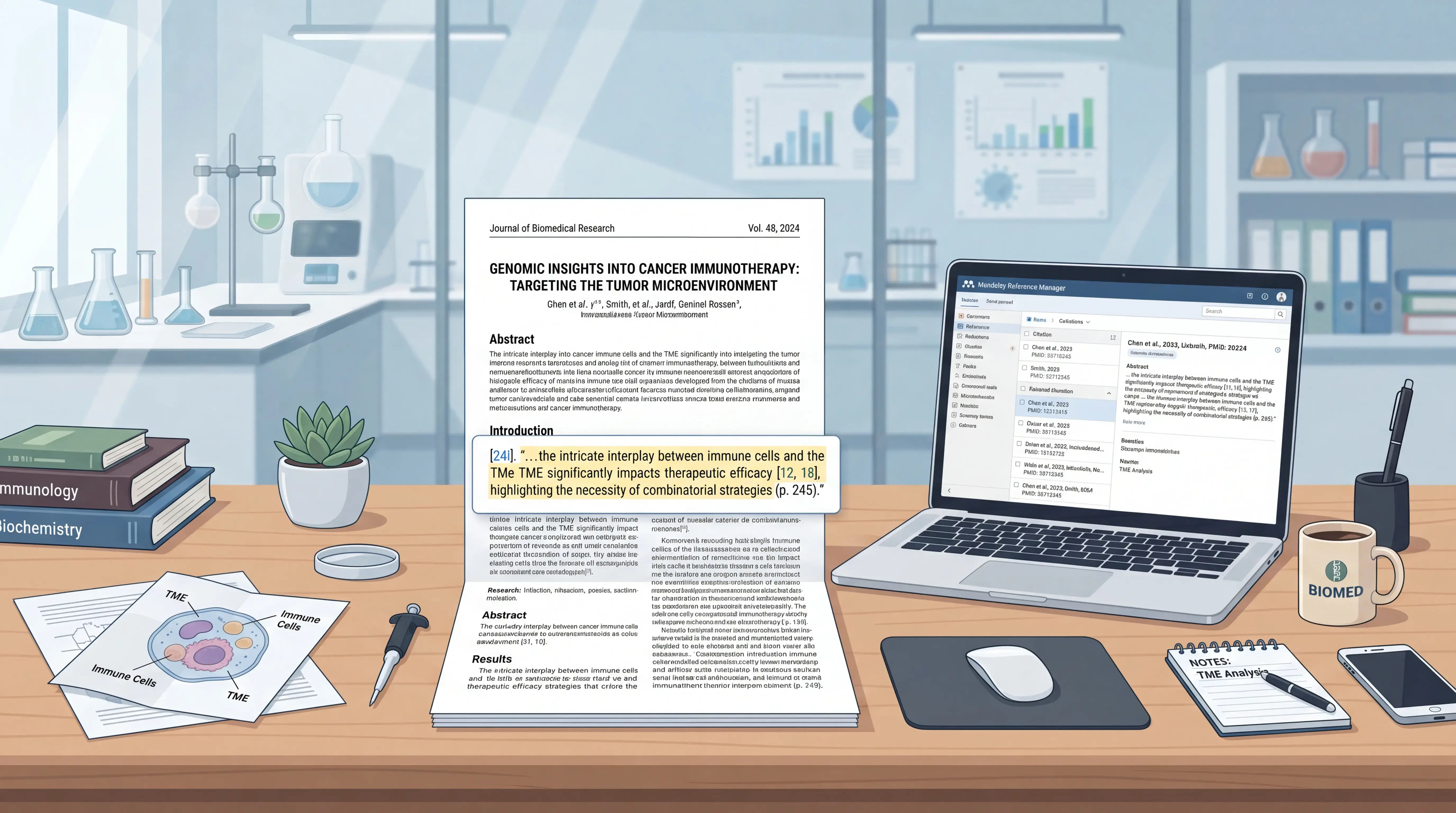
A quotation is the exact wording taken from a source and placed in your essay with quotation marks and a citation. In a research paper, quotations are useful when the original wording is precise, authoritative, or difficult to paraphrase without losing meaning. This matters in medicine and clinical research, where exact phrasing can change interpretation.
Quotations should support your argument, not replace it. If the quoted sentence does not add evidence, clarity, or authority, it should usually be paraphrased instead.
1.2 When to quote and when not to
Use quotations in a research paper when:
- The source uses a definition that is important and widely accepted.
- The wording is unique, memorable, or authoritative.
- You need to analyze the language itself.
- You are citing a statement that is central to your discussion.
Avoid quotations when:
- The idea can be paraphrased clearly.
- The passage is too long.
- The quotation adds no new value.
- You are quoting only because you are unsure how to explain the source yourself.
In most essays, paraphrasing should still be the default. Quotations are selective tools, not the main writing method.
2. Choose Quotations That Fit Your Research Purpose
2.1 Select sources with strong academic value
For medical and scientific essays, the best quotations come from high-quality sources such as peer-reviewed journals, clinical guidelines, landmark studies, and authoritative textbooks. When several sources support the same point, choose the most relevant and credible ones.
In practice, this means asking three questions:
- Does the source directly support my point?
- Is the wording important enough to quote?
- Will this quotation improve the reader’s understanding?
A strong quotation is specific, relevant, and defensible. It should fit the logic of your paragraph, not interrupt it.
2.2 Keep quotations short and purposeful
Long quotations often reduce readability. They also make your essay feel less analytical. In a research paper, short quotations are usually more effective because they preserve your voice and keep the focus on your interpretation.
Use brief quotations to highlight a key phrase, a definition, or a statement of principle. If the source contains a large block of important information, consider summarizing or paraphrasing most of it and quoting only the critical phrase.
2.3 Protect your own analytical voice
A research paper is not a quotation collection. Your role is to evaluate, compare, and interpret. After every quotation, explain why it matters. Connect it to your hypothesis, method, discussion, or conclusion.
A simple structure works well:
- Introduce the source.
- Insert the quotation.
- Explain the meaning.
- Link it to your argument.
This structure keeps the essay focused and professional.
3. Use Quotations Correctly in Sentence Structure and Citation
3.1 Introduce quotations smoothly
A quotation should never appear without context. Lead into it with a signal phrase that identifies the author, study, or guideline. This helps readers understand why the source matters.
Examples of effective lead-ins:
- Smith et al. reported that...
- The guideline states that...
- According to the authors...
- As the study concluded...
Smooth integration is a hallmark of strong academic writing. It shows control, clarity, and confidence.
3.2 Match the quotation to the grammar of your sentence
Your sentence and the quoted text must work together. If needed, adjust the sentence structure so the quotation fits naturally. Use brackets or ellipses only when necessary and only in a way that preserves the original meaning.
Example of clean integration:
Smith et al. noted that “early intervention improved clinical outcomes.”
The sentence remains readable because the quotation fits the grammar. In contrast, a quotation dropped into the middle of a paragraph without context can feel abrupt and weak.
3.3 Follow the citation style required by the journal
Different journals and institutions use different citation styles, such as APA, Vancouver, MLA, or Chicago. For medical writing, journal-specific formatting is critical. Always follow the target journal’s instructions.
At minimum, a quotation needs:
- The exact quoted text.
- A citation in the required format.
- A page number if the style requires it.
- A full reference in the bibliography.
Accurate citation is not optional. In scientific and clinical writing, it is part of academic integrity.
4. Avoid Common Mistakes That Weaken an Essay
4.1 Do not overquote
Overquoting is one of the most common problems in an essay. Too many quotations can make the paper look copied, fragmented, or underdeveloped. Readers want to see your interpretation, not only the source material.
A useful rule is this: if your paragraph contains multiple quotations, you may be relying on sources too heavily. Aim for balance. Your own analysis should remain dominant.
4.2 Do not quote without explaining
A quotation that is not explained is wasted space. In a research paper, every quotation should be followed by analysis, comparison, or implication. Tell the reader what the quotation means for your argument.
For example, if a guideline says early screening improves detection, explain:
- Why this matters clinically.
- How it supports your claim.
- Whether it aligns with prior studies.
- What limitation should be considered.
This is especially important in discussion sections, where the quotation should help build interpretation rather than simply restate facts.
4.3 Do not use quotations to hide weak writing
Sometimes writers quote because they cannot summarize clearly. That creates a dependence on external wording. In an essay, this weakens originality and can reduce clarity.
Instead, use the quotation only where it is necessary. Then explain the point in your own words. That approach improves readability and shows true understanding.
5. Apply Quotations Across Different Parts of a Research Paper
5.1 Introduction and background
Quotations can be useful in the introduction when you need a precise definition, a landmark claim, or a statement that frames the research gap. In medical writing, they may help establish why the topic matters.
Use them sparingly. The introduction should still move quickly from background to problem statement to research purpose. Too many quotations can slow the argument.
5.2 Methods and discussion
In the methods section, quotations are less common but may appear when describing an established technique, instrument, or protocol from a source that must be cited precisely. In the discussion, quotations may help compare your findings with prior literature or highlight a key interpretation.
This is where an essay becomes stronger if it is built on thoughtful comparison:
- What did previous studies say?
- How does your result align or differ?
- What can the quotation add to that comparison?
Good discussion writing does not repeat sources. It evaluates them.
5.3 Conclusion
The conclusion should not introduce new quotations unless absolutely necessary. It should synthesize the main findings and reinforce the paper’s contribution. If you quote here, keep it minimal and purposeful.
6. Use AI Tools to Manage Quotations and References More Efficiently
6.1 Why AI can help
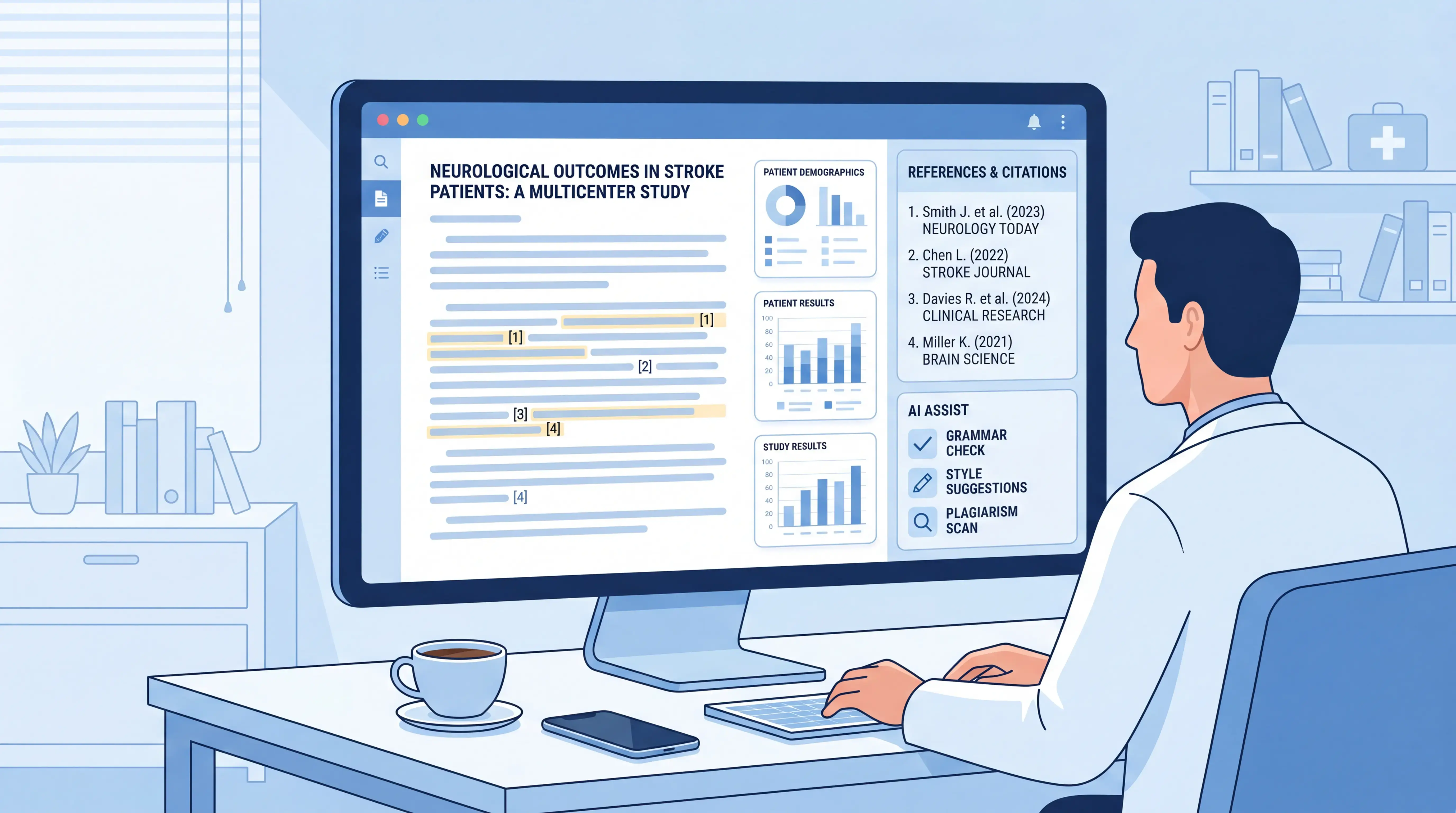
For researchers and clinicians writing under time pressure, repetitive citation tasks take valuable time. AI tools can help identify citation formats, organize references, and format quotations according to target journal rules. This is especially useful when an essay must remain accurate, consistent, and submission-ready.
6.2 How scifocus.ai supports research writing
A platform like scifocus.ai can streamline quotation handling and reference formatting. It can reduce manual work in repetitive academic tasks, help standardize citations, and improve workflow efficiency.
This is useful when you need to:
- Check quotation formatting.
- Organize source lists.
- Match journal-specific style requirements.
- Save time on reference cleanup.
For medical students, doctors, and researchers, this means more time for analysis and less time on formatting. That shift can improve both writing quality and productivity.
Conclusion
Using quotations well in a research paper requires judgment. Quote only when the original wording adds value. Keep quotations short. Introduce them clearly. Explain their relevance. Follow the citation style exactly. In a strong essay, quotations support your analysis rather than dominate it.
If you want to make this process faster and more reliable, consider using scifocus.ai to help manage citations and reference formatting with less manual effort. For serious academic writing, that kind of support can make a measurable difference.
Did you like this article? Explore a few more related posts.
Start Your Research Journey With Scifocus Today
Create your free Scifocus account today and take your research to the next level. Experience the difference firsthand—your journey to academic excellence starts here.