

How to Use Hedging Language in Academic Writing
Introduction
Hedging language is one of the most useful skills in an academic essay, especially for medical students, doctors, and researchers who need to sound precise without overclaiming. In clinical and scientific writing, one unsupported certainty can weaken credibility. Hedging helps you present findings with caution, accuracy, and authority. It also protects you from making claims that go beyond the evidence.
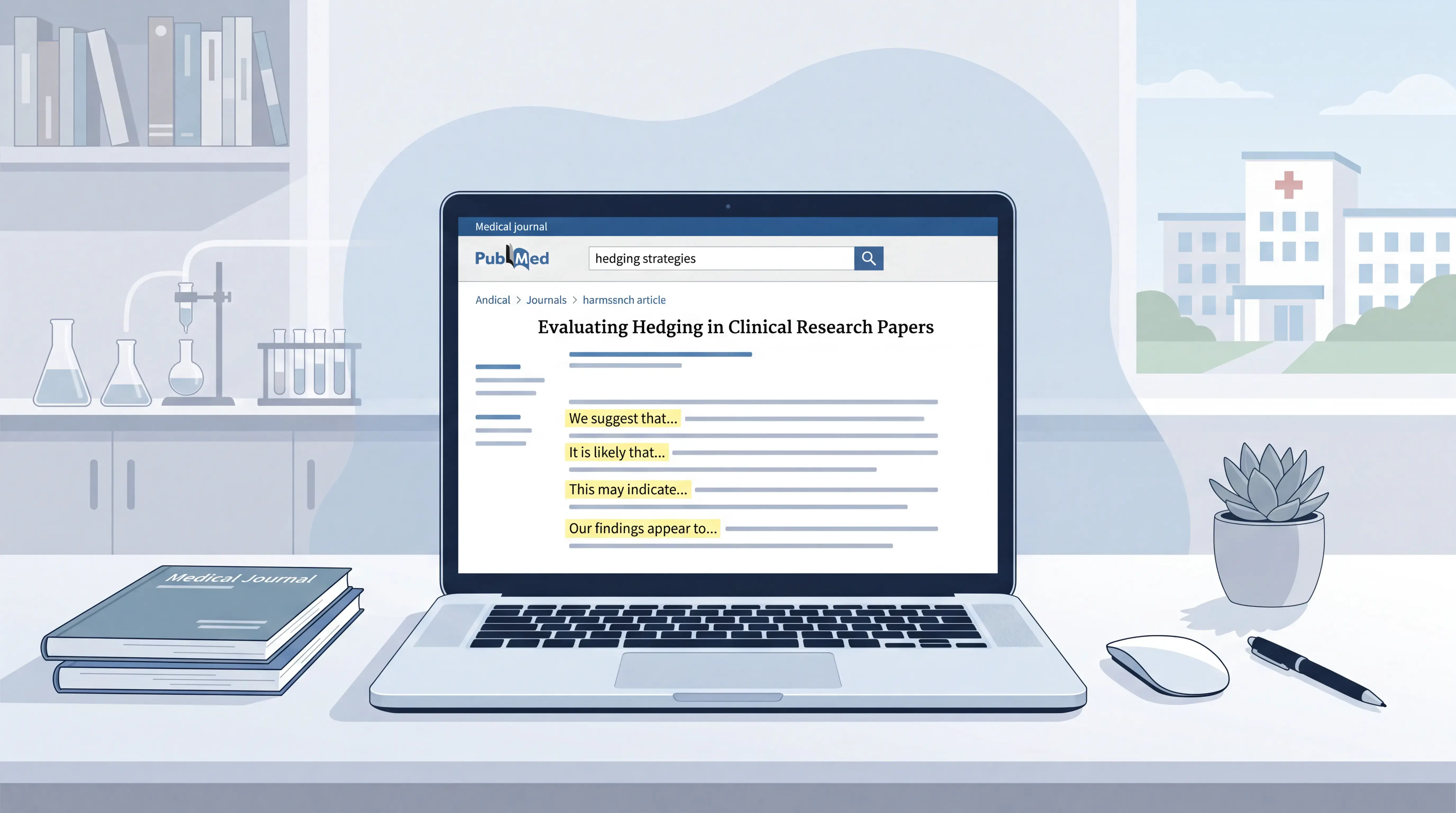
1. What Hedging Language Means in Academic Writing
1.1 Why Hedging Matters
Hedging language softens a claim when the evidence is limited, indirect, or still developing. In academic writing, this is not weakness. It is a sign of rigor. A researcher who writes “This treatment reduces mortality” may sound confident, but if the data only suggest an association, the statement becomes too strong.
In an academic essay, hedging protects your argument from overstatement. It signals that you understand the limits of your data. This is especially important in medicine, where precision affects interpretation and future decision-making.
1.2 Common Uses in Medicine and Research
Hedging appears in many settings:
- Reporting preliminary results.
- Discussing sample-size limits.
- Interpreting observational data.
- Comparing findings across studies.
- Writing literature reviews and discussion sections.
For example, instead of saying “This biomarker predicts disease progression,” a more accurate version may be “This biomarker may be associated with disease progression.” That small change makes the claim more defensible.
1.3 A Simple Rule to Follow
Use hedging when the evidence does not justify absolute certainty. Use direct language when the data are strong and the conclusion is well supported. The goal is balance, not hesitation.
2. Common Hedging Words and Phrases
2.1 Modal Verbs and Adverbs
The most common hedging forms include:
- may
- might
- could
- likely
- possibly
- probably
- suggests
- appears to
- seems to
These words are useful because they frame claims as evidence-based rather than absolute. For example:
- “The intervention may improve adherence.”
- “The results suggest a possible benefit.”
2.2 Nouns and Verbs That Reduce Certainty
Academic writers also hedge with verbs and nouns:
- indicate
- imply
- estimate
- tendency
- possibility
- association
- hypothesis
These terms are common in scientific literature because they reflect measured interpretation. A strong academic essay often sounds careful, not dramatic.
2.3 Avoiding Overused Weak Language
Not every softener is useful. Phrases like “I think,” “maybe,” or “kind of” are too informal for academic writing. They reduce authority. Replace them with discipline-appropriate forms.
For instance:
- Weak: “I think the study proves the method works.”
- Better: “The study suggests the method may be effective.”
3. How to Use Hedging Effectively
3.1 Match the Hedge to the Evidence
The strength of the hedge should match the quality of the evidence. If you have a randomized controlled trial with robust outcomes, use less hedging. If you have a small observational study, use more.
A practical scale:
- Strong evidence, direct result. Use minimal hedging.
- Moderate evidence, limited sample. Use moderate hedging.
- Early or indirect evidence. Use stronger hedging.
Good hedging reflects the certainty level of the data, not the writer’s personality.
3.2 Hedge Claims, Not Facts
Do not hedge established facts. Facts should remain direct. Hedge your interpretation, not the raw result.
For example:
- Fact: “The sample included 120 patients.”
- Hedged interpretation: “The findings may not be generalizable beyond this population.”
This distinction is important in any high-level academic essay because it shows methodological discipline.
3.3 Use Hedging in the Right Sections
Hedging is most common in:
- Abstracts.
- Discussion sections.
- Limitations.
- Conclusions.
It is less common in methods and results, where clarity is more important. However, even there, careful wording helps when describing assumptions or model-based estimates.
3.4 Keep the Sentence Clear
Hedging should not make writing vague. Long, overloaded sentences can hide meaning. A good approach is to shorten the sentence and place the hedge near the main claim.
Compare:
- “The results may possibly, to some extent, indicate that the drug could be useful.”
- “The results suggest that the drug may be useful.”
The second sentence is clearer and more professional. Precision and caution should work together.
4. Practical Rewriting Techniques for Stronger Academic Essays
4.1 Replace Absolute Verbs
Absolute language can sound too rigid. Swap it with measured alternatives.
Examples:
- proves → suggests
- confirms → supports
- shows → indicates
- causes → is associated with
- is → may be
These substitutions are especially useful in a medical or research essay where evidence standards are high.
4.2 Change Sentence Structure
You can improve hedging by adjusting word order or sentence form. For example, active voice can become passive when needed, and long claims can be broken into shorter statements.
- Direct: “This mutation causes inflammation.”
- Hedged: “Inflammation may be related to this mutation.”
You can also change cause-effect emphasis:
- “X leads to Y” becomes “Y may result from X.”
This technique helps when the evidence supports a relationship but not a definitive mechanism.
4.3 Use Cautious Language in Literature Reviews
When summarizing other studies, avoid copying their certainty level without checking the context. If several papers report associations rather than causation, keep your own wording aligned with that evidence.
For example:
- “Previous studies suggest a relationship between sleep quality and recovery time.”
- “Several reports indicate that sleep quality may influence recovery time.”
This keeps your review accurate and consistent.
4.4 Revise for Repetition and Precision
If a paragraph repeats the same claim in different forms, refine it. Replace repeated phrases with concise alternatives. This improves readability and reduces the risk of sounding inflated.
Useful revision steps:
- Identify absolute claims.
- Check whether the evidence supports them.
- Replace them with a suitable hedge.
- Read aloud for clarity.
- Remove unnecessary weak phrases.
5. Mistakes to Avoid When Using Hedging Language
5.1 Over-Hedging
Too much caution can make writing sound unsure. If every sentence includes “may,” “might,” or “possibly,” the argument loses force. Readers may assume the evidence is weak, even when it is not.
Hedging should be selective. It should not flatten your conclusions.
5.2 Under-Hedging
The opposite problem is also common. Medical writers sometimes use strong verbs because they sound efficient. But if the design is observational, cross-sectional, or based on a small sample, strong conclusions can mislead.
Avoid:
- “This proves…”
- “This definitely causes…”
- “This always works…”
Instead, align wording with the actual level of evidence.
5.3 Using Hedging as a Substitute for Evidence
Hedging cannot rescue a weak argument. It only helps you present evidence accurately. If your data are limited, say so clearly. If the limitation is major, address it directly.
In a strong academic essay, the writer shows both caution and analytical confidence.
6. How AI Tools Can Help You Apply Hedging Correctly
6.1 Faster Revision Without Losing Meaning
For medical students, doctors, and researchers, revising academic English can take time. AI tools like scifocus.ai can help identify overly strong claims, suggest more appropriate hedging, and improve sentence flow without changing the core meaning.
This is especially useful when you are polishing a manuscript, literature review, or thesis section under a deadline. A good tool should support accuracy, not add noise.
6.2 What to Look For in an AI Writing Workflow
A reliable academic writing workflow should help you:
- detect overconfident wording.
- rewrite sentences in a more neutral tone.
- preserve scientific meaning.
- improve readability and consistency.
- reduce editing time.
Used well, this can make your essay cleaner and more publication-ready. It can also help non-native English writers avoid tone problems that weaken authority.
6.3 Why This Matters for Clinical and Research Writing
In medicine, a single word can change interpretation. “Associated with” is not the same as “causes.” “May improve” is not the same as “proves.” That distinction matters in peer review, grant writing, and academic submission.
If you want a practical way to refine this style, scifocus.ai can help you edit with more control, more speed, and less risk of overstating your findings.
Conclusion
Hedging language is essential for writing a credible academic essay. It helps you present evidence with precision, avoid overclaiming, and match your wording to the strength of your data. For medical students, doctors, and researchers, this skill improves both clarity and trust. Use hedging selectively. Keep it concise. Let the evidence guide the tone. If you want support refining academic English faster, try scifocus.ai and make your next draft clearer, safer, and more publication-ready.

Did you like this article? Explore a few more related posts.
Start Your Research Journey With Scifocus Today
Create your free Scifocus account today and take your research to the next level. Experience the difference firsthand—your journey to academic excellence starts here.