

How to Run a Focus Group in Medical Research
Introduction
A well-run essay on focus groups in medical research is not just about discussion. It is about getting reliable, actionable insights from the right participants. Many studies fail because the question is vague, the group is poorly recruited, or the discussion is not structured. In medical research, that wastes time, weakens trust, and reduces publication value. A focus group is useful only when the purpose, participants, and analysis plan are clear from the start.
1. What a Focus Group Is and When to Use It
1.1 Define the research purpose first
A focus group is a guided group interview used to explore attitudes, beliefs, experiences, and decision-making. It is common in qualitative medical research. It helps researchers understand the “why” behind patient behavior, clinician choices, or caregiver concerns.
Use it when you need depth, not breadth. For example, you may want to explore why patients do not follow treatment plans, how doctors view a screening tool, or what barriers exist in a clinic workflow. A focus group is not designed to estimate prevalence or test causality.
1.2 Match the method to the clinical question
Medical research often needs the right design for the right question. If you need exposure-outcome associations, a case-control or cohort study may be better. If you need lived experience, acceptance, or barriers, a focus group may be more appropriate.
This matters for publication quality too. A focus group is strongest when it supports a larger study, informs a survey, or helps refine a clinical intervention. In other words, it is often used to generate hypotheses or explain findings from quantitative work.
1.3 Know its limits
Focus groups can produce rich data, but they also have limits. Dominant speakers can influence others. Sensitive topics may be underreported. Group dynamics can distort honest responses. That is why the moderator, participant selection, and analysis process must be carefully planned.
Good qualitative data does not happen by accident. It comes from disciplined design.
2. Build the Right Research Question
2.1 Keep the question specific
A strong focus group begins with a focused question. For example:
- What barriers do diabetic patients face in self-management?
- How do residents perceive shared decision-making in oncology?
- What concerns do parents have about childhood vaccination?
These are clear, practical, and clinically relevant. A vague question like “What do people think?” leads to weak discussion and weak data.
2.2 Define the target participants
The participant group should match the study goal. In medical research, this may include:
- Patients with a specific disease
- Doctors, nurses, or pharmacists
- Caregivers
- Medical students or trainees
- Public health stakeholders
If the research aims to compare perspectives, separate groups may be needed. For example, patients and clinicians should usually not be placed in the same session because power differences can suppress honest feedback.
2.3 Set inclusion and exclusion criteria
Use practical criteria. Define age range, diagnosis, clinical setting, language ability, and ability to participate in a group discussion. Exclude people who cannot consent, cannot communicate clearly, or may be at high risk of discomfort in a group setting.
Precise eligibility criteria improve trustworthiness and reduce bias.
3. Plan Recruitment and Group Composition
3.1 Recruit enough participants
Most focus groups work best with 6 to 10 participants per session. Smaller groups may limit interaction. Larger groups can become hard to manage. For many studies, 3 to 6 focus groups are enough to identify major themes, but the final number depends on your topic and how quickly themes repeat.
Recruitment should be realistic. Use clinic lists, research registries, flyers, or clinician referrals. Be transparent about the purpose, time commitment, and confidentiality rules.
3.2 Use purposeful sampling
In qualitative research, random sampling is usually not the goal. Instead, use purposive sampling to include people who can provide relevant insight. This is especially useful in medical research where experience matters more than representativeness in the statistical sense.
You may sample for variation in:
- Age
- Disease stage
- Treatment experience
- Professional role
- Clinical site
This helps capture different views and reduces one-sided conclusions.
3.3 Decide whether to stratify groups
Sometimes it is better to separate participants by role or experience. For example, junior doctors may speak more openly with peers than in a mixed senior-junior group. Similarly, newly diagnosed patients may discuss concerns differently from those living with a condition for years.
Group composition affects data quality as much as the discussion guide does.
4. Prepare the Discussion Guide and Moderator
4.1 Build a clear topic guide
A focus group needs a semi-structured guide. Start with broad, easy questions. Then move to deeper topics. The guide should include:
- Opening questions
- Core questions
- Follow-up probes
- Closing question
Keep questions open-ended. Ask “What makes it difficult to follow this treatment?” instead of “Do you find this treatment difficult?” The first invites detail. The second may produce short yes-or-no answers.
4.2 Train the moderator
The moderator should know how to lead discussion without dominating it. This role requires clinical awareness, neutrality, and good listening. The moderator should encourage quiet participants, manage conflict, and redirect off-topic discussion.
A skilled moderator does not lecture. They guide. They probe. They listen for patterns and contradictions.
4.3 Assign a note-taker
A note-taker should document nonverbal behavior, group dynamics, interruptions, emotional moments, and key quotes. Audio recording is also strongly recommended, with consent. These records support accurate transcription and better analysis later.
5. Conduct the Session Properly
5.1 Create a comfortable setting
Choose a quiet room with minimal interruptions. Seating should be arranged in a circle or around a table to support eye contact. Provide water and a neutral, professional environment. For virtual sessions, test the platform in advance and make sure all participants can join without technical barriers.
The opening should explain:
- The study purpose
- Confidentiality expectations
- Voluntary participation
- Recording procedures
- Ground rules for respectful discussion
5.2 Start with easy questions
Begin with simple, non-threatening questions. This helps participants relax and speak more naturally. Then move into more sensitive or detailed topics.
For example, in a study of medication adherence:
- Ask about daily routines.
- Ask about challenges.
- Ask about support systems.
- Ask about solutions.
This sequence is easier than asking sensitive questions first.
5.3 Manage discussion balance
Watch for dominance, silence, or groupthink. Invite quieter members to speak. Politely limit participants who talk too much. Avoid agreeing too quickly with any one opinion, because that can shut down diversity of views.
Useful prompts include:
- “Can you tell me more about that?”
- “Does anyone have a different experience?”
- “How does this compare with what others have seen?”
The goal is not consensus. The goal is rich, balanced insight.
6. Analyze the Data Rigorously
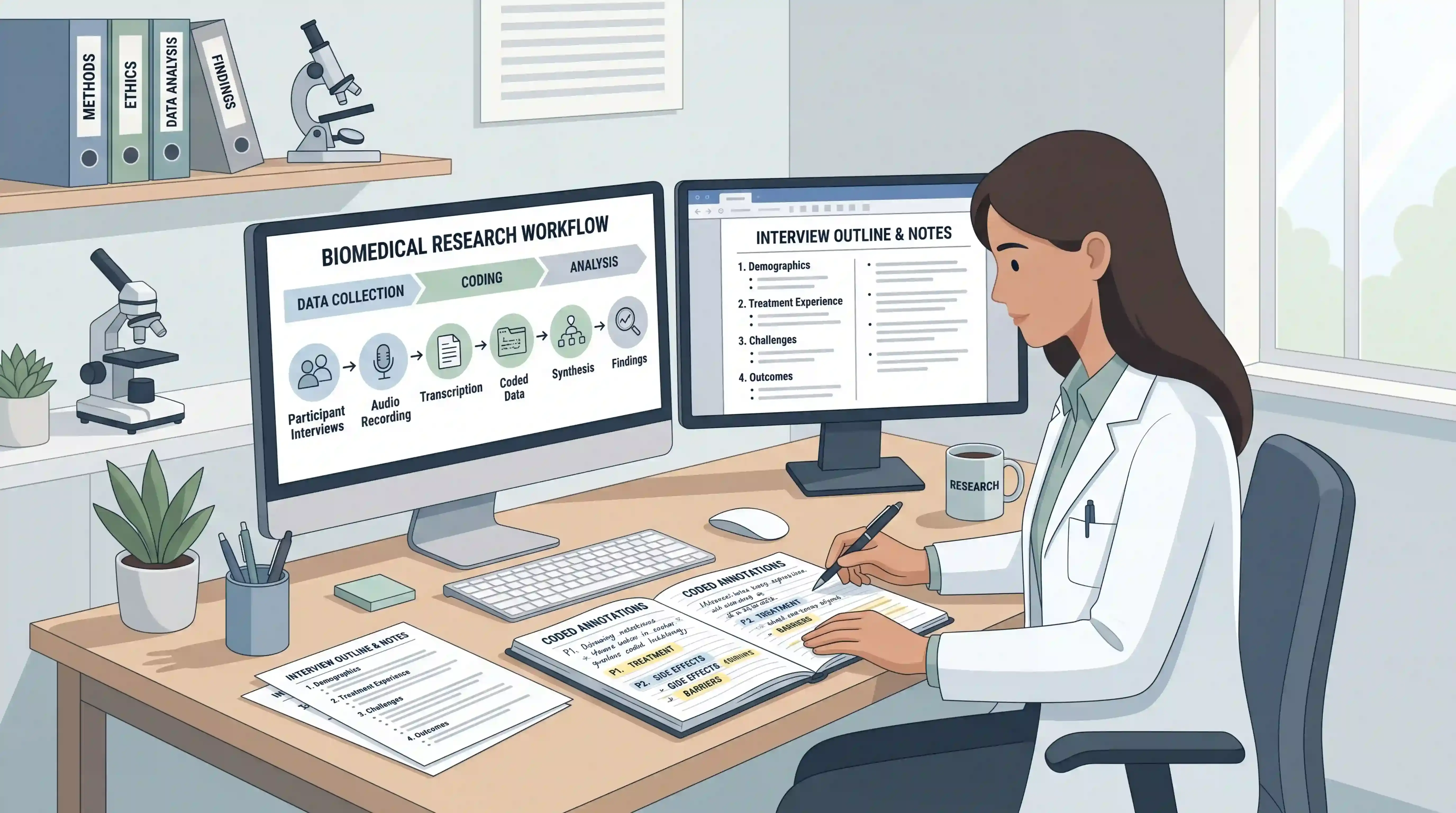
6.1 Transcribe and organize the material
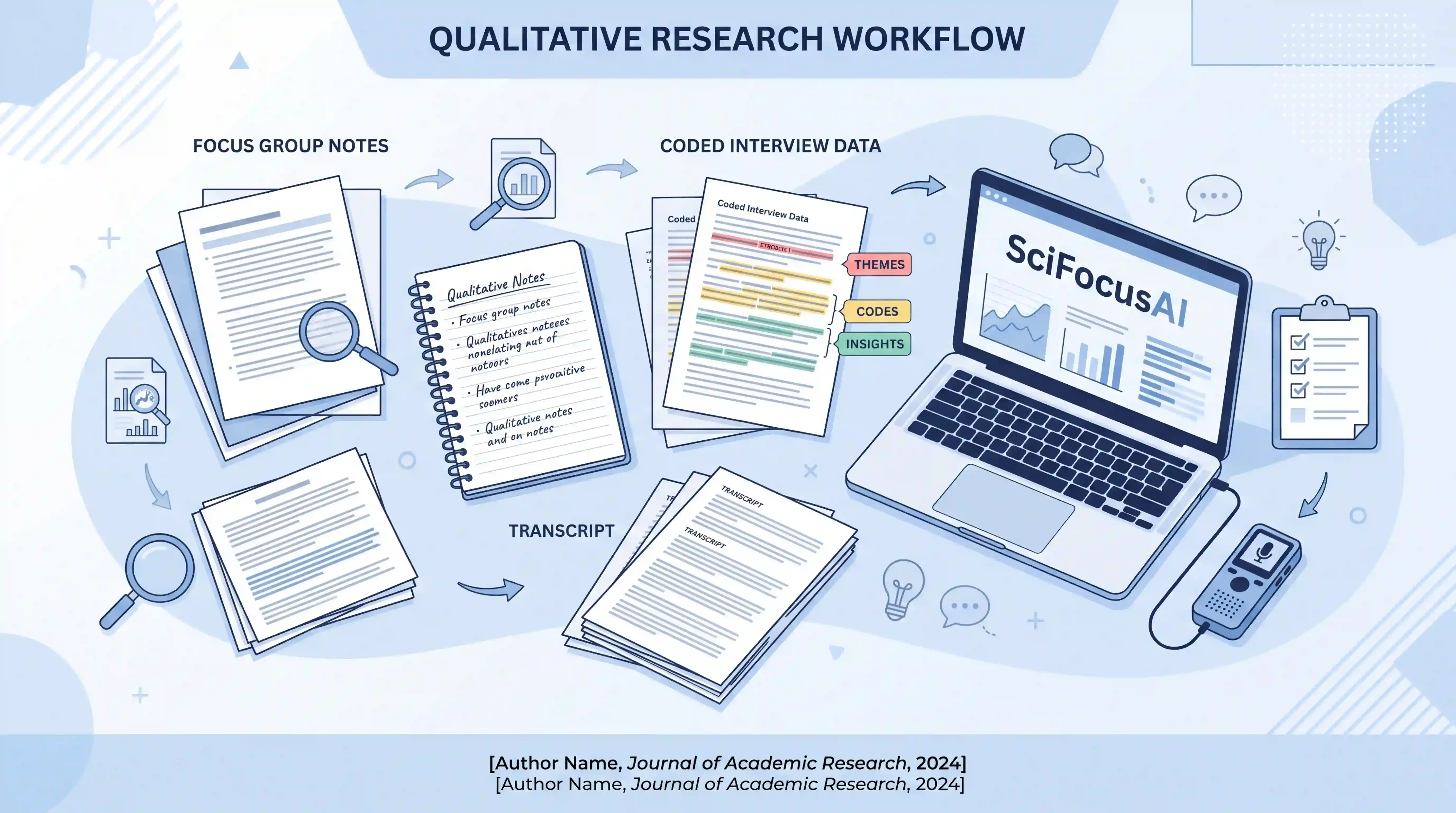
After the session, transcribe the recording as soon as possible. Clean transcripts while keeping meaning intact. Add field notes and label each focus group clearly. Good data management matters because qualitative analysis depends on traceability.
6.2 Code themes systematically
Read the transcript line by line. Assign codes to meaningful segments. Then group codes into broader themes. Common themes in medical research may include perceived barriers, trust, stigma, workload, access, fear, or communication gaps.
Use a transparent method such as thematic analysis. Document how codes were generated, how themes were refined, and how disagreements were resolved. Readers should be able to see how your conclusions were built from the data.
6.3 Strengthen credibility
To improve rigor, consider:
- Dual coding by two researchers
- Audit trails
- Reflexive notes
- Member checking when appropriate
- Clear reporting of participant characteristics
This is especially important in medical research, where readers expect methodological discipline. The evidence is qualitative, but the process must still be systematic.
7. Report the Study for Publication
7.1 Write with clarity and structure
A strong report should explain:
- The research aim
- Why focus groups were chosen
- Who participated
- How recruitment was done
- How many sessions were held
- How data were analyzed
- What themes emerged
Avoid overclaiming. A focus group does not prove that a behavior is common in the whole population. It shows patterns in a defined group.
7.2 Connect the findings to practice
The value of a focus group is practical insight. Your discussion section should explain how the findings can improve care, communication, education, or future study design. For medical students, doctors, and researchers, this is where the study becomes useful.
7.3 Use AI to support, not replace, the process
If you want to save time on organizing transcripts, summarizing themes, or drafting a structured qualitative report, scifocus.ai can help support the workflow. It can reduce manual friction and help researchers move faster from raw discussion to a polished research draft.
That said, the interpretation must remain in the hands of the research team. Tools can assist analysis, but clinical judgment and methodological oversight still matter most.
Conclusion
Running a focus group in medical research requires more than gathering people in one room. It needs a precise question, the right participants, skilled moderation, careful transcription, and transparent analysis. When done well, it can reveal barriers, needs, and perspectives that surveys often miss. For medical students, doctors, and researchers who want faster and more organized writing support, scifocus.ai can help turn discussion data into a clearer, publication-ready workflow.
Did you like this article? Explore a few more related posts.
Start Your Research Journey With Scifocus Today
Create your free Scifocus account today and take your research to the next level. Experience the difference firsthand—your journey to academic excellence starts here.