

How to Register a Systematic Review Protocol on PROSPERO
Introduction
A systematic review protocol helps you define your question, methods, and eligibility criteria before you begin. That matters because a poorly planned review can lead to duplication, bias, and avoidable rejection later. If you are preparing an essay on evidence synthesis, or you are a medical student, clinician, or researcher planning a review, learning how to register a systematic review protocol on PROSPERO is a practical first step. Registration improves transparency, strengthens your methodology, and makes your work easier to defend in academic settings.

1. What PROSPERO Is and Why Registration Matters
1.1 PROSPERO in the evidence-based medicine workflow
PROSPERO is an international database for prospective registration of systematic review protocols. It exists to make review plans visible before results are known. That supports evidence-based medicine, where clinical decisions rely on research evidence, professional expertise, and patient values rather than experience alone.
Systematic reviews are designed to identify, appraise, and summarize the best available evidence. Since the idea became widely recognized in the 1970s through Cochrane’s work, protocol registration has become a key part of high-quality review practice. A registered protocol helps you show that your review question, search strategy, and analysis plan were set in advance.
1.2 Why researchers should register before screening begins
Registering early reduces the risk of selective reporting and post hoc changes. It also helps readers compare the final review against the original plan. That is especially important in medicine, where small changes in outcomes or inclusion criteria can change the results.
For students and early-career researchers, registration also adds structure. It forces you to define the population, intervention, comparator, outcomes, and study design before the literature search starts. That makes your later writing faster and more precise.
2. Before You Start the PROSPERO Submission
2.1 Make sure your review is eligible
PROSPERO is intended for systematic reviews with a health-related outcome. Before submitting, confirm that your project is a protocol for a systematic review, not a narrative review, opinion piece, or simple literature summary.
Your question should be focused. A clear PICO structure is usually the best starting point:
- Population.
- Intervention.
- Comparator.
- Outcomes.
If your topic is too broad, the registration process becomes harder. A narrow and clinically relevant question is easier to justify and easier to complete.
2.2 Prepare the protocol details first
Before opening the registration form, prepare the main elements of your protocol. This usually includes:
- Review title.
- Review question.
- Background and rationale.
- Inclusion and exclusion criteria.
- Search sources.
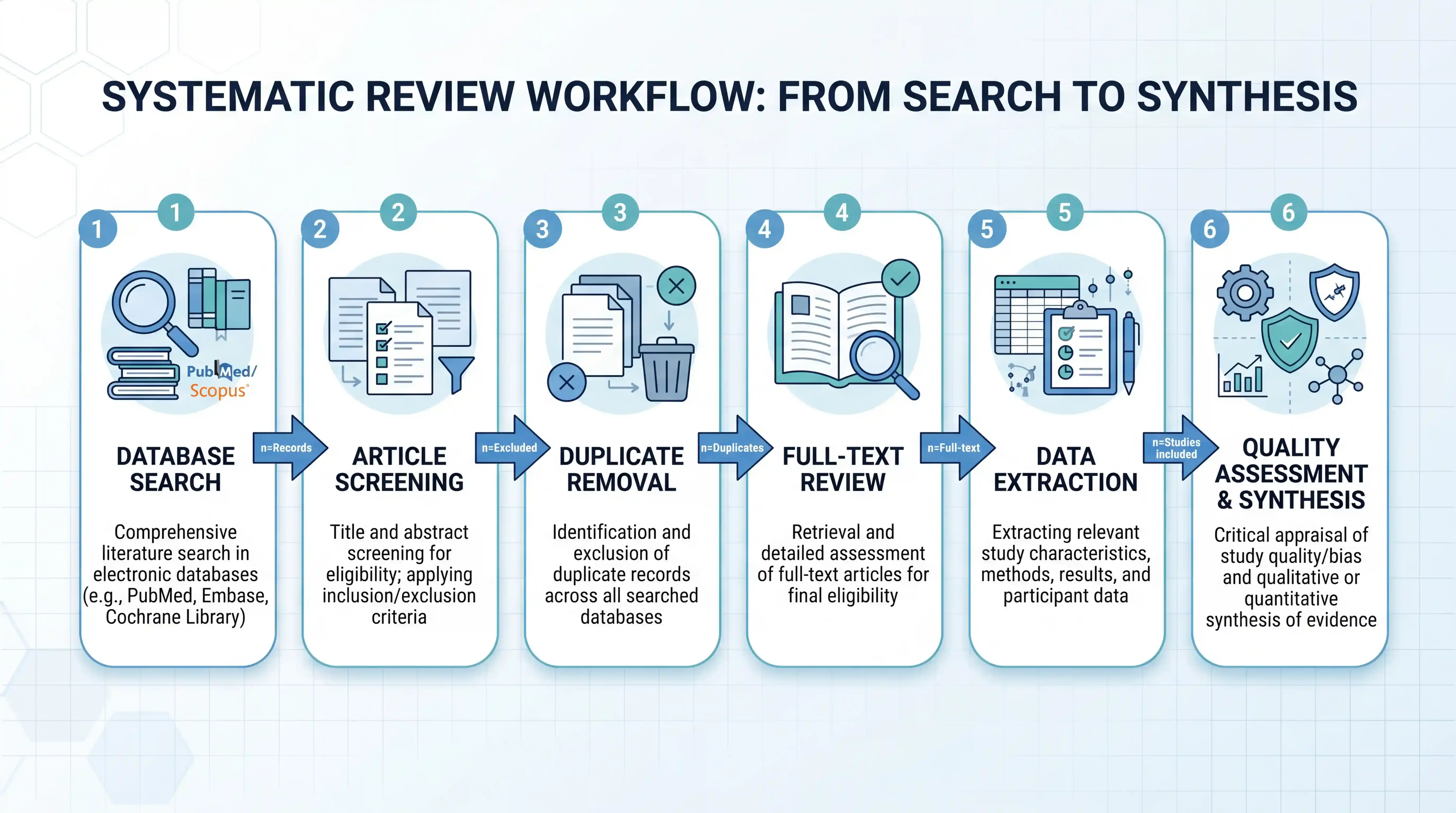
- Screening process.
- Data extraction plan.
- Risk of bias assessment.
- Planned synthesis methods.
- Dissemination plan.
A strong protocol saves time later because it prevents repeated edits during submission and review. If your team has multiple authors, agree on roles early. That avoids conflicting edits and inconsistent terminology.
3. How to Register a Systematic Review Protocol on PROSPERO
3.1 Create an account and start a new record
Go to the PROSPERO website and create a user account if you do not already have one. After logging in, choose the option to start a new registration record. The system will guide you through a structured submission form.
At this stage, accuracy matters. Use the exact title of the review. Keep the wording specific and clinically meaningful. If your study compares two interventions, make that clear in the title.
3.2 Complete the core registration fields
The form typically asks for information about the review team, the topic, the question, and the methods. Enter the details carefully and keep them consistent with your protocol document.
Key fields usually include:
- Review title.
- Anticipated start and completion dates.
- Contact author.
- Named collaborators.
- Review question.
- Health condition or domain.
- Information sources.
- Eligibility criteria.
- Data synthesis plan.
Do not leave methods vague. PROSPERO is not only a title registry. It is a methods record. Your entries should clearly describe how studies will be searched, selected, and analyzed.
3.3 Write a precise methods section
The methods section is the most important part of the record. It should explain your planned approach in enough detail that another researcher could understand your process.
Include the following:
- Eligibility criteria. State the population, intervention, comparator, outcomes, study design, setting, and time limits if any.
- Search strategy. Name the databases and other sources you will search.
- Selection process. Explain how many reviewers will screen titles, abstracts, and full texts.
- Data extraction. Describe what data will be collected and by whom.
- Risk of bias assessment. Specify the tool you plan to use, if applicable.
- Data synthesis. State whether you plan meta-analysis, narrative synthesis, or both.
- Subgroup or sensitivity analysis. Mention any planned secondary analyses.
- Publication bias. Note how you will assess it if enough studies are found.
This section should be concise, but not generic. If your review uses a specific model, such as an intervention review, explain it in practical terms.
3.4 Review the submission before finalizing
Before you submit, read every field again. Check for consistency between the title, rationale, and methods. Common errors include mismatched outcomes, unclear comparators, and incomplete search descriptions.
Use a short checklist:
- Is the question specific?
- Are all eligibility criteria defined?
- Are search sources named?
- Is the analysis plan realistic?
- Are the author details correct?
A clean submission reduces delays and lowers the chance of revision requests. This is especially important if your protocol is part of a thesis, publication plan, or institutional review project.
4. Common Mistakes and How to Avoid Them
4.1 Vague questions and broad scope
One of the most common mistakes is trying to cover too much in one review. A broad topic often leads to weak methods and inconsistent studies. Narrow the focus early. For example, choose one condition, one intervention, and one comparator when possible.
If the topic is complex, split it into a more manageable question. That improves both registration quality and later analysis.
4.2 Incomplete or changing methods
Another common problem is registering methods that are too general. If your protocol says “we will analyze studies as appropriate,” that is not enough. You need to explain what “appropriate” means in practice.
Avoid frequent post-registration changes unless they are necessary. If changes happen, document them clearly in the final review. Transparency is part of trust.
4.3 Weak alignment between protocol and review
Your final review should match the registered protocol as closely as possible. Major deviations can weaken credibility. Minor changes are sometimes unavoidable, but they should be explained.
This is where good planning matters most. A well-written protocol is not just a formality. It is the blueprint for the entire project.
5. Tools That Can Strengthen Your Workflow
5.1 Use structured writing and review management tools
Many researchers also prepare the review in software such as RevMan, which supports structured systematic review writing. RevMan allows users to create protocol or full review files, organize sections such as background, objectives, and methods, and manage study flow diagrams and references.
For teams working on a Cochrane-style project, this kind of structure is useful. It helps keep the protocol organized and reduces formatting problems. It also makes collaboration easier when multiple authors are editing the same project.
5.2 Use AI-assisted drafting to save time
If you are struggling with first drafts, literature organization, or section planning, scifocus.ai can help streamline the workflow. It is useful for turning scattered notes into a clearer draft structure, especially when you are preparing a protocol for registration and publication.
The goal is not to replace expert judgment. The goal is to speed up the drafting process while keeping your methods clear, consistent, and submission-ready. For medical students, doctors, and researchers with limited time, that support can make the registration process far less stressful.
6. Final Checks Before Submission
6.1 Confirm transparency and feasibility
Before you click submit, ask three questions:
- Is the review question answerable?
- Are the methods reproducible?
- Can the project realistically be completed?
If the answer is yes to all three, your registration is in good shape. If not, revise the protocol before submission. That is better than fixing problems after registration.
6.2 Keep your protocol and final review aligned
Registration is most valuable when the final publication stays close to the original plan. That alignment improves trust and makes your research easier to evaluate. It also strengthens your academic writing because the logic of the project is visible from the beginning.
For graduate students and clinicians publishing their first evidence synthesis, this discipline is especially important. It shows that the work was planned carefully and conducted with methodological integrity.
Conclusion
Knowing how to register a systematic review protocol on PROSPERO is essential for transparent, credible evidence synthesis. Start with a focused question, prepare your protocol carefully, and describe your methods in a clear, reproducible way. Registration is not just an administrative step. It is part of sound research design.
If you want to write faster and organize your protocol more efficiently, consider using scifocus.ai to support your drafting workflow. It can help you move from outline to submission-ready text with less friction, while keeping your review structured and professional.
Did you like this article? Explore a few more related posts.
Start Your Research Journey With Scifocus Today
Create your free Scifocus account today and take your research to the next level. Experience the difference firsthand—your journey to academic excellence starts here.