
How to Reduce Turnitin Similarity Score
Introduction
A high Turnitin report can be stressful, especially when your essay is clinically important, research-heavy, or built on standard methods. For medical students, doctors, and researchers, the problem is often not plagiarism, but overlap in terminology, methods, and citations. The goal is not to “cheat” the system. The goal is to write more original, clearer, and better-structured academic text.

1. Understand What Turnitin Actually Flags
1.1 Similarity is not the same as plagiarism
Turnitin compares your text against a large database of academic papers, websites, and publications. It highlights matched strings. That means a high score does not automatically mean misconduct.
A common issue in an essay is repeated phrasing in definitions, method descriptions, and standard medical terminology. In scientific writing, some overlap is expected. For example, phrases used in “materials and methods” often sound similar across studies because the procedure itself is standardized.
1.2 Focus on the type of overlap
Before you change anything, read the similarity report carefully. Ask three questions:
- Is the match in a reference list?
- Is it a quoted definition or guideline?
- Is it a block of text that could be rewritten more clearly?
Not every highlighted sentence needs rewriting. Some text should stay exact, especially citations, technical names, and official terms.
2. Rewrite with Meaning, Not Just Synonyms
2.1 Change structure first
Many writers try to reduce similarity by replacing individual words. That is not enough. Turnitin can still detect close sentence patterns. A stronger method is to change the sentence structure.
For example, instead of copying a source line by line, you can:
- Read the source carefully.
- Close it.
- Explain the idea in your own words.
- Rebuild the paragraph with your own logic.
This is especially important in a medical essay, where paraphrasing must remain accurate. A weak rewrite can distort the meaning, which is worse than a high similarity score.
2.2 Use synthesis, not patchwriting
Synthesis means combining ideas from multiple sources into one new explanation. Patchwriting means copying small fragments and swapping words. Turnitin often still catches patchwriting.
A more effective approach is to write around the idea rather than around the sentence. For example:
- State the concept.
- Add the mechanism.
- Then explain the clinical relevance.
- Finally, connect it to your argument.
This approach improves originality and makes the essay easier to read.
3. Treat Methods and Background Sections Separately
3.1 Why methods often score high
In scientific writing, the methods section often has the highest similarity. This is because lab steps, statistical tests, and protocol language are naturally repetitive. The knowledge base confirms that the materials and methods section is one of the easiest parts to imitate, which also makes it one of the most repetitive.
To reduce overlap in this section:
- Describe the rationale behind the method.
- Reorder the steps logically.
- Combine repeated information.
- Use tables or figures where appropriate.
A carefully written essay in medicine should preserve precision. Do not oversimplify technical procedures just to force a lower score.
3.2 Use figures or tables when appropriate
If a process is difficult to rewrite without losing clarity, convert it into a table or figure. Similarity tools generally do not read image content in the same way as text.
This is useful for:
- Clinical protocols
- Workflow summaries
- Diagnostic pathways
- Data comparison tables
Use this method sparingly. It should improve clarity, not hide copied material.
4. Build Originality Through Better Research Writing
4.1 Add your interpretation
Originality comes from insight, not only from new wording. In a strong essay, you should explain what the evidence means, not just repeat what the source says.
For example, after citing a study, add:
- Why the result matters
- How it applies to your field
- What limitation should be considered
- How it compares with another study
This creates a distinct academic voice. It also shows E-E-A-T, which matters for trust and quality.
4.2 Use more than one source
If one paragraph is built on a single paper, it is easier to copy its structure and wording. If you combine several reliable sources, your writing becomes more original.
Good sources for medical writing include:
- Peer-reviewed journal articles
- Clinical guidelines
- Institutional or government publications
- Systematic reviews and meta-analyses
The more you understand the topic, the easier it is to write an original essay.
5. Edit With a Practical Workflow
5.1 Use an AI tool, but do not rely on it alone
The knowledge base confirms that AI-assisted rewriting is feasible. Tools can help detect repetitive content and suggest alternatives. However, machine rewriting is not fully reliable.
A safe workflow is:
- Draft the text yourself.
- Use an AI tool to identify repetitive sections.
- Review every change manually.
- Check scientific accuracy.
- Revise again if needed.
This is especially important for medical and research content. AI may change wording correctly but miss nuance, context, or disciplinary standards.
5.2 Check every change against the source
After rewriting, compare the revised text with the original source. Make sure:
- The meaning is preserved
- The wording is genuinely new
- The sentence length and rhythm are not too similar
- The citation is still correct
A lower similarity score is only useful if the final essay remains accurate, ethical, and publication-ready.
6. Use Scifocus.ai to Streamline the Revision Process
6.1 Why it helps
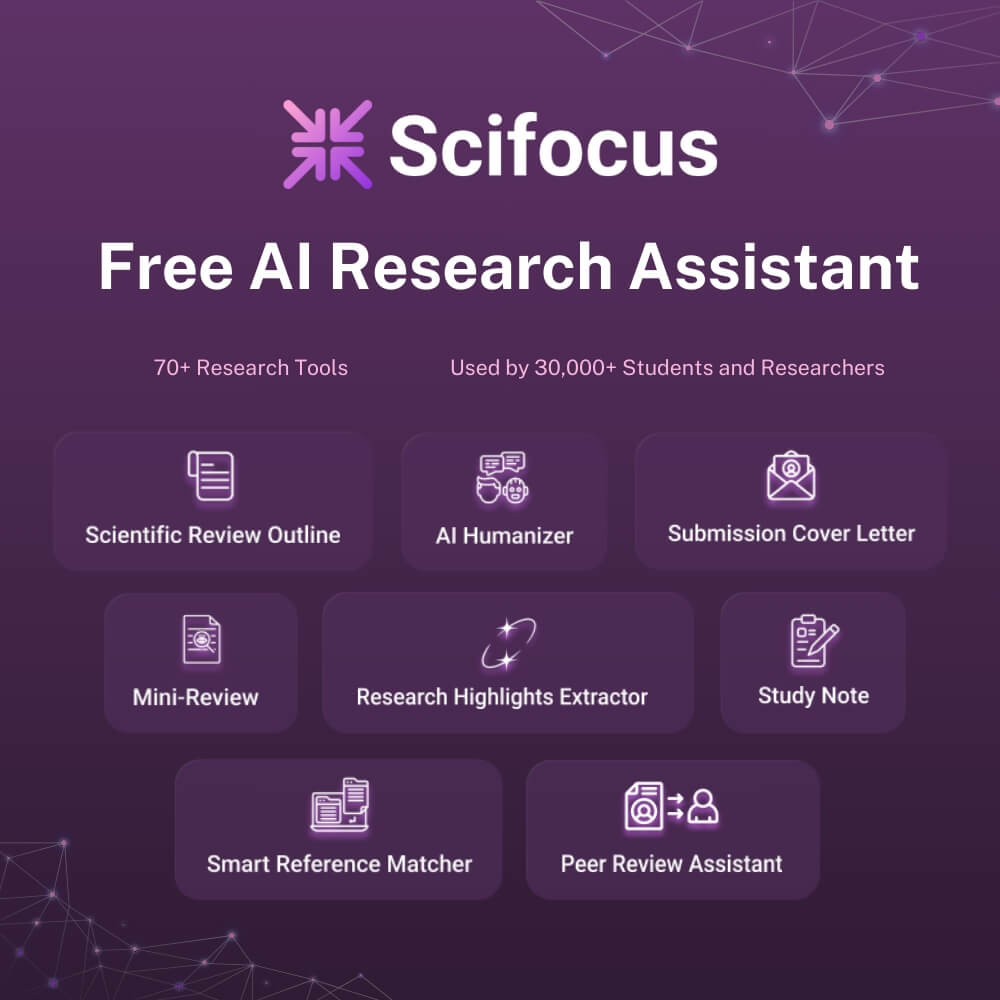
For medical students, doctors, and researchers, the hardest part is usually not writing a first draft. It is revising technical text without damaging meaning. That is where scifocus.ai can help.
A focused research-writing platform can support you in:
- Identifying repetitive phrasing
- Restructuring paragraphs
- Improving clarity in dense academic text
- Saving time during revision
6.2 Where it fits in your workflow
Use scifocus.ai after your first draft and before final submission. It can help you refine a complex essay faster, especially when you are working under deadline pressure.
The best results come from combining:
- Your subject expertise
- Manual review
- Careful source checking
- Smart revision support from scifocus.ai
This is the most practical way to reduce similarity without sacrificing academic integrity.
Conclusion
Reducing Turnitin similarity is not about tricking the system. It is about writing with better structure, clearer logic, and stronger originality. For medical students, doctors, and researchers, the safest method is to understand the report, rewrite meaningfully, and verify every edit manually. AI tools can help, but they should support expert judgment, not replace it.
If you want a faster, more reliable revision workflow, try scifocus.ai. It can help you refine your essay, reduce repetitive phrasing, and improve academic clarity while keeping your technical meaning intact.

Did you like this article? Explore a few more related posts.
Start Your Research Journey With Scifocus Today
Create your free Scifocus account today and take your research to the next level. Experience the difference firsthand—your journey to academic excellence starts here.