
How to Read a Scientific Paper Efficiently in Three Passes
Introduction
If you need to read an essay-length scientific paper quickly, the real challenge is not English. It is structure. Many medical students, doctors, and researchers spend too long on every line, then still cannot recall the argument or judge the paper’s value. Efficient reading is a skill, not a shortcut. This guide shows how to read a scientific paper in three passes, so you can identify the core idea, assess the evidence, and decide whether the paper deserves a deeper read.
1. Understand the Logic Before You Read
1.1 Scientific papers follow a predictable pattern
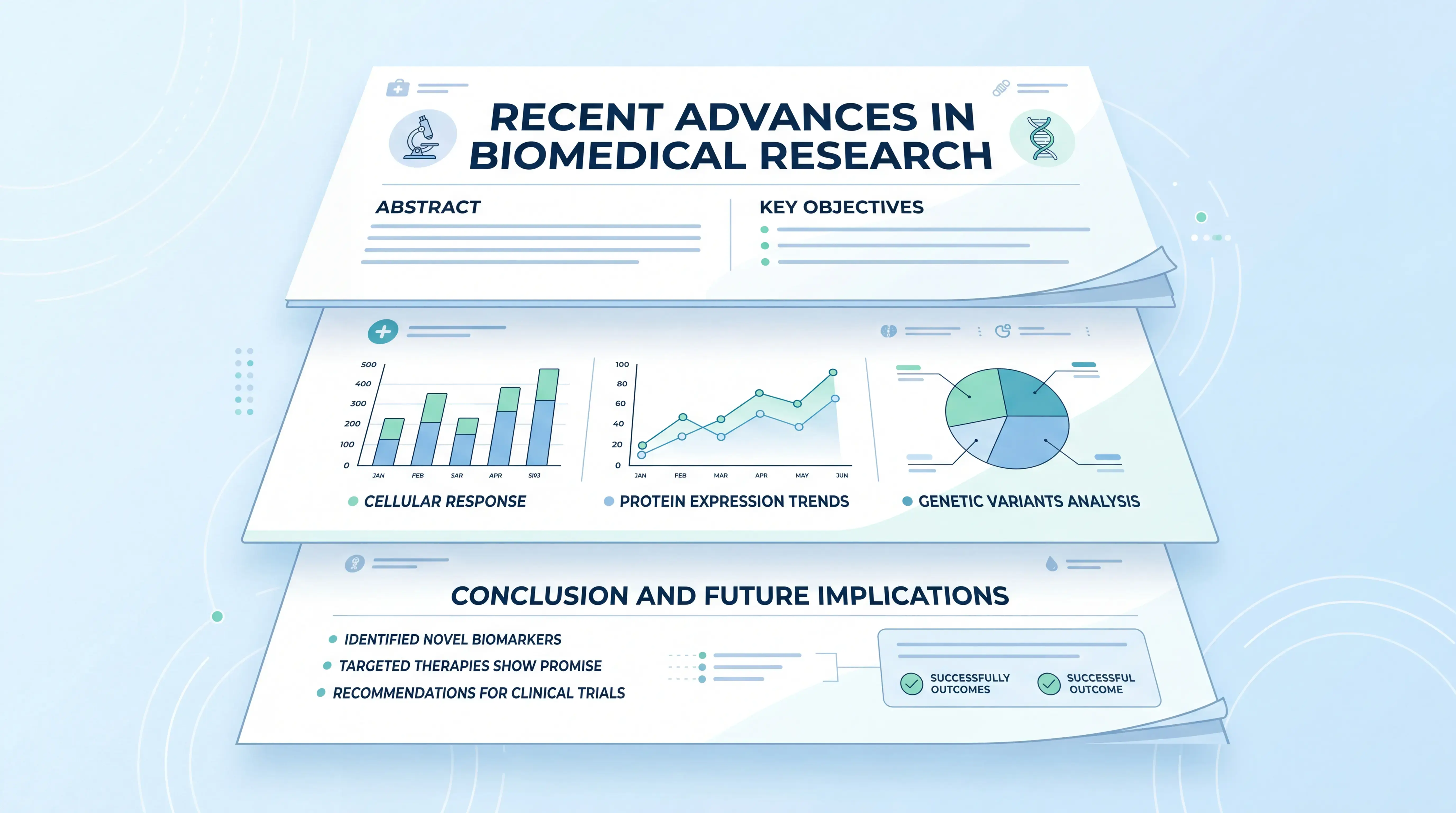
Most biomedical papers are built around a repeatable logic. The title usually contains the key elements of the hypothesis. The abstract summarizes the question, method, and main result. The figures carry most of the evidence. The discussion explains meaning and limits.
That is why you do not need to read every sentence in the same way. In most papers, the real value is in the data and in how the author connects those data into an argument.
1.2 Read for hypothesis, not for translation
A common mistake is to translate line by line before understanding the paper. That slows you down and often blocks scientific thinking. Instead, try to restore the title into a hypothesis.
For example, ask:
- What is the disease or context?
- What is the factor or variable?
- What is the outcome or effect?
- What mechanism is proposed?
This is the core of efficient essay reading in science. Nouns matter more than verbs at the first pass. Once you identify the subject, the effect, and the mechanism, the paper becomes much easier to follow.
1.3 Learn the paper’s structure, not just its language
A scientific paper is not literature. It is an evidence chain. The author usually starts with a known problem, adds a factor, shows an effect, then proposes a mechanism. In many basic biomedical studies, this logic repeats across the whole paper.
If you can see this pattern, you can read faster and remember more. You are not trying to understand every word. You are trying to understand the author’s reasoning.
2. First Pass: Decide Whether the Paper Is Worth Your Time
2.1 Start with the title and abstract
The first pass is a screening pass. Read the title, then the abstract. Your goal is simple: decide whether the paper is relevant to your own topic, your clinical question, or your manuscript.
Do not open every paper in full detail. A fast title-and-abstract screen can save hours. For busy clinicians and researchers, that time matters.
A useful method is to convert the title into a question:
- Is this about my disease area?
- Is the variable related to my project?
- Does the paper study a similar model or mechanism?
If the answer is no, move on.
2.2 Use keywords to classify relevance
When you search a topic, you may get 20 or more papers. Do not treat them all equally. Separate them into three groups:
- High relevance, worth deeper reading
- Medium relevance, worth scanning
- Low relevance, not worth your time
This simple classification improves efficiency. It also protects your attention for the papers that can actually help your research.
2.3 Read the abstract like a map
A good abstract should tell you:
- What problem was studied
- What method was used
- What was found
- Why it matters
If these points are not clear, the paper may not be useful for your current purpose. The first pass is about triage, not mastery.
3. Second Pass: Read the Figures and Results
3.1 Figures often carry the real story
In the second pass, go directly to the figures, figure legends, and results. This is where most of the evidence lives. In many journals, the results section is arranged around figure order, so each figure usually supports one key claim.
Do not try to memorize every detail. Instead, ask:
- What is shown in each panel?
- What comparison is being made?
- What conclusion does this figure support?
This is the fastest way to understand the paper’s argument.
3.2 Focus on the data, not the decoration
Many results sections contain long explanations and repeated wording. You do not need to read them line by line at first. The data are the priority.
Look for:
- Control versus experiment
- Upregulation or downregulation
- Increase or decrease in phenotype
- Rescue or reversal experiments
- Mechanistic validation
If the figures do not support the claims, the paper is weak. If they do, the paper may be useful even if the prose is not elegant.
3.3 Identify the logic between figures
Good papers do more than show separate experiments. They connect them. The first figure often establishes the problem. The next figure shows an effect. The next adds mechanism. The final figure may test whether the mechanism is real.
This sequence matters. It shows how the author built the argument. For medical students and researchers, learning this sequence is more valuable than reading every sentence in order.
If you are not sure what a figure means, then read only the relevant result paragraph or the legend. Avoid getting stuck in unrelated text.
4. Third Pass: Read the Discussion and Method Only as Needed
4.1 Read the discussion for interpretation and limits
The third pass is for the discussion, not for a full re-read of the whole paper. This section tells you how the author interprets the findings, what limitations exist, and how the work fits into the field.
At this stage, ask:
- Did the conclusion match the data?
- Did the author overstate the result?
- What limitations were acknowledged?
- What future direction is suggested?
A strong reader can judge a paper like a reviewer. That is the standard you should aim for.
4.2 Use the method section selectively
The method section is essential when you need to reproduce a protocol or evaluate rigor. But for rapid reading, you do not need every technical detail.
Use the method section when:
- You do not understand the experimental design
- You need to compare techniques
- You plan to reuse the approach in your own project
Otherwise, you can often scan it briefly and move on. If a method is unfamiliar, look up the principle or protocol separately.
4.3 Know what not to spend time on
In many papers, references do not need detailed reading during the first three passes. The same is often true for routine method descriptions. Your time is better spent on:
- Hypothesis
- Figures
- Key comparisons
- Logic of the conclusion
This is the difference between busy reading and productive reading.
5. Turn Three Passes into a Repeatable Workflow
5.1 A practical reading order
Here is a reliable order for most scientific papers:
- Title
- Abstract
- Figures and figure legends
- Results
- Discussion
- Selected methods if needed
This order is efficient because it follows the paper’s logic, not its page order. You are reading to extract meaning, not to admire completeness.
5.2 Build a personal reading checklist
To make this method stick, use the same checklist every time:
- What is the paper asking?
- What is the key variable?
- What evidence is shown?
- What is the main conclusion?
- What is missing or weak?
After repeated use, this becomes automatic. That is when reading speed improves without losing accuracy.
5.3 Deep reading still matters
Three passes do not replace deep reading. They help you decide where deep reading is worth the effort. In practice, most papers only need a structured scan. A small number deserve full attention because they are close to your own project, are highly cited, or can serve as a template for writing.
Good researchers do not read everything deeply. They read the right papers deeply.
6. How SciFocus.ai Helps You Read Faster
6.1 Reduce friction in paper screening
For clinicians and researchers with limited time, the biggest problem is not access to papers. It is speed of comprehension. Tools like scifocus.ai can support faster screening by helping you organize, summarize, and prioritize reading tasks.
That means less time wasted on irrelevant papers and more time spent on evidence that matters.
6.2 Support structured reading
When you apply the three-pass method, a smart workflow tool can help you keep notes, compare papers, and return to key points later. That is especially useful when you are reviewing multiple studies for an essay, a thesis, a manuscript, or a grant application.
If your reading list is large, structure matters even more than speed.
6.3 Make the method sustainable
The goal is not to read faster for one day. The goal is to build a stable system. scifocus.ai can fit into that system by helping you keep your reading organized, searchable, and easier to act on.
7. Conclusion
Reading a scientific paper efficiently is about method. The three-pass approach helps you move from relevance screening, to evidence review, to interpretation. For medical students, doctors, and researchers, this saves time and improves understanding. It also helps you think like a scientist, not just a reader.
If you want a more organized way to manage papers, notes, and literature review work, try scifocus.ai. It can help you turn scattered reading into a clear workflow, so each essay-style paper you read becomes easier to understand and more useful in your research.
Did you like this article? Explore a few more related posts.
Start Your Research Journey With Scifocus Today
Create your free Scifocus account today and take your research to the next level. Experience the difference firsthand—your journey to academic excellence starts here.