

How to Format a Research Paper Title Page
Introduction
Writing an essay for a medical or research audience is never just about content. Presentation matters too. If the title page is formatted poorly, reviewers may question your attention to detail before they even read the paper. That is why learning how to format a research paper title page is a practical skill, not a minor one. It sets the tone for credibility, helps journals process submissions faster, and protects you from avoidable rejection.
1. What a Research Paper Title Page Must Do
1.1 Present the Paper Clearly
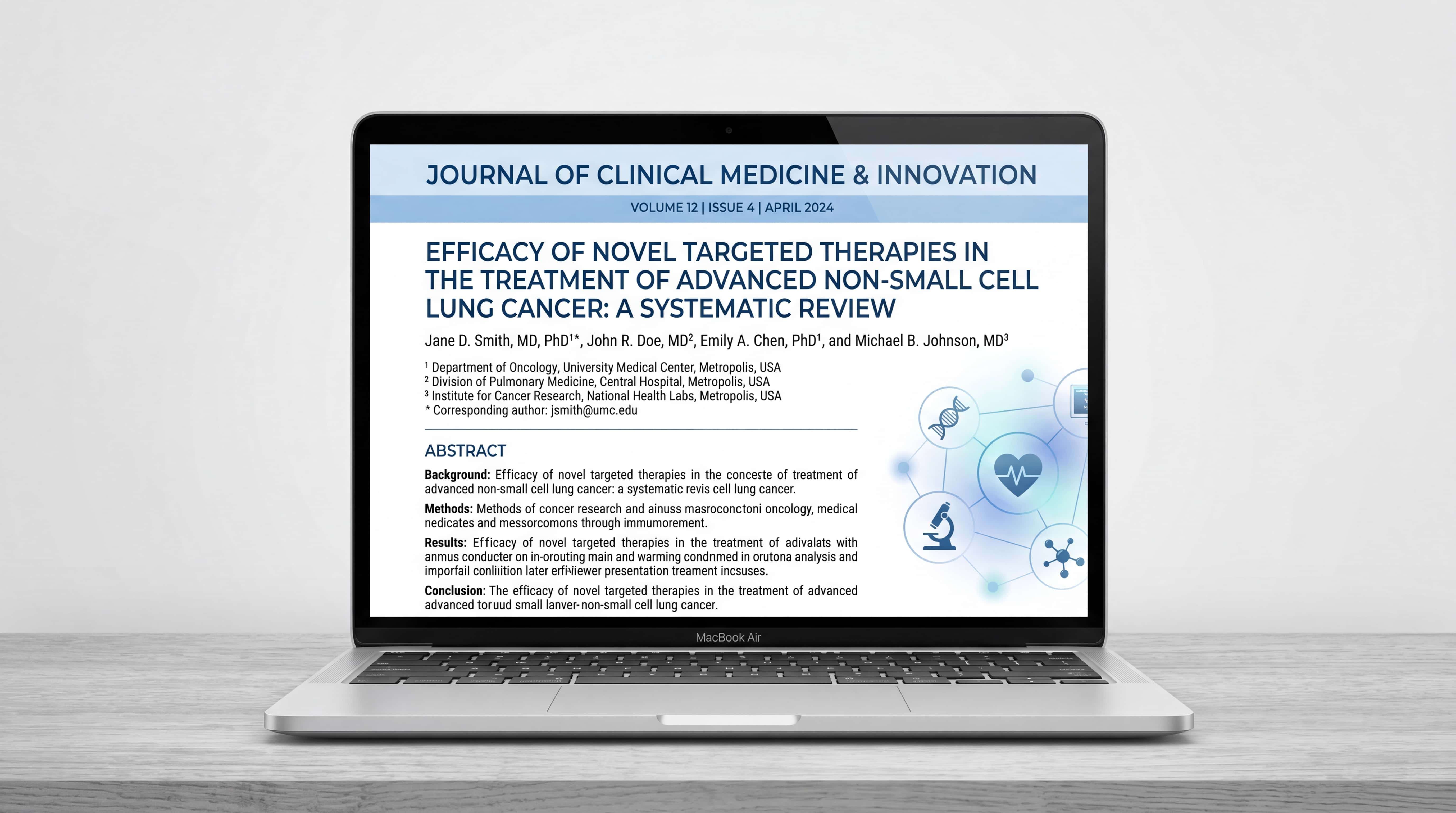
A title page is not decoration. It is the first formal record of your work. For medical students, doctors, and researchers, it should identify the paper, the authors, and the institution with precision.
A strong title page improves readability, professionalism, and submission accuracy. It also helps editors and reviewers locate the key metadata they need.
In most journals, the title page supports anonymity in peer review and keeps author details separate from the main manuscript when required. That is why the structure must be deliberate, not improvised.
1.2 Match Journal Requirements
There is no single universal format. Different journals ask for different elements. Some want a full title page with all author information. Others require a separate blinded manuscript.
At minimum, confirm these details before submission:
- Full paper title
- Author names
- Institutional affiliations
- Corresponding author details
- Word count or article type, if required
- Conflict of interest statement, if required
The safest rule is simple: follow the target journal’s instructions exactly. Even a well-written essay can be delayed if the title page does not match the submission rules.
2. Core Elements of a Title Page
2.1 Title of the Paper
The title should be concise, specific, and accurate. It should tell readers what the study is about without exaggeration.
From a writing perspective, a good title usually includes the topic, population, method, or key finding. Avoid vague phrases like “study of” or “effect of” when possible. These sound generic and weak.
Based on the knowledge base, strong titles should be short and clear, often around 10 to 20 English words. They should not overstate the findings. They should not use unnecessary symbols or question forms.
2.2 Author Information
List each author in the correct order. In research writing, order matters because it often reflects contribution. Use the name format required by the journal.
Then add affiliations clearly. A typical title page should show:
- Department
- Institution name
- City
- Country
If there are multiple authors from different institutions, use superscript numbers to match names and affiliations. This keeps the title page organized and easy to scan.
2.3 Corresponding Author Details
The corresponding author should be easy to identify. Include:
- Full name
- Email address
- Department and institution
- Mailing address, if requested
This section is essential for editorial communication. Missing or incomplete contact information can slow down review and publication.
3. How to Format the Title Page Step by Step
3.1 Place the Title in the Correct Position
The title usually appears near the top of the page, centered or aligned according to journal style. Use a clean font and avoid decorative styling.
Keep the title readable. Do not add unnecessary abbreviations unless they are widely recognized in the field. In medical writing, clarity is more valuable than clever wording.
If your essay is for a journal submission, make sure the title page is separate from the abstract and body text when the journal requires blinding. That separation is especially important in peer review systems.
3.2 Add Authors and Affiliations Below the Title
After the title, list authors in order. Then add the affiliations directly below. Keep formatting consistent throughout.
For example, if two authors are from the same department, do not repeat the full affiliation unnecessarily. Use the journal’s preferred superscript or numbering system.
A polished title page should be visually simple:
- Title
- Author names
- Institutional affiliations
- Corresponding author
- Any required notes
Consistency is more important than decorative formatting. A clean layout improves both professionalism and submission efficiency.
3.3 Include Required Notes and Disclosures
Some journals ask for extra information on the title page. This may include funding support, conflict of interest declarations, or acknowledgments of equal contribution.
Do not add these items unless the journal asks for them. But when required, place them in the correct section and label them clearly.
From an E-E-A-T perspective, this improves trust. It shows the manuscript is transparent and prepared according to academic standards.
4. Common Formatting Mistakes to Avoid
4.1 Using Vague or Inflated Titles
One major mistake is writing a title that sounds broad but says little. Another is making claims that the data do not support. If the study is preliminary or limited to one sample, the title should not sound like a final clinical conclusion.
The knowledge base emphasizes that a title should be objective. It should reflect the real scope of the research. A title that overpromises can damage credibility immediately.
4.2 Ignoring Journal Style Rules
Some journals use title case. Others require sentence case. Some want the title page double-spaced. Others do not.
Also watch capitalization, punctuation, and abbreviations. Small errors can create a poor impression. For example, inconsistent author formatting or missing affiliation details can suggest weak manuscript control.
A practical checklist helps:
- Confirm journal title case rules.
- Check author order.
- Verify affiliations.
- Confirm corresponding author details.
- Add disclosures only if required.
4.3 Mixing Title Page and Main Text
In a blinded review process, the title page should usually be separate from the manuscript body. If author names appear in the main text file when they should not, the submission may be returned.
This is especially important for medical essays, clinical research reports, and review articles. Submission systems often reject files that do not meet anonymity rules.
5. Title Page Best Practices for Medical Writers
5.1 Keep the Layout Clean
Medical readers value efficiency. So do journal editors. Use a simple, structured layout with enough white space to make the page easy to scan.
Avoid clutter. Avoid unnecessary fonts. Avoid inserting logos unless the journal or institution specifically requires them.
A professional title page is usually built on three principles:
- Accuracy
- Simplicity
- Compliance
5.2 Align the Title with the Research Purpose
Your title page begins with the title, so the title must reflect the actual research aim. The knowledge base notes that article titles should be concise summaries of the study’s content and key finding.
That means the title should help readers identify:
- The research topic
- The subject or material
- The study type
- The main result, if appropriate
For researchers writing an essay in the medical field, this matters because the title is part of the article’s first impression and search visibility.
5.3 Use Tools to Reduce Formatting Errors
Manually formatting every submission increases the chance of mistakes. This is where an academic writing workflow tool can help. For example, scifocus.ai can support researchers with structured writing, revision, and manuscript organization.
Using the right tool saves time and reduces formatting inconsistency. For busy clinicians and researchers, that means less time fixing details and more time refining the science.
6. A Simple Title Page Checklist
6.1 Final Pre-Submission Check
Before you upload your paper, review the title page line by line. This takes only a few minutes and can prevent unnecessary revisions.
Check the following:
- Is the title accurate and concise?
- Are all author names correct?
- Are affiliations complete?
- Is the corresponding author clearly marked?
- Are journal-specific notes included?
- Is the page formatted according to submission rules?
6.2 When to Revise the Title Page
Revise the title page if:
- The journal rejects the format
- Author order changes
- The corresponding author changes
- Funding or disclosure information is updated
- The title is adjusted after manuscript review
A title page should be treated as a living submission document, not a fixed cover sheet. It must reflect the final version of the paper.
Conclusion
Knowing how to format a research paper title page is essential for anyone preparing a medical essay, clinical manuscript, or academic submission. A good title page is accurate, clean, and journal-compliant. It improves professionalism and reduces friction in peer review. Use a clear title, complete author details, and the exact format requested by the target journal. If you want a faster and more organized writing workflow, consider using scifocus.ai to support manuscript preparation and help you submit with confidence.

Did you like this article? Explore a few more related posts.
Start Your Research Journey With Scifocus Today
Create your free Scifocus account today and take your research to the next level. Experience the difference firsthand—your journey to academic excellence starts here.