
How to Detect and Avoid AI-Hallucinated Citations
Introduction
AI can draft an essay fast, but it can also invent citations that look real and do not exist. For medical students, doctors, and researchers, that is a serious risk. A single wrong reference can weaken a manuscript, delay submission, or damage trust. AI-hallucinated citations are common enough that every reference must be checked manually. If you use AI for writing, you need a reliable process to detect errors before they reach your paper.
1. What AI-Hallucinated Citations Look Like
1.1 Citations that cannot be found
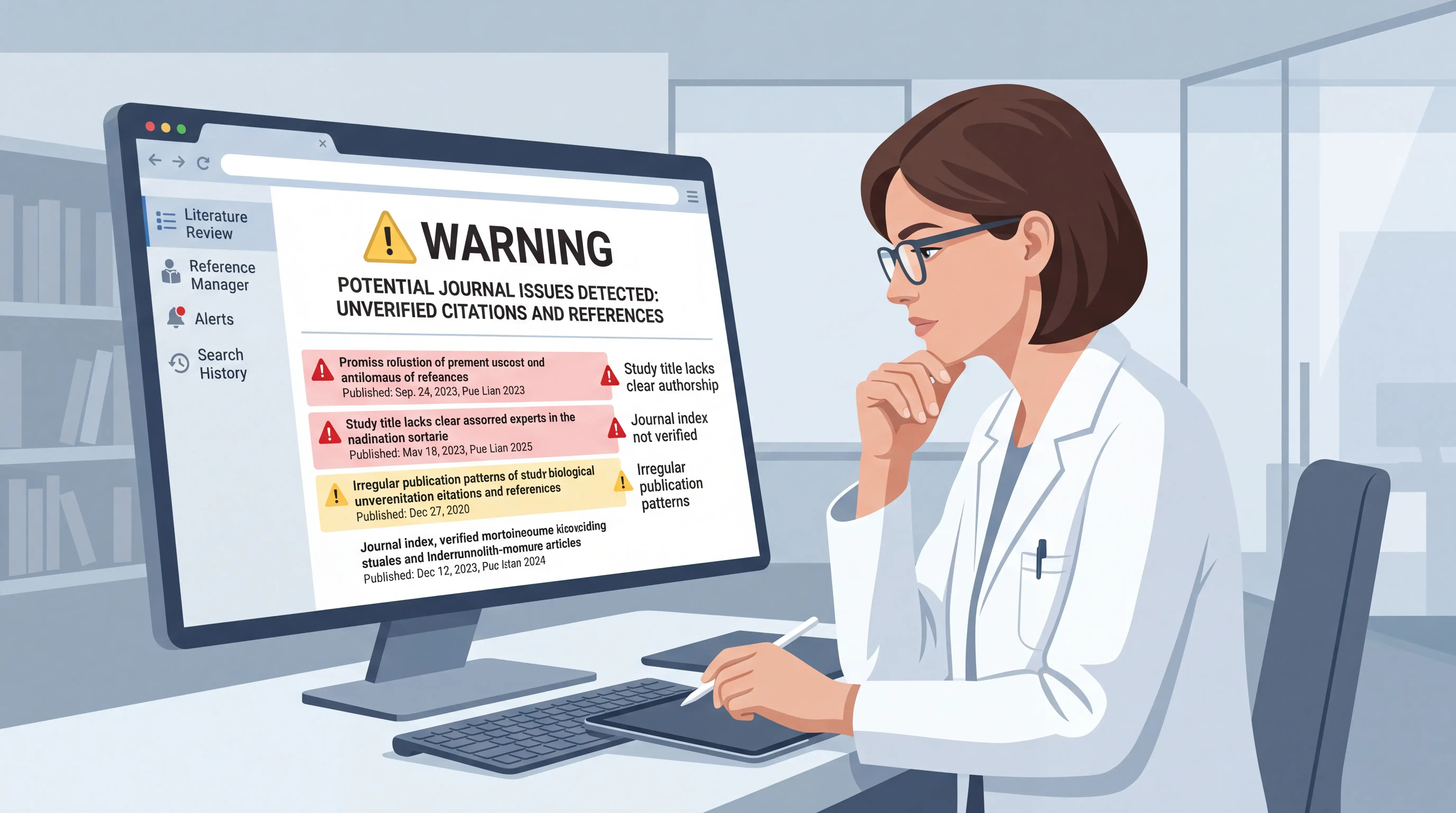
The most obvious sign is a reference that does not appear in PubMed, Google Scholar, Crossref, or the journal website. Some AI tools generate plausible author names, titles, and years. They look convincing, but the paper is missing.
In practice, this happens more often than many users expect. Based on the knowledge base, citation accuracy may be around 80 percent, which means roughly 10 to 20 percent of references can be wrong. That is enough to create major problems in an academic essay or manuscript.
1.2 Real wording, wrong source
Sometimes the sentence is correct, but the citation attached to it is wrong. The article may support the claim in a general sense, but not with the exact data, population, or conclusion. This is dangerous because the text appears credible while the evidence is mismatched.
1.3 Outdated or weaker evidence
AI may also choose older studies when newer and stronger evidence exists. In medicine, that matters. A review of clinical guidance, treatment outcomes, or diagnostic performance should rely on the most current and relevant literature.
2. How to Detect Hallucinated Citations
2.1 Verify every reference in trusted databases
Use PubMed, Crossref, Web of Science, Google Scholar, or the journal website. Check whether the title exists, whether the authors match, and whether the year, volume, issue, and pages are correct.
Do not trust citation formatting alone. A reference can look polished and still be fabricated. For clinical and research writing, verification is not optional.
2.2 Compare the citation with the actual claim
Open the paper and confirm the exact statement it supports. Ask three questions:
- Does the paper discuss the same topic?
- Does it study the same population or model?
- Does it actually support the conclusion in your text?
If the answer is no, replace it. A correct-looking reference is not enough.
2.3 Watch for impossible publication details
Fake citations often contain clues. Common red flags include:
- Journals with slightly wrong names
- Author combinations that do not fit the field
- Volume and issue numbers that do not align
- DOI formats that fail to resolve
- Articles that cannot be found in any database
If a citation cannot be traced in under a few minutes, treat it as suspicious.
2.4 Check reference consistency across the manuscript
A citation may appear in the text but not in the reference list, or vice versa. Some tools also duplicate entries. EndNote or similar reference managers can help remove duplicates, but the final review still belongs to the author.
3. Why AI Gets Citations Wrong
3.1 AI predicts patterns, not truth
Large language models generate text by pattern recognition. They do not “know” whether a paper exists unless the source is retrieved and verified. That is why fabricated references can appear natural and precise.
3.2 Retrieval quality matters
If the tool is connected to poor retrieval or incomplete databases, the reference list may be weak, outdated, or inaccurate. A good writing system should favor newer literature and traceable sources, but that does not eliminate the need for human review.
3.3 Medical writing has a higher standard
In medical education and research, citation errors are more than a formatting issue. They can affect clinical interpretation, systematic reviews, and publication credibility. Accuracy must be checked reference by reference.
4. A Practical Workflow to Avoid Citation Errors
4.1 Use AI for drafting, not final validation
AI is useful for outline generation, summarization, and language refinement. It is not a substitute for literature verification. Write the draft first, then audit every citation before submission.
4.2 Build a two-step review process
A simple process works well:
- Generate or collect candidate references.
- Verify each one manually against a database and the full text.
For higher-stakes work, have a second reviewer check key claims and supporting studies. This is especially useful in a research essay or literature review.
4.3 Maintain a claim-to-source table
Create a small table with three columns:
- Key claim
- Supporting source
- Verification status
This helps you see which statements are properly supported and which still need better evidence. It also reduces the chance of repeating the same weak citation across multiple paragraphs.
4.4 Prefer tools that support traceable literature workflows
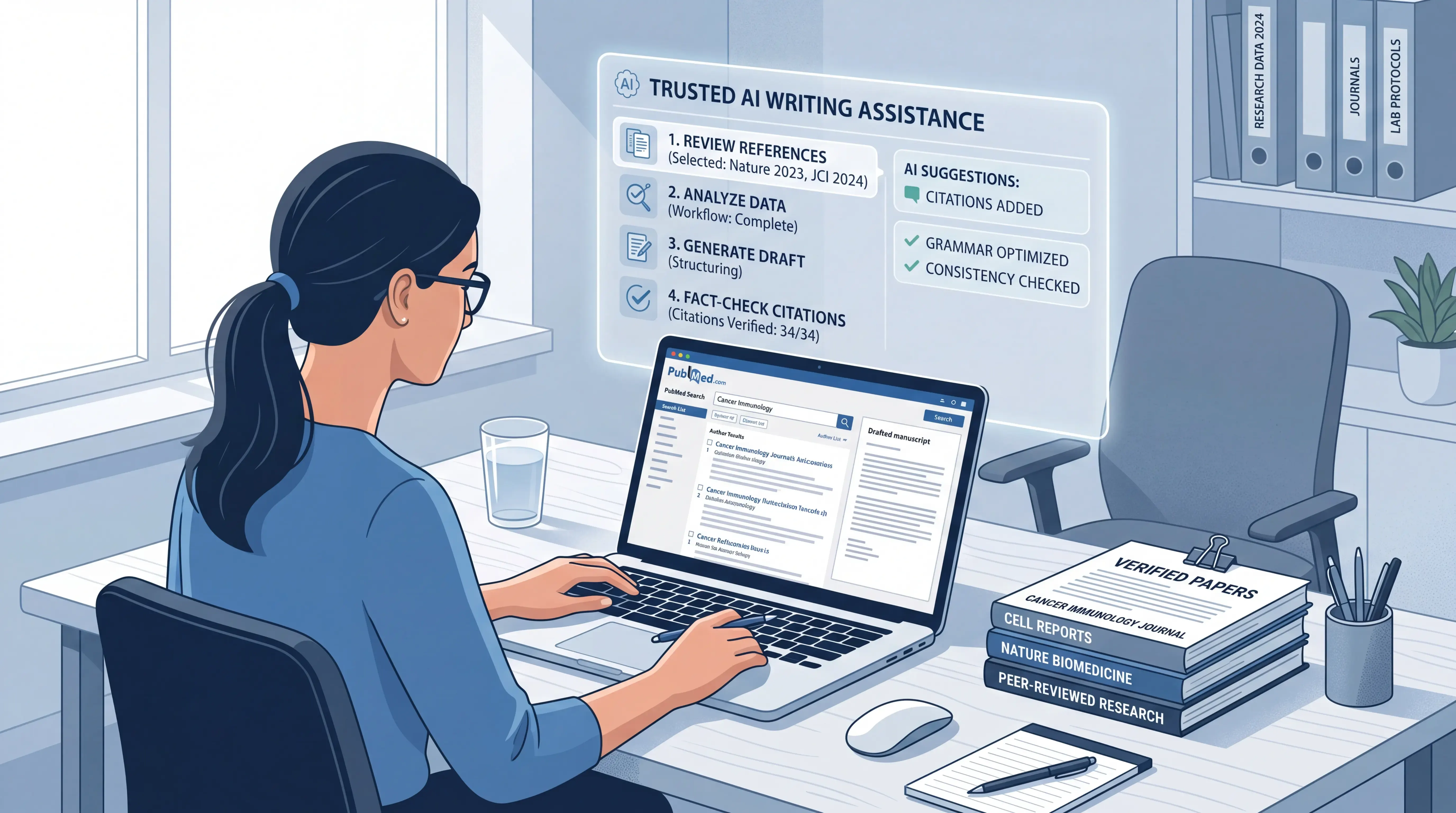
If you want to reduce manual work, use a platform that combines writing support with citation checking and literature retrieval. For example, scifocus.ai can help researchers organize sources, structure academic writing, and reduce the risk of unsupported claims. The key benefit is workflow discipline. You still verify references, but the process becomes faster and more controlled.
5. Best Practices for Medical Students, Doctors, and Researchers
5.1 Use recent, field-relevant literature
In medicine, recent evidence is often essential. If your topic is treatment, diagnostics, or outcomes, prioritize current studies and guideline-level sources. Older citations should be used only when they remain highly relevant.
5.2 Be transparent when AI is used
According to the knowledge base, when AI contributes to a manuscript, its role should be disclosed in the acknowledgment or methods section as required by the journal. Report the tool name, version, manufacturer, date used, and what it helped with. This is especially important when the AI assisted with drafting, editing, or data analysis.
5.3 Keep responsibility with the author
The author remains responsible for the accuracy of every citation. That includes references generated by AI, references copied from drafts, and citations imported from databases. If a source cannot be verified, it should not stay in the manuscript.
6. A Simple Checklist Before Submission
6.1 Final citation audit
Before you submit, check the following:
- Every citation appears in the reference list
- Every reference is traceable in a trusted database
- The cited paper supports the exact claim
- Author names, year, journal, and DOI are correct
- Duplicate or missing references have been removed
6.2 Content-level review
Read the surrounding paragraph and confirm that the evidence matches the argument. This step matters because even a real reference can be the wrong reference.
6.3 Record your verification process
For major submissions, keep a short internal record of how references were checked. That can be useful for coauthors, supervisors, or journal review questions.
Conclusion
AI can speed up academic writing, but it cannot be trusted to self-validate citations. For a medical essay, review article, or manuscript, the safest method is simple: verify every reference, confirm every claim, and correct every mismatch before submission. Hallucinated citations are preventable when you combine AI drafting with human checking. If you want a more structured workflow, consider using scifocus.ai to support literature organization and writing efficiency, while keeping full responsibility for citation accuracy.
Did you like this article? Explore a few more related posts.
Start Your Research Journey With Scifocus Today
Create your free Scifocus account today and take your research to the next level. Experience the difference firsthand—your journey to academic excellence starts here.