

How to Choose the Right Control Group for Your Experiment
Introduction
Choosing the right control group is one of the most important steps in any experiment essay. A weak control group can blur results, weaken causality, and make even a well-designed study hard to publish. For medical students, doctors, and researchers, the real challenge is not just “having a control,” but selecting one that truly answers the research question. The control group should isolate the effect of the intervention while minimizing bias and confounding.
1. Understand the Role of the Control Group
1.1 Why the control group matters
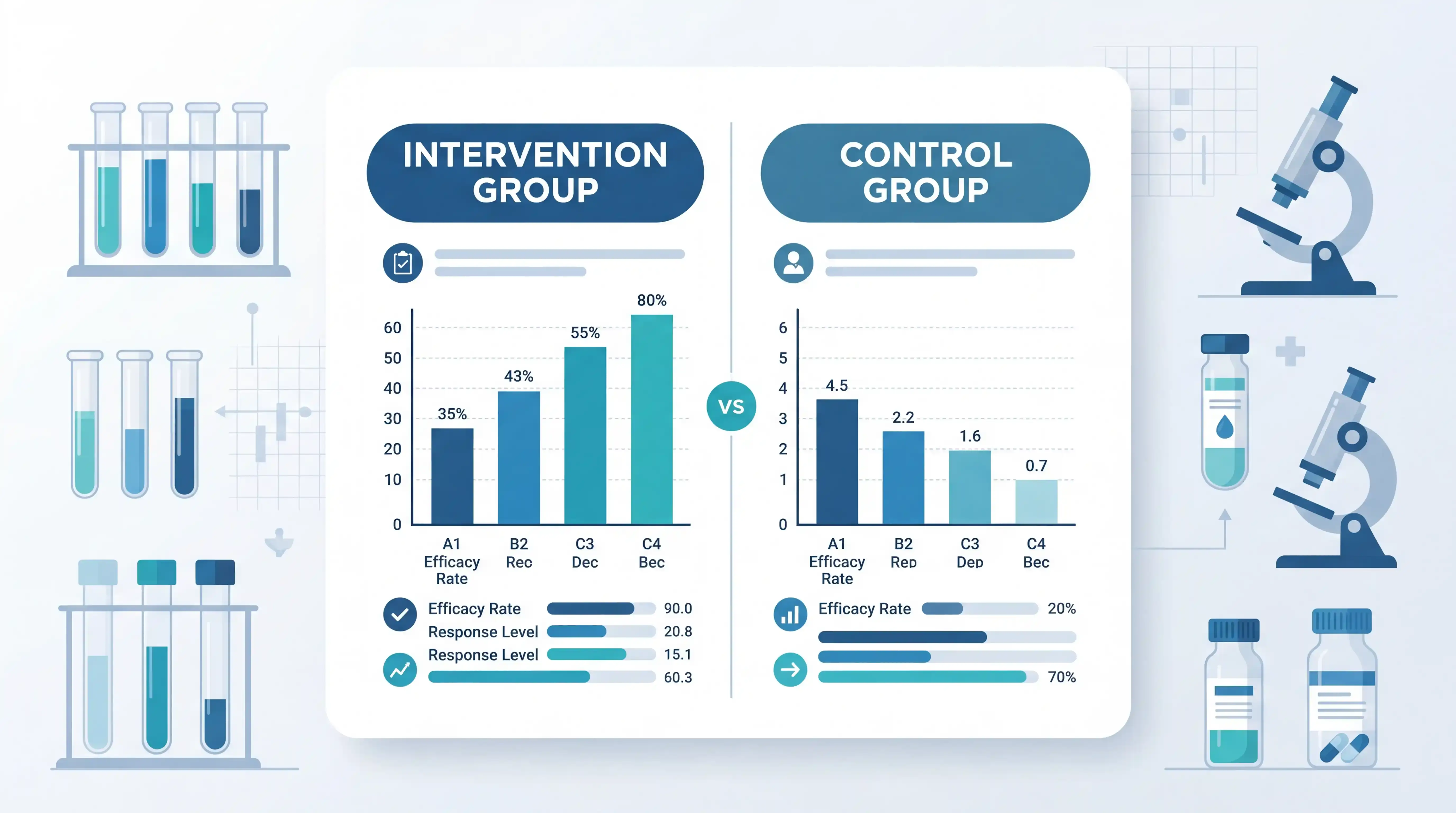
A control group gives you a baseline for comparison. It helps separate the effect of the intervention from natural variation, regression to the mean, and background noise. Without it, your essay may describe change, but not explain why the change happened.
In clinical research, the control group can be placebo, standard care, no treatment, or an active comparator. The choice depends on the hypothesis. A good control group is not the easiest option. It is the most scientifically defensible one.
1.2 Match the control to the research question
If your study asks whether a new drug works better than current care, standard treatment is often the most relevant control. If the question is about biological mechanism, then a sham or untreated control may be more appropriate. If you are testing safety or feasibility, the control should reflect real-world clinical conditions as closely as possible.
This logic is consistent with experimental design in translational research. The control must help you interpret the intervention effect, not create artificial contrast. In a strong essay, the control group should be justified by the endpoint, not by convenience.
2. Choose the Right Type of Control
2.1 Placebo, active, and no-treatment controls
A placebo control is useful when expectation effects may influence outcomes, especially in symptom-based trials. It is strongest when blinding is possible. An active control is better when withholding treatment would be unethical or when the goal is comparative effectiveness. A no-treatment control may be acceptable in mechanistic or preclinical work, but it is less useful when natural improvement is likely.
Each option has trade-offs:
- Placebo controls reduce expectation bias.
- Active controls reflect real clinical choice.
- No-treatment controls are simple but may overestimate effect size.
- Sham controls are useful in procedural studies.
The control must be ethically acceptable and scientifically informative at the same time.
2.2 Standardize what the control receives
A control group should not be vague. Define dose, timing, follow-up, and co-interventions. In RCT writing, this is essential because unclear control conditions make results difficult to interpret and reproduce. A control group that receives “usual care” must still be described in detail.
The same principle applies in laboratory studies. If controls differ in handling, cell culture conditions, or sample processing, observed effects may reflect procedure rather than biology. In an essay, that weakens internal validity.
3. Control Bias Before You Start
3.1 Randomization and allocation concealment
Randomization is the main method for reducing selection bias. It gives each participant an equal chance of assignment and improves baseline comparability. Use a computer-generated random sequence when possible. Avoid predictable methods such as alternating assignment.
Allocation concealment is different from blinding. Concealment prevents prediction of the next assignment before enrollment. This is critical because foreknowledge can distort group composition. Randomization without concealment is not enough.
3.2 Blinding and outcome assessment
Blinding reduces performance and measurement bias. When participants, investigators, and outcome assessors do not know group assignment, the risk of biased reporting drops. If full blinding is impossible, at least blind the outcome assessor.
This is especially important for subjective endpoints. Pain scores, symptom scales, and behavioral outcomes are highly sensitive to expectation. Objective endpoints, such as lab values or imaging results, are less vulnerable but still benefit from blinded review.
4. Size the Control Group Correctly
4.1 Use sample size planning, not guesswork
A control group must be large enough to support reliable inference. Small samples increase random error and can produce false-positive or false-negative findings. Sample size planning should be based on the primary endpoint, expected effect size, variability, alpha, and power.
For an essay, it is not enough to say “we enrolled enough patients.” Explain how the number was justified. In clinical research, that step supports credibility and shows methodological discipline.
4.2 Handle attrition and incomplete data
Loss to follow-up can distort the balance between groups. Plan for it in advance. In many clinical studies, keeping dropout within 10% is considered desirable, and rates above 20% raise serious concerns. Use intention-to-treat analysis when appropriate to preserve the benefits of randomization.
If missing data are likely, define how they will be handled before the study begins. This improves transparency and reduces selective reporting.
5. Align the Control Group With the Endpoint
5.1 Primary and secondary outcomes should guide the choice
The control group should fit the main outcome, not just the intervention. If the primary outcome is biological activity, the control should allow mechanistic comparison. If the endpoint is clinical response, the control should reflect the alternative a patient would realistically receive.
This matters because different controls answer different questions. A placebo control can show efficacy. An active control can show superiority or non-inferiority. A no-treatment control can show natural course. One control group cannot answer every question well.
5.2 Keep the comparison clinically meaningful
A study may be statistically clean but clinically irrelevant if the control is unrealistic. For example, comparing a new therapy with no treatment may be informative in early-phase research, but it may not help clinicians decide between available options. In medical writing, relevance is part of rigor.
Think about the reader of your essay. Will the result change practice, refine mechanism, or support further development? The control group should match that goal.
6. A Practical Selection Framework
6.1 Use this step-by-step checklist
When choosing a control group, work through the following questions:
- What is the exact hypothesis?
- What endpoint matters most?
- Is placebo ethically acceptable?
- Is an active comparator more realistic?
- Can randomization and blinding be implemented?
- What baseline differences are most likely?
- How much attrition should you expect?
- What result would be clinically meaningful?
This sequence keeps the design focused. It also helps you write a stronger essay because each decision is traceable.
6.2 Common mistakes to avoid
Avoid these frequent errors:
- Choosing controls based on convenience only.
- Failing to define standard care.
- Mixing control conditions across sites.
- Ignoring contamination between groups.
- Using outcomes that do not match the control design.
These mistakes reduce interpretability. They also make peer reviewers skeptical. A well-chosen control group should support a clean comparison, not create new ambiguity.
7. Using scifocus.ai to Strengthen Your Study Design
7.1 Turn a rough idea into a structured research plan
Many researchers struggle not with the intervention, but with the control logic. scifocus.ai can help you organize the hypothesis, clarify the comparison group, and shape the essay into a publication-ready structure. It is especially useful when you need to align the control group with the endpoint, randomization plan, and statistical rationale.
For busy clinicians and researchers, this saves time and reduces drafting errors. It also helps you identify weak points early, before the study protocol is finalized. A clear control strategy improves both study quality and manuscript quality.
7.2 Build a stronger methods section faster
If you are writing an essay for a grant, paper, or thesis, scifocus.ai can support clearer academic writing by helping you refine the logic of your design. That includes framing the control group, tightening the methods narrative, and keeping the study aim consistent with the analysis plan.
Instead of treating the control group as a formality, use it as a scientific tool. That shift improves rigor, readability, and publishability.
Conclusion
The right control group is the foundation of a credible experiment. It should match the research question, reduce bias, fit the endpoint, and remain ethically sound. When designed well, the control group makes your results interpretable and your essay convincing. If you want to plan and write faster with more structure, try scifocus.ai to support your next research project.

Did you like this article? Explore a few more related posts.
Start Your Research Journey With Scifocus Today
Create your free Scifocus account today and take your research to the next level. Experience the difference firsthand—your journey to academic excellence starts here.