

How to Choose Keywords That Boost Your Paper’s Discoverability
Introduction
Choosing the right keywords can decide whether your essay is found, read, and cited. For medical students, doctors, and researchers, discoverability is not optional. It is part of publication quality. In academic writing, keywords should reflect the core topic, support retrieval, and help readers quickly understand the paper’s focus. This is especially important for any essay that aims to reach the right audience in a crowded database.

1. Understand What Keywords Are and Why They Matter
1.1 Keywords are search tools, not decoration
Keywords are terms or phrases selected from the title, abstract, or main text to identify the paper’s core topic. Their main function is to improve literature retrieval efficiency. In medical publishing, that means helping databases, indexing systems, and readers locate your work faster.
A strong keyword list reduces the risk of your essay being missed in search. It also helps readers grasp the paper’s central message in seconds. That matters for both visibility and citation potential.
1.2 Keywords support multiple academic tasks
Keywords do more than improve search. They also help with labeling, filing, and citation management. Researchers often use them to organize papers in reference systems and reading notes. A well-chosen set creates a clear academic footprint.
For an essay in medicine, keywords should represent the disease, mechanism, method, or outcome that defines the study. If a term does not help identify the paper’s real content, it does not belong in the keyword list.
2. Start with the Right Sources
2.1 Read the title, abstract, and headings first
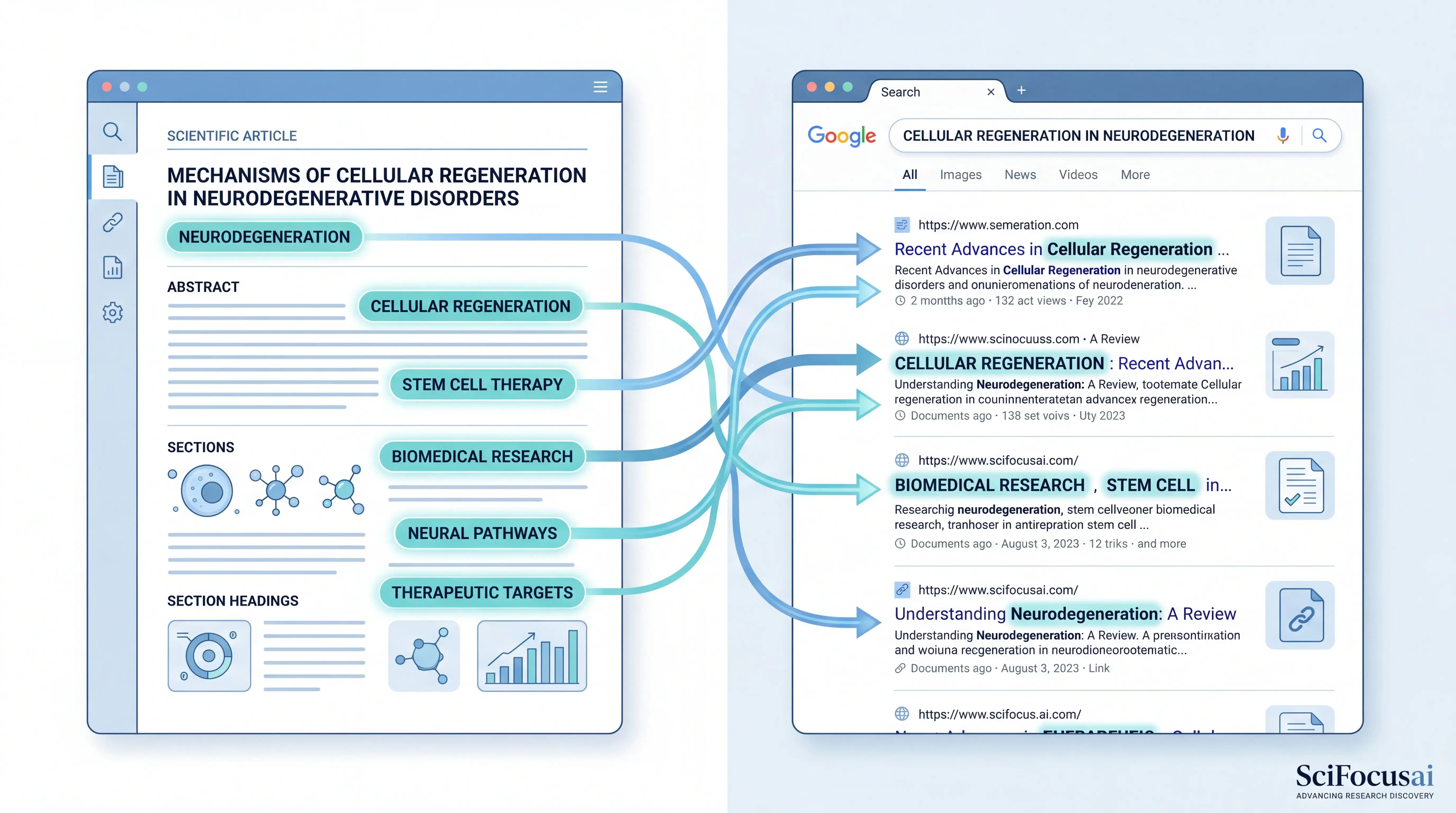
The best keywords usually come from the most informative parts of the paper. Start with the title, abstract, section headings, and conclusion. These areas usually contain the main concepts and the strongest signals of the paper’s scope.
Do not invent keywords from memory or guesswork. Good keywords are extracted, not imagined. If needed, scan the full text to catch important terms that were not obvious at first reading.
2.2 Look for core concepts and subtopics
A useful way to build keywords is to separate the main theme from the subtheme. For example, if the paper focuses on immune checkpoint inhibitors in cancer immunotherapy, then “immune checkpoint inhibitors” is a core concept. PD-1, PD-L1, mechanism, and clinical application may be subtopics.
This method helps you avoid overly broad or vague terms. It also keeps your essay aligned with how researchers actually search.
3. Choose Keywords with Precision
3.1 Use professional and standard terminology
Choose terms that match accepted academic usage. In medicine, this usually means using standardized terminology rather than casual language. Where possible, select terms from subject heading systems or widely recognized medical vocabulary.
A keyword should be specific enough to identify your paper, but broad enough to be searchable. That balance is essential. Too broad, and your essay is buried in thousands of results. Too narrow, and no one finds it.
3.2 Avoid generic or weak terms
Generic words often create poor discoverability. Terms that are too general can cause your article to be overlooked. For example, “treatment” alone is usually too broad. “Hepatocellular carcinoma treatment response” is much more useful.
Also avoid words that are not central to the paper’s argument. If a term does not help define the topic, mechanism, population, or outcome, leave it out.
3.3 Match the journal’s keyword rules
Most journals require a fixed number of keywords, often around 5 to 8. Some journals also have strict formatting rules. In Chinese-English submissions, the number and order of Chinese and English keywords must correspond exactly.
Before submission, check the journal instructions carefully. Keyword selection should always follow the target journal’s author guidelines. This is a simple step, but it prevents unnecessary revision later.
4. Build a Reliable Selection Workflow
4.1 Use a four-step method
A practical keyword workflow has four steps:
- Read the paper carefully.
- Identify content strongly related to the theme.
- Select the best terms from those concepts.
- Rank the keywords by importance.
This method works well for a medical essay because it keeps the final list tied to the paper’s structure and message.
4.2 Analyze strong relevance, not just title wording
Do not rely only on title words. Search for terms that directly describe the core theme, the limiting factors, the research goal, or the conclusion. These are often the most searchable terms.
Useful categories include:
- Core disease or condition.
- Key molecule, pathway, or intervention.
- Research mechanism.
- Clinical outcome or application.
- Time or population limits, when relevant.
For example, if a study examines PD-1 and PD-L1 inhibitors in tumor immunotherapy, strong keyword candidates may include the inhibitors themselves, tumor immune escape, mechanism of action, and clinical application.
4.3 Rank by importance
Once you have a list, arrange the keywords from most important to least important. The first keyword should reflect the strongest and most central idea of the paper.
This ranking matters because it signals the paper’s main emphasis to readers and indexing systems. A clear order makes the essay easier to scan and categorize.
5. Use Search Behavior to Test Your Keywords
5.1 Check how your terms perform in databases
After choosing candidate keywords, search them in medical databases and see what kind of articles appear. If the results are too broad, the term may be too general. If the results are too narrow or irrelevant, the term may not be the right fit.
This test is practical and fast. It helps you compare your essay against real papers in the same research area.
5.2 Compare with similar papers
Look at recent articles in your field and note which keywords they use. This is especially useful for medical students and researchers writing their first papers. It shows how experienced authors position similar topics for indexing and retrieval.
Benchmarking against similar papers can improve the precision of your own keyword list. It also helps you avoid unusual terms that readers are unlikely to search.
6. Common Mistakes to Avoid
6.1 Avoid overly long or overly short terms
Keywords that are too short can be vague. Keywords that are too long can be too narrow. Both reduce discoverability.
For example, “glucose” is too broad for a diabetes study. A longer, more precise phrase may work better if it reflects the study’s actual focus. The goal is clarity, not length.
6.2 Avoid stop words and non-searchable terms
Some journals and databases ignore certain words. When selecting keywords, avoid terms that are excluded by the journal’s rules or subject heading lists. If a term is not useful for retrieval, it should not be included.
6.3 Do not force every important word into the list
A keyword list is not a summary of the entire paper. It is a retrieval tool. You do not need to include every concept. Focus on the most representative and searchable terms only.
7. A Practical Example for Medical Writing
7.1 From topic to keywords
Imagine an essay on immune checkpoint inhibitors in cancer immunotherapy. A strong keyword set may include:
- immune checkpoint inhibitors
- PD-1
- PD-L1
- cancer immunotherapy
- mechanism of action
- clinical application
These terms work because they capture the disease area, the intervention, and the research direction. They are specific and searchable.
7.2 From broad idea to precise indexing
Now compare that with a weak set such as:
- cancer
- therapy
- immune
- treatment
- result
These words are too general. They do not tell databases or readers what the paper is really about. Precision is the difference between being indexed and being ignored.
8. How SciFocus Helps You Improve Discoverability
8.1 Turn keyword selection into a faster process
Choosing effective keywords takes time, especially when you are balancing medical accuracy, journal requirements, and search behavior. SciFocus.ai can help streamline that process by supporting clearer organization of paper topics and keyword planning.
For busy medical students, doctors, and researchers, that means less guesswork and a more efficient writing workflow. It can help you stay focused on the most important terms in your essay.
8.2 Support better paper visibility
When your keywords are well chosen, your paper becomes easier to find, easier to classify, and easier to cite. Tools like SciFocus.ai can fit into that workflow by helping you move from topic planning to publication-ready structure with less friction.
If your goal is stronger discoverability, a cleaner keyword strategy is one of the highest-return improvements you can make. SciFocus.ai can be part of that process.
Conclusion
Good keywords are not an afterthought. They are a core part of academic visibility. For any medical essay, the best keywords come from the title, abstract, headings, and conclusion. They should be specific, standard, searchable, and ordered by importance. Avoid vague terms, follow journal rules, and test your choices in real searches. If you want to make this process faster and more consistent, explore SciFocus.ai as a practical support tool for better paper planning and discoverability.
Did you like this article? Explore a few more related posts.
Start Your Research Journey With Scifocus Today
Create your free Scifocus account today and take your research to the next level. Experience the difference firsthand—your journey to academic excellence starts here.