

How Many Words Is a 10-Page Research Paper?
Introduction
A 10-page research paper can feel simple, until you start writing and realize the page count is not the same as the word count. For students, clinicians, and researchers writing an essay or academic paper, this creates a real planning problem. How many words is a 10-page research paper? The answer depends on formatting, spacing, font, and citation style. In this guide, you will get a clear, practical breakdown so you can estimate length correctly and avoid running short or over the limit.
1. How Many Words Is a 10-Page Research Paper?
1.1 The short answer
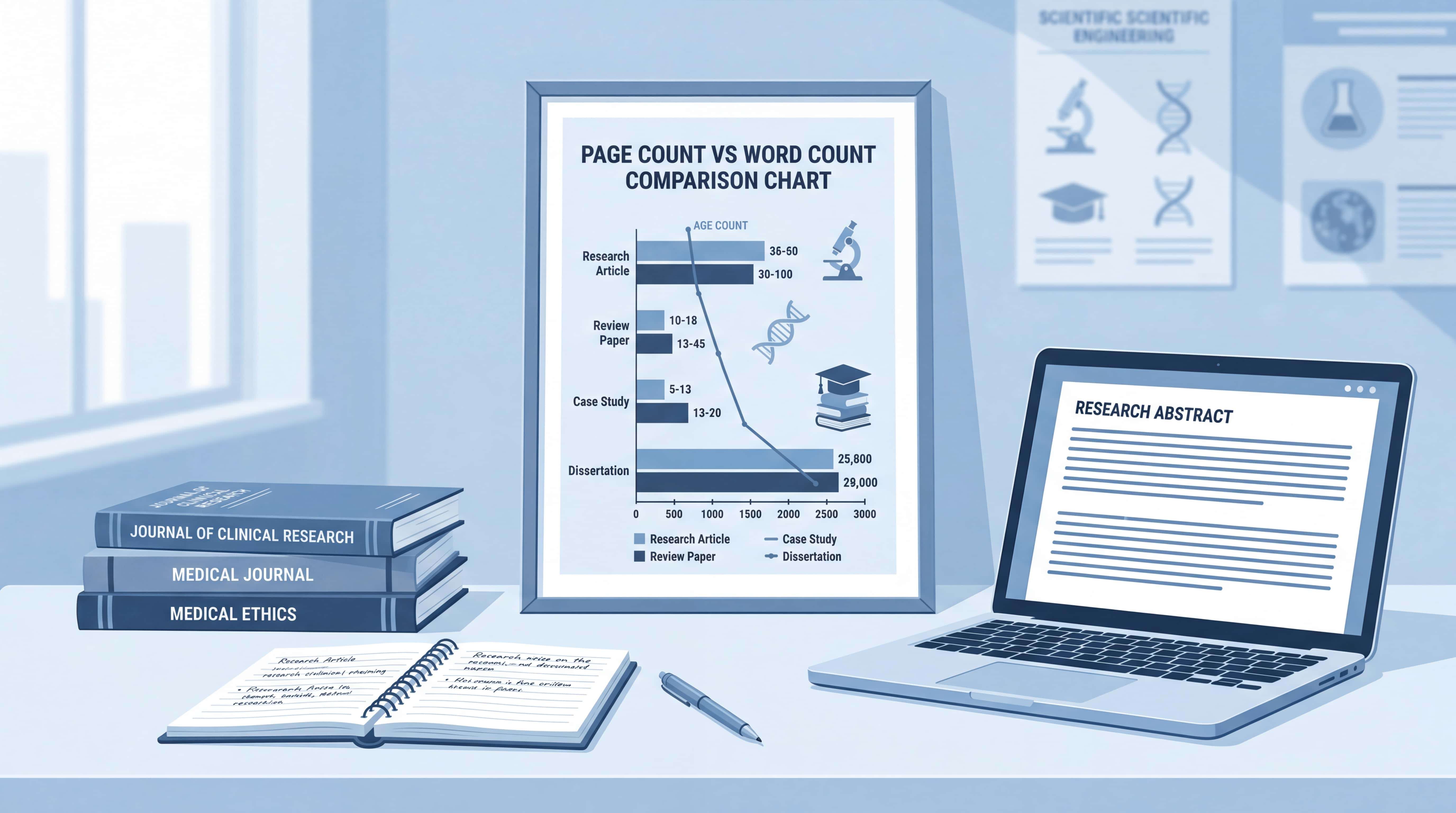
In most academic settings, a 10-page research paper is usually around 2,500 to 3,000 words. This is the most common estimate when the paper is double-spaced, uses 12-point Times New Roman, and follows standard margins.
If the paper is single-spaced, the word count can be much higher, often 5,000 to 6,000 words or more. If it is double-spaced with large margins or images, the total words may be lower. So the real answer is not fixed.
1.2 Why page count is not enough
Page count tells you layout. Word count tells you substance. A paper filled with tables, figures, headings, or long references may have fewer words than expected. A dense, text-heavy paper may contain far more.
For medical students, doctors, and researchers, this matters because academic writing is often judged by both structure and precision. A 10-page research paper is best measured by formatting rules first, then by word count.
1.3 Common word count ranges by format
Here is a practical estimate:
- Double-spaced, 12 pt font, standard margins: 2,500 to 3,000 words
- Single-spaced, 12 pt font: 5,000 to 6,000 words
- Double-spaced with many headings, charts, or tables: 2,000 to 2,700 words
- APA or MLA with title page and references included: the body may be 2,200 to 2,800 words
These ranges are useful for planning your essay before you begin writing. They also help you decide how much evidence, analysis, and discussion you can include.
2. What Affects the Word Count of a 10-Page Research Paper?
2.1 Spacing, font, and margins
Formatting has the biggest impact. A paper in 12-point Times New Roman with 1-inch margins and double spacing is the standard benchmark in many universities. Under those rules, one page usually holds about 250 to 300 words.
Change the font, and the count shifts. Use 11-point Calibri or narrower margins, and each page may fit more words. Increase spacing or add large headings, and each page holds less.
2.2 Title page, abstract, and references
Some instructors count these pages, and others do not. This creates confusion.
You should always confirm whether “10 pages” means:
- 10 pages of main text only
- 10 pages including title page
- 10 pages including references
- 10 pages excluding tables and appendices
For a research paper, the reference list can take one or more pages without adding much or any body text. That means a 10-page assignment may require fewer than 3,000 words of actual writing.
2.3 Headings, tables, and figures
Academic writing in medicine and biomedical research often includes structured headings, tables, and figures. These reduce the word count per page. A page with a full table may contain only a few hundred words.
This is why a clinical essay or research paper on a complex topic can look long while having a moderate word count. The visual length and the writing length are not always the same.
3. How to Plan a 10-Page Research Paper Efficiently
3.1 Build an outline before drafting
A strong outline prevents overwriting or underwriting. For a 10-page paper, a useful structure is:
- Introduction, about 10 to 15 percent
- Literature review or background, about 25 to 30 percent
- Main analysis or methods and results discussion, about 40 to 50 percent
- Conclusion, about 10 percent
For a 2,700-word paper, that could mean:
- Introduction: 250 to 350 words
- Body sections: 1,500 to 1,800 words
- Conclusion: 200 to 300 words
This keeps your paper balanced and easy to revise.
3.2 Match words to evidence, not padding
Researchers often make the mistake of adding filler to meet page count. That weakens clarity. Instead, connect each section to a purpose.
Use each paragraph to do one of the following:
- explain a clinical problem
- summarize prior research
- compare conflicting findings
- interpret data
- identify limitations
- support a conclusion
This approach is especially useful in a research-based essay, where depth matters more than length.
3.3 Use section-by-section targets
A practical way to stay on track is to assign word targets before drafting. For example:
- Introduction: 300 words
- Background: 600 words
- Core argument or method discussion: 1,200 words
- Conclusion: 250 words
- Allow 300 to 500 words for transitions and revision flexibility
This method works well for medical writing, where precision and flow are both important. It also helps prevent the final paper from becoming uneven.
4. Research Paper Length in Academic and Medical Writing
4.1 Why precision matters in medicine
Medical students, physicians, and researchers often write under strict academic requirements. A paper that is too short may miss critical evidence. A paper that is too long may drift away from the research question.
In professional writing, the goal is not simply to reach a page count. The goal is to communicate a clear, defensible idea. That is why careful planning matters as much as the final word count.
4.2 The role of concise scientific writing
Strong scientific writing is concise. It removes repetition and keeps only the material that advances the argument. In many cases, the best research paper is not the longest one. It is the one that is easiest to understand and verify.
A concise essay is easier for reviewers to read and more likely to hold attention. That matters in graduate work, journal-style assignments, and grant-related writing.
4.3 When tools can help
Planning a research paper manually takes time. You need sources, structure, language precision, and consistency. Tools like scifocus.ai can help researchers organize ideas faster, refine academic structure, and improve writing efficiency.
For busy medical professionals and researchers, this can reduce friction in the drafting stage. It is especially useful when you need to turn a topic into a polished, publication-ready paper without losing academic rigor.
5. A Practical Word Count Guide for a 10-Page Paper
5.1 Quick reference table
Use this simple estimate:
- 1 page single-spaced: about 500 to 600 words
- 1 page double-spaced: about 250 to 300 words
- 10 pages single-spaced: about 5,000 to 6,000 words
- 10 pages double-spaced: about 2,500 to 3,000 words
These numbers are estimates, not rules. Always check your assignment guidelines.
5.2 Best practice before submission
Before you submit, check:
- page count requirements
- word count requirements
- spacing and font rules
- whether references are included
- whether tables and figures count toward the total
This small check can save you from losing points for formatting alone.
Conclusion
So, how many words is a 10-page research paper? In most cases, the answer is 2,500 to 3,000 words if the paper is double-spaced and formatted in a standard academic style. But the exact number depends on spacing, font, margins, references, and whether visuals are included.
For medical students, doctors, and researchers, the smartest approach is to plan by structure first and word count second. That keeps your essay focused, concise, and credible. If you want a faster way to organize ideas and produce a cleaner academic draft, consider using scifocus.ai to support your research writing workflow.

Did you like this article? Explore a few more related posts.
Start Your Research Journey With Scifocus Today
Create your free Scifocus account today and take your research to the next level. Experience the difference firsthand—your journey to academic excellence starts here.