

How Many Paragraphs in a Research Paper
Introduction
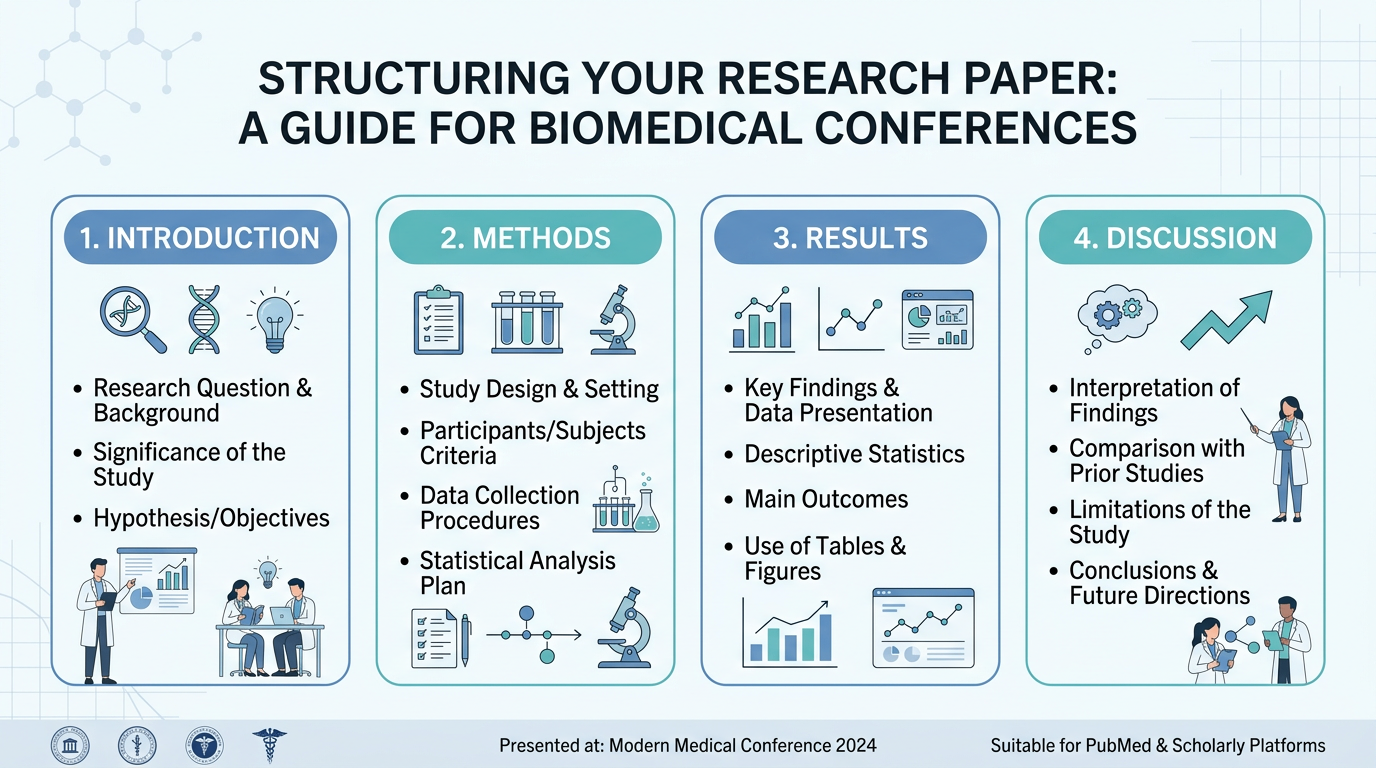
If you are writing an essay for a research paper, one of the first questions is simple: how long should it be, and how many paragraphs does it need? For medical students, doctors, and researchers, the answer matters because structure affects clarity, readability, and publication quality. The short answer is that there is no fixed number. A research paper’s paragraph count depends on the journal, study design, and section depth. But there are reliable patterns you can use to plan a strong paper.
1. The Short Answer: There Is No Universal Paragraph Count
1.1 Why paragraph count is not fixed
A research paper is not judged by paragraph count alone. It is judged by whether each section answers the scientific question clearly. A 1,500-word paper may need 8 to 12 paragraphs. A 3,000-word paper may need 15 to 25. The real issue is logic, not quantity.
In academic writing, each paragraph should serve one clear function. That is especially important in medicine and biomedical research, where readers expect precision and brevity.
1.2 What determines the number of paragraphs
Several factors shape the structure:
- Journal or school formatting rules
- Word count requirement
- Type of paper, such as original study, review, or case report
- Complexity of the topic
- Number of key findings or arguments
A simple clinical topic may need fewer paragraphs. A complex translational study may need more. If you are writing an essay for a research paper assignment, the same principle applies. The structure should follow the content, not the other way around.
2. Typical Paragraph Structure by Section
2.1 Introduction
In many SCI-style papers, the introduction is often the shortest major section. Based on common academic logic, it can be written in 3 to 5 paragraphs.
A minimal structure is:
- Disease or clinical problem
- Core molecule, mechanism, or research variable
- Experimental overview or study aim
If you are working on a hot phenotype or a well-known signaling pathway, you may add one more paragraph. But for common topics, extra explanation is often unnecessary.
A strong introduction narrows from broad context to a precise research gap. That is the core rule.
2.2 Methods
Methods are usually organized by subheadings rather than long narrative blocks. In many papers, this section may contain 3 to 6 paragraphs, depending on design complexity. For example, a retrospective clinical study may need fewer paragraphs than a multi-center experimental study.
Common method blocks include:
- Study population
- Sample collection
- Experimental procedures
- Statistical analysis
- Ethics approval
If your methods section becomes too long, use subheadings. That improves readability and helps reviewers find key details fast.
2.3 Results
Results often take the most space in an original research paper. A typical results section may include 4 to 8 paragraphs, sometimes more.
A practical rule is one paragraph per major finding. For example:
- Baseline characteristics
- Primary outcome
- Secondary outcomes
- Subgroup analysis
- Validation or sensitivity analysis
Each results paragraph should present data, not interpretation. Save explanation for the discussion.
2.4 Discussion
The discussion often contains the most analytical writing. In many medical papers, it may have 5 to 9 paragraphs. The exact number depends on how much literature comparison and interpretation are needed.
A common structure is:
- Main finding summary
- Comparison with previous studies
- Biological or clinical explanation
- Novel contribution
- Limitations
- Clinical or scientific implications
- Future research direction
This structure aligns well with E-E-A-T because it shows evidence, context, and critical thinking.
3. Paragraph Count by Paper Type
3.1 Original research paper
Original studies usually have the most defined structure. A standard IMRaD paper may contain 15 to 25 paragraphs in total, depending on length. That includes introduction, methods, results, and discussion.
This is not a rule. It is a practical range. Short papers may be leaner. Full-length articles may be longer.
3.2 Review article
Reviews often need more paragraphs because they synthesize literature across multiple themes. A review may contain 20 or more paragraphs, especially if it includes several subtopics or disease pathways.
3.3 Case report
Case reports are usually shorter. They often include 6 to 10 paragraphs. The focus is on the case, clinical reasoning, and lessons learned.
3.4 Student essay or assignment paper
For a class assignment, the count is often guided by word count. A 1,000-word paper may have about 5 to 8 paragraphs. A 2,000-word paper may have 10 to 15. In this context, the essay format is often more flexible than a journal manuscript, but the logic still matters.
4. How to Build the Right Paragraph Count
4.1 Use one paragraph for one idea
This is the most reliable rule. If a paragraph contains multiple unrelated ideas, it becomes harder to read. In scientific writing, that weakens the argument.
A good paragraph usually has:
- A clear topic sentence
- Supporting evidence or explanation
- A concluding or linking sentence
4.2 Follow the reader’s workflow
Medical readers scan quickly. They want the main question, the method, the result, and the meaning. If your paragraphs are too long, the paper feels dense. If they are too short, the argument feels fragmented.
Aim for clarity before length.
4.3 Match structure to journal expectations
Always check the target journal’s author guidelines. Some journals prefer concise introductions. Others allow longer discussions. Some require strict subheadings. Following those rules is part of professional scientific writing.
5. Common Mistakes to Avoid
5.1 Writing by word count only
A paper can meet the word limit and still read poorly. Paragraphs should be shaped by argument, evidence, and section purpose.
5.2 Overloading the introduction
The introduction should not become a full literature review. In most research papers, you do not need to explain every phenotype, pathway, or model unless it is central to the study.
5.3 Mixing results and discussion
This is a common problem in student writing. Results should report facts. Discussion should explain meaning. Keeping them separate improves scientific clarity.
5.4 Using paragraphs that are too long
Long paragraphs reduce readability. If a paragraph exceeds one major point, split it.
6. A Practical Framework for Medical Writing
6.1 A simple planning model
Before drafting, outline your paper like this:
- Introduction: 3 to 5 paragraphs
- Methods: 3 to 6 paragraphs
- Results: 4 to 8 paragraphs
- Discussion: 5 to 9 paragraphs
- Conclusion: 1 paragraph
This gives you a realistic working structure without forcing a rigid formula.
6.2 Example of efficient paragraph planning
If you are writing a 2,500-word clinical paper, you might use:
- 4 paragraphs in the introduction
- 5 paragraphs in methods
- 6 paragraphs in results
- 7 paragraphs in discussion
- 1 short conclusion paragraph
That totals 23 paragraphs. It is a useful target, not a rule.
6.3 Why planning matters
A planned structure saves time during revision. It also helps you avoid repetition, which is one of the biggest causes of weak scientific writing. For busy clinicians and researchers, this can make the difference between a clear draft and a rejected manuscript.
7. How SciFocus.ai Can Help You Write Faster
If you often struggle with structure, scifocus.ai can help you move from rough notes to a clean academic draft faster. It is designed to support research writing workflows, especially when you need to organize ideas into clear sections and paragraphs.
For medical students and researchers, that means less time spent guessing how many paragraphs to use and more time refining the science. A good writing tool will not replace your expertise, but it can reduce structural friction and improve consistency.
Conclusion
So, how many paragraphs in a research paper? There is no single answer. The right number depends on the paper type, word count, journal rules, and scientific depth. For most medical and research papers, the useful range is clear: 3 to 5 paragraphs for the introduction, 3 to 6 for methods, 4 to 8 for results, and 5 to 9 for discussion.
The best papers are not defined by paragraph count alone. They are defined by structure, precision, and clarity. If you want help building that structure faster, explore scifocus.ai and use it to streamline your next research essay or manuscript draft.

Did you like this article? Explore a few more related posts.
Start Your Research Journey With Scifocus Today
Create your free Scifocus account today and take your research to the next level. Experience the difference firsthand—your journey to academic excellence starts here.