

How Long Is an Introduction Paragraph
Introduction
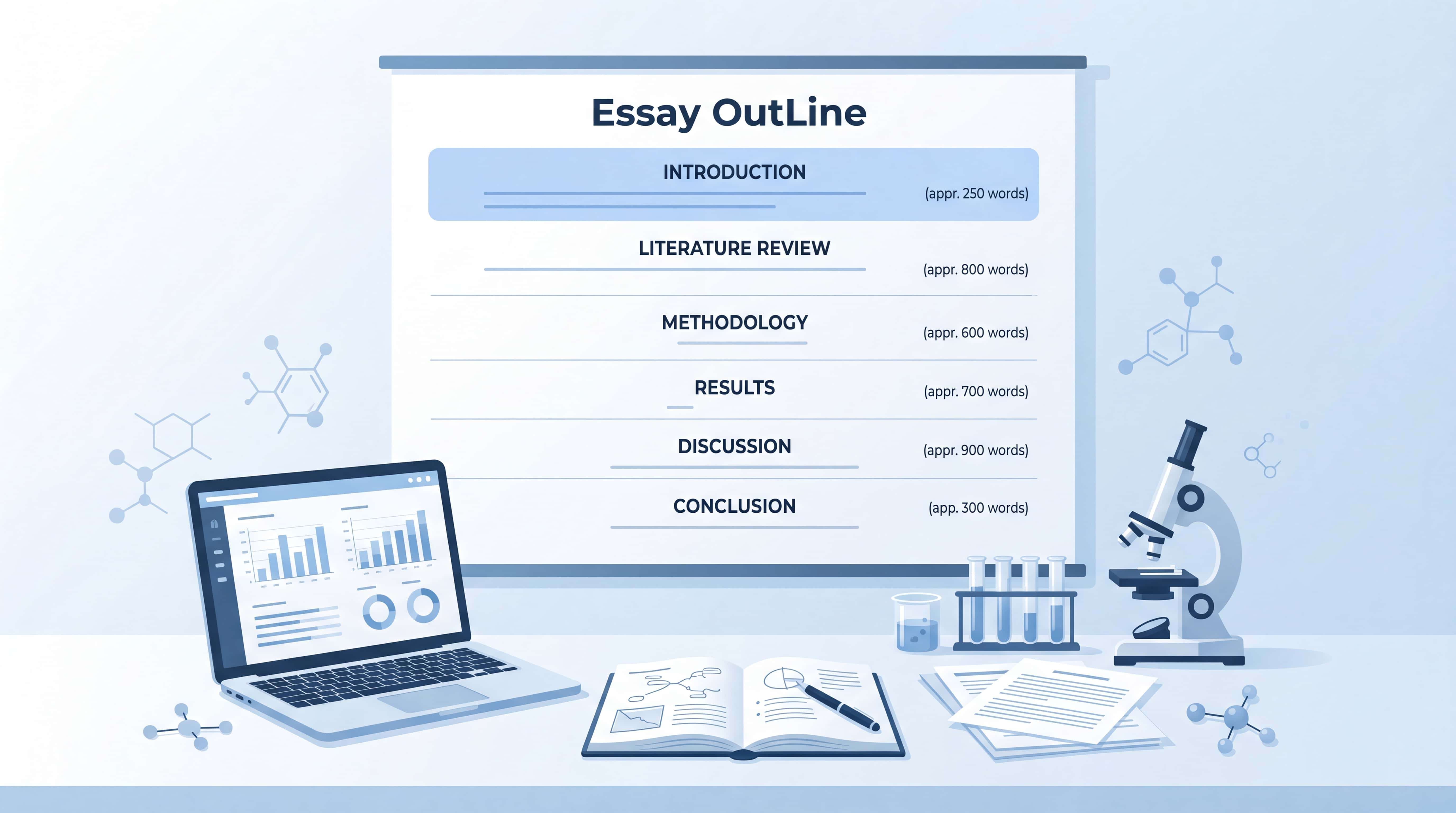
How long is an introduction paragraph in an essay? For medical students, doctors, and researchers, the answer matters because a weak opening can blur the research gap, lower reader trust, and weaken the paper’s impact. In scientific writing, the introduction must be long enough to give context, but short enough to stay focused. The right length depends on the purpose of the essay, the journal, and the complexity of the topic.
1. What an Introduction Paragraph Should Do
1.1 Set the context fast
An introduction paragraph should give the reader enough background to understand the topic. It should not read like a literature review. It should move from broad context to a specific problem.
A strong introduction paragraph answers one question first: why does this essay matter?
For biomedical writing, that usually means naming the disease, the clinical burden, or the research gap. If the topic is a disease, the first lines should explain its impact. For example, a disease may be associated with high mortality, frequent recurrence, delayed diagnosis, or poor prognosis. That is the “general-to-specific” logic.
1.2 Build the gap in knowledge
The introduction should also show what is still unknown. This is essential in an essay for scientific audiences. Readers should quickly see why the topic still needs study.
A common structure is:
- What is known.
- What is important.
- What is still unclear.
- Why the study is needed.
This structure helps the introduction stay focused. It also supports E-E-A-T because it shows clear reasoning, not vague claims.
2. How Long Is an Introduction Paragraph in an Essay
2.1 Standard length in academic writing
In most academic essays, a single introduction paragraph is usually 100 to 200 words. In short essays, it may be closer to 100 words. In longer scientific essays, the introduction often expands into several paragraphs instead of one.
For research writing, length is less important than function. A paragraph is too short if it does not explain the problem. It is too long if it starts covering results, discussion, or background that is not directly relevant.
For a medical or scientific essay, one introduction paragraph should usually do three things:
- Define the topic.
- Show the gap.
- State the purpose or hypothesis.
2.2 When the introduction needs more than one paragraph
If the topic is complex, one paragraph is rarely enough. Many research essays use 3 to 5 introduction paragraphs.
A practical model is:
- Paragraph 1: disease or problem background.
- Paragraph 2: key molecule, concept, or mechanism.
- Paragraph 3: hot phenotype or pathway, if relevant.
- Final paragraph: research question, hypothesis, and brief study aim.
This layered structure is common in biomedical papers because it helps the reader move from general context to the specific research question.
3. A Practical Structure for a Strong Essay Introduction
3.1 Use the funnel method
The funnel method is one of the most reliable ways to write an introduction. It starts broad, then narrows down.
A useful order is:
- Background.
- Gap in knowledge.
- Research question.
- Hypothesis or purpose.
- Brief strategy or approach.
This approach works well in scientific essays because it keeps the logic clean. It also avoids the common mistake of dumping too much information into the opening.
3.2 Keep each sentence purposeful
A strong introduction paragraph should not contain filler. Every sentence should move the reader forward.
For example:
- Sentence 1: define the clinical or scientific problem.
- Sentence 2: explain the burden or key limitation.
- Sentence 3: identify what remains unknown.
- Sentence 4: state the aim of the essay or study.
If a sentence does not help the reader understand the problem, it probably does not belong in the introduction.
4. What to Include and What to Leave Out
4.1 Include only the most relevant background
The introduction should be selective. That is especially important for medical students and researchers who need concise, publishable writing.
Include:
- The disease or core problem.
- The most relevant mechanism, molecule, or phenotype.
- The key knowledge gap.
- The purpose of the essay or study.
Leave out:
- Unnecessary historical detail.
- Broad review-style discussion.
- Results that belong in the results section.
- Methodological details that belong in materials and methods.
4.2 Match the length to the reader
The right length depends on the audience. Experts do not need elementary definitions of common concepts. For example, if the essay is about proliferation, a full definition may not be necessary. If the essay is about a rare or highly specific phenotype, more explanation may be needed.
The same rule applies to pathways. A well-known signaling pathway usually does not need a long explanation unless the pathway is the central focus of the essay.
5. Writing an Introduction for Medical and Research Essays
5.1 Start with the clinical or scientific burden
For healthcare and research audiences, the opening should show significance immediately. In disease-focused writing, this means presenting the burden first.
A concise disease background might mention:
- Low survival.
- High recurrence.
- Diagnostic difficulty.
- Poor prognosis.
- Mechanistic uncertainty.
This is an efficient way to establish importance without sounding repetitive.
5.2 Present the main variable clearly
If the essay centers on a molecule, gene, or RNA, the introduction should explain its core identity and known roles. For example, a molecule may belong to a specific family, have a known localization pattern, or participate in certain disease processes.
Then comes the key transition: although the molecule has been studied in other contexts, its role in the current disease remains unclear. That sentence is often the real bridge from background to hypothesis.
This is where scientific writing becomes persuasive. The goal is not to overstate. The goal is to show a real gap.
5.3 State the purpose directly
The final part of the introduction should be clear and direct. Readers should know exactly what the essay or study will address.
Useful purpose statements include:
- This essay examines...
- This study aims to...
- We hypothesize that...
- The present work investigates...
A clear purpose statement improves readability and makes the introduction feel complete.
6. A Model Length by Essay Type
6.1 Short academic essay
A short essay usually needs one introduction paragraph of around 100 to 150 words. That is enough for a direct topic statement and a focused thesis.
6.2 Research essay
A research essay often needs 2 to 4 paragraphs in the introduction. This allows room for background, gap, hypothesis, and brief context.
6.3 Biomedical article or SCI-style paper
In scientific writing, the introduction section is often about 10% to 15% of the full manuscript. That means the length is usually determined by the complexity of the topic, not by a fixed word count.
The best introduction paragraph is the one that earns the right to the next section.
7. Common Mistakes to Avoid
7.1 Making the introduction too broad
A common problem is writing too much general information. This weakens focus. If the topic is a specific disease, do not turn the introduction into a textbook summary.
7.2 Mixing in results too early
The introduction should not present the final findings. It should create the reason for the study. Results belong later.
7.3 Overexplaining familiar concepts
If your readers are clinicians or researchers, keep basic explanations short. Prioritize the unfamiliar and the clinically relevant.
7.4 Losing the research gap
A good introduction always points to one unresolved issue. Without that, the essay feels descriptive rather than analytical.
8. How SciFocus.ai Can Help
8.1 Faster structure, cleaner wording
For busy medical writers, the hardest part is often not writing more. It is deciding what to include and what to cut. That is where SciFocus.ai can help.
It supports clearer structuring, faster drafting, and more focused academic wording. Instead of spending time searching for sentence patterns, you can use a system designed to keep the introduction narrow, logical, and publication-ready.
8.2 Better focus on the research gap
A strong introduction depends on precise transitions. SciFocus.ai can help you turn broad background notes into a focused academic paragraph that highlights the gap, states the purpose, and stays aligned with the target audience.
For medical students, doctors, and researchers, that means less rewriting and more time spent on the science itself.
Conclusion
So, how long is an introduction paragraph in an essay? In most cases, 100 to 200 words is a practical range, but the real standard is clarity, focus, and relevance. For scientific and medical writing, the introduction should move from background to gap to purpose with no wasted space.
If you want to write stronger introductions faster, try SciFocus.ai. It can help you organize your essay, sharpen your academic tone, and produce a more focused introduction that fits professional research writing.
Did you like this article? Explore a few more related posts.
Start Your Research Journey With Scifocus Today
Create your free Scifocus account today and take your research to the next level. Experience the difference firsthand—your journey to academic excellence starts here.