

How Can Medical Education Build a Rigorous Clinical Thinking Training System?
Introduction
In medical education, many learners can collect facts, but far fewer can think clinically with rigor. The gap shows up in weak problem framing, poor study design, and scattered reasoning. A rigorous clinical thinking training system is not a luxury. It is the foundation of safe care and credible research. For medical students, physicians, and researchers, the real challenge is not only “knowing more,” but learning how to ask better questions, use data correctly, and stay objective.
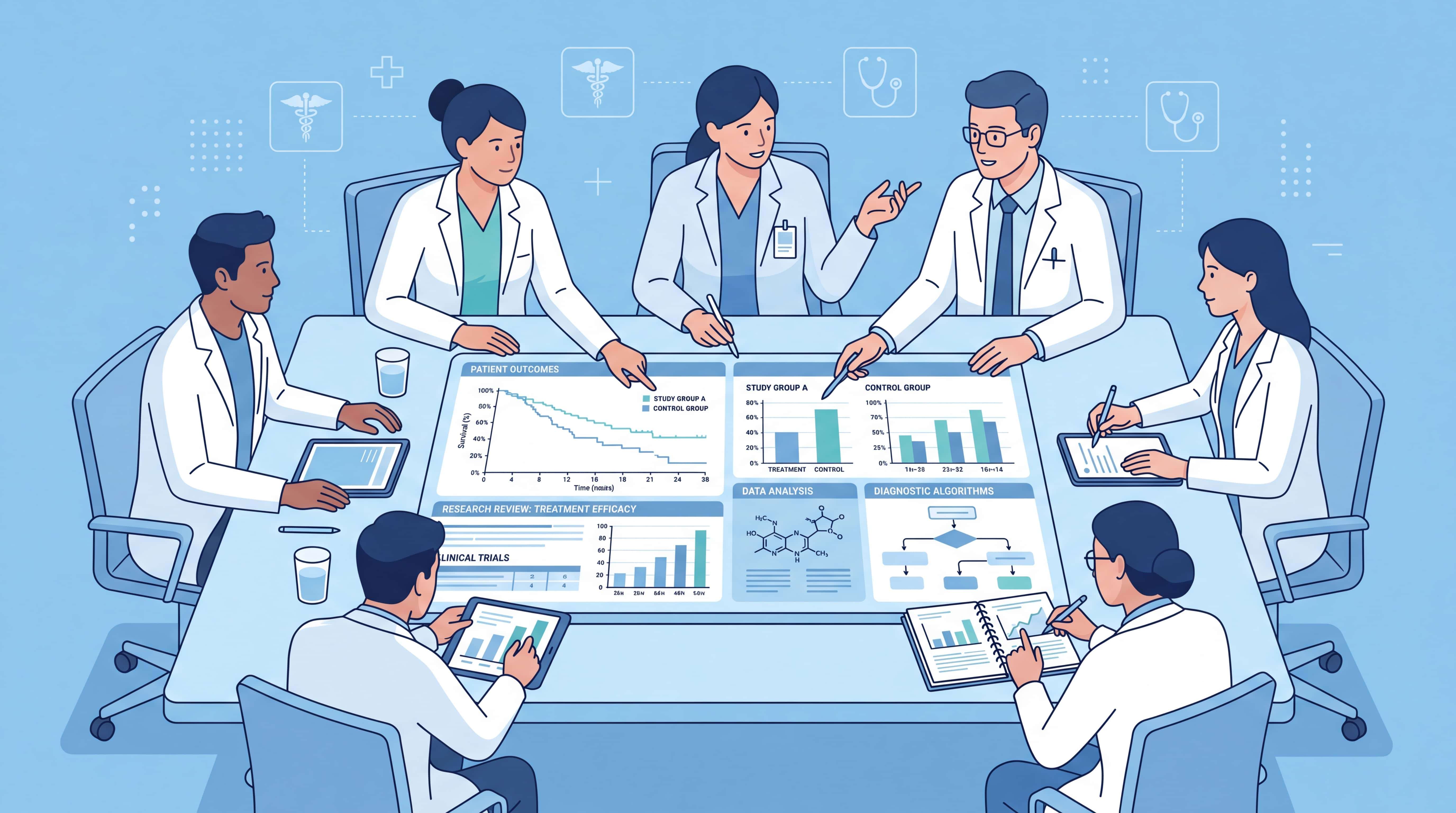
1. Why Clinical Thinking Must Be Trained, Not Assumed
1.1 Clinical thinking is a structured habit
Clinical thinking is an advanced way of understanding the full research and care process. It is not the same as memorizing guidelines or copying popular methods. In medical education, this means teaching learners to connect symptoms, data, design, and conclusions in one logical chain.
A common mistake is to focus only on publishing papers. That mindset often produces shallow studies and weak reasoning. True clinical thinking starts with a clinical problem, not with a publication target. Once the problem is clear, the rest of the process becomes more disciplined.
1.2 Start small, but start correctly
For young researchers, high-level multicenter work is not always possible at the beginning. That is normal. A practical entry point is retrospective clinical research. It has a lower threshold, often requires no new intervention, and can be done with existing clinical data.
This does not mean retrospective work is “low level.” On the contrary, it is often the first real training ground for research discipline. In strong education systems, learners build competence step by step: literature reading, methodology basics, data handling, and then more advanced designs.
1.3 Data resources matter more over time
A strong training system should not stop at one project. It should help learners build lasting infrastructure, such as follow-up databases and biospecimen banks. These resources allow clinicians to grow from small retrospective studies into stronger collaborative work.
Sustained academic growth comes from accumulation, not shortcuts. That is a core lesson for medical education and for research training alike.
2. The Four Pillars of Rigorous Clinical Thinking
2.1 Serve the clinic first
All clinical research should aim to solve real clinical problems. This is the first pillar. If the question does not matter in practice, the training system is already off track.
For students and clinicians, this means learning to ask: What problem am I solving? Who benefits from the answer? What decision will this change? These questions keep research grounded and useful.
2.2 Follow the correct process
The second pillar is process. A rigorous system should teach a fixed sequence:
- Literature review.
- Idea generation.
- Study design.
- Quality control during data collection.
- Correct statistical analysis.
- Clear and logical writing.
This process sounds simple, but each step is often mishandled. In particular, study design should be scientifically sound, practical, innovative, and feasible. It should also include homogeneity considerations across the entire workflow, not only at the end.
2.3 Stay objective and reasonable
The third pillar is objectivity. Clinical evidence should not be shaped by wishful thinking. Some studies appear “perfect” on paper but may be suspiciously flawless. Others are messy because they were designed without basic methodological knowledge. Both extremes are problematic.
Rigorous medical education teaches learners to avoid both fabrication-like perfection and uncontrolled improvisation. The goal is balanced, transparent, and defensible reasoning.
2.4 Pursue depth, not breadth alone
The fourth pillar is refinement. Medicine is too complex for anyone to master everything at once. Expertise comes from deep work in a focused field. A clinician may understand many areas, but real academic authority usually grows from sustained work in one domain.
This is especially important in research training. Learners should not jump from topic to topic too quickly. Instead, they should build depth, then improve precision, then expand collaboration.
3. How to Build the Training System in Practice
3.1 Use retrospective research as the first stage
A good training model should help learners begin with feasible projects. Retrospective studies are suitable because they use existing clinical experience and data. They also teach core skills, including case selection, variable definition, bias awareness, and statistical interpretation.
The key is to treat each project as a training exercise, not just a paper. Every study should improve the learner’s ability to think, not only their ability to publish.
3.2 Build databases and collaboration networks
The next step is infrastructure. A follow-up database and a biospecimen bank can turn isolated projects into a long-term research program. They also support better collaboration with experienced researchers and external centers.
Within a hospital or department, cooperation is essential. Roles should be discussed before the project starts. Authorship, contribution order, and responsibilities should be clear. This prevents conflict and improves trust. In academic education, transparency is part of rigor.
3.3 Teach methods and statistics as clinical tools
Many learners fear statistics because they see formulas instead of decisions. A better approach is to teach statistics like clinical prescribing.
For example:
- Know when a method should be used.
- Know its assumptions.
- Know when it cannot be used.
- Know the substitute method.
This practical style is especially useful in medical education. It helps learners understand statistical description, inference, and effect estimation as tools for answering clinical questions.
3.4 Use real discussion and repeated practice
A training system must include repeated exposure to study design and data analysis. Learners should read methodology papers, compare statistical choices in published studies, and then practice on real datasets.
Knowledge becomes clinical thinking only when it is applied, discussed, and corrected. That is why guided discussion matters. It prevents passive learning and strengthens judgment.
4. What High-Quality Training Should Avoid
4.1 Avoid “paper-first” thinking
If the main goal is only to publish quickly, the study design will often be weak. That creates poor science and poor learning. The better mindset is problem-first: define the clinical issue, then build the study around it.
4.2 Avoid design-free research
Another common failure is data collection without a real design. This may look active, but it produces weak conclusions. A rigorous system should require clear inclusion criteria, defined outcomes, appropriate controls, and a statistical plan before analysis begins.
4.3 Avoid isolated work
Clinical thinking grows through cooperation. Internal teamwork, external partnerships, and, when possible, international collaboration all raise the standard. One small team can improve quickly if it shares expertise well and builds long-term continuity.
4.4 Avoid superficial mastery
A learner may know many terms but still not think clinically. That is why medical education must go beyond lectures. It should require reading, methods training, case discussion, and project-based learning. Depth matters more than volume.
5. Where SciFocus.ai Fits Into the Training System
5.1 A practical support layer for research workflow
A rigorous training system needs structure. It needs literature review support, idea refinement, workflow discipline, and writing consistency. That is where scifocus.ai can help as a research productivity layer.
It can support learners who need to organize clinical questions, manage reading, and turn scattered notes into a clearer research path. For students, physicians, and researchers, this kind of support reduces friction and keeps attention on reasoning, not just formatting.
5.2 From scattered effort to repeatable output
The main value of a tool like scifocus.ai is not to replace thinking. It is to make thinking more efficient and repeatable. When the workflow is clearer, learners can spend more time on problem framing, design logic, and interpretation.
In modern medical education, the best tools are those that strengthen rigor, not shortcuts. Used correctly, scifocus.ai can help support that standard.
Conclusion
A rigorous clinical thinking training system in medical education should do four things well: serve real clinical problems, follow a correct process, stay objective, and build deep expertise. It should start with feasible retrospective studies, grow through databases and collaboration, and train learners to use methods and statistics as clinical tools.
For medical students, doctors, and researchers, the goal is clear. Do not just learn more. Learn to think better. If you want a more structured way to support that process, explore scifocus.ai as part of your research and learning workflow.
Did you like this article? Explore a few more related posts.
Start Your Research Journey With Scifocus Today
Create your free Scifocus account today and take your research to the next level. Experience the difference firsthand—your journey to academic excellence starts here.