

Grounded Theory Steps for Beginners in Medical Research
Introduction
For many medical students, doctors, and researchers, writing an essay on research methods feels difficult at first. Grounded theory is often mentioned, but the process can seem vague. The real problem is not interest. It is knowing how to turn a clinical observation into a clear, researchable framework. This article breaks the process into practical steps. It stays focused on medical research, so you can move from idea to study design with less confusion.
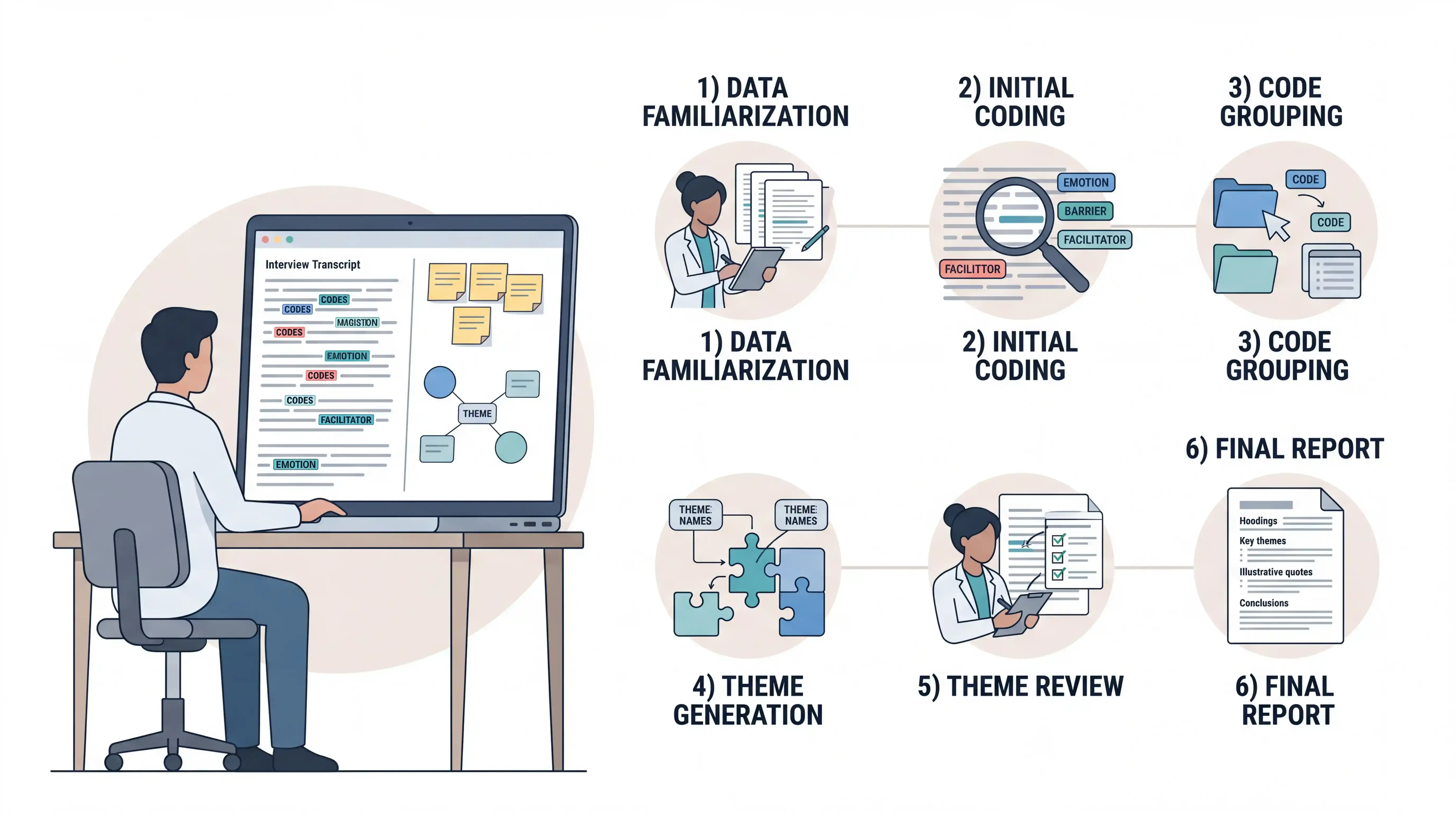
1. Understand What Grounded Theory Means in Medical Research
1.1 Start With a Real Clinical Problem
In medical research, the first step is not the title. It is the problem. A useful study often begins with a question from practice, not from assumption. You may notice a gap in diagnosis, treatment, prognosis, or patient education. That observation becomes the starting point.
A strong clinical problem is specific, relevant, and worth solving. If the question has no clinical value, the study is unlikely to matter. That is why literature reading and clinical experience should come before topic selection.
1.2 Turn Observation Into a Scientific Question
A clinical impression is not yet a scientific question. It must be tested. For example, if you notice that one postoperative education method improves sputum clearance in lung cancer patients, that is only an idea at first. You then check the literature, compare existing findings, and decide whether the idea is worth studying.
This is where grounded theory is useful for beginners. It helps you build theory from real data instead of forcing a theory onto the data. In medical research, that approach supports more practical and credible conclusions.
2. Build the Research Question Step by Step
2.1 Review the Literature Before Choosing the Topic
Many weak studies begin with poor reading. Literature review is not optional. It is the base of the whole project. Search recent papers, guidelines, and controversial findings. Look for repeated gaps, inconsistent results, or unresolved clinical issues.
A useful rule is simple. The more carefully you read, the better your question becomes. Reading helps you avoid duplication and improves the scientific quality of the essay you write later.
2.2 Form a Clear Hypothesis
After reading, move from curiosity to hypothesis. A good hypothesis should be measurable and testable. It should also be practical in a real clinical setting. Avoid vague ideas that cannot be observed or measured.
A beginner-friendly structure is:
- Identify the population.
- Define the intervention or exposure.
- Choose the comparison.
- Select the outcome.
- Add the time frame if needed.
This logic is similar to PICO, which is widely used in clinical research planning. It keeps the question focused and manageable.
2.3 Keep the Research Scope Narrow
Beginners often try to solve too many problems in one study. That usually weakens the final result. One paper should usually answer one main question. If you expand too much, the analysis becomes scattered and the message becomes unclear.
A narrow question is easier to design, easier to analyze, and easier to publish. That is especially important in medical research, where clarity matters.
3. Design the Study Before Collecting Data
3.1 Choose a Feasible Method
A good research design must be realistic. Consider sample size, time, staff, cost, ethics, and technical support. A brilliant idea that cannot be completed is not a good study.
Feasibility should come first. Then you can assess whether the topic is interesting, novel, and clinically relevant. If ethics approval is unlikely, the project should be revised early.
3.2 Plan the Variables and Outcomes
In grounded theory, data collection must fit the research question. In medical research, that means you need clear variables and a clear outcome framework. Decide what you will observe, how you will measure it, and how often you will collect it.
Use objective measures whenever possible. Continuous variables are often useful because they support stronger statistical analysis. They can also improve the precision of your findings.
3.3 Build the Study Around the Clinical Context
Medical studies are not abstract exercises. They must fit the real world. A good design reflects the population, the setting, and the intervention. For example, a postoperative nursing education study should be designed around actual ward workflow, patient adherence, and follow-up feasibility.
Design quality determines data quality. If the plan is weak, later analysis will not fix it.
4. Collect Data Carefully and Systematically
4.1 Follow the Protocol Strictly
Once the study begins, do not improvise without reason. Data collection should follow the protocol exactly. Changing methods halfway through can damage the validity of the study.
This is a common mistake in beginner research. People adjust the plan while collecting data, then lose consistency. In grounded theory, flexibility is useful during coding and interpretation. In clinical research operations, however, protocol discipline is essential.
4.2 Record Data in a Structured Way
Good data collection is organized data collection. Use consistent forms, clear labels, and the same definitions throughout the project. If multiple researchers are involved, they should all follow the same rules.
Important items to track include:
- Inclusion and exclusion criteria.
- Baseline characteristics.
- Intervention details.
- Outcome timing.
- Missing or abnormal values.
4.3 Keep Ethics in View
Medical research must respect patient dignity and safety. The purpose is to benefit patients, not to create burden. Ethical approval, informed consent, and confidentiality are not formalities. They are core requirements.
A study that ignores ethics cannot be considered strong science, no matter how attractive the topic sounds.
5. Analyze, Write, and Present the Findings
5.1 Use Statistics That Match the Design
Statistics should be planned early, not added at the end. The analysis must match the type of data and the study question. This is one of the most common weaknesses in beginner research.
A good statistical plan answers three questions:
- What type of data do I have?
- What comparison do I need?
- What result will answer my hypothesis?
If the design and statistics do not match, the results lose credibility.
5.2 Write the Essay With a Clear Research Story
At this stage, your essay should tell a complete story. It should move from problem to question, from question to method, and from method to result. Avoid long explanations that hide the real message.
A strong research essay usually includes:
- The clinical problem.
- The literature gap.
- The hypothesis.
- The method.
- The main findings.
- The practical meaning.
Readers should understand why the study matters within the first few paragraphs.
5.3 Summarize the Clinical Value
A good medical study does more than report numbers. It explains what the findings mean for patients, clinical workflow, or future research. That is the part readers remember.
If the results do not improve practice, interpretation should be careful and limited. Honest discussion strengthens trust.
6. Use Smart Tools to Speed Up the Workflow
6.1 Reduce Repetitive Work
Beginners often lose time on literature sorting, note-taking, and draft revision. This is where a research support tool can help. scifocus.ai can assist with organizing ideas, structuring your writing, and keeping your research workflow cleaner.
For medical students and busy clinicians, that matters. It saves time and helps you focus on the scientific question instead of manual drafting.
6.2 Move From Draft to Polished Output Faster
A practical platform can support early topic exploration, outline building, and manuscript refinement. That does not replace critical thinking. But it can reduce friction in the writing process.
If you want to turn a rough idea into a more structured academic paper, tools like scifocus.ai can help you work faster and stay organized.
Conclusion
Grounded theory gives beginners a practical way to understand medical research. Start with a real clinical problem. Read widely. Turn the problem into a testable question. Build a feasible design. Collect data strictly. Then analyze and write with clarity. The best medical essay is not the longest one. It is the one that answers one important question well. If you want help organizing the process, refining your outline, and speeding up your writing, explore scifocus.ai as a supportive research tool.

Did you like this article? Explore a few more related posts.
Start Your Research Journey With Scifocus Today
Create your free Scifocus account today and take your research to the next level. Experience the difference firsthand—your journey to academic excellence starts here.