

free-mla-citation-generator
Introduction
An essay in medicine or research must be accurate, readable, and properly cited. Yet many students, doctors, and researchers still lose time fixing MLA references after editing content. A free-mla-citation-generator can help, but only if you understand what it does, and what it does not do. It formats citations fast, but it will not automatically update your reference list when your essay changes.
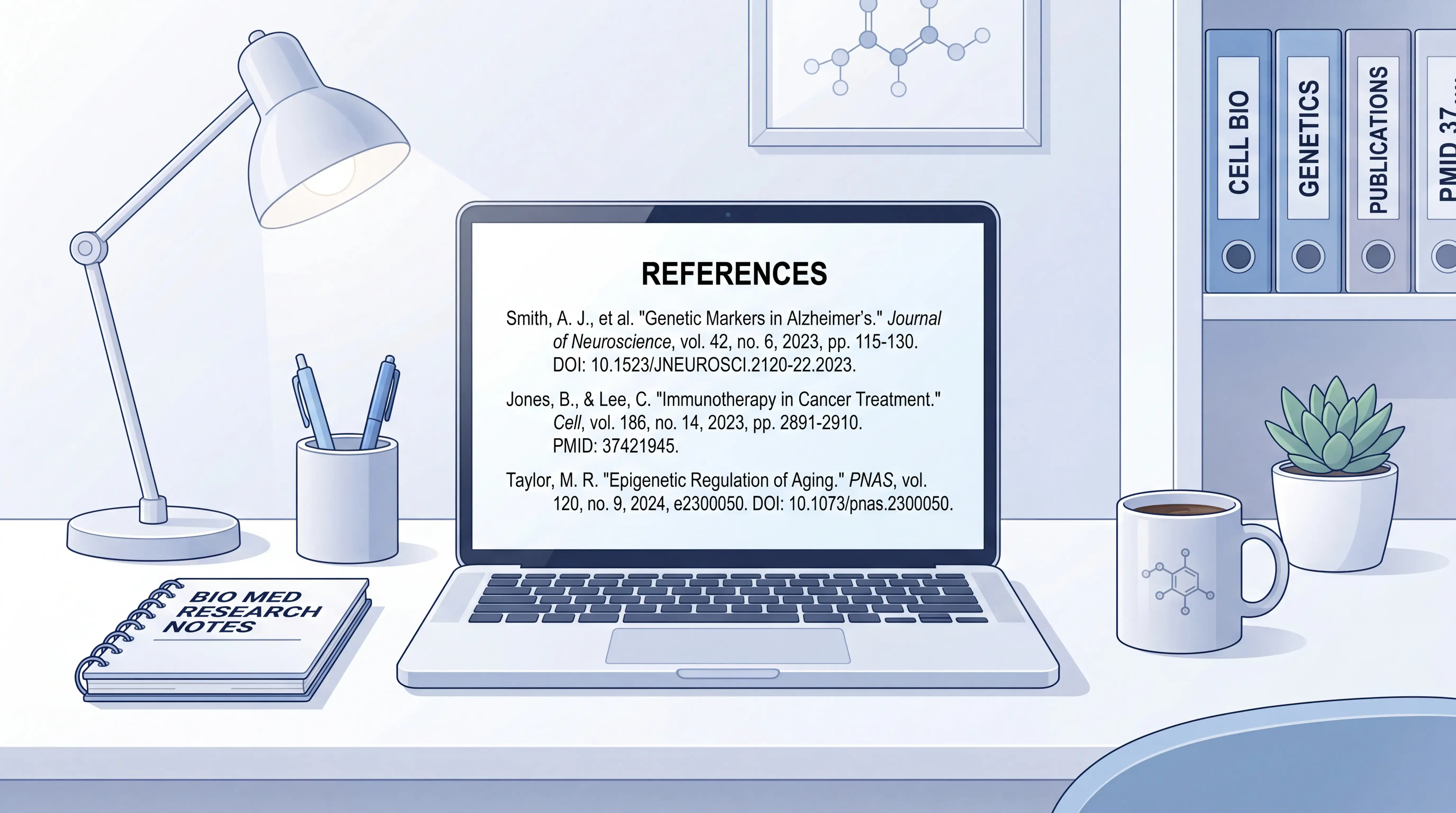
1. Why MLA citation still matters in academic essay writing
1.1 MLA supports clarity and academic trust
For medical students and researchers, MLA may not be the most common style in clinical journals, but it still appears in academic writing, humanities-linked health topics, and interdisciplinary work. A well-cited essay shows that the writer understands source credibility and avoids plagiarism.
Good citation also improves readability. Readers can trace claims back to the source. That matters when your work touches on patient education, ethics, or public health communication.
1.2 The real problem is not citation creation, but citation maintenance
Many writers use a generator to build a reference list once. The problem starts when the essay changes. If you delete a paragraph, move a section, or remove a quote, the reference list may no longer match the body text.
This is a common workflow issue. Citations are often generated automatically, but revisions are manual. That is why users need both a generator and a correction process.
1.3 Who benefits most from a free MLA citation generator
A free tool is especially useful for:
- Medical students preparing class assignments
- Doctors writing educational materials
- Researchers drafting interdisciplinary papers
- Anyone revising an essay with multiple sources
It saves time on formatting. It also reduces simple style errors, such as incorrect punctuation, missing italics, or inconsistent author order.
2. How a free MLA citation generator works
2.1 The basic workflow is simple
Most tools follow the same pattern. You enter source details, choose MLA style, and export the formatted citation. A strong free-mla-citation-generator should support books, journal articles, websites, and reports.
A typical workflow includes:
- Enter author, title, publication date, and source type.
- Select MLA format.
- Review the output carefully.
- Copy the citation into your document.
The key step is review. Never trust the output blindly. Source metadata can be incomplete or outdated.
2.2 Why generated citations still need human review
Even reliable tools can produce errors if the input is wrong. For example, a missing volume number or incorrect page range can lead to an inaccurate citation. This is especially important in scientific writing, where article details must be exact.
If your essay uses multiple databases or source types, check every item against the original source or publisher page. That is the only way to reduce citation drift.
2.3 What happens when your essay changes
If you remove part of the content, the reference list does not always fix itself. In the knowledge base workflow, references are generated automatically, but they do not change with content edits. You must update them manually.
If your citation order changes, use a re-order or re-number function when available. This is the safest way to keep the bibliography aligned with the body of the essay.
3. How to edit references after deleting content
3.1 Start by identifying all removed in-text citations
When revising an essay, first scan the deleted section. List every citation that disappeared. Then check whether those sources still appear elsewhere in the paper.
If a source is used only once and that sentence is deleted, the citation should usually be removed from the reference list too. If the source appears again, keep it.
3.2 Rebuild the sequence, then verify the final list
After deletions, update the order of citations in the document. If you use a word processor or a citation tool, refresh the list before final submission. This prevents mismatched numbering or stale references.
A practical checklist:
- Remove citations tied only to deleted text
- Confirm surviving citations still match the correct source
- Reorder references if numbering changed
- Compare the bibliography with the body text
- Check punctuation and italics
This process is not optional in professional writing. It protects accuracy and saves time during revision.
3.3 Use tools that fit your workflow
For medical writers who revise often, a good workflow matters more than a one-time citation export. Word has a basic reference manager. Online generators like Cite This For Me can also help format bibliographies. Reference managers such as Zotero or Mendeley are better when the essay contains many sources.
If your goal is speed and structure, pair a generator with a text-checking tool. Grammarly can help with grammar. Turnitin can help detect overlap. DeepL can support translation when you are adapting material across languages. These tools do different jobs, but together they reduce editing risk.
4. Best practices for medical students, doctors, and researchers
4.1 Choose sources with strong credibility
In medical and research writing, not every source deserves the same weight. Use peer-reviewed journals, official reports, textbooks, and recognized academic databases when possible. An essay built on weak or outdated sources will not satisfy reviewers.
Before citing a website, check:
- Author credentials
- Publication date
- Organization or institution
- Evidence quality
- Stability of the URL
4.2 Keep one master source list
Do not wait until the end to organize your references. Maintain a master list while drafting. This helps when you delete content or change the structure of the essay.
A master list should include:
- Full source details
- Source type
- In-text citation used
- Notes on where the source appears
This method reduces errors during final editing. It also makes it easier to spot missing items after revision.
4.3 Do not confuse citation tools with plagiarism protection
A generator formats citations. It does not verify whether your content is original. That is why plagiarism checking still matters. In academic medicine, a clean bibliography is important, but originality is equally important.
A correct MLA citation list does not excuse weak attribution. Every borrowed idea should be traceable in the text and in the references.
5. Where SciFocus.ai fits into a faster workflow
5.1 Use automation without losing control
If you want to save time, use a system that supports drafting, citation consistency, and revision management. This is where scifocus.ai can help. It is designed to streamline academic writing tasks so your essay stays organized while you edit.
A better workflow is not just faster. It is safer. You reduce formatting errors, avoid duplicate entries, and make post-edit cleanup easier.
5.2 A smarter process for revision-heavy writing
For clinical essays, literature reviews, and research summaries, the biggest pain point is usually revision. One deleted paragraph can break the citation sequence. One edited source can make the bibliography inconsistent. A structured platform helps you keep the paper aligned from first draft to final version.
If your writing process includes frequent changes, use tools that support correction, not just generation. That is the difference between a quick draft and a submission-ready document.
5.3 Why this matters for busy professionals
Medical students, doctors, and researchers often work under time pressure. They need accurate output, not just fast output. By combining a citation generator with an organized writing platform, you can spend more time on content quality and less time fixing references.
A free-mla-citation-generator is useful. But a complete workflow is better. scifocus.ai helps turn citation management into a repeatable system, which is exactly what high-stakes academic writing needs.
Conclusion
A strong MLA workflow is not only about generating citations. It is about keeping the entire essay consistent after every edit. If you delete content, you must review the reference list, remove unused entries, and reorder citations when needed. A free-mla-citation-generator saves time, but human review still protects accuracy. For a more efficient and controlled writing process, explore scifocus.ai and build a workflow that supports both drafting and revision.

Did you like this article? Explore a few more related posts.
Start Your Research Journey With Scifocus Today
Create your free Scifocus account today and take your research to the next level. Experience the difference firsthand—your journey to academic excellence starts here.