
free-literature-review-tools-for-students
Introduction
Writing an essay that includes a literature review can be difficult for medical students, doctors, and researchers. You need accurate sources, clear structure, and low similarity. You also need to avoid weak wording, vague logic, and repeated expressions. Free literature review tools can save time, improve clarity, and support stronger academic writing. This article explains which tools are useful, how they help, and how Scifocus.ai can streamline the process.

1. Why Literature Review Tools Matter for Academic Writing
1.1 Literature review work is more than collecting papers
A literature review is not just a list of studies. It must show research progress, identify gaps, and present evidence in a logical way. In biomedical writing, this matters even more because topics are often narrow, technical, and highly repetitive.
For this reason, a strong essay needs more than subject knowledge. It needs language accuracy, structure, and originality. If the writing is too close to existing sources, the risk of high similarity increases. If the logic is weak, the reader loses trust.
1.2 Free tools can improve both speed and quality
Many students spend hours searching, reading, and rewriting. Free tools help reduce that burden. Some tools support literature search. Others help with grammar, translation, citation, or rewriting. The right tool can make the workflow faster and more controlled.
The goal is not to replace academic judgment. The goal is to support it. A good tool helps you write more clearly, not more mechanically. That is especially important for medical writing, where precision matters.
2. Free Literature Review Tools That Support Better Essays
2.1 PubMed and PubMed AI for focused literature search
PubMed remains one of the most reliable starting points for medical research. It helps users find peer-reviewed studies, reviews, and clinical papers. For students writing a literature-based essay, this is often the first step.
The knowledge base also highlights PubMed AI, which adds fast summarization on top of PubMed search. That is useful when you need to identify key findings quickly before deeper reading. It helps narrow the literature and saves time during screening.
2.2 Grammarly and DeepL for language support
Grammarly is useful for grammar checks and sentence-level polishing. It can help identify awkward phrasing, grammar errors, and punctuation issues. DeepL is useful for translation, especially when you need a clearer English version of source notes or draft ideas.
These tools do not solve every writing problem. But they can improve readability. In academic writing, that matters because unclear wording can weaken a strong argument. A well-written essay should sound precise and consistent.
2.3 COCA and CiteThisForMe for word choice and references
COCA helps users check meaning, collocations, and usage patterns. This is valuable when you need natural academic English instead of direct translation. It is especially helpful for researchers who write in English as a second language.
CiteThisForMe can generate bibliographies faster. That reduces manual reference formatting work. For medical students and clinicians, this can save time during final manuscript preparation. It also helps keep citation style more consistent.
3. How to Use Free Tools Without Losing Academic Quality
3.1 Use a step-by-step workflow
A practical workflow makes free tools more effective. Start with topic search. Then screen relevant papers. Next, extract key points. After that, rewrite the content in your own structure and style. Finally, check grammar and citations.
A simple workflow like this reduces confusion. It also lowers the chance of copying sentence patterns from source papers. The best literature review tools support original thinking. They do not replace it.
3.2 Focus on logic, not only wording
Many writers think polishing means changing words only. That is not enough. The knowledge base shows that strong polishing also improves logic, sentence flow, and structure. This matters because a literature review must connect evidence, not just summarize it.
For a stronger essay, ask these questions:
- Does each paragraph have one clear point.
- Do the studies support a progression of ideas.
- Is the gap in the literature clearly stated.
- Are repeated expressions removed.
These checks improve both readability and academic value.
3.3 Lower similarity the right way
Similarity reduction is not about hiding sources. It is about restating ideas accurately in new language while keeping the original meaning. That requires sentence restructuring, synonym control, and careful source use.
This is especially important in biomedicine. Many terms are fixed. Many methods are standardized. That makes repetition more common. A good tool can help reduce unnecessary duplication, but the writer still needs to preserve scientific accuracy.
4. Where Scifocus.ai Fits in the Writing Process
4.1 An integrated tool can simplify the full workflow
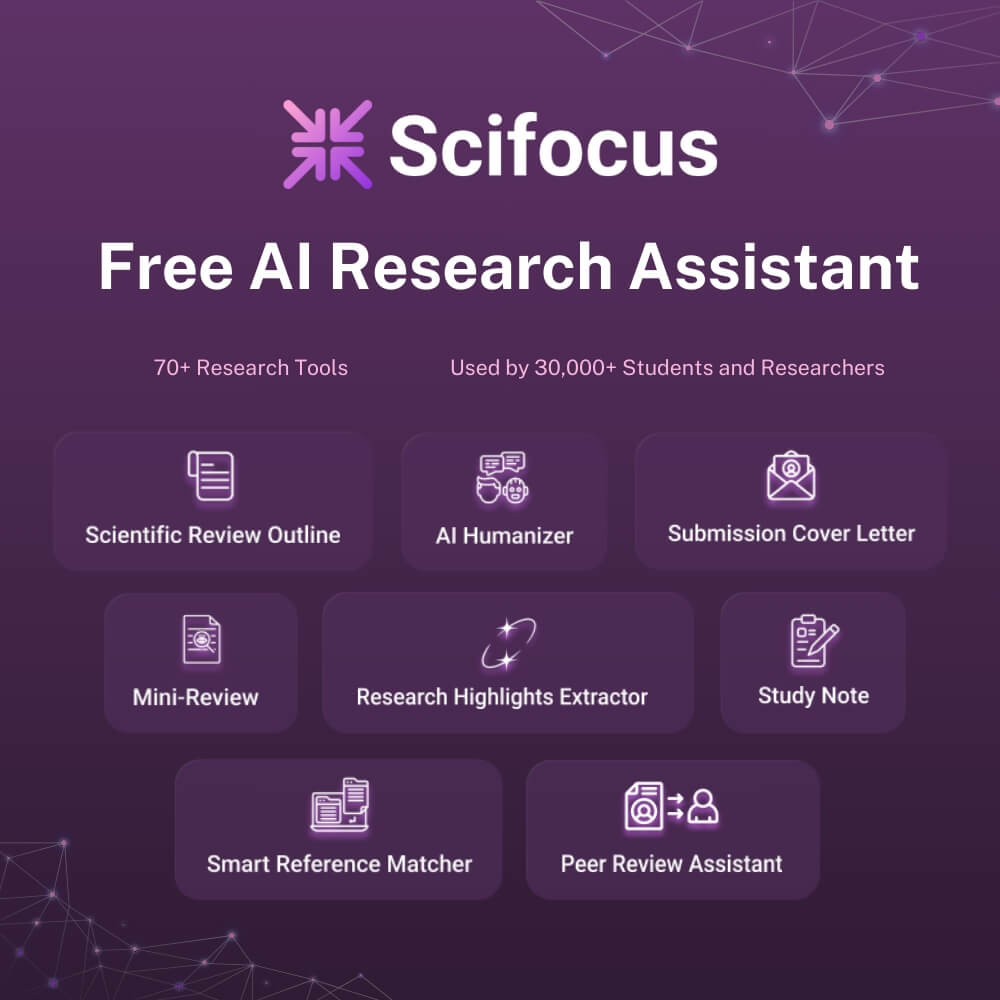
Free tools are helpful, but switching between multiple platforms can be inefficient. This is where Scifocus.ai becomes useful. It is designed to support writing, polishing, and similarity reduction in one place. That makes the workflow more organized.
For medical students, doctors, and researchers, this integrated setup is practical. You spend less time moving content between tools. You also reduce formatting mistakes and repeated edits. A single platform can make the literature review process more efficient and easier to manage.
4.2 Better support for review writing and revision
The knowledge base notes that good tools can generate outlines, assist with rewriting, and improve readability. That is exactly what many academic writers need when preparing a literature-based essay. The challenge is usually not only finding papers. It is turning papers into a coherent argument.
Scifocus.ai can help with that transition. It can support drafting, polishing, and revision in a more streamlined way. That is valuable when deadlines are tight and submission standards are strict.
4.3 Why this matters for biomedical users
Biomedical writers often face limited source pools, strict journal expectations, and high standards for accuracy. In that environment, time is important. So is clarity. Scifocus.ai helps reduce repetitive manual work while keeping the focus on content quality.
If your current process feels fragmented, Scifocus.ai can help unify search, writing, and revision into one practical workflow. That is the kind of support many students and clinicians need when producing an academic essay or literature review.
Conclusion
Free tools can make literature review writing more efficient, more accurate, and easier to manage. PubMed, Grammarly, DeepL, COCA, and citation tools each solve a different problem. Used together, they can improve search quality, language clarity, and reference handling.
Still, tools work best when paired with a clear method. Start with good sources. Build a logical structure. Rewrite carefully. Check grammar and citations. If you want a more complete solution, explore Scifocus.ai for a smoother literature review workflow, from draft to polished submission.
Did you like this article? Explore a few more related posts.
Start Your Research Journey With Scifocus Today
Create your free Scifocus account today and take your research to the next level. Experience the difference firsthand—your journey to academic excellence starts here.