
Free Academic Writing Tools Online
Introduction
Writing an essay for medical school, clinical work, or research publication is rarely just about ideas. It is about clarity, structure, and precise language. Many medical students, doctors, and researchers have strong content, but still lose time on grammar, style, and wording. That is where free academic writing tools online can help. They support drafting, polishing, and rewriting, without replacing your expertise.

1. Why Medical Writers Need Better Writing Support
1.1 The real problem is not always the science
In medical writing, weak language can hide strong research. A clear essay can improve readability, reviewer confidence, and submission speed. But many authors still spend hours fixing sentence-level issues that software can handle faster.
This matters because academic readers expect precision. In medicine, a vague phrase can weaken an argument. A long, unclear sentence can slow the reader down. For non-native English speakers, this challenge is even more common.
1.2 Where free tools fit into the workflow
Free academic writing tools online are most useful in the early and middle stages of writing. They can help with:
- Grammar correction.
- Terminology checking.
- Phrase improvement.
- Sentence rewriting.
- Structure support.
Used correctly, these tools save time. They do not replace scientific judgment. They support it.
2. Free Tools That Improve Academic Essay Quality
2.1 Grammar and style checkers
Tools like Grammarly, Ginger, and Whitesmoke are useful for catching spelling, punctuation, and basic grammar errors. They can identify agreement problems, missing articles, and awkward wording.
Grammarly is especially helpful for sentence-level editing. It highlights errors and suggests corrections. However, it does not fix logic, flow, or argument structure. That means it should be used as a polishing tool, not a full writing solution.
Ginger and Whitesmoke also offer grammar and style suggestions. They are useful for writers who want quick correction before submission. For medical students preparing an essay, these tools can reduce avoidable language mistakes.
2.2 Phrase banks and corpus-based writing support
For academic expression, Academic Phrasebank is one of the most practical resources. It provides model sentences for:
- Introducing work.
- Referring to sources.
- Describing methods.
- Reporting results.
- Discussing findings.
- Writing conclusions.
This is especially valuable when you know the idea but not the best academic phrasing. Instead of guessing, you can study a sentence pattern and adapt it to your own work.
Other corpus tools, such as Linggle and writing repositories like Pepper Assistant or similar academic text banks, help users check collocations and common phrasing. These tools are useful when you want your essay to sound natural and academically appropriate.
2.3 Terminology tools for accurate medical language
Medical writing depends on precise terms. A small wording error can change meaning. That is why terminology databases matter.
The termonline.cn platform is a free and practical option for checking standardized technical terms across fields such as medicine, science, engineering, and agriculture. It is useful when translating or confirming professional vocabulary.
For medical students and researchers, this helps avoid incorrect term choices. In a scientific essay, the right term is not optional. It is essential.
3. How to Use These Tools Without Damaging Your Writing
3.1 Use one tool for one task
A common mistake is to rely on one platform for everything. That usually leads to shallow editing. A better workflow is simple:
- Draft your ideas first.
- Check terminology.
- Improve sentence structure.
- Run grammar correction.
- Read the final version aloud.
This approach keeps your own thinking in control. It also reduces over-editing.
3.2 Do not accept every suggestion
Even the best free academic writing tools online can make wrong suggestions. Some may change a medical term unnecessarily. Others may simplify a sentence that should stay precise.
Always verify any automated change against your actual meaning. This is especially important in clinical, biomedical, and research writing. If the tool weakens accuracy, reject the suggestion.
3.3 Build a reusable writing system
Experienced academic writers do not start from zero every time. They use templates, phrase banks, and revision habits. Over time, this creates a repeatable workflow for each essay or manuscript section.
A practical system can include:
- Saved sentence templates for introductions and discussions.
- A personal list of approved terminology.
- A grammar checker for final cleanup.
- A phrase bank for academic transitions.
This method is efficient and reliable. It also helps junior writers improve faster.
4. Free Tools vs. Professional Editing Services
4.1 Free tools are useful, but not enough for every case
Free tools are excellent for first-pass editing. They are fast, accessible, and easy to use. But they cannot fully assess logic, scientific tone, or publication readiness.
If your manuscript is high-stakes, such as a grant proposal, journal submission, or thesis chapter, a human editor may still be necessary. The knowledge base also notes that official language-editing services from providers such as Wiley, Elsevier, or AJE can be useful when higher-level polishing is needed.
4.2 When human editing makes sense
Consider professional editing if:
- The essay must meet journal standards.
- English is not your working language.
- The logic is strong, but the writing feels uneven.
- You need help before submission deadline.
For many medical authors, a combination works best: free tools for speed, professional editing for final quality.
5. Where SciFocus.ai Fits in a Modern Writing Workflow
5.1 A smarter way to move from draft to submission
If you regularly write clinical summaries, research reports, or an academic essay, you need more than spelling correction. You need a workflow that supports drafting, refinement, and consistency.
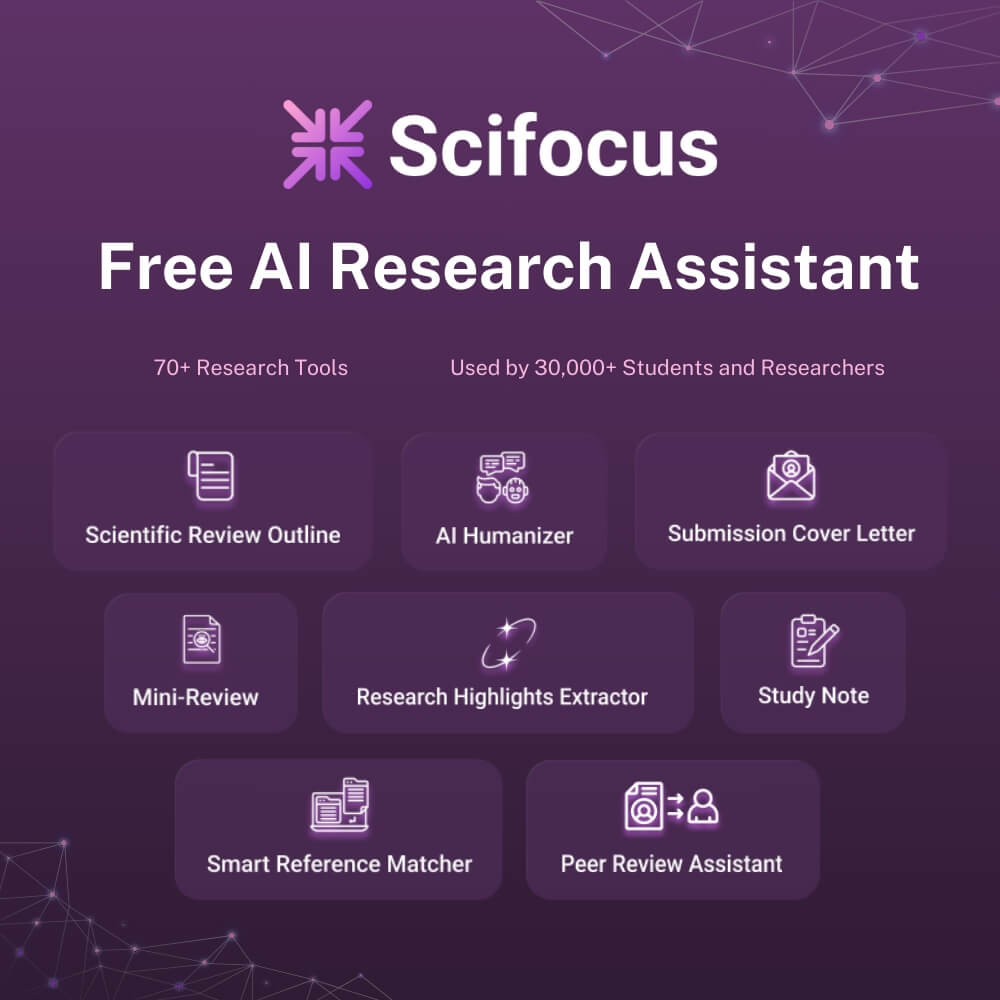
This is where scifocus.ai can help. It can be positioned as a practical writing support platform for academic users who want to write faster and polish more efficiently. Instead of switching between many disconnected tools, you can streamline the process in one place.
5.2 Why this matters for medical writers
Medical professionals do not have time for inefficient editing. They need tools that reduce friction and support quality at every stage. A platform like scifocus.ai can help you move from rough draft to clearer academic prose with fewer manual steps.
The goal is not to write for you. The goal is to help you produce a stronger, cleaner, and more submission-ready essay.

Conclusion
For medical students, doctors, and researchers, writing well is part of professional communication. The right free academic writing tools online can improve grammar, terminology, and sentence clarity. They can also save time and reduce avoidable revision work.
Still, the best results come from combining tools with judgment. Use phrase banks for structure. Use grammar checkers for cleanup. Use terminology resources for precision. Then, if you want a more efficient and modern workflow, explore scifocus.ai as your next step toward better academic writing.
If your next essay needs to be clearer, faster, and more professional, start with the right tools and build a smarter writing system today.
Did you like this article? Explore a few more related posts.
Start Your Research Journey With Scifocus Today
Create your free Scifocus account today and take your research to the next level. Experience the difference firsthand—your journey to academic excellence starts here.