
Free Academic Databases for Research
Introduction
Finding a reliable essay source for medical research is not easy. Many students and clinicians waste time on weak search results, paywalled papers, or outdated references. For medical students, doctors, and researchers, the real challenge is not just access. It is finding the right database fast, then using it well. The best free academic databases for research help you locate credible literature, track trends, and support evidence-based work with less effort.
1. Why Free Academic Databases Matter in Medical Research
1.1 They save time and reduce search noise
A strong literature search begins with the right platform. In medicine, the wrong database can return thousands of irrelevant records. That slows down every step of your essay, thesis, or manuscript.
Free academic databases are useful because they help you:
- Find peer-reviewed sources faster.
- Check whether a topic has enough evidence.
- Compare Chinese and English literature.
- Follow new findings in a specific field.
For medical research, access is only the first step. Precision is what makes a database valuable.
1.2 They support evidence-based decision-making
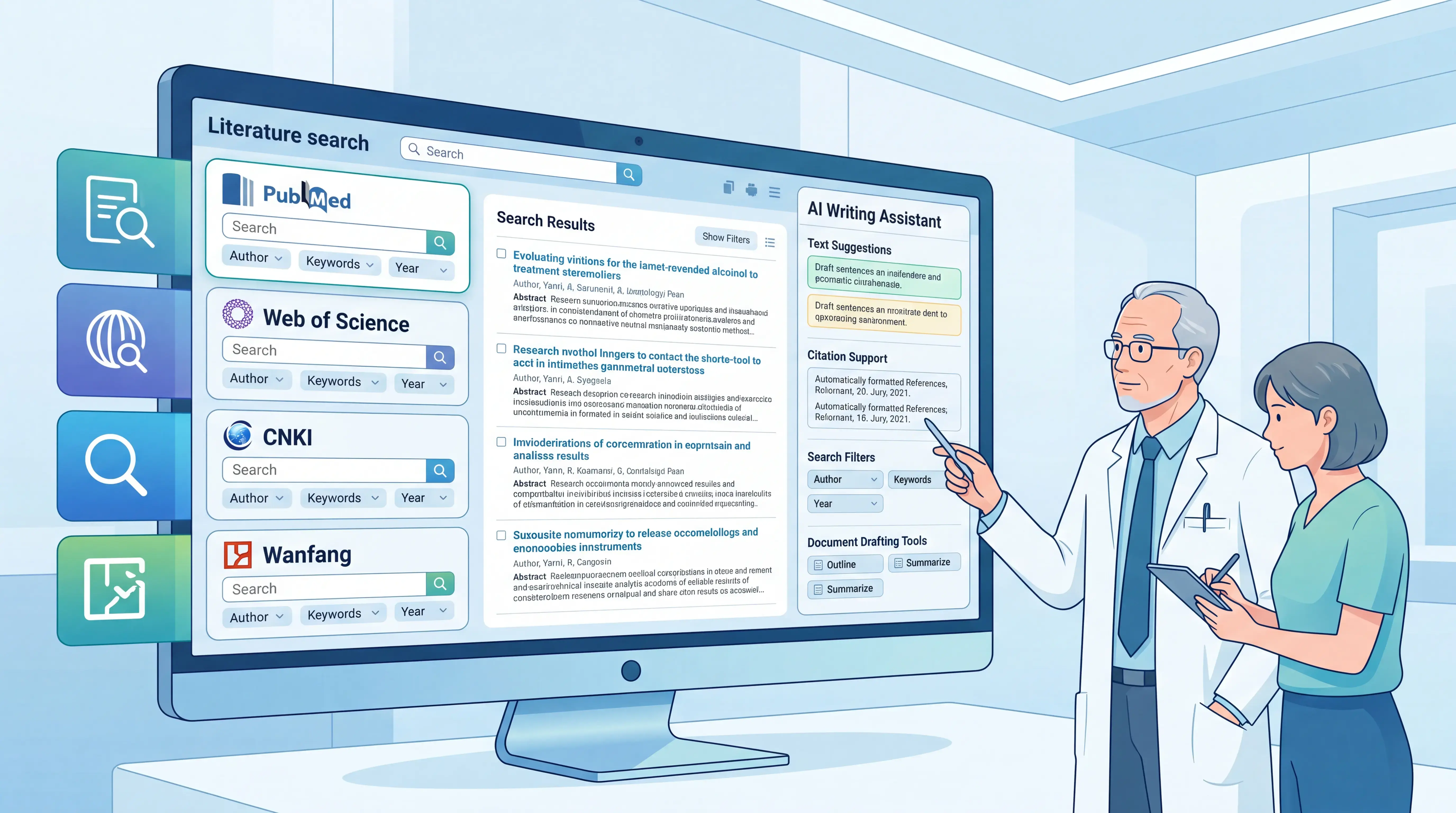
Clinical questions should be grounded in up-to-date literature. Databases such as PubMed, Web of Science, and CNKI are often used to identify studies, reviews, and citations that support treatment decisions and academic writing.
This matters for:
- Medical essays.
- Research proposals.
- Case discussions.
- Systematic topic exploration.
When you use reliable databases, you reduce the risk of citing incomplete or low-quality sources. That improves both academic quality and trust.
2. Core Databases Every Medical Researcher Should Know
2.1 PubMed for biomedical literature
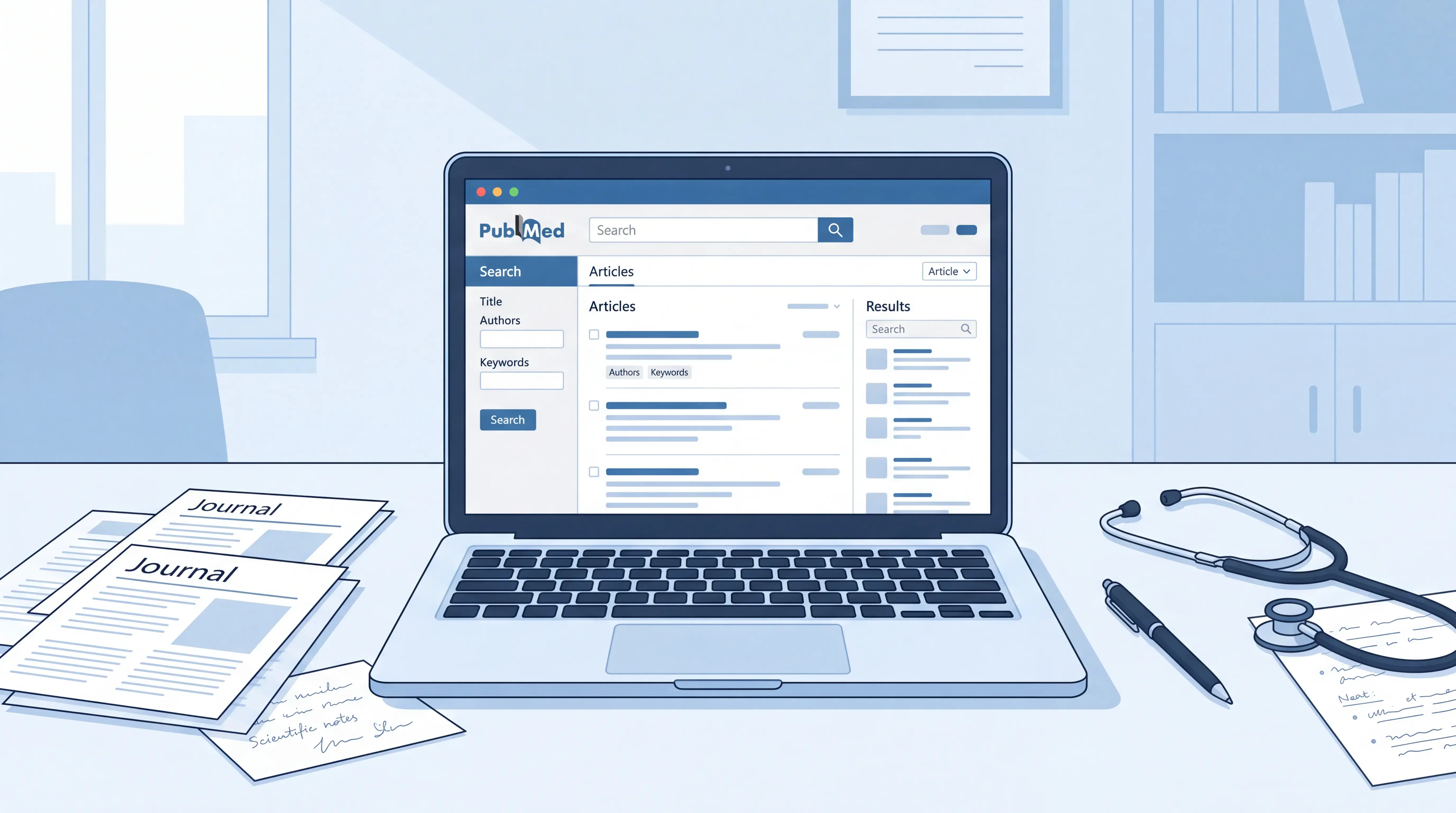
PubMed is one of the most important biomedical databases in the world. It is developed by the U.S. National Library of Medicine through NCBI. For medical students and doctors, it is often the first stop for English-language literature.
PubMed supports:
- Basic search.
- Advanced search.
- Filters.
- MeSH term searching.
That makes it especially useful when you need a focused literature set for an essay or a clinical research question. If you search “prostate cancer,” for example, you can narrow results by article type, date, and subject terms.
PubMed is not just a search engine. It is a structured biomedical indexing system.
2.2 Web of Science for citation analysis and SCI screening
Web of Science is widely respected because it is strong in citation tracking and journal evaluation. It is also useful for checking whether a paper is indexed in SCI-related collections.
Its value includes:
- Citation reports.
- Author tracking.
- Topic alerts.
- Journal and impact analysis.
For researchers, this is important when you need to assess research impact or identify influential papers in a field. If you are planning a submission strategy, Web of Science helps you understand journal positioning more clearly.
2.3 CNKI for Chinese academic literature
CNKI is the largest Chinese academic database and a major source for Chinese-language journals, dissertations, conference papers, and reference materials. It is widely used in China for academic study and medical research.
It is useful when you want to:
- Search Chinese studies on a disease or treatment.
- Review local clinical experience.
- Access dissertations and conference papers.
- Search by keywords with flexible filters.
CNKI also supports unified search across many resource types. That makes it practical for a comprehensive essay or background review.
2.4 Wanfang for broader Chinese medical coverage
Wanfang Data integrates journals, dissertations, conference papers, books, standards, patents, and scientific reports. It is often used alongside CNKI because the two databases do not always index exactly the same materials.
For medical research, Wanfang is valuable when you need:
- Core journal coverage.
- More complete issue-level article access.
- Additional Chinese references for a topic review.
Using CNKI and Wanfang together often gives you a fuller picture of Chinese medical literature.
3. How to Search Smarter, Not Just More
3.1 Start with the right keywords
A weak search starts with a vague term. A strong search begins with a clear concept, then expands through synonyms and subject terms.
Use this process:
- Define the main disease, drug, or method.
- Add synonyms and abbreviations.
- Use subject headings when available.
- Narrow by year, study type, or population.
For example, if your essay topic is related to breast cancer treatment, do not search only one term. Combine disease names, intervention terms, and outcome terms.
3.2 Use advanced filters to remove irrelevant results
Most researchers do not fail because of too little literature. They fail because of too much noise. Advanced search tools can solve this.
Useful filters include:
- Publication year.
- Article type.
- Author.
- Institution.
- Journal.
- Subject category.
Web of Science also allows citation-based analysis, which helps you identify whether a topic is growing or declining. PubMed gives you MeSH terms and clinical filters. CNKI and Wanfang offer their own structured search options.
Filtering is not optional. It is the difference between a broad search and a usable one.
3.3 Track research trends, not only papers
A good researcher does more than collect articles. They track how a topic changes over time.
Practical ways to do this include:
- Checking citation trends in Web of Science.
- Reviewing recent top papers in PubMed.
- Monitoring author updates through Google Scholar.
- Following current journal issues in Nature, Cell, or Science.
- Reading research alerts on key platforms.
This is especially useful when writing a competitive essay or preparing a research proposal. You need to know what has been done, what is trending, and where the gap is.
4. Practical Workflow for Medical Students, Doctors, and Researchers
4.1 Build a simple search workflow
A repeatable workflow saves time and improves consistency. Use this sequence:
- Search PubMed for current biomedical evidence.
- Search Web of Science for citation strength and impact.
- Search CNKI and Wanfang for Chinese literature.
- Compare results and remove duplicates.
- Export records for reading and citation management.
This approach is efficient for essays, review writing, and early-stage project design. It also helps you avoid over-relying on a single database.
4.2 Check journal quality before you cite or submit
Database search is only one part of the process. You also need to evaluate where papers are published.
Useful checks include:
- Journal indexing.
- Citation visibility.
- Subject relevance.
- Impact factor context.
- JCR quartiles or Chinese Academy of Sciences divisions.
A paper in a visible, indexed journal is usually easier to verify, cite, and evaluate.
4.3 Use alerts to stay current
Many platforms allow alerts or tracking functions. This is useful if you follow a narrow topic, a specific author, or a clinical question.
You can use alerts to:
- Receive new results on a topic.
- Track citations of a paper.
- Follow an important author.
- Monitor emerging research fronts.
For busy clinicians and researchers, this is a practical way to stay updated without manual searching every week.
5. Common Problems and How to Avoid Them
5.1 Relying on one database only
No single database is complete. PubMed is excellent for biomedical literature, but it does not replace CNKI or Wanfang for Chinese sources. Web of Science is strong in citation analysis, but it is not designed to be your only literature base.
A better approach is combination search. That gives you broader coverage and fewer blind spots.
5.2 Using poor search terms
If your search terms are too broad, you get noise. If they are too narrow, you miss key papers. The solution is controlled vocabulary, synonyms, and iterative refinement.
5.3 Ignoring full-text access issues
Sometimes the abstract is available, but the full paper is not. In that case, institutional access, database links, or browser tools may help. The goal is not just finding the citation. It is obtaining the full evidence needed to read critically.
6. Where SciFocus Fits Into the Research Workflow
6.1 From literature search to writing support
After you collect articles, the next bottleneck is usually writing. You still need to organize findings, compare studies, and turn literature into a structured essay or manuscript.
This is where a workflow tool like scifocus.ai can help. It is positioned to support researchers who need faster topic structuring, literature handling, and academic writing assistance.
6.2 Why this matters for medical users
Medical students, doctors, and researchers often work under time pressure. You may need to prepare:
- A course essay.
- A literature review.
- A case discussion.
- A research background section.
A tool such as scifocus.ai can reduce friction in the writing stage after database search. That means less time spent organizing scattered notes and more time spent on interpretation and critical thinking. When paired with free academic databases for research, it can help create a more efficient end-to-end workflow.
Conclusion
For medical students, doctors, and researchers, the best results come from combining the right databases with a clear search strategy. PubMed, Web of Science, CNKI, and Wanfang each serve a different purpose. Used together, they help you find stronger evidence, track trends, and write a better essay. If you want to move faster from literature search to structured academic writing, explore scifocus.ai as a practical next step.
Did you like this article? Explore a few more related posts.
Start Your Research Journey With Scifocus Today
Create your free Scifocus account today and take your research to the next level. Experience the difference firsthand—your journey to academic excellence starts here.