

Does Your Paper Contain These 3 Common Mistakes in the Discussion Section?
Introduction
The paper discussion section is where many manuscripts win or lose acceptance. It is also where medical students, clinicians, and researchers often make avoidable mistakes. A weak discussion can blur your key message, repeat results, or overstate the significance. If your discussion does not answer the research question clearly, reviewers notice fast. In this article, we will break down the 3 most common errors and show how to fix them with a clean, publishable structure.
1. Why the Discussion Section Matters
1.1 It Converts Results Into Meaning
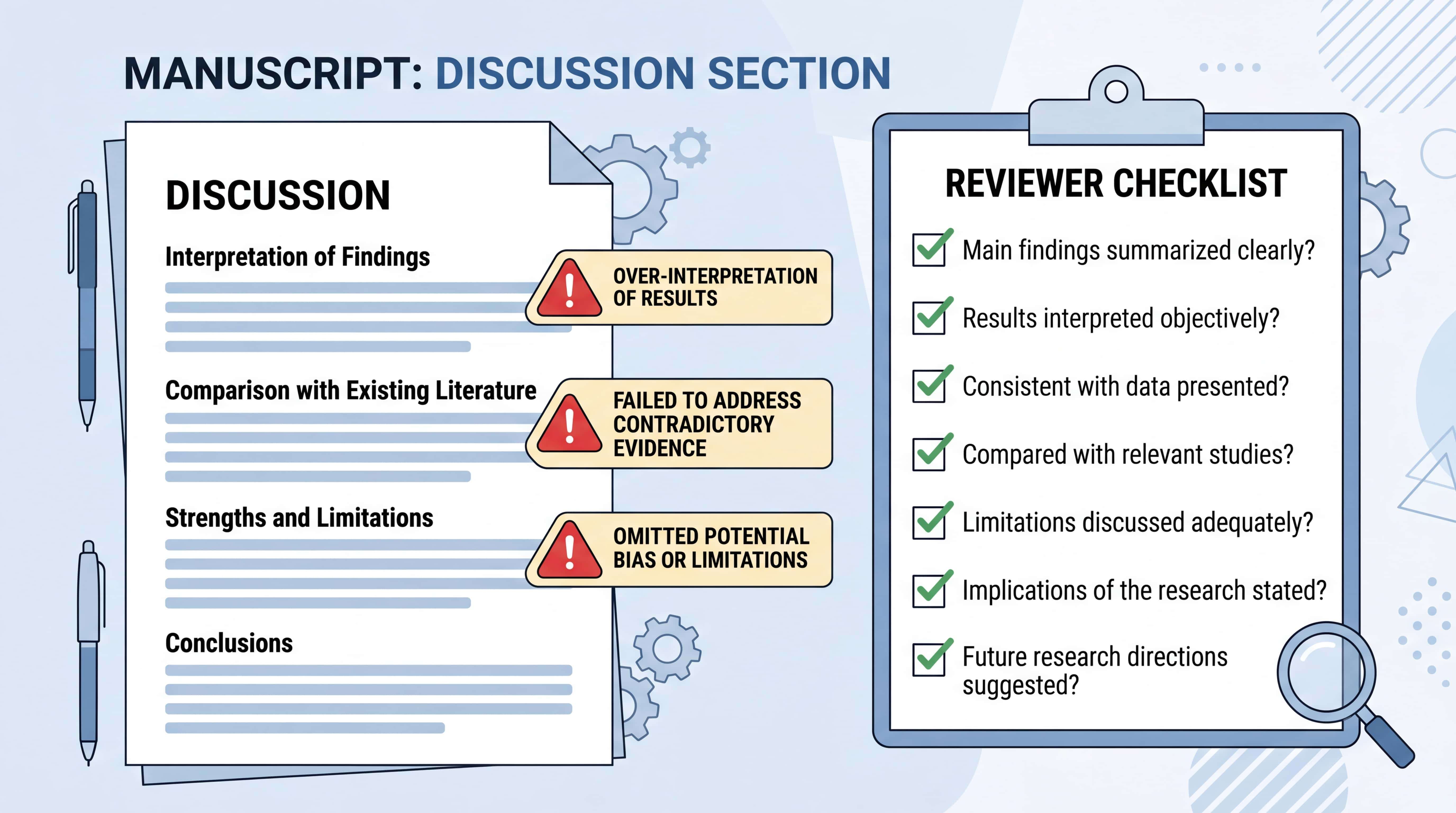
The discussion is not a place to restate data. Its job is to interpret findings and explain their value. In SCI-style writing, the discussion helps readers understand what the study means, not just what was observed.
A strong discussion answers the question raised in the introduction, explains the findings, and shows why they matter. This is especially important in medical research, where readers expect clinical relevance, mechanism, and evidence-based interpretation.
1.2 It Strongly Affects Acceptance
Many papers are rejected not because the data are weak, but because the discussion is poorly written. Common problems include unclear research significance, excessive repetition of data, and overly long interpretation. These issues reduce clarity and make the manuscript feel unfocused.
A good discussion should move from the specific to the general. Start with the study’s direct findings. Then connect them to broader knowledge. Finally, state the implication for practice, research, or theory.
2. Error One: Wrong Tense Usage
2.1 Use Present Tense for Conclusions
One of the most common grammar problems in the discussion section is tense inconsistency. Results are usually described in the past tense, but conclusions and general interpretations are often written in the present tense. That is because the data were obtained in the past, while the conclusion is presented as a current, general statement.
For example, a sentence like “These results suggested...” may be better written as “These results suggest...” when you are stating an interpretation derived from the findings.
2.2 Why This Matters in Academic Writing
Tense errors can make your discussion sound less precise. Reviewers may read them as a sign of weak academic control, even if the science is sound. In biomedical writing, this matters because the discussion must sound factual, stable, and professional.
A practical rule is simple:
- Past tense for what was done and observed.
- Present tense for what the findings mean.
- Present perfect only when linking past evidence to current knowledge.
This small correction can improve the entire tone of your paper.
3. Error Two: Using the Wrong Verb to Report Other Studies
3.1 Prefer Formal Reporting Verbs
Another frequent problem is the use of informal or imprecise verbs when citing previous work. In academic writing, verbs such as “thought” or “considered” may sound too conversational. A better choice is often “reported,” “demonstrated,” “showed,” or “suggested.”
For example, instead of writing that another team “considered” a finding, you can write that the authors “reported” it or “demonstrated” it, depending on the strength of the evidence.
3.2 Match the Verb to the Evidence
Not every study supports the same level of certainty. The verb should reflect that level.
Use this logic:
- Reported: neutral presentation of a published finding.
- Showed / demonstrated: stronger evidence and clearer experimental support.
- Suggested: cautious interpretation, especially when evidence is indirect.
- Confirmed: use only when the evidence is strong and consistent.
This is more than style. It is about accuracy. The verb you choose signals how confidently the reader should interpret the cited evidence. In a discussion section, that precision matters.
4. Error Three: Repeating Ideas Unnecessarily
4.1 Avoid Duplicate Expressions
A third common mistake is repeating the same meaning twice in one sentence. For example, phrases like “besides our study” and “also” may overlap semantically. That creates redundancy and makes the writing heavier than necessary.
Academic English values economy. If one phrase already expresses comparison or addition, do not add another phrase with the same function. Remove the extra wording and keep the sentence tight.
4.2 Keep the Discussion Lean
The same principle applies to long paragraphs that restate results in detail. The discussion should not become a second results section. Instead, it should focus on interpretation, comparison, and implication.
A clean discussion usually follows this order:
- Introduce what is already known.
- State what your study found.
- Explain why the finding matters.
- Note limitations objectively.
- End with a broader implication.
If a sentence does not help explain meaning, it probably does not belong in the discussion.
5. A Simple Structure That Helps You Avoid These Errors
5.1 Use the Three-Paragraph Logic
For beginners, the easiest way to build a discussion is with a three-part logic. This approach is practical and consistent with SCI writing principles.
You can structure each discussion section like this:
- Paragraph 1: Summarize relevant prior studies and what they reported.
- Paragraph 2: Present your key findings and explain how they fit, extend, or differ from earlier studies.
- Paragraph 3: End with the significance, unresolved questions, or clinical implications.
This framework prevents rambling. It also keeps the discussion aligned with the paper’s title and main question.
5.2 Connect Specific Findings to General Meaning
Good discussion writing moves from a narrow finding to a broader conclusion. For example, a result about one biomarker, one patient group, or one experimental model should be framed in a way that shows wider relevance.
That does not mean overclaiming. It means drawing a fair conclusion from the evidence you actually have. Strong discussion writing is precise, not exaggerated.
6. Practical Editing Checklist Before Submission
6.1 Check Language, Logic, and Scope
Before you submit your paper, review the discussion section with these questions:
- Does it answer the research question from the introduction?
- Does it avoid simply repeating the results?
- Are the tense and reporting verbs correct?
- Are comparisons with prior studies accurate and fair?
- Is the significance stated clearly but not exaggerated?
- Are limitations acknowledged objectively?
This checklist helps you catch the three most common mistakes before a reviewer does.
6.2 Use Tools to Save Time and Improve Consistency
Writing a discussion section well takes time, especially when you are balancing grammar, logic, and journal style. This is where a focused writing tool can help. SciFocus.ai can support you in organizing your discussion, refining academic wording, and reducing repetitive expression.
For medical students, doctors, and researchers, that means less time fixing sentence-level issues and more time improving scientific argumentation. A tool like SciFocus.ai is especially useful when you need to turn dense results into clear, publication-ready discussion points.
Conclusion
The discussion section is often the hardest part of a paper, but it is also one of the most important. If you avoid the three common errors, wrong tense, weak reporting verbs, and unnecessary repetition, your manuscript will read as clearer, more professional, and more persuasive. A strong discussion should interpret the findings, compare them fairly with existing research, and show the real significance of the study.
If you want to write faster and more accurately, try SciFocus.ai. It can help you structure your argument, polish academic language, and make your discussion section more publication-ready.
Did you like this article? Explore a few more related posts.
Start Your Research Journey With Scifocus Today
Create your free Scifocus account today and take your research to the next level. Experience the difference firsthand—your journey to academic excellence starts here.