

Discrete vs. Discreet
Introduction
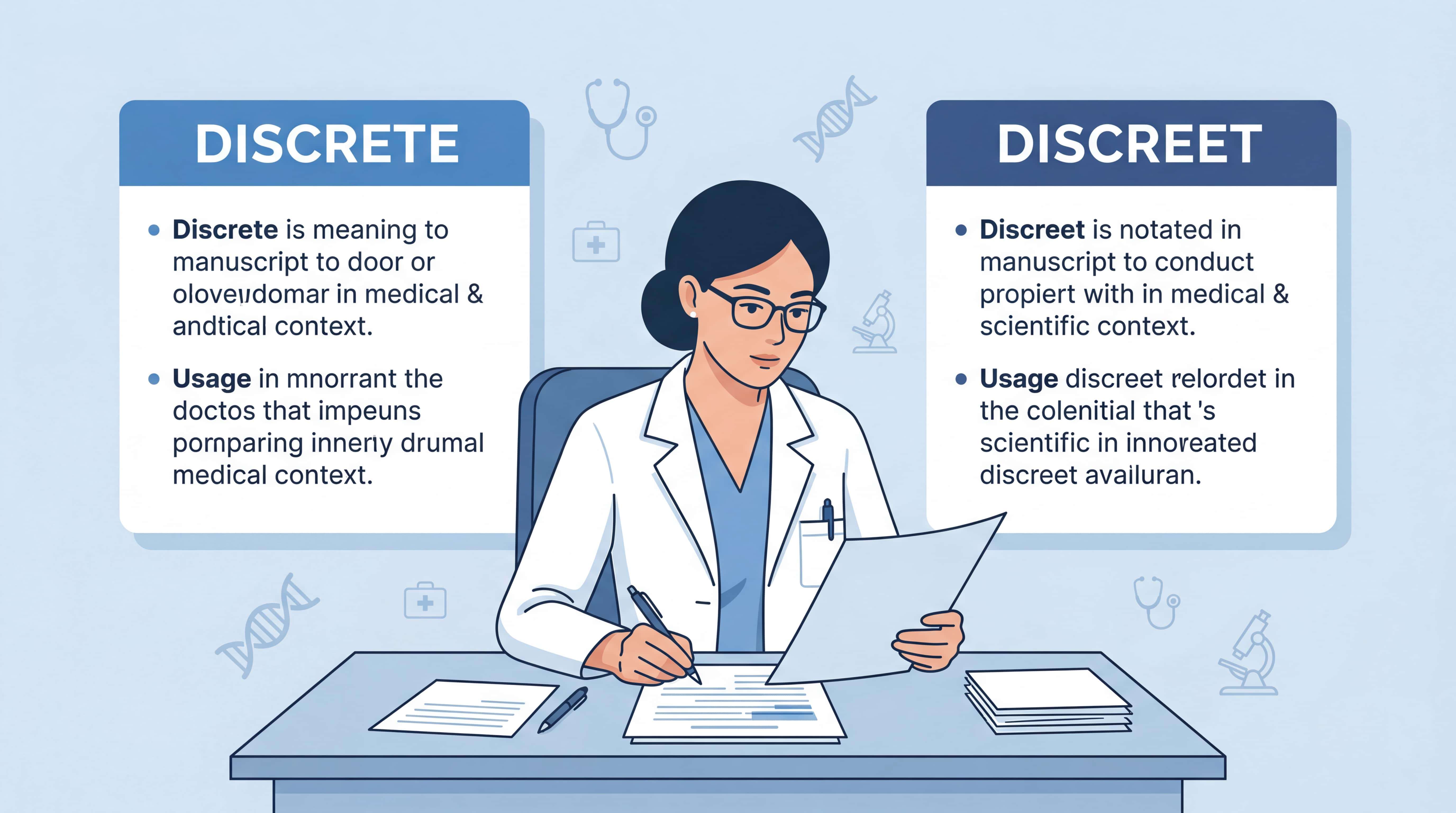
If you write an essay for medical school, clinical research, or journal submission, small language mistakes can weaken your credibility. One common error is discrete vs. discreet. These words look similar, but they mean different things and belong in different contexts. Using the wrong one can distract readers and undermine a professional essay. This article explains the difference clearly, shows how to use each word correctly, and gives practical examples for academic and medical writing.
1. What “Discrete” Means
1.1 Definition and Core Meaning
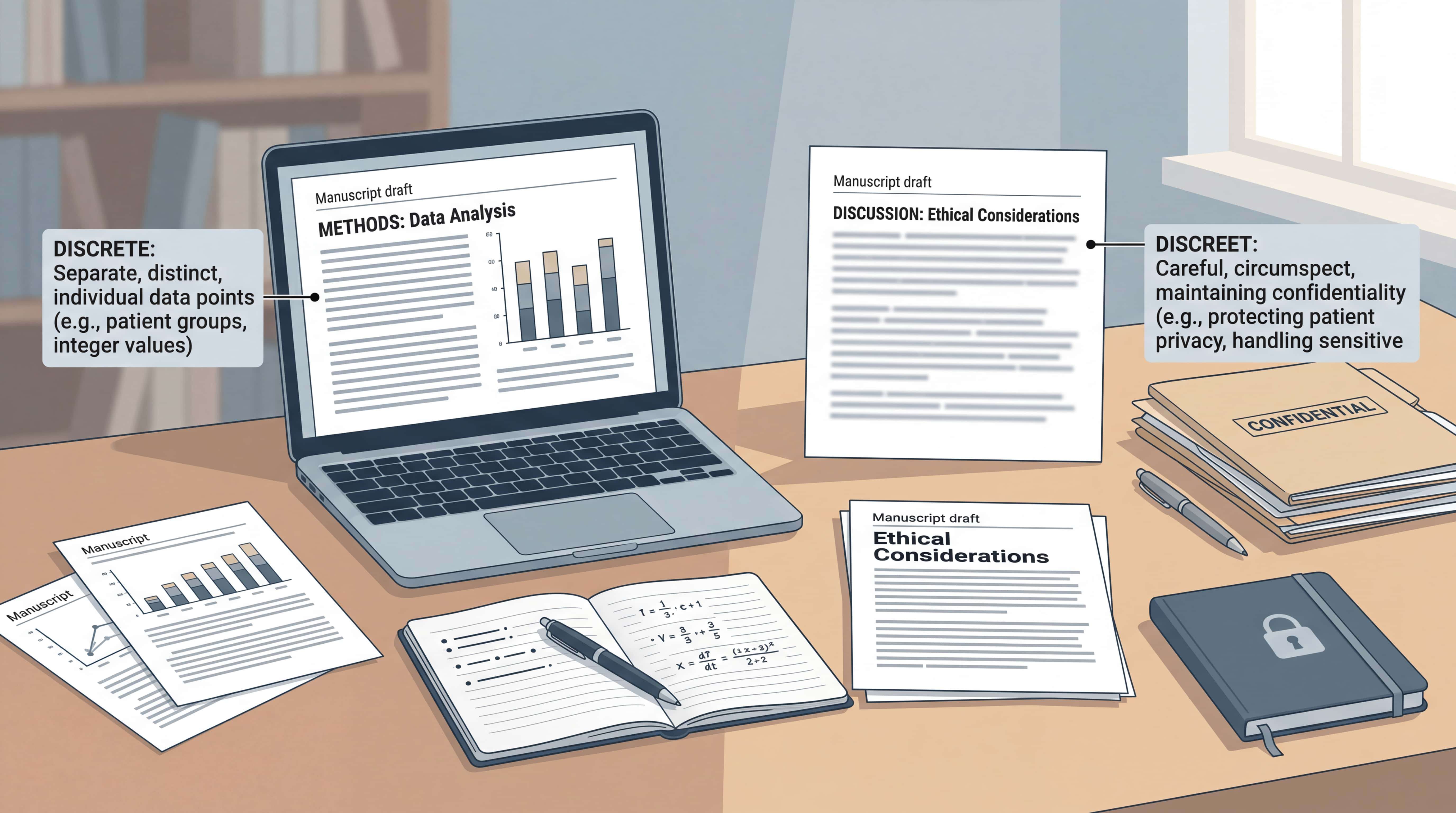
Discrete means separate, distinct, or individually divided. It is commonly used in technical, scientific, statistical, and academic writing.
In a medical or research essay, you may use discrete when describing:
- distinct data points
- separate anatomical structures
- individual categories in a study
- clearly divided variables
For example, a clinical dataset may contain discrete variables such as blood type or disease stage. These are values that are separate, not continuous.
1.2 How to Use It Correctly
The word discrete is often used in precise, formal contexts. It signals that things are not blended together.
Examples:
- The study analyzed discrete patient groups.
- The nervous system has several discrete functional regions.
- Researchers identified discrete endpoints in the trial.
Key point: discrete always refers to separable units or clearly defined categories.
2. What “Discreet” Means
2.1 Definition and Core Meaning
Discreet means careful, tactful, or modest in behavior. It describes a person who avoids drawing attention and handles matters with judgment.
In professional writing, discreet may appear when describing:
- private communication
- careful handling of sensitive information
- tactful professional conduct
For example, a physician may need to be discreet when discussing confidential patient information.
2.2 How It Differs from “Discrete”
This is where many writers make mistakes. Discreet is about behavior and judgment. Discrete is about separation and distinction.
Examples:
- The nurse was discreet when speaking with the family.
- The doctor made a discreet inquiry about the patient’s history.
- The researcher maintained a discreet presence during the interview.
Important: discreet does not mean “separate.” That meaning belongs to discrete.
3. Discrete vs. Discreet in Academic and Medical Writing
3.1 Why the Difference Matters
In an essay, precision matters. Medical students, doctors, and researchers are expected to write with exact language. A single wrong word can create confusion.
For example:
- “Discrete lesions” means separate lesions.
- “Discreet lesions” is incorrect, because lesions are not described by tactful behavior.
Likewise:
- “Discreet communication with the patient” means private and tactful communication.
- “Discrete communication” would suggest separate communication units, which is usually not what you mean.
This distinction is especially important in scientific essays, where clarity and terminology affect interpretation.
3.2 Common Contexts in Research
You may encounter discrete more often in:
- biostatistics
- epidemiology
- pathology
- imaging reports
- laboratory classification
You may encounter discreet more often in:
- patient interaction
- ethics discussions
- confidentiality
- professional conduct
A strong essay uses the right word based on meaning, not appearance.
4. Practical Examples for Medical Students and Researchers
4.1 Correct Usage Examples
Here are correct examples you can use as models:
- The study measured discrete outcomes at three time points.
- The tumor consisted of discrete cellular clusters.
- The physician gave discreet advice to protect the patient’s privacy.
- The assistant handled the interview in a discreet manner.
4.2 Incorrect vs. Correct
A quick comparison helps prevent errors.
-
Incorrect: The patient was divided into discreet groups.
-
Correct: The patient was divided into discrete groups.
-
Incorrect: The doctor acted discrete during the consultation.
-
Correct: The doctor acted discreet during the consultation.
A simple rule: if the sentence means “separate,” use discrete. If it means “careful or tactful,” use discreet.
4.3 A Memorization Trick
For fast recall:
- Discrete contains “-ete,” like “separate.”
- Discreet contains two “e”s, which can remind you of “eyes” watching carefully, or a cautious person being subtle.
This is not a formal linguistic rule, but it helps many writers avoid mistakes during drafting.
5. How to Avoid the Error in Your Essay
5.1 Edit for Meaning First
Do not rely on spelling alone. These words are near-homophones and easy to confuse.
When revising, ask:
- Do I mean separate or distinct?
- Or do I mean tactful, careful, or private?
- Does the sentence sound natural in a medical or academic context?
This quick check can prevent a costly wording error in your essay.
5.2 Use Writing Tools Wisely
Grammar tools can help, but they are not perfect. They may miss context-specific errors, especially in technical writing.
That is why an academic writing workflow should include:
- an initial draft
- terminology review
- sentence-level editing
- final proofread for word choice
Human review remains essential in medical and research writing.
5.3 Improve Efficiency with AI Support
If you write essays often, especially under deadline pressure, a specialized writing tool can help you draft faster and revise more accurately. scifocus.ai is designed to support structured academic writing, helping users organize ideas, refine language, and reduce avoidable word-choice mistakes.
For medical students and researchers, that matters. Clear language improves readability. Better readability improves acceptance, evaluation, and comprehension.
Conclusion
Discrete vs. discreet is a small distinction with a big impact on professional writing. Discrete means separate or distinct. Discreet means tactful, careful, or private. In an essay, especially in medical and scientific contexts, using the correct term shows precision and strengthens your credibility.
If you want to write faster and reduce avoidable language errors, consider using scifocus.ai as part of your workflow. It can help you create clearer essays, refine academic language, and stay focused on what matters most: accurate, professional communication.
Did you like this article? Explore a few more related posts.
Start Your Research Journey With Scifocus Today
Create your free Scifocus account today and take your research to the next level. Experience the difference firsthand—your journey to academic excellence starts here.