

Deep Analysis of the Core Elements of an Excellent Literature Review
Introduction
A strong literature review is more than a list of papers. It is a structured argument that shows what is known, what remains unclear, and where research should go next. For medical students, clinicians, and researchers, the main pain point is the same: many reviews read like summaries, not scholarly synthesis. An excellent literature review should combine scope, logic, evidence, and independent insight.
1. What Makes a Literature Review Truly Valuable
1.1 It covers frontier topics without losing relevance
A high-quality literature review should include current research trends, emerging technologies, and active scientific questions. At the same time, it should not chase novelty for its own sake. Older studies still matter if they provide foundational evidence or if new findings change how they are interpreted.
This balance is especially important in medicine. A review on biomarkers, treatment strategies, or diagnostic tools must show both the historical trajectory and the latest evidence. That is what allows readers to understand the field, not just memorize isolated findings.
1.2 It helps readers see the research gap
The real value of a literature review is not only to report what exists. It is to identify what is missing. Good reviews answer three questions clearly:
- What has been established?
- What is still controversial?
- What should be studied next?
Without this logic, a review becomes a pile of references. With it, the paper becomes a map for future research.
2. Structure Is the Foundation of a High-Quality Review
2.1 A clear narrative is essential
A strong literature review should read like a coherent story. The reader should be able to follow the author’s reasoning from the problem statement to the final conclusion. This means the paper needs a logical sequence, not a random collection of studies.
A practical structure usually includes:
- Title
- Abstract
- Introduction
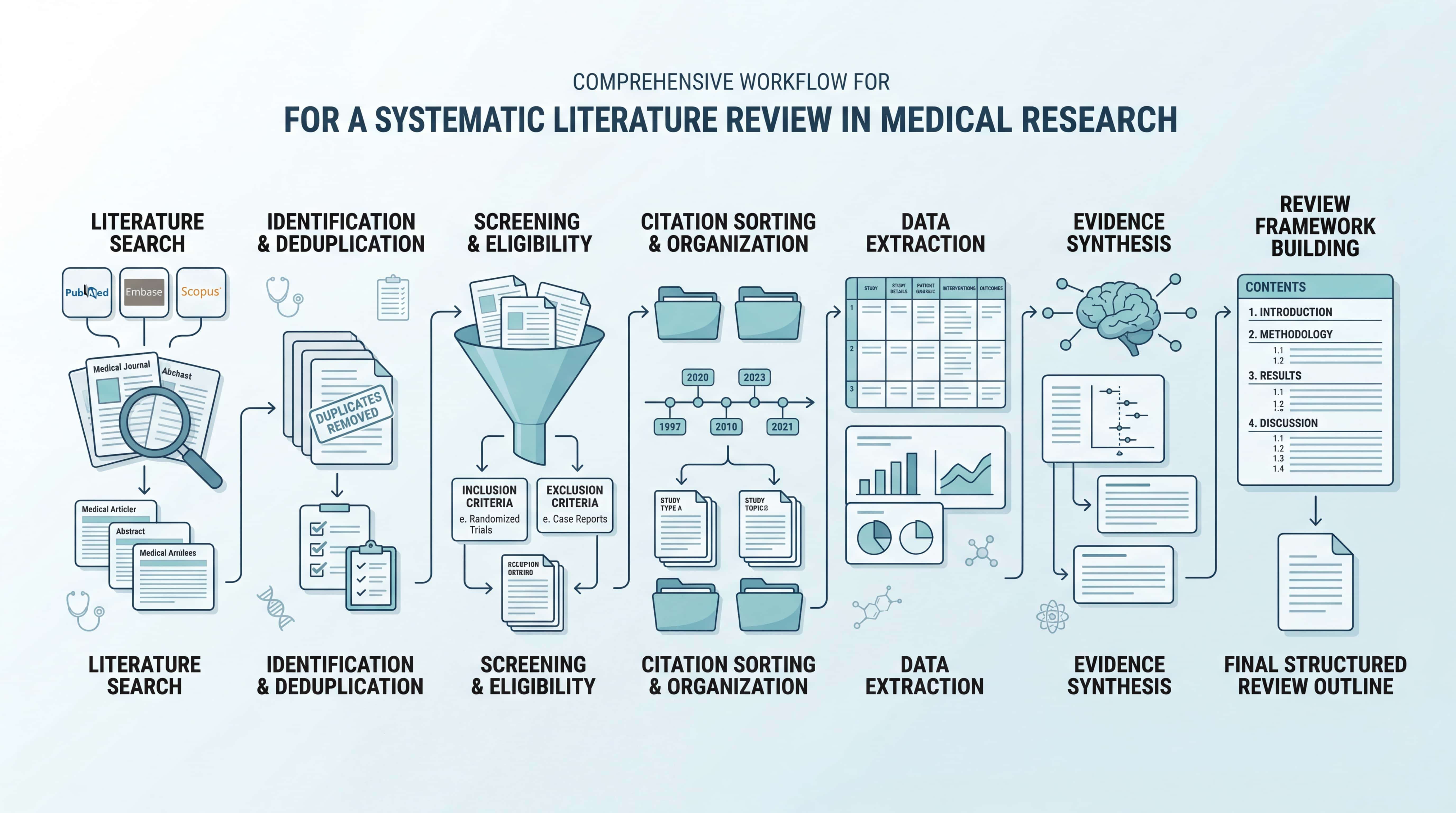
- Search or selection method
- Main body
- Conclusion or perspective
- References
- Figures and tables
This structure gives the article credibility and makes it easier to read, especially in long scientific reviews.
2.2 The title and introduction must be precise
The title should be short, accurate, and searchable. It should contain the key topic without unnecessary words. The introduction should be concise and direct. In under 100 words, it should explain the problem, the scope, and why the topic matters.
A well-written introduction tells readers exactly why this literature review deserves attention. It should not delay the core message.
2.3 Methods are important even in a review
Many readers ignore the Methods section in a literature review, but it matters. Authors should explain how papers were selected, which databases were searched, and what inclusion or exclusion criteria were used. This improves transparency and trust.
For systematic reviews and meta-analyses, this step is even more important. A review without a clear search logic is harder to verify and less persuasive.
3. Evidence Selection Must Be Complete and Reliable
3.1 Use comprehensive and up-to-date sources
A rigorous literature review should not rely on a narrow set of papers. It should draw from multiple databases and cover recent studies as well as landmark articles. The best practice is to combine freshness, representativeness, and reliability.
That means selecting:
- Recent high-impact studies
- Key papers from leading research groups
- Original research articles, not only secondary summaries
- Articles from reputable journals in the field
This approach reduces bias and improves the depth of the review.
3.2 Define the topic scope carefully
One common problem is choosing a topic that is too broad or too narrow. A topic that is too broad becomes vague. A topic that is too narrow may lack enough evidence for meaningful analysis.
A good literature review needs a clear scope. It should be narrow enough to stay focused, but broad enough to support analysis, comparison, and synthesis.
3.3 Organize the material systematically
Once the literature is collected, it should be categorized in a meaningful way. Common ways include:
- By timeline
- By mechanism
- By disease subtype
- By intervention type
- By methodological approach
Systematic organization turns information into knowledge. It also helps the author detect patterns, contradictions, and evidence gaps.
4. Visual Elements and Tables Improve Comprehension
4.1 Figures make complex ideas easier to understand
A good literature review is not only text-based. It should include clear figures that explain mechanisms, pathways, or conceptual frameworks. In biomedical writing, visuals can reduce cognitive load and make complex processes easier to retain.
For example, a schematic figure can show:
- Disease progression
- Molecular targets
- Regulatory pathways
- Research workflow
- Proposed future model
Well-designed figures support the narrative and strengthen the paper’s professionalism.
4.2 Tables condense large amounts of information
Tables are one of the most useful tools in a literature review. They allow readers to compare studies quickly and see key differences at a glance. This is especially helpful when summarizing similar clinical trials, experimental models, or diagnostic approaches.
A strong table often includes:
- Author and year
- Study design
- Sample or model
- Main findings
- Limitations
- Relevance to the topic
A concise table can save the reader several pages of dense text.
4.3 Visual design should match scientific rigor
Figures and tables should be accurate, readable, and consistent. They are not decoration. They are evidence tools. Poor visuals weaken trust, while strong visuals improve clarity and authority.
5. Independent Thinking Is What Separates Good from Excellent
5.1 Synthesis is more important than repetition
A weak literature review simply reports study after study. An excellent one synthesizes. That means comparing results, explaining contradictions, and evaluating the strength of evidence.
The author should ask:
- Which findings are robust?
- Which results depend on context?
- Where do studies disagree, and why?
This level of analysis shows academic maturity.
5.2 Critical judgment adds real value
An effective review should include the author’s own evaluation. That does not mean subjective opinion. It means reasoned judgment based on evidence. Readers need to know which conclusions are well supported and which remain speculative.
Independent thinking is the difference between copying literature and contributing to the field. This is one of the most common weaknesses in novice writing.
5.3 Perspective matters
A strong literature review should end with a forward-looking perspective. It should summarize the current state of the field and identify future directions. In medical and scientific research, this might include:
- Better study design
- Larger sample sizes
- More standardized methods
- Multi-center validation
- Mechanistic exploration
- Clinical translation
These points help readers understand where the field is heading.
6. How SciFocus.ai Helps Solve the Main Writing Pain Points
6.1 Faster topic framing and literature organization
For many researchers, the hardest part of writing a literature review is not the language. It is structure. SciFocus.ai can support topic framing, literature organization, and outline building so authors can move from scattered notes to a clear review logic more efficiently.
6.2 Better efficiency without sacrificing rigor
Time pressure is a real problem for medical students, physicians, and researchers. A tool like SciFocus.ai can help streamline the workflow by improving planning, summarization, and draft preparation. That means more time for critical reading, evidence checking, and final refinement.
6.3 A practical assistant for review writing
The best use of AI is support, not substitution. SciFocus.ai is most valuable when it helps writers stay systematic, focused, and evidence-driven. For a demanding literature review, that combination can improve both productivity and quality.
Conclusion
An excellent literature review is built on five essentials: frontier relevance, clear structure, reliable evidence selection, strong figures and tables, and independent thinking. When these elements work together, the review becomes more than a summary. It becomes a scholarly guide for the field. For authors who want to write faster while staying rigorous, SciFocus.ai offers a practical way to organize ideas, improve workflow, and support high-quality academic writing.

Did you like this article? Explore a few more related posts.
Start Your Research Journey With Scifocus Today
Create your free Scifocus account today and take your research to the next level. Experience the difference firsthand—your journey to academic excellence starts here.