

Data Fabrication and Improper Image Processing: The Hidden Traps in Biomedicine
Introduction
Avoiding academic misconduct is not only a compliance issue. It is a core requirement for scientific trust. In biomedicine, image data often looks simple on the surface, but small manipulations can distort results, mislead peers, and damage careers. Avoiding academic misconduct starts with understanding where image editing crosses the line. For medical students, clinicians, and researchers, the risk is real: one incorrect figure can undermine an entire study.
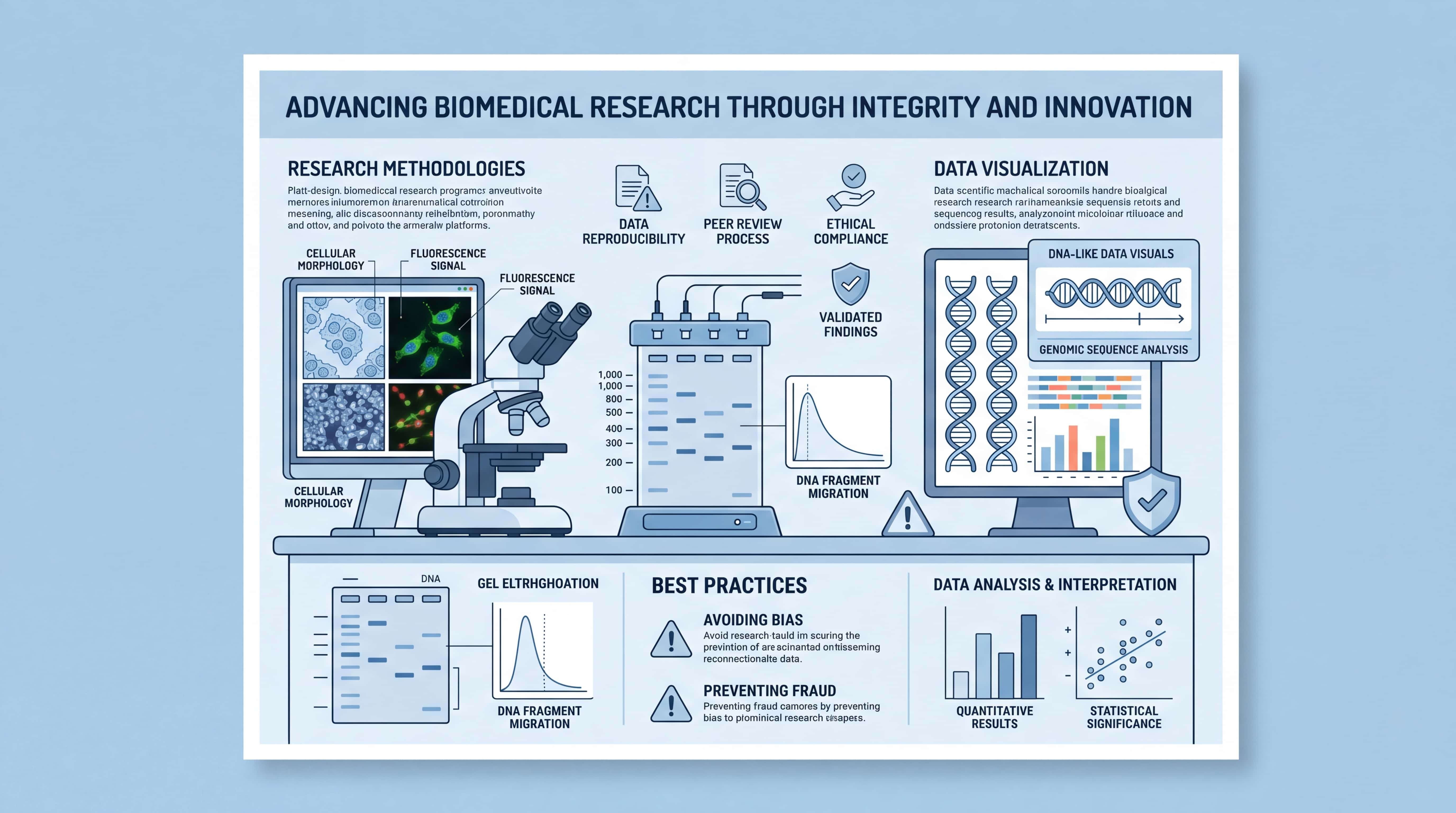
1. Why Data Fabrication and Image Misuse Matter
1.1 The damage goes beyond one paper
In biomedicine, images are often treated as evidence. Western blots, microscopy fields, radiology snapshots, and histology slides all support a conclusion. When data are fabricated or images are altered improperly, the problem is not cosmetic. It changes the scientific record.
This can affect:
- Clinical interpretation.
- Future experiments.
- Grant credibility.
- Patient trust.
Avoiding academic misconduct protects both the researcher and the integrity of biomedical knowledge. Once a misleading figure enters a manuscript, it can be copied into presentations, preprints, and downstream reviews.
1.2 The hidden trap is often “small” edits
Many violations do not begin with obvious fraud. They begin with weak habits. A researcher crops too tightly. Another adjusts contrast until faint bands disappear. Someone removes background noise only from one panel. These edits may seem minor, but they can alter how the data are read.
In practice, the danger is that image manipulation can be hard to detect by eye. Some software can identify:
- Repeated regions.
- Inconsistent backgrounds.
- Unexpected splice lines.
- Unusual contrast patterns.
Avoiding academic misconduct requires a discipline mindset, not just good intentions.
2. What Counts as Improper Image Processing
2.1 Acceptable editing has a clear boundary
Not every image adjustment is wrong. Basic corrections may be allowed if they are applied uniformly and do not change the meaning of the data. According to common biomedical image integrity rules, acceptable handling usually includes:
- Backing up the original file.
- Editing only a copy.
- Applying the same adjustments to the whole image.
- Keeping all experimental images processed under identical settings.
These steps preserve transparency. They also make the workflow easier to audit later.
2.2 The red flags are easy to miss
Improper processing usually involves actions that hide or create information. Common examples include:
- Changing a negative result into a positive one.
- Removing parts of a figure that do not support the hypothesis.
- Brightening or darkening only one region.
- Combining multiple microscope fields into one false image.
- Reusing the same control band more than once.
If the edit changes what the experiment actually showed, it is not a harmless correction.
2.3 Overprocessing can erase real data
Even when there is no intent to deceive, excessive editing can still cause problems. Over-adjusting brightness or contrast may erase weak bands or subtle tissue details. Strong color correction can distort the original signal. Resampling a low-resolution image to make it appear sharper may create details that never existed.
This is especially important in:
- Gel images.
- Microscopy figures.
- Histopathology panels.
- Imaging-based quantitative studies.
Avoiding academic misconduct also means avoiding “helpful” edits that damage scientific meaning.
3. Common Image Integrity Problems in Biomedical Research
3.1 Western blots and gel figures
Western blot images are one of the most frequent sources of concern. The main risks include duplicated bands, inconsistent background removal, and selective enhancement of one lane. If different parts of the same experiment are handled differently, readers may misjudge the result.
A safer approach is simple:
- Keep the raw file unchanged.
- Apply uniform adjustments only.
- Save every processing step.
- Document the final figure assembly.
A clean blot figure should be readable, but never “improved” into something different.
3.2 Microscopy and histology images
Microscopy brings another challenge. A single field of view cannot stand in for many fields unless the figure and legend clearly explain the method. Combining unrelated images without boundaries or labels can create the false impression of one continuous observation.
Also, local edits to only part of an image are risky. They can hide background, remove artifacts, or exaggerate cellular features. If multiple images from the same experiment are shown, they should receive the same processing values.
3.3 Quantitative imaging and reproducibility
Biomedical imaging is often tied to numbers. That means image integrity affects statistics too. If the image is altered before quantification, the final analysis can become unreliable. Reproducibility suffers, and reviewers may question the entire dataset.
This is why avoiding academic misconduct is not just about ethics. It is also about data validity.
4. How to Prevent Misconduct in Daily Research Work
4.1 Build a transparent workflow
The best protection is a simple, consistent process. Every laboratory should define how images are stored, edited, and reviewed. A practical workflow includes:
- Saving raw files immediately.
- Creating an edited copy, never overwriting the original.
- Recording software, settings, and date.
- Using identical adjustments for related images.
- Reviewing figures before submission.
This is especially useful for team-based projects where more than one person handles the data.
4.2 Train everyone, not only the first author
Image problems often happen because younger researchers are never trained in detail. They know how to make a figure look polished, but not how to preserve scientific integrity. Supervisors should teach what is allowed, what is risky, and what is prohibited.
A strong lab culture should make these points clear:
- A figure must represent the experiment honestly.
- “Pretty” is not the same as “accurate.”
- All edits should be reversible or documented.
- Uncertainty should be reported, not hidden.
Avoiding academic misconduct is a shared responsibility across the research team.
4.3 Use software and review tools wisely
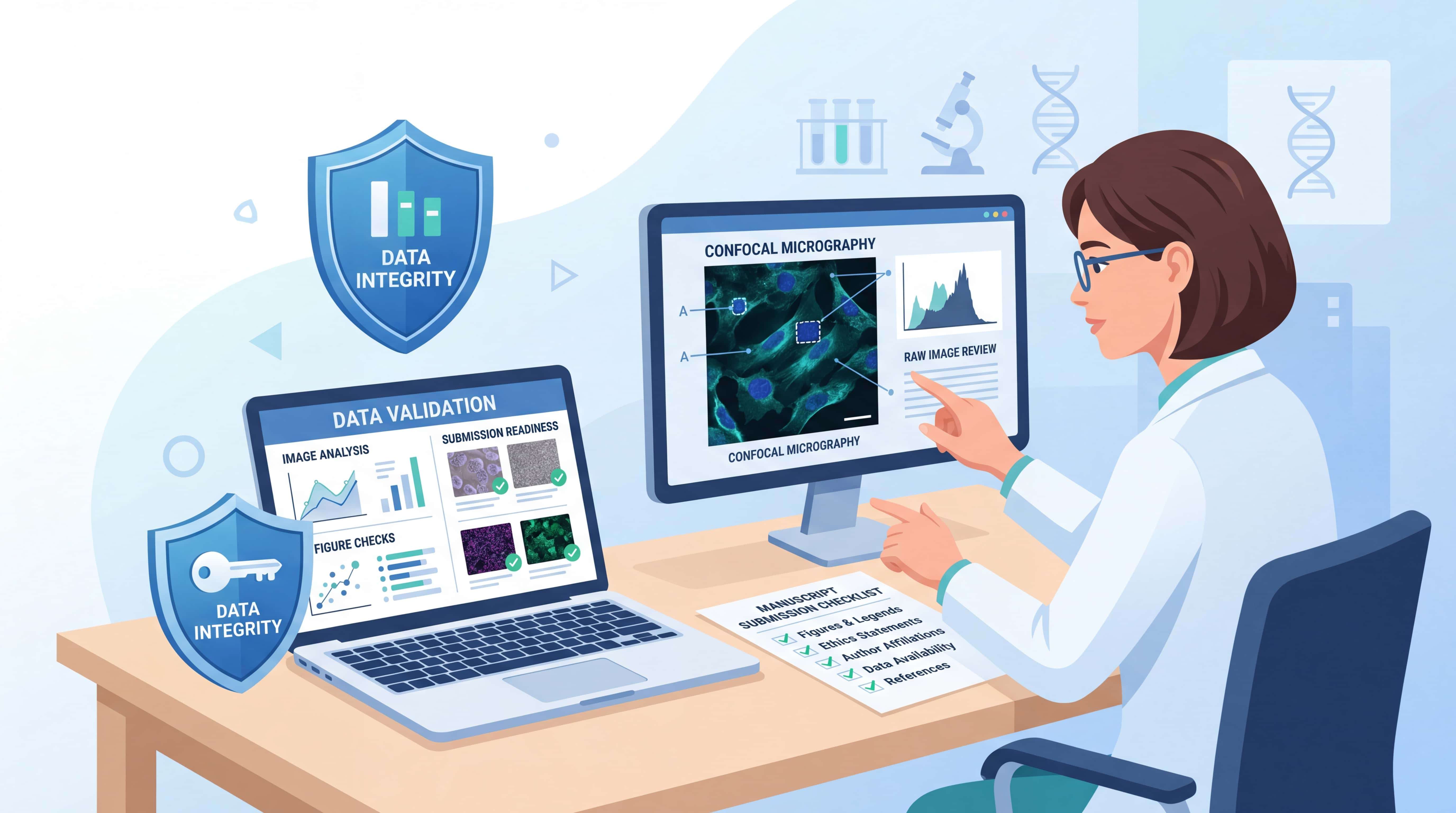
Modern tools can help flag image issues before submission. They may detect duplication, splicing, or unusual contrast patterns. Internal review is also valuable. A second reviewer can often spot problems that the first author missed.
This is where specialized platforms can help. scifocus.ai can support researchers by organizing manuscripts, checking consistency, and streamlining quality control before submission. Used properly, it can reduce avoidable mistakes and help teams maintain a more reliable publication workflow.
5. What Editors, Reviewers, and Institutions Expect
5.1 Transparency is now the standard
Journals increasingly expect authors to provide original files when needed. Many require authors to explain image assembly, cropping, and processing. If a figure contains splices or composite panels, the legend should say so clearly. If an adjustment was made, it should not hide meaningful information.
Common expectations include:
- No duplicated lanes or reused controls without disclosure.
- No selective enhancement of only one region.
- No unauthorized composite construction.
- No misleading presentation of data.
5.2 Retention of raw data is essential
If the original files are lost, it becomes difficult to defend the integrity of the work. Labs should keep source data in a secure, searchable system. This includes raw images, metadata, and version history. A strong data retention practice can resolve questions quickly if editors request clarification.
Avoiding academic misconduct is much easier when the raw record is complete, accessible, and unchanged.
Conclusion
Data fabrication and improper image processing are hidden traps because they can look like routine figure preparation. In biomedical research, however, the line between editing and distortion is strict. The safest approach is to protect original data, apply uniform processing, avoid selective changes, and document every step. For medical students, doctors, and researchers, this is not optional. It is part of scientific responsibility. If you want a more reliable workflow, consider using scifocus.ai to support manuscript organization, consistency checks, and submission readiness. Avoiding academic misconduct begins with better habits, and better habits start before the paper is sent out.
Did you like this article? Explore a few more related posts.
Start Your Research Journey With Scifocus Today
Create your free Scifocus account today and take your research to the next level. Experience the difference firsthand—your journey to academic excellence starts here.