

Conscience vs Conscious
Introduction
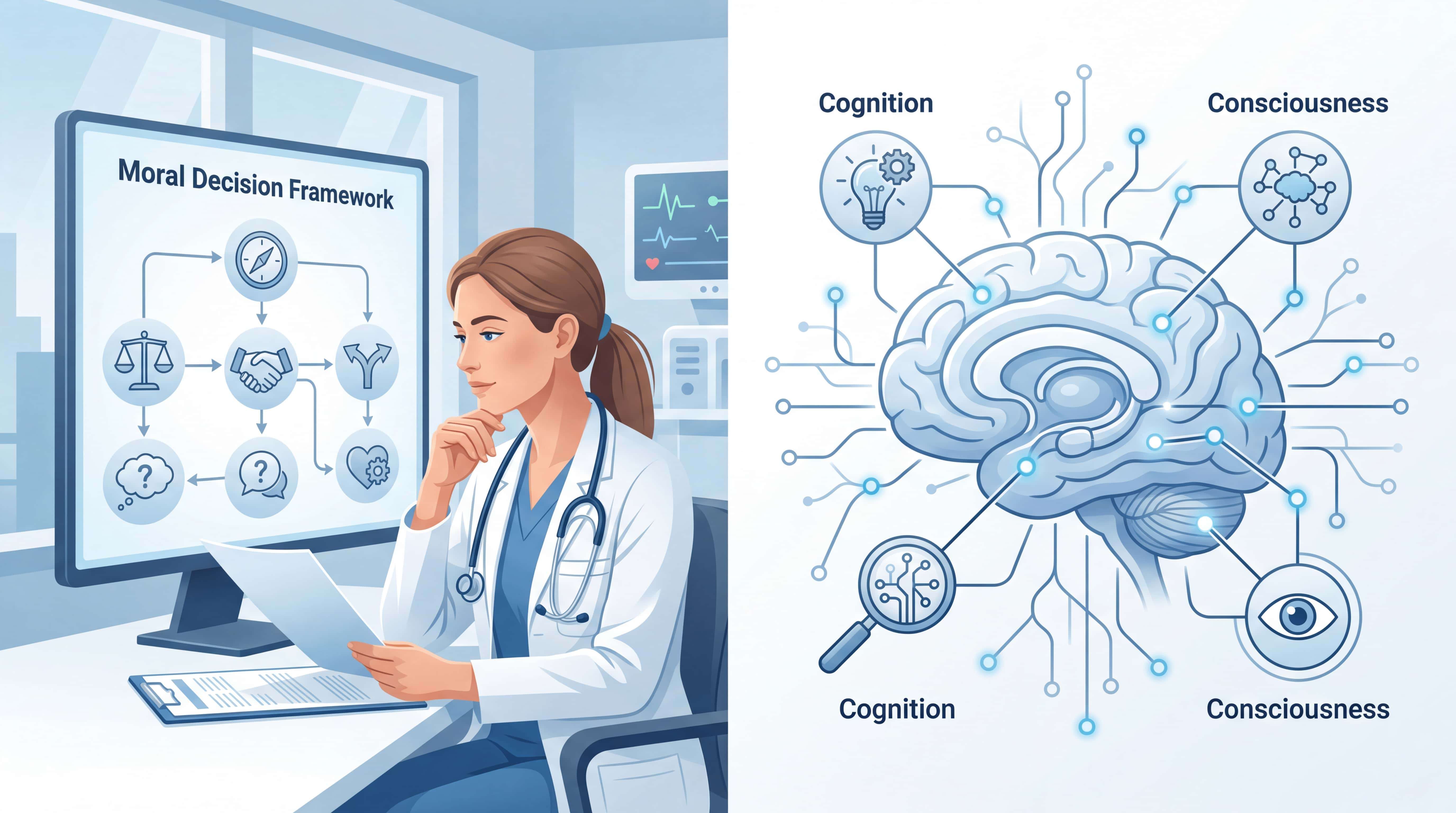
When writing an essay, many medical students, physicians, and researchers confuse conscience and conscious. The words sound similar, but they mean very different things. In academic writing, using the wrong one can weaken clarity and credibility. This guide explains the difference, shows how to use each word correctly, and helps you avoid common mistakes in professional writing.
1. Understanding the Core Meaning
1.1 What “conscience” means
Conscience is a noun. It refers to a person’s inner sense of right and wrong. In medicine, this often appears in ethical judgment, professional responsibility, and moral reflection.
For example, a clinician may experience a conflict between institutional policy and personal conscience. A researcher may question whether a study design fully protects participants. In both cases, conscience relates to moral evaluation.
1.2 What “conscious” means
Conscious is an adjective. It describes awareness, alertness, or deliberate perception. In clinical settings, it may refer to a patient who is awake and responsive.
It can also describe intentional action. For example, a doctor may make a conscious decision to follow evidence-based guidelines. Here, conscious means deliberate, not moral.
1.3 The simplest rule
Conscience = morality. Conscious = awareness.
That rule is often enough for academic and clinical writing. If you can replace the word with “ethics” or “inner moral sense,” conscience is usually correct. If you can replace it with “aware” or “awake,” conscious is usually correct.
2. Why the Difference Matters in an Essay
2.1 Precision affects academic credibility
In a strong essay, word choice is not cosmetic. It shapes meaning. A single error can change the reader’s interpretation of a sentence.
For example:
- “The patient remained conscience after surgery” is incorrect.
- “The patient remained conscious after surgery” is correct.
The first sentence is nonsensical in clinical English. The second is standard medical language. In professional writing, that difference matters.
2.2 Medicine uses both words in different contexts
Medical writers often use conscious in neurological assessment and emergency care. Common phrases include:
- conscious patient
- conscious level
- loss of consciousness
Meanwhile, conscience appears in medical ethics, professional integrity, and moral distress. Common phrases include:
- conscience clause
- moral conscience
- professional conscience
Using the wrong term can make a report, paper, or essay look poorly edited.
2.3 Readers expect exact language
Medical audiences are trained to notice precision. A doctor reading a research paper expects accurate terminology. A reviewer expects correct definitions. A supervisor expects disciplined writing.
Clear language builds trust. In academic and clinical contexts, trust depends on exactness.
3. Common Usage in Medical and Scientific Writing
3.1 “Conscious” in clinical documentation
In healthcare documentation, conscious usually refers to a patient’s mental state. It is often part of the neurological exam.
Examples:
- The patient was conscious and oriented.
- He regained consciousness after resuscitation.
- She remained conscious throughout the procedure.
These are factual observations. They describe awareness, not ethics.
3.2 “Conscience” in ethics and professionalism
Conscience appears in discussions about physician values, informed consent, end-of-life care, and conscientious objection.
Examples:
- The physician raised a conscience-based objection.
- Ethical practice requires respect for professional conscience.
- The committee considered the moral conscience of the team.
This word belongs in ethical analysis, not neurological description.
3.3 The role of context
Context decides the correct word. That is why proofreading matters. A sentence can be grammatically correct and still be semantically wrong.
Consider this pair:
- “The researcher was conscious of the bias in the dataset.”
- “The researcher acted according to conscience.”
The first means aware. The second means guided by moral judgment. Both are correct, but they express different ideas.
4. How to Avoid Confusing Them in an Essay
4.1 Ask two quick questions
Before finalizing a sentence, ask:
- Am I describing moral judgment?
- Am I describing awareness or alertness?
If the answer to the first is yes, use conscience. If the answer to the second is yes, use conscious.
This simple check reduces avoidable errors.
4.2 Use sentence-level substitution
A practical editing method is substitution.
Try replacing:
- conscience with “moral sense”
- conscious with “aware”
If the sentence still works, the word choice is probably correct. If it breaks the meaning, revise it.
4.3 Watch for frequent errors
Common mistakes include:
- using conscience when describing a patient’s wakefulness
- using conscious when referring to moral responsibility
- confusing “consciousness” with “conscience”
- writing “conscience decision” instead of “conscious decision”
A careful reviewer should treat these as separate vocabulary items, not interchangeable terms.
5. Examples for Medical Students, Doctors, and Researchers
5.1 Correct examples with “conscious”
- The patient was conscious after intubation.
- She made a conscious effort to reduce documentation errors.
- The study required conscious attention to protocol adherence.
In these examples, conscious refers to awareness or deliberate action.
5.2 Correct examples with “conscience”
- The doctor faced a conflict of conscience.
- The committee discussed the role of conscience in clinical ethics.
- The researcher acted according to conscience when reporting the results.
Here, conscience refers to ethical judgment.
5.3 Incorrect examples to avoid
- The patient was conscience after the accident.
- He made a conscience choice to attend the seminar.
- The nurse remained conscience during monitoring.
These sentences misuse the noun and adjective forms. In formal writing, such errors should be corrected immediately.
6. A Practical Editing Framework for Academic Writing
6.1 Use a three-step review
When revising an essay, use this workflow:
- Read the sentence aloud.
- Identify whether the word refers to morality or awareness.
- Check whether the part of speech matches the sentence structure.
This process takes less than a minute per paragraph and can prevent repeated misuse.
6.2 Build a personal word bank
Medical writers benefit from a small high-risk word list. Include pairs such as:
- conscience and conscious
- affect and effect
- complement and compliment
- principal and principle
Keeping a word bank improves consistency across essays, papers, and reports.
6.3 Use tools, but do not rely on them alone
Spellcheck often misses semantic errors. It may not flag conscience used where conscious should be. That is why human review remains essential.
For researchers and clinicians who write often, AI-supported editing can save time and improve accuracy. A tool like scifocus.ai can help structure content, refine terminology, and reduce language errors before submission. It is especially useful when you need faster drafting without losing precision.
7. Conclusion
7.1 Final takeaway
The difference between conscience and conscious is simple but important. Conscience refers to moral judgment. Conscious refers to awareness, alertness, or deliberate action. In a medical or scientific essay, using the correct word improves clarity, professionalism, and trust.
7.2 What to do next
Before you submit your next paper, review every sentence with this rule in mind. If you want to speed up drafting and improve precision, consider using scifocus.ai as part of your writing workflow. It can support clearer structure, cleaner language, and more efficient revision.
Strong academic writing depends on accurate words. Choosing conscience or conscious correctly is a small detail, but in medicine and research, small details matter.
Did you like this article? Explore a few more related posts.
Start Your Research Journey With Scifocus Today
Create your free Scifocus account today and take your research to the next level. Experience the difference firsthand—your journey to academic excellence starts here.