

Breath vs Breathe
Introduction
Essay writing in medical and scientific contexts demands precision. One small spelling error can weaken credibility, confuse readers, and distort meaning. The pair breath vs breathe is a common example. They look similar, but they are not interchangeable. If you write clinical notes, research papers, or teaching materials, knowing the difference matters.
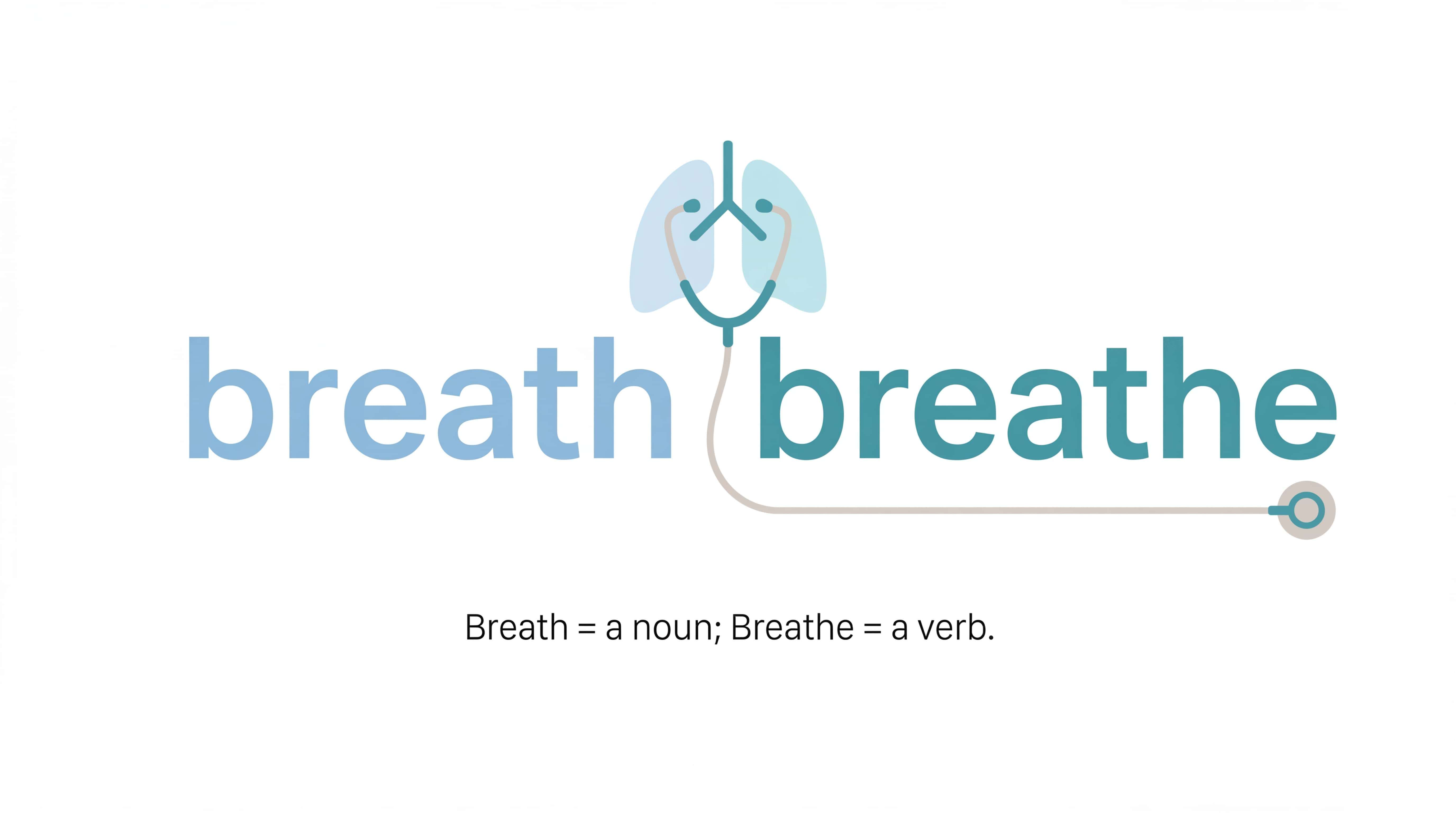
1. The Core Difference Between Breath and Breathe
1.1 Breath Is a Noun
A breath is the air taken into or out of the lungs in one cycle. In medicine, it can also refer to the act or sound of respiration in a clinical description.
Examples:
- Take a deep breath.
- The patient’s breath was shallow.
- Each breath was measured during the test.
Breath is the thing you take. It is a noun.
1.2 Breathe Is a Verb
To breathe means to inhale and exhale air. It describes the process.
Examples:
- Please breathe slowly.
- The patient can breathe without assistance.
- We monitored how the patient breathed during sleep.
Breathe is the action. It is a verb.
1.3 Why This Matters in Medical Writing
In healthcare communication, a word choice error can affect clarity. A note that says “the patient cannot breath” is grammatically incorrect. The correct form is “the patient cannot breathe.”
This is not a minor issue. In clinical writing, exact language supports accurate documentation, better handoffs, and stronger scientific credibility.
2. How to Use Breath and Breathe Correctly in an Essay
2.1 Use Breath When You Need a Noun
If the word follows an article, adjective, or possessive structure, breath is often correct.
Common patterns:
- a breath
- deep breath
- short breath
- his breath
- every breath
Examples:
- The patient took a deep breath before spirometry.
- Her breath was rapid after exertion.
- Each breath was recorded during examination.
2.2 Use Breathe When You Need an Action
If the word describes what someone does, use breathe.
Common patterns:
- can breathe
- must breathe
- breathe normally
- breathe deeply
- breathe through the mouth
Examples:
- The patient can breathe on room air.
- Try to breathe deeply during the exam.
- Some patients struggle to breathe after surgery.
2.3 A Quick Memory Rule
A simple rule helps:
- Breath = noun
- Breathe = verb
A second clue is pronunciation. Breathe has a long “ee” sound at the end. Breath ends more sharply. This small sound difference can help during proofreading.
3. Clinical Examples That Show the Difference
3.1 Respiratory Assessment Language
Medical writing often uses both words in the same report. Here are correct examples:
- The patient took a shallow breath.
- The patient continued to breathe with mild dyspnea.
- Breath sounds were reduced at the base.
These sentences show the grammatical distinction clearly. Breath describes the unit or sound. Breathe describes respiratory function.
3.2 Research and Teaching Contexts
In an essay, lecture note, or journal draft, precision improves readability.
Correct:
- We recorded each breath during the procedure.
- Participants were instructed to breathe at a steady rate.
- The analysis included breath frequency.
Incorrect:
- Participants were instructed to breath at a steady rate.
That error is common because the two words look nearly identical. But in scholarly writing, small errors reduce trust.
3.3 Why Precision Supports E-E-A-T
For medical students, physicians, and researchers, accurate language strengthens:
- Expertise, because terminology is used correctly.
- Authority, because documents appear professionally edited.
- Trust, because readers see careful, reliable writing.
In an essay, grammar is not cosmetic. It is part of scientific quality.
4. Common Mistakes and How to Avoid Them
4.1 Frequent Error Patterns
Writers often confuse the two words in predictable places:
- “cannot breath” should be “cannot breathe”
- “take a breathe” should be “take a breath”
- “breath normally” should be “breathe normally”
These mistakes usually happen under time pressure, especially in notes, case reports, or manuscript drafts.
4.2 A Fast Editing Checklist
Before submitting an essay or clinical note, check these points:
- If it is a thing, use breath.
- If it is an action, use breathe.
- Read the sentence aloud.
- Look for articles like “a” or “the” before the word.
- Search for common phrases such as “deep breath” and “breathe deeply.”
A 30-second review can prevent avoidable errors.
4.3 Sentence Swaps for Practice
Use these examples to self-test:
- I took a deep breath before speaking.
- The patient must breathe more slowly.
- The nurse counted each breath.
- The infant could not breathe well.
If you can replace the word with “inhale/exhale” as a verb, use breathe.
If you can replace it with “air taken in one time,” use breath.
5. Breath vs Breathe in Scientific and Clinical Essays
5.1 Why This Pair Appears Often in Research Writing
Respiratory studies, ICU notes, pulmonary essays, and clinical case discussions often mention breathing patterns, breath counts, or breath sounds. That makes this word pair especially important for medical writers.
Examples of correct usage in academic prose:
- The study measured breath frequency.
- Patients were instructed to breathe through a nasal cannula.
- Breath-by-breath analysis was performed.
- The intervention improved the ability to breathe comfortably.
5.2 Writing for Clarity and Search Visibility
From an SEO perspective, clear definitions improve user satisfaction. Readers searching for essay help, medical writing support, or grammar clarification want direct answers fast. That means short sentences, clean structure, and correct examples.
For content creators in medicine and science, this is especially valuable:
- It reduces bounce rate.
- It improves time on page.
- It supports semantic relevance.
- It helps readers trust the content.
Accuracy in language is part of content performance.
5.3 How SciFocus.ai Can Help
If you write medical essays, case summaries, or research drafts, tools that support clarity and structure can save time. SciFocus.ai can help streamline drafting, improve consistency, and support better academic writing workflows.
For busy students and clinicians, that means:
- faster first drafts,
- cleaner sentence structure,
- more efficient revision,
- and less time spent fixing avoidable language errors.
If your goal is stronger scientific writing, a smart writing assistant can make the process more efficient.
Conclusion
The difference between breath vs breathe is simple but important. Breath is a noun. Breathe is a verb. In medical and scientific writing, using them correctly improves clarity, professionalism, and reader trust. That matters in every essay, note, and manuscript.
Before you submit your next draft, do one quick review for this pair. It is a small fix with a big impact. If you want to write faster and more accurately, consider using SciFocus.ai as part of your workflow.

Did you like this article? Explore a few more related posts.
Start Your Research Journey With Scifocus Today
Create your free Scifocus account today and take your research to the next level. Experience the difference firsthand—your journey to academic excellence starts here.