
Best Tools for Academic Writing in 2026
Introduction
Writing an essay for medical school, clinical training, or research publication is no longer just about grammar. The real problem is speed, clarity, and precision under pressure. Many medical students, doctors, and researchers lose time on wording, structure, and terminology. In 2026, the best tools for academic writing help you draft faster, polish language, and reduce avoidable errors. The right workflow can improve both writing quality and submission confidence.
1. What Academic Writing Tools Should Solve in 2026
1.1 Faster drafting without losing accuracy
Academic writing tools should reduce the time spent on repetitive tasks. For an essay, that means help with phrasing, sentence expansion, and concise rewriting. This matters in medicine, where time is limited and the cost of unclear language is high.
Modern tools should also support controlled writing. A good tool does not just “make text longer.” It helps you produce readable, defensible sentences. For scientific readers, clarity beats decoration.
1.2 Better language quality for publication
Language issues are still one of the most common reasons for rejection or revision. Tools like Grammarly, Ginger, and WhiteSmoke can catch grammar, spelling, punctuation, and sentence-level problems. They are useful for a final language check, especially when English is not your first language.
However, these tools do not solve everything. They cannot fully repair weak logic, poor argument flow, or a flawed structure. That is why academic writing needs both language support and research-aware editing.
1.3 Terminology and academic phrasing
For medical writing, terminology is critical. Incorrect terms can distort meaning. Tools like Termonline help users search professional terms quickly and free of charge. Academic Phrasebank is also valuable because it provides sentence patterns for introductions, methods, results, discussion, and conclusions.
When you write an essay, these phrase-based tools can reduce guesswork. They help you sound more natural in an academic setting while staying accurate.
2. The Most Useful Writing and Polishing Tools
2.1 Grammarly for grammar and mechanics
Grammarly is one of the most practical tools for everyday academic writing. It checks spelling, punctuation, grammar, and some contextual word choices. This makes it useful for first-pass editing and final proofreading.
For medical students and researchers, Grammarly works best after the draft is already structurally complete. It helps clean the surface level, but it does not replace subject knowledge. Use it to fix errors, not to build your argument.
2.2 Wordtune for rewriting and style
Wordtune is useful when your sentences are correct but not elegant. It offers rewriting suggestions, style adjustments, and alternative expressions. This is especially helpful when you want to shorten a long sentence or improve tone.
In an essay, Wordtune can help you turn awkward academic English into clearer prose. It is strong for paraphrasing, but it should still be used carefully. Always check that the revised sentence keeps the original meaning.
2.3 Ginger and WhiteSmoke for practical editing
Ginger provides real-time grammar and spelling correction. It also offers vocabulary suggestions and multilingual support. WhiteSmoke adds style improvement and contextual correction. Both are useful when you need a broader proofreading layer.
These tools are not advanced research editors. Still, they are effective for routine academic writing tasks. They can support students who need quick corrections before submission or supervisor review.
2.4 Academic Phrasebank for structure and phrasing
Academic Phrasebank remains one of the most reliable free resources for academic writing. It includes phrase models for:
- Introducing a topic
- Referring to sources
- Describing methods
- Reporting results
- Discussing findings
- Writing conclusions
This is especially useful for a medical essay that must sound formal and disciplined. Instead of copying whole sentences, use the structure as a model. That approach is safer and more academically sound.
3. Tools for Medical and Research Terminology
3.1 Termonline for accurate terminology
Termonline is a free online terminology database developed by China’s National Committee for Terms in Science and Technology. It covers medicine, engineering, basic science, humanities, and more. For bilingual academic work, it is extremely practical.
If you know the Chinese term, you can search for its correct English equivalent. This reduces the risk of using nonstandard wording. In medical writing, that precision matters because terminology can affect how reviewers interpret your work.
3.2 Linggle for collocations and natural usage
Linggle helps users check whether a phrase sounds natural, whether a word is necessary, and what collocations are common. It is valuable when you want to confirm how academic English is actually used.
For an essay, this can improve phrasing at the sentence level. It is especially helpful when you are unsure whether a word choice sounds native-like or overly translated.
3.3 DeepL and COCA for support, not substitution
DeepL is useful for fast translation and bilingual drafting. COCA helps with vocabulary meaning, common collocations, and synonym comparison. Together, they can support early-stage writing and revision.
Still, translation tools should not be treated as final academic editors. They are best used to understand options and refine expression. The writer remains responsible for meaning, accuracy, and scholarly tone.
4. Workflow Matters More Than the Tool
4.1 A practical writing sequence
The best academic writing results usually come from a simple workflow:
- Draft the ideas first.
- Check terminology.
- Revise the structure.
- Polish grammar and style.
- Review for clarity and consistency.
This sequence works better than jumping straight into polishing. If your logic is weak, grammar tools will only make the text look cleaner, not better.
4.2 What medical writers should prioritize
Medical students, doctors, and researchers should prioritize three things:
- Accuracy of data and terminology
- Logical flow between sentences and paragraphs
- Final language correctness
An essay in medicine often fails because of unclear argumentation, not just grammar errors. That is why a writing system should combine drafting support, term checking, and polishing tools.
4.3 Why human review still matters
Even the best AI or software cannot fully replace expert review. Native-like polishing remains valuable when the goal is journal submission or academic evaluation. That is why many researchers still use professional editing services after their own revisions.
A tool can improve language. A human expert can improve judgment. In academic work, you usually need both.
Conclusion
In 2026, the best tools for academic writing are the ones that save time, improve precision, and reduce language risk. For an essay, the most useful combination is not a single app. It is a workflow built from terminology support, academic phrase resources, grammar checking, and style revision. Grammarly, Wordtune, Linggle, Ginger, WhiteSmoke, Termonline, DeepL, and Academic Phrasebank each solve different problems. Use them together to write with more confidence and fewer errors.
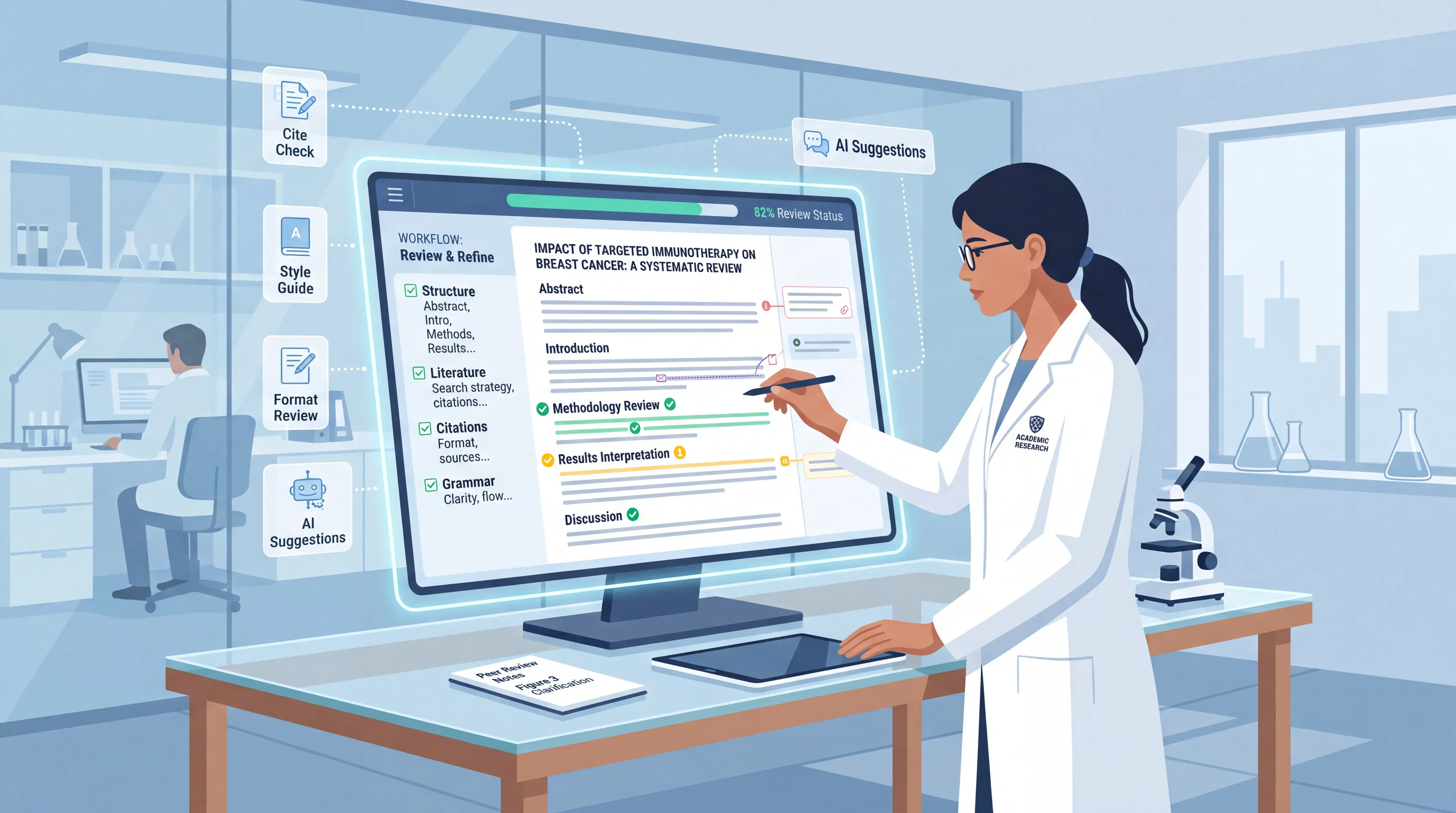
If you want a more efficient academic writing process, consider a smarter integrated solution like scifocus.ai. It can help streamline drafting, rewriting, and polishing in one place, which is especially useful for medical students, doctors, and researchers working under time pressure.
Did you like this article? Explore a few more related posts.
Start Your Research Journey With Scifocus Today
Create your free Scifocus account today and take your research to the next level. Experience the difference firsthand—your journey to academic excellence starts here.