
Best Reference Management Tools for Students
Introduction
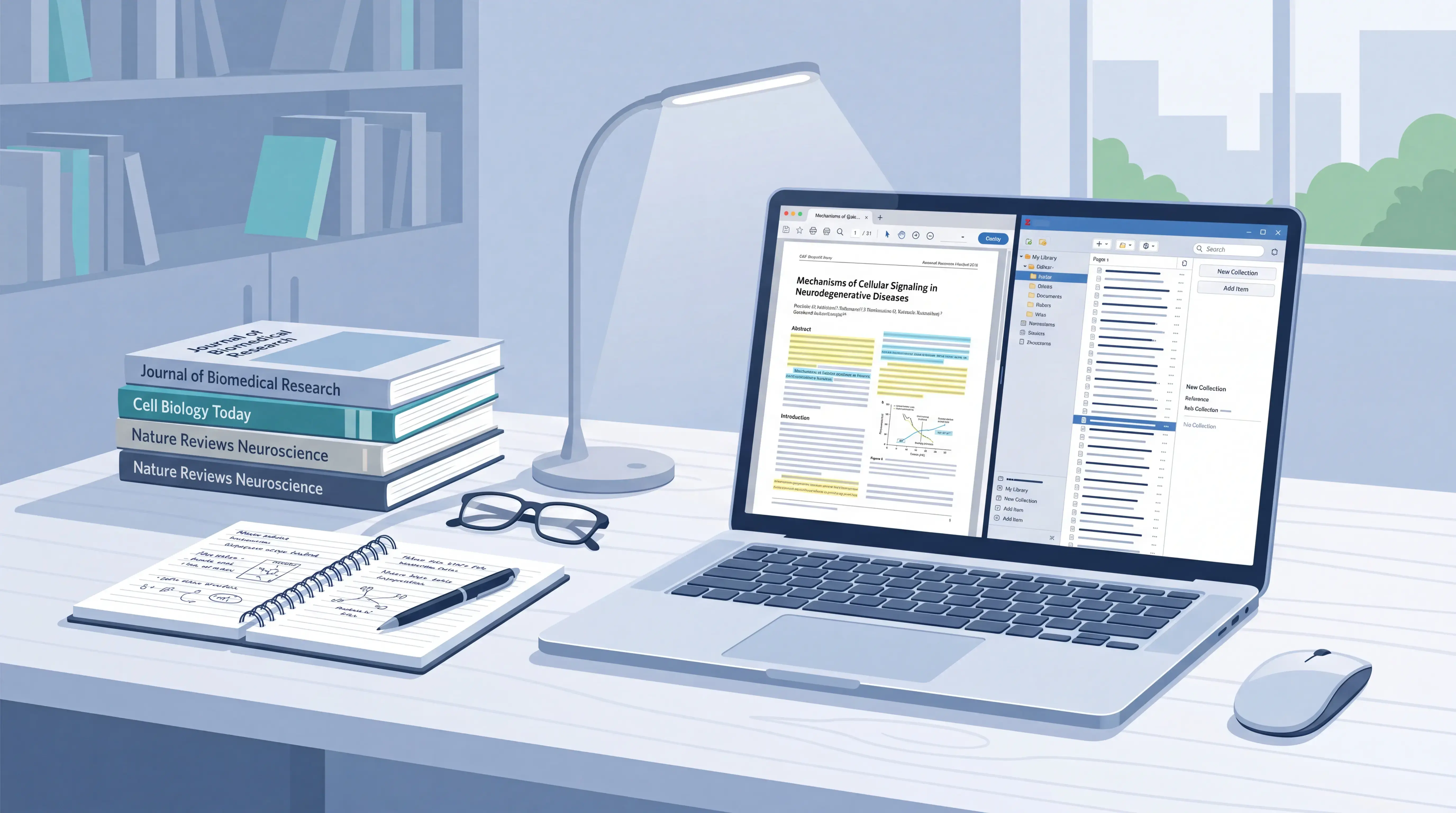
Managing an essay with dozens of sources can quickly become messy. Missed citations, duplicate PDFs, and inconsistent styles waste time and hurt credibility. For medical students, doctors, and researchers, the real challenge is not only collecting papers, but keeping every source searchable, organized, and ready for submission. The best reference management tools solve that problem. They help you save time, reduce citation errors, and write with more confidence.
1. Why Reference Management Matters in Academic Writing
1.1 The cost of manual citation
When source lists grow, manual tracking becomes unreliable. Even a strong essay can lose quality if references are incomplete or formatted incorrectly. A single journal submission may require dozens of changes in citation style, and doing that by hand is slow.
Reference managers reduce this burden. They store bibliographic data, attach PDFs, and generate citations inside Word or other editors. That matters in medicine and research, where accuracy is non-negotiable.
1.2 What students and researchers should look for
A good tool should do more than store papers. It should support:
- Fast import from databases and browser pages
- PDF annotation and search
- Citation style switching
- Cloud sync across devices
- Word integration for drafting an essay
- Easy manual editing when metadata is incomplete
The best tool is the one that fits your workflow, not the one with the longest feature list.
1.3 A practical standard for selection
For most users in medical education and research, the ideal tool must balance speed, reliability, and compatibility. If you work across institutions, write in multiple formats, or handle both English and Chinese literature, software choice matters even more. A tool that works well for a short essay may fail under the pressure of a full thesis or clinical review.
2. Best Reference Management Tools for Students
2.1 Zotero: flexible and widely used
Zotero is one of the most practical choices for students and researchers. It is free, open source, and works on Windows, Mac, and Linux. It is also known for strong browser capture and broad plugin support.
Key strengths include:
- Easy import from databases and websites
- PDF drag-and-drop recognition
- Browser plugin for one-click saving
- Word integration for citations
- Flexible organization for large libraries
Zotero is especially useful if you need to collect sources quickly while drafting an essay. It also supports manual entry, which is helpful when a record is incomplete.
For many users, Zotero offers the best balance of cost, control, and extensibility.
2.2 Mendeley: strong sync and simple interface
Mendeley is another well-known option. It is free, cross-platform, and backed by Elsevier. Its major advantage is synchronization across desktop and mobile devices. It also supports importing references from other managers.
Mendeley is useful if you want:
- A clean interface
- Cloud-based access
- Word plugin support
- Annotation and note-taking inside PDFs
- Easy citation style changes
It can be a solid choice for an essay or a thesis when you need a simple workflow. However, users who rely heavily on Chinese databases or advanced local workflows may find it less convenient than other tools.
2.3 EndNote: powerful, but not always the easiest
EndNote has long been a major name in reference management. It is widely used in academic publishing and supports a large number of citation styles. It is also known for strong bibliography formatting and journal-style switching.
Its strengths include:
- Mature citation handling
- Broad format support
- Strong compatibility with academic publishing
- Useful export options for collaboration
But EndNote can feel less convenient for some users. Based on common user feedback in the knowledge base, cross-platform use is not always as smooth as expected, and the interface may feel less fluid for non-English users. For a short essay, that may not matter. For longer projects, workflow friction can.
2.4 JabRef: best for BibTeX and LaTeX users
JabRef is an open-source tool built around BibTeX. It is not a general-purpose manager in the same way as Zotero or Mendeley. Instead, it is especially useful for LaTeX writing.
Its main value is clear:
- Native support for .bib files
- Good fit for LaTeX-based academic writing
- Open-source and lightweight
- Can import PDFs and create entries from them
One limitation is that it does not handle citation formatting on its own as smoothly as other tools. For users writing technical papers or preparing a research-heavy essay in LaTeX, though, it remains a strong specialized choice.
2.5 NoteExpress and NoteFirst: strong options for Chinese databases
For users working heavily with Chinese literature, NoteExpress and NoteFirst are important choices. The knowledge base indicates that these commercial tools support Chinese databases and Chinese references better than EndNote, and they often fit local academic workflows more naturally.
Their advantages include:
- Better support for Chinese databases
- More convenient handling of Chinese references
- Advanced functions such as duplicate detection and literature analysis
- Better alignment with local institutional workflows
These tools are often paid, but many universities have campus licenses. For a bilingual essay or a mixed-language literature review, they can save substantial time if your institution provides access.
3. How to Choose the Right Tool for Your Workflow
3.1 If you mainly write in English
If your work is focused on English-language journals, PubMed, Web of Science, or international submission formats, Zotero, Mendeley, and EndNote are the most common starting points. They all support citation insertion and bibliography generation.
For many students, Zotero is the easiest free option. Mendeley is attractive if you value synchronization. EndNote is better if your institution already supports it and you need advanced journal workflows for a long essay or manuscript.
3.2 If you work with Chinese sources
If Chinese databases are central to your research, you should pay attention to compatibility. According to the source material, Zotero can be extended with plugins to capture Chinese references more effectively. NoteExpress is especially strong here. EndNote and Mendeley may require more manual correction.
That difference matters when your source list grows. A tool that imports metadata cleanly can save hours during citation cleanup.
3.3 If you write in LaTeX
JabRef is the most natural fit for BibTeX-driven writing. It is not the simplest option for beginners, but it is highly efficient once your workflow is established. If you prepare technical documents, lab reports, or a structured essay in LaTeX, JabRef can be a smart choice.
3.4 If your university provides a license
This is often overlooked. Before paying for software, check whether your university or hospital already provides institutional access. Many campuses license NoteExpress or similar tools. That can make the decision much easier.
The best tool is often the one you can access legally, reliably, and consistently.
4. A Simple Workflow That Saves Time
4.1 Build your library first
Start by collecting sources into one place. Use browser import, database export, or PDF drag-and-drop. Then clean the metadata. Check author names, years, journal titles, and DOI fields.
A well-structured library makes every later step easier. This is true whether you are drafting a class essay or a publication-ready literature review.
4.2 Organize with tags, folders, or collections
Do not rely on memory. Group sources by topic, methodology, or project stage. Use tags for quick filtering. Keep duplicates out of the library. The source material notes that some tools handle groups better than tags, so choose a system that fits the software you use.
4.3 Insert citations while writing
Do not wait until the end. Insert references as you draft. That reduces errors and prevents missing sources. Most major managers offer Word plugins, so citation insertion can happen in real time.
4.4 Switch styles only at the end
Many researchers switch citation styles when submitting to a different journal. Good tools can do this in one step. That is a major reason people use reference managers instead of manual formatting for a long essay or manuscript.
5. Final Recommendation for Medical Students, Doctors, and Researchers
5.1 Match the tool to the task
There is no single winner for everyone. Zotero is often the best free all-round choice. Mendeley is attractive for sync and ease of use. EndNote remains powerful and established. JabRef is best for LaTeX. NoteExpress and NoteFirst are strong if your work depends on Chinese databases.
If you need a modern, efficient workflow for academic writing, especially when moving between sources, notes, and citations, you should choose a tool that reduces friction at every stage of the essay process.
5.2 Why integrated AI support can help
Even the best reference manager still requires time. You still need to search, summarize, quote, and format. That is where a platform like scifocus.ai can add value. It can help streamline research tasks, support academic writing, and reduce the repetitive work around source handling.
If your goal is faster drafting with better structure, combining a reference manager with scifocus.ai can improve both speed and consistency. It is a practical next step for users who want to spend less time on manual formatting and more time on analysis.
Conclusion
The right reference management tool can transform how you write. It keeps your sources organized, improves citation accuracy, and reduces the stress of formatting. For students, doctors, and researchers, that means more time for thinking and less time fixing references. If you want a smarter academic workflow, pair your preferred reference manager with scifocus.ai and make your next essay easier to manage from first draft to final submission.
Did you like this article? Explore a few more related posts.
Start Your Research Journey With Scifocus Today
Create your free Scifocus account today and take your research to the next level. Experience the difference firsthand—your journey to academic excellence starts here.